
If you’re tired of worrying about your gate freezing up during a power outage or dreading the cost of digging trenches for wires, you aren't alone. I see more and more homeowners looking for automated gate power alternatives that offer more reliability without the massive utility bill. Technology has come a long way, making it easier than ever to keep your property secure using smarter, greener energy sources.
The shift toward solar and hybrid systems is changing the way we think about residential security. Modern setups are incredibly efficient, often running smoothly even on those gray, overcast days when you’d expect them to struggle. Choosing the right power source is all about finding that perfect balance between consistent performance and long-term savings for your home.
Choosing a solar kit is often the smartest way to bring power to a remote gate without the headache of digging trenches for wires. I have seen many homeowners save thousands of dollars by skipping the electrical contractor and opting for a high-efficiency solar setup instead. These modern kits use advanced MPPT controllers that act like a smart brain for your power system, squeezing every bit of energy out of the sun even on cloudy days. Because these controllers are nearly 99 percent efficient, you can feel confident that your gate will have plenty of juice to open and close whenever you need it. It is a practical, eco-friendly solution that turns a difficult installation into a straightforward weekend project.
When you are comparing power options, think of a solar kit as a reliable battery backup system that happens to charge itself for free. These systems are designed to store energy in deep-cycle batteries, ensuring your gate stays operational during power outages or long stretches of bad weather. Since about 40 percent of new installations are moving toward solar in 2026, the technology has become incredibly user-friendly and durable for everyday use. You get the peace of mind that comes with a hardwired system without the high cost of utility bills or complex wiring. It is all about finding that sweet spot between sustainability and total reliability for your property's security.
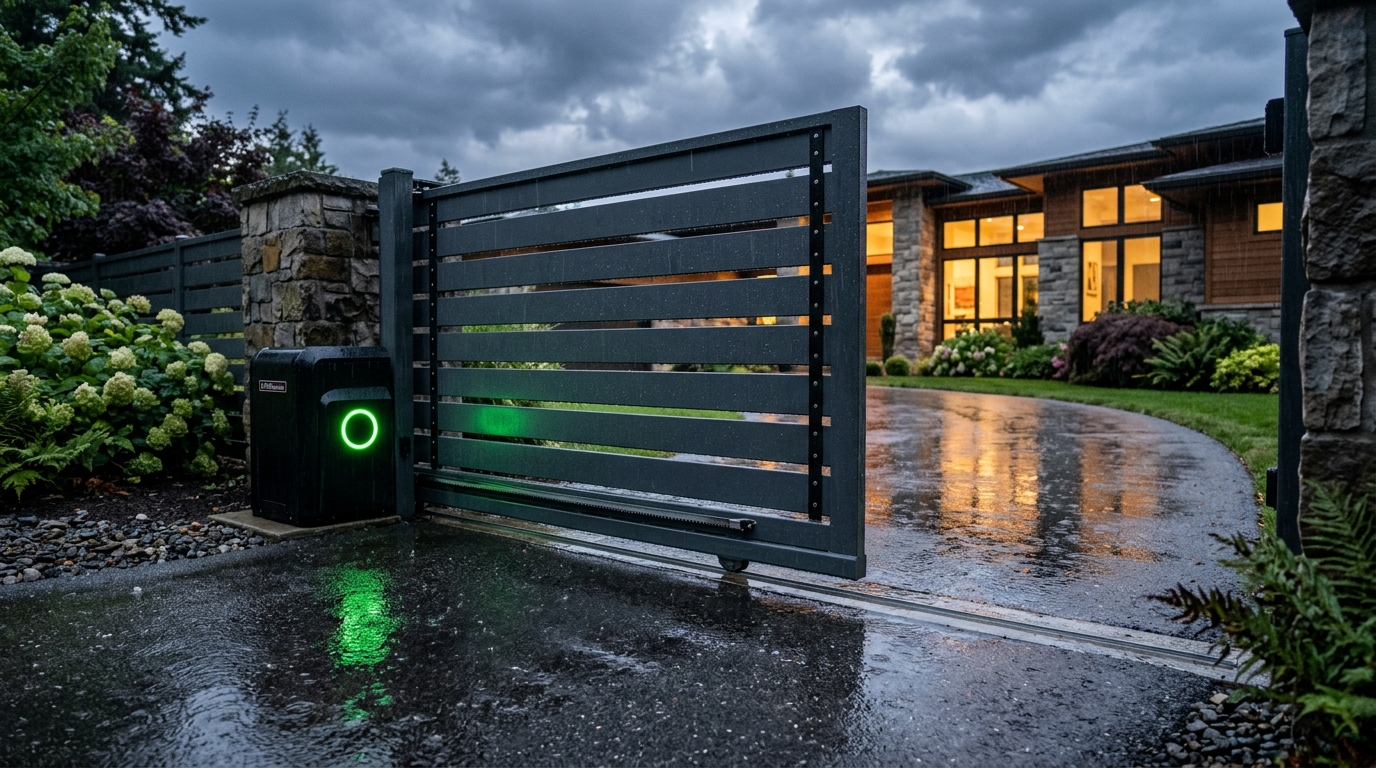
When you are looking at upgrading your gate system, a reliable battery backup is one of the smartest investments you can make. Think of it as an invisible safety net that sits quietly in your control box, waiting for the moment the local power grid fails. If a storm hits or a transformer blows, you will not have to worry about being locked out of your own property or struggling with a heavy manual override in the rain. These modern systems take over instantly, providing enough juice to keep your gate cycling smoothly for dozens of opening and closing motions. It is a simple addition that transforms a potential security headache into a minor blip you barely even notice.
Choosing between a standard hardwired setup and a battery-supported system usually comes down to how much you value peace of mind during an emergency. I often tell folks that while a basic motor is fine for daily use, the real test of a gate happens when the lights go out. Modern battery units are designed with smart charging technology, meaning they stay topped off using a tiny amount of electricity from your main line without wasting energy. They are built to handle high-demand residential needs and even light commercial traffic, ensuring that your property remains secure and accessible around the clock. You get the strength of a hardwired connection with the absolute reliability of a standalone power source.
Setting up these systems is much more straightforward than it used to be, especially with the high-efficiency components available today. Most of the newer control boards are designed to be plug and play, allowing a battery to integrate directly with the main motor without complex rewiring. You can even find hybrid options that use the battery as the primary driver while the grid power acts as a constant charger, which actually puts less strain on your motor over time. This setup is particularly great for heavy gates that require a consistent burst of energy to get moving. It is a practical, honest way to make sure your home or business stays reachable no matter what is happening with the local utility company.
For high-security properties and sprawling rural farms, relying on a single power source can feel like a bit of a gamble. I often recommend hybrid systems that combine solar panels with small wind turbines because they offer the most reliable uptime you can get. While solar does the heavy lifting during the day, a wind turbine can kick in during stormy weather or overnight to keep your batteries topped off. This dual approach ensures that your gate stays operational regardless of the season or the time of day. It is a fantastic way to guarantee that your property remains secure without the constant worry of a dead battery.
Choosing a hybrid setup is one of the smartest upgrades you can make if you are looking for a truly fail-safe solution. These systems use advanced controllers to manage the energy coming from both the sun and the wind, directing it exactly where it needs to go. We see these performing exceptionally well in areas where the grid is unreliable or where running a hardwired line is just too expensive. By diversifying your energy sources, you are essentially creating your own mini power grid that works around the clock. It provides a level of independence and peace of mind that a standard battery backup simply cannot match.
If you are concerned about 100% uptime for a commercial site, a hybrid system is likely your best option for long-term reliability. These units are built to handle the frequent cycles of a busy entrance while maintaining a healthy charge in the battery bank. You will find that the initial investment pays off quickly since you are avoiding the high costs of trenching for electrical wires. Plus, having two ways to generate power means you have a built-in safety net for those long stretches of cloudy or calm weather. It is a practical, straightforward way to ensure your gate opens every single time someone arrives at your entrance.
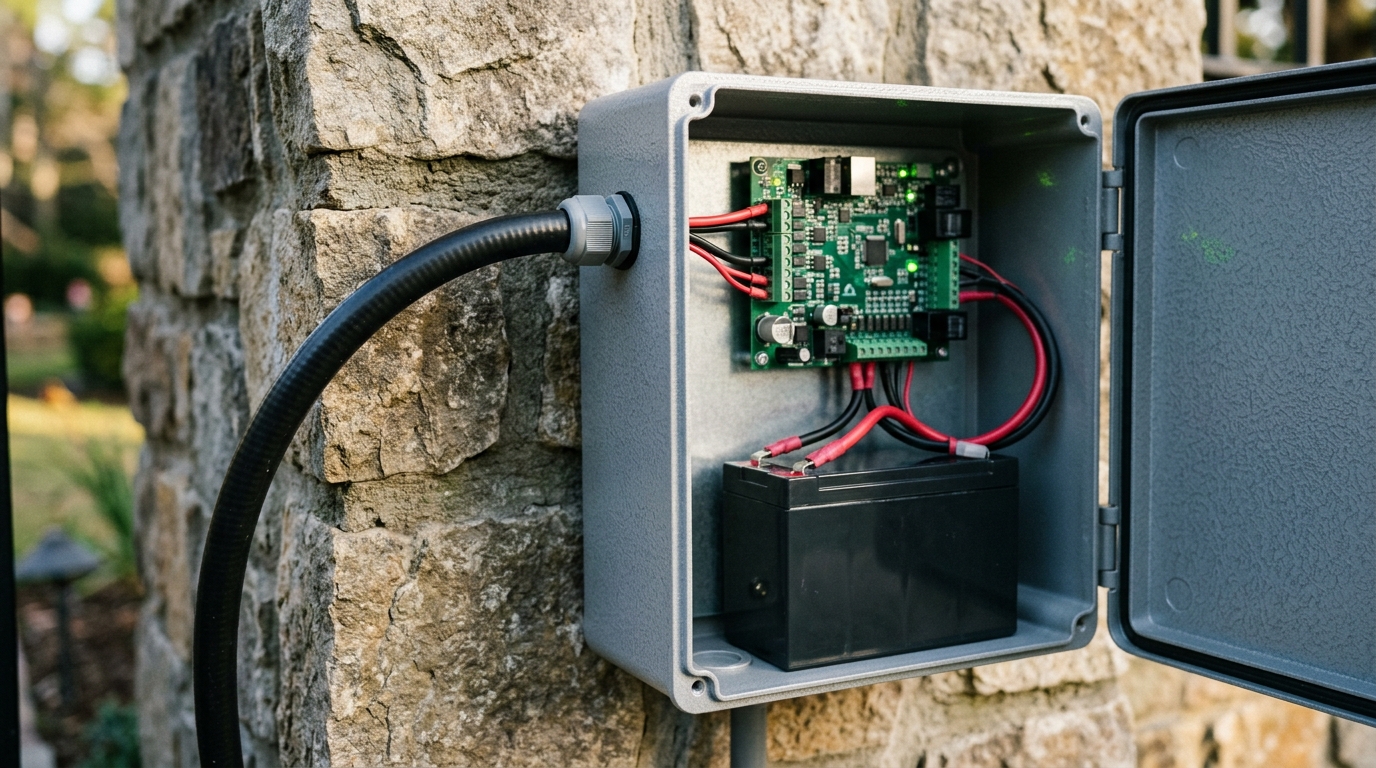
Hardwiring your gate to a standard AC power source remains the gold standard for reliability, especially for heavy gates that see a lot of daily traffic. By connecting directly to your home or business electrical grid, you ensure that the motor always has the high torque needed to swing or slide without hesitation. The real magic happens when we pair that steady current with a smart battery backup system designed for the modern era. This setup eliminates the anxiety of being locked in or out during a sudden local power outage. You get the raw strength of a traditional plug-in system with a digital safety net that kicks in the second the grid goes down.
I always recommend these integrated systems because they take the guesswork out of maintenance and long term performance. Modern Gate Openers are much smarter than the simple lead-acid batteries of the past, often using advanced monitoring to keep the cells healthy and ready for action. You can even check the status of your power supply through a smartphone app, giving you a heads-up if the battery needs attention before a storm hits. This combination is perfect for anyone who wants a "set it and forget it" solution that works every single time. It provides the ultimate peace of mind because you are never dependent on just one source of energy to keep your property secure.
Choosing this hybrid approach is often the best financial move for property owners who already have electricity near their driveway. Since the wiring is already in place, adding a smart battery unit is a straightforward upgrade that adds significant value and convenience. It handles the heavy lifting of industrial-sized gates while maintaining the energy efficiency of a much smaller device. You won't have to worry about cloudy days affecting your gate's speed or the motor straining under pressure. It is a practical, honest solution that balances old-school power with the latest smart technology for a truly seamless experience.
Choosing the right power setup for your gate really comes down to balancing your daily needs with your budget. If you are worried about frequent power outages, a high quality battery backup is the smartest investment you can make. These systems kick in the moment the grid fails, ensuring you are never locked out or stuck inside your own property. For most residential and light commercial sites, a hybrid approach that combines a hardwired connection with a reliable battery is the best way to guarantee security. It gives you the consistent speed of standard electricity while providing a vital safety net for emergencies.
If you are looking to save on long term energy costs or need to power a gate in a remote area, modern solar kits are a fantastic alternative. These systems have become incredibly efficient lately, using advanced controllers that keep things running even when the sun is hiding behind clouds. Trenching wires across a long driveway can be expensive, so going solar often pays for itself before you even finish the installation. I recommend checking your daily gate usage to ensure your battery capacity can handle the load during the night. Taking the time to pick a system with smart monitoring will give you total peace of mind.
Ultimately, your goal is a gate that opens every single time you press the button regardless of what the local power grid is doing. For heavy industrial gates that see constant traffic, staying with a hardwired AC connection backed by a heavy duty battery is usually the safest bet. For everyone else, the flexibility of solar and high efficiency backups offers a green way to stay secure. I suggest starting with a clear look at your property layout and how much you want to spend upfront versus over time. With the right power alternative in place, you can stop worrying about outages and focus on enjoying your secure home.
Yes, they really do. Modern kits use advanced controllers that are nearly 99 percent efficient, so they can pull energy from the sun even when it is overcast. Your gate will have plenty of power to stay running smoothly through gray weather.
You can easily save thousands of dollars by skipping expensive electrical contractors and the need to dig deep trenches for wires. Since the sun charges your system for free, you also avoid adding any extra costs to your monthly utility bill.
Your gate will keep working perfectly because these alternative systems store energy in deep-cycle batteries. Think of it as a built-in backup that stays charged and ready, so you never have to worry about being locked in or out during a blackout.
I consider it a very straightforward weekend project for most homeowners. Since you do not have to mess with high-voltage wiring or trenching, it turns a complicated installation into a simple task that you can handle with basic tools.
Think of an MPPT controller as the smart brain of your power system. It manages the energy coming from your panels to make sure your batteries stay charged as efficiently as possible, which is a big reason why these modern systems are so reliable.
Technology has improved so much that about 40 percent of new installations are expected to be solar by 2026. It is becoming the go-to choice because it is eco-friendly, incredibly reliable, and much easier on your wallet than traditional grid power. Installing an electric gate is a valuable part of security for your property. If you are managing a business facility, you may also want to review a guide to commercial gate opener pricing to better understand your long-term investment.
Choosing the right perimeter protection isn't just about marking your property line anymore; it's about how long you can keep an intruder out. When we look at modern industrial security fence specifications, the focus has shifted toward delay time and making sure your physical barrier talks to your cameras. You need a setup that doesn't just look tough but actually buys your team enough time to react before a breach happens.
I always tell my clients to think of their fence as the first layer of a smart security system rather than just a pile of steel. Whether you are protecting a warehouse or critical infrastructure, small details like mesh density and height can make all the difference in stopping a climb. Getting these technical details right ensures your site stays locked down while keeping you in line with the latest safety standards.
When you are planning a high security perimeter, the eight foot mark is really where our conversation should start. While a six foot fence might keep out a casual trespasser, an eight foot barrier creates a psychological and physical hurdle that most intruders simply cannot clear without specialized equipment. In my experience, this extra height provides the necessary delay time to allow your surveillance systems to do their job and alert security. It is all about making your facility look like a difficult target so that potential threats decide to move on to somewhere else.
The thickness and pattern of your mesh are just as important as the total height of the fence. For most industrial sites, I recommend starting with a 9 gauge wire because it is heavy enough to resist cutting with basic hand tools. If you are protecting critical infrastructure or high value assets, the 358 anti climb mesh is the absolute gold standard for 2026. This specific design uses narrow gaps that are too small for fingers or toes to get a grip, and the tight spacing makes it nearly impossible to use bolt cutters.
Choosing the right combination of height and gauge is really about balancing your budget with the level of risk your facility faces. I always tell my clients to think of the fence as the first layer of a much larger security system that includes cameras and sensors. A sturdy, tall fence does not just block people, it also provides a stable platform for mounting your tech and ensures your site stays compliant with modern safety standards. Taking the time to get these technical specs right during the planning phase will save you a lot of headaches and potential upgrades down the road.
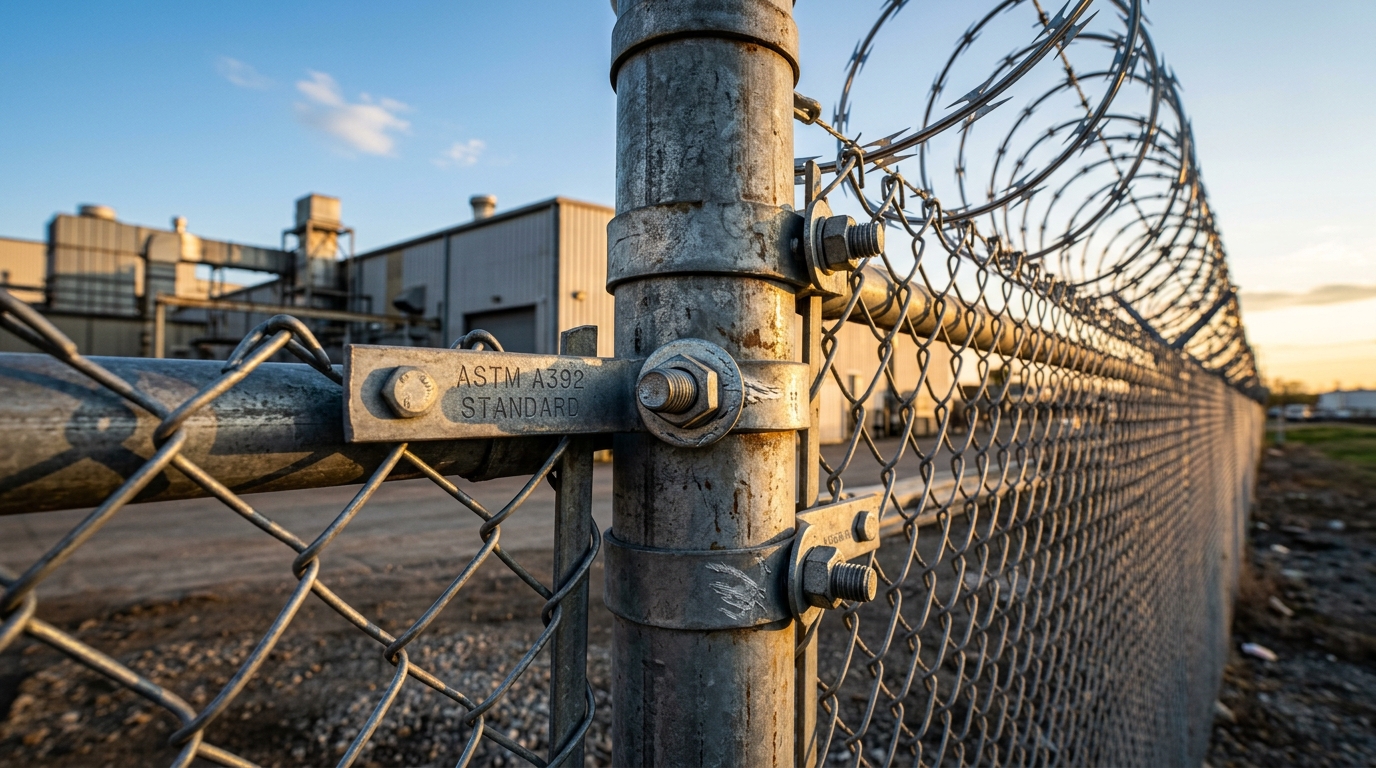
When you are planning a high security perimeter, you need to know that your fence posts can stand up to both physical force and the elements. I always look to ASTM F1083 and F1043 as the gold standard for the actual pipe used in your fence framework. This specification ensures that the steel has the right wall thickness and strength to prevent it from buckling if someone tries to climb or ram it. It also covers the heavy duty galvanization process that keeps your steel from rusting after just a few seasons of rain. Choosing the right schedule of pipe under this standard means you are investing in a skeleton that will hold its shape for decades.
Once you have the right pipes selected, you need to make sure the rest of the hardware and industrial fittings are up to the task. That is where ASTM F1043 comes into play, as it sets the rules for the protective coatings and the strength of the rails and braces. I view this standard as your insurance policy against wind loads and environmental wear that could otherwise cause a fence to sag or lean. It helps us categorize different grades of steel so you are not overpaying for overkill or under-specifying a weak link. By matching these two standards together, you create a unified barrier that provides a predictable delay time against any potential intruders.
Adding toppings like barbed wire or razor ribbons is one of the most effective ways to turn a standard barrier into a true high security perimeter. I always tell facility managers that these features work twice as hard because they provide both a physical obstacle and a powerful psychological deterrent. When a person sees those sharp coils or strands at the top of a twelve foot fence, they usually decide the risk of injury isn't worth the effort. You want to focus on three strand barbed wire outriggers angled at forty five degrees to make scaling the mesh nearly impossible. This simple addition significantly increases the delay time by forcing an intruder to deal with sharp edges while balanced at a great height.
Choosing between barbed wire and razor ribbon often depends on the specific level of risk your facility faces on a daily basis. Barbed wire is a great standard choice for most industrial sites because it is cost effective and clearly signals where the property line begins. If you are managing a high risk utility or a data center, I recommend stepping up to stainless steel razor coils for maximum protection. These ribbons are much harder to cut with standard tools and create a dense, intimidating thicket that stops climbers in their tracks. Always make sure your installation follows local safety codes to ensure these deterrents remain on your property and away from public sidewalks.
The way you configure these toppings can change how your entire security system functions during a potential breach. I prefer using a Y-shaped bracket because it allows you to install razor wire in a way that overhangs both sides of the fence line. This setup makes it extremely difficult for someone to lean a ladder against the structure or throw a heavy blanket over the top to climb across. You should also consider how these metallic features might interfere with your camera views or motion sensors during the planning phase. Keeping the wire tight and well maintained ensures that your physical defenses look professional and remain ready to do their job for years.
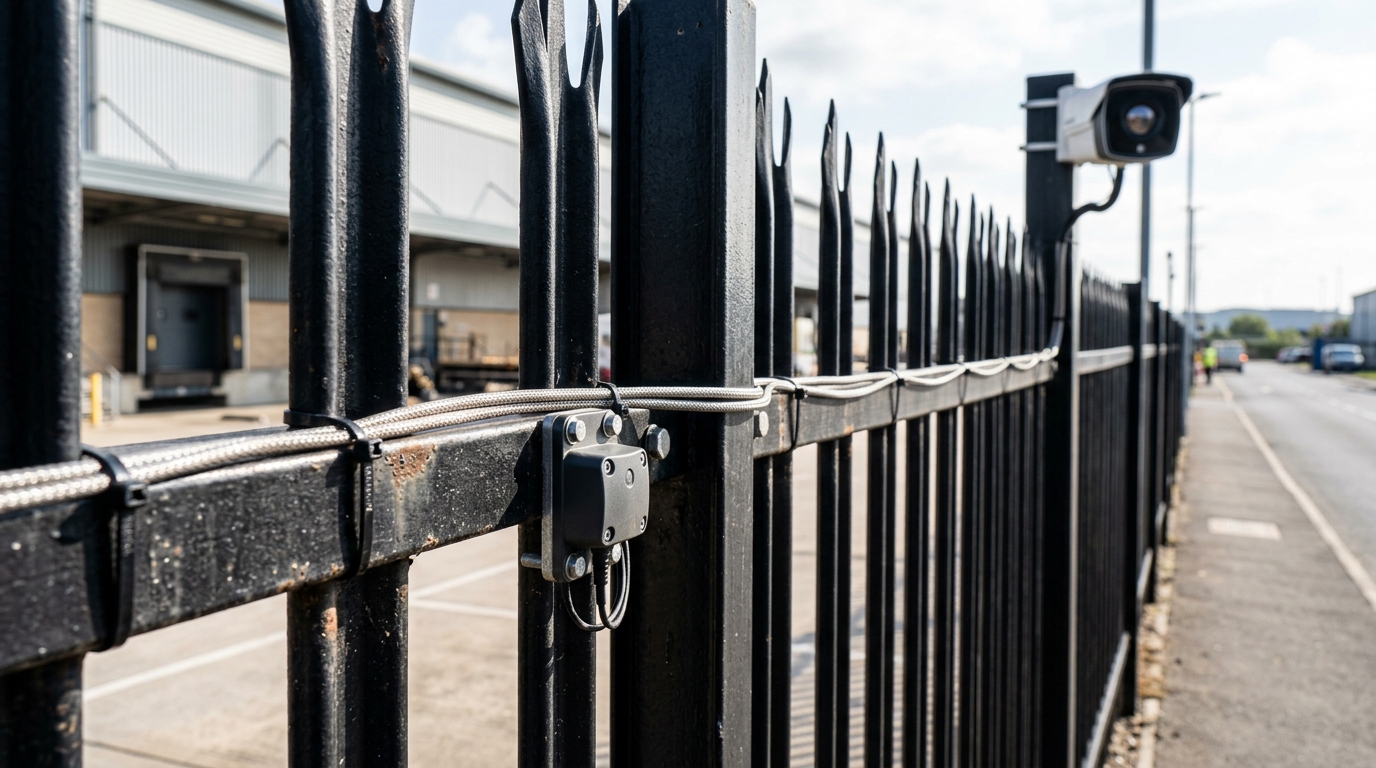
When you are drafting your fence specifications, you have to think about how the physical metal will talk to your digital security tools. A high quality security fence is a great start, but it becomes much smarter when you add electronic sensors that can detect someone trying to cut or climb the wire. I always recommend choosing a rigid mesh or a sturdy palisade style that does not wobble too much in the wind, as this prevents those annoying false alarms. If your fence is too flimsy, your sensors will be going off every time a heavy gust of wind hits, which eventually leads to people ignoring the alerts. You want a stable platform that allows the technology to do its job without constant interference from the environment.
The placement of your surveillance cameras and lighting also depends heavily on the physical layout of your perimeter. I suggest looking for fence designs that offer clear lines of sight so your cameras can see through the mesh without any glare or blurring. If you are using infrared cameras for night vision, the material and coating of the fence should not be overly reflective or it might blind the lens. You should also consider integrated mounting brackets or cable conduits within the fence posts themselves to keep your wiring protected and neat. By planning for these tech needs during the design phase, you avoid having to drill holes or run messy conduit after the installation is already finished.
Ultimately, your goal is to create a system where the physical barrier buys you enough time for your electronics to alert the right people. This concept of delay time is vital because a fence that stands alone is just a hurdle, but a fence integrated with sensors is a proactive defense. I tell my clients to treat the fence as the skeleton of their security system and the sensors as the nervous system. When these two parts work together perfectly, you get a much higher level of protection that can actually stop a breach before it happens. Taking the time to match your hardware specs with your software needs ensures your investment stays effective for years to come.
Ultimately, choosing the right industrial security fence comes down to finding that perfect sweet spot between technical durability and the real world risks your facility faces every day. While it is tempting to go for the most heavy duty 358 mesh or the tallest possible height, you really want a perimeter that makes sense for your specific site layout. High security fencing specifications are not just about keeping people out, they are about buying your team enough time to react if someone tries to get in. I always tell my clients that a fence is only as strong as its weakest point, so make sure your gates and hardware match the strength of your panels.
As you move toward your formal request for quotes, keep in mind that modern fencing is now a key part of your building's tech stack. You want to ensure your final choice integrates smoothly with your cameras and sensors to create a smart boundary. A well planned perimeter gives you peace of mind and keeps your operations running without unnecessary interruptions. By focusing on delay time and material quality now, you are saving yourself from expensive upgrades or security gaps down the road. Understanding why industrial chain link fencing is often the preferred base for these systems can help you make a more informed decision. Trust your instincts on your facility's needs and prioritize those features that offer the best long term protection.
I always recommend starting at the eight foot mark for high security perimeters. This height creates a strong physical and psychological barrier that is tough to clear without tools, giving your security team more time to react.
For most industrial sites, a 9 gauge wire is my go-to choice because it is heavy enough to resist basic hand tools. If you are protecting high value assets, you might want to look into even thicker options or specialized anti climb mesh.
The 358 anti climb mesh uses a very tight pattern that makes it impossible for intruders to get a finger or toe hold. These narrow gaps also make it extremely difficult to use bolt cutters, which is why it is my top pick for critical infrastructure.
Think of your fence as the first layer of a smart system that buys you valuable delay time. A good fence slows down an intruder long enough for your cameras to spot them and for your team to respond before a breach actually happens.
A six foot fence might stop a casual trespasser, but it is much easier to climb than an eight foot barrier. I suggest going higher to make your facility look like a difficult target so potential threats move on to somewhere else.
Security is not just about marking a line, it is about how long you can keep someone out. The right specifications ensure your barrier holds up long enough for your surveillance and security staff to do their jobs effectively.
Installing a new gate is one of the best ways to boost your home’s curb appeal, but the most common question I hear is how long the project actually takes. Your driveway gate installation timeline can range from a single afternoon for a simple manual gate to several months for a custom automated masterpiece. Understanding these stages up front helps you plan for everything from utility marking to that final satisfying click of the latch.
The truth is that the biggest delays usually happen before a single hole is even dug. Between waiting on HOA approvals and the time it takes to custom-build your gate in the shop, the invisible work often takes longer than the physical installation. I want to help you set realistic expectations so you can handle the permits and site prep without any stressful surprises.
The first few weeks of your driveway gate project are all about laying a solid foundation through proper planning and approvals. If you live in a neighborhood with a Home Owners Association, your first stop is getting their green light on your design and materials. These architectural review boards usually meet once or twice a month, so you should expect this step to take anywhere from two to four weeks. I always recommend submitting your plans early to avoid any surprise delays that could push back your actual start date. Taking the time to get these HOA approvals now prevents expensive headaches or forced removals once the gate is already standing.
Once your paperwork is in order, we have to look beneath the surface before any shovels hit the dirt. You will need to call 811 to have your local utility lines marked, which is a free service that ensures we don't hit water, gas, or power lines while digging post holes. This process typically takes about two to four business days for the crews to come out and spray-paint the ground. It is a simple but mandatory safety step that keeps your home and the neighborhood safe during the construction phase. I find that checking this off your list early gives you peace of mind as we move into the physical work.
During this same two to four week window, I also suggest checking with your local building department to see if a permit is required for your specific gate height or motor. Some cities are very quick with over the counter permits, while others might take a couple of weeks to process the application. Having these documents ready to go means that as soon as your gate arrives, there is nothing standing in the way of the installation. Managing these logistical pieces upfront allows the rest of the timeline to flow much smoother. This preparation ensures that your project stays on track and avoids any unnecessary legal or safety interruptions.
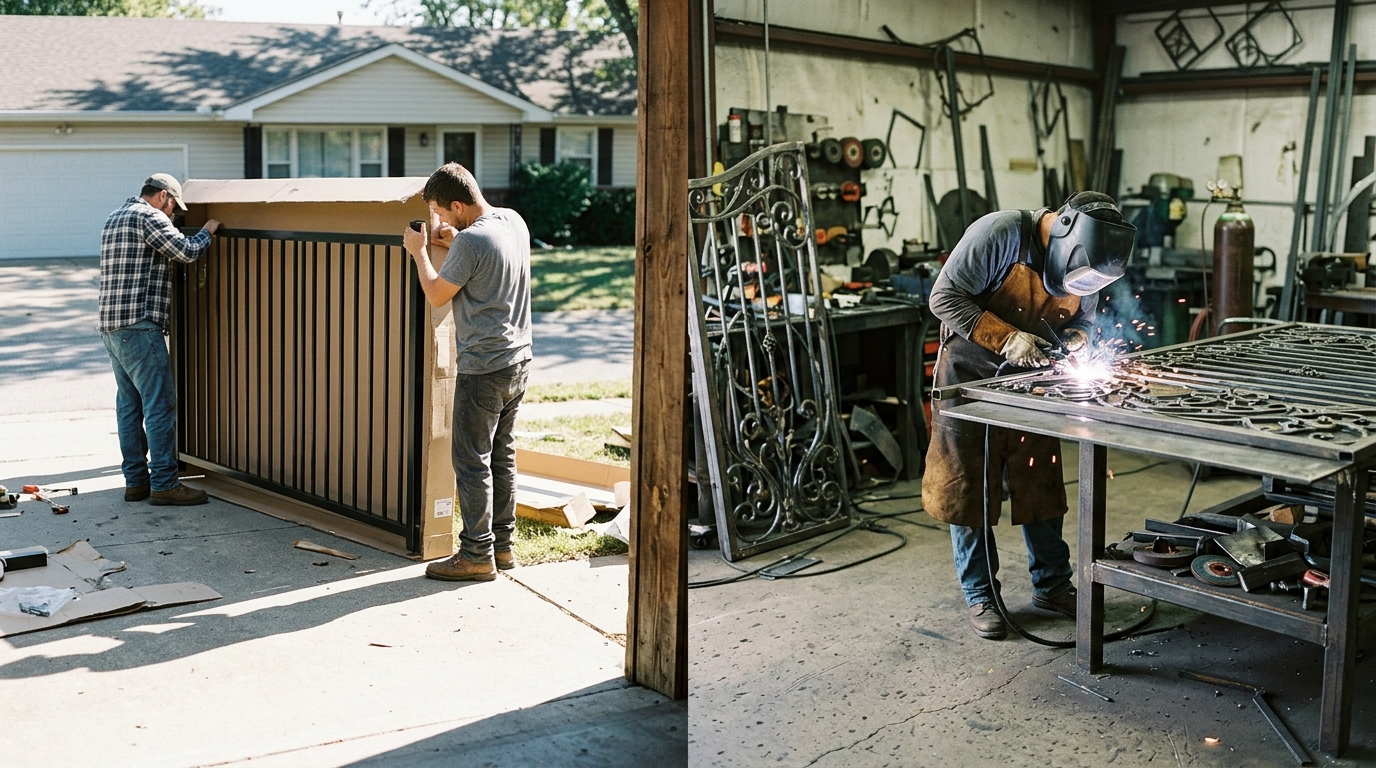
When you are planning your project, the first big decision involves choosing between a prefabricated gate and a custom architectural design. Prefabricated gates are usually kept in stock or manufactured in large batches, meaning they can often arrive at your property in just a few days or weeks. These off-the-shelf options are perfect if you are on a tight schedule and need to secure your driveway quickly. While you might have fewer style choices, the speed of delivery is a massive advantage for homeowners who want to start the physical installation process almost immediately.
If you have a specific vision for your home, a custom gate is likely the way to go, but you must account for a much longer lead time. These unique pieces are built from scratch to your exact specifications, which often requires six to fourteen weeks of fabrication time. This window allows for precise welding, specialized powder coating, and detailed quality checks that ensure your gate lasts for decades. I always tell my clients to view this period as an investment in their property value, even though it requires a bit more patience during the planning phase.
Understanding these timelines helps you coordinate other parts of your construction schedule, such as masonry work or electrical wiring. If you choose a custom design, you can use those three months of fabrication time to pull permits and get your HOA approvals in order. On the other hand, if you go with a prefab model, you need to have your utility lines marked and your installers ready to go right away. Matching your expectations to these manufacturing realities ensures that your project stays on track without any stressful surprises.
The physical installation is the most exciting part of the process because you finally get to see your vision come to life. For most custom projects, this stage typically takes between three and seven days depending on the complexity of your site. We start by digging deep concrete footings and setting the heavy duty posts in concrete to ensure everything is perfectly level. It is important to let that concrete cure properly so the gate stays straight for years to come. Once the foundation is solid, we hang the gate panels and make sure the swing or slide is smooth and balanced.
After the gate is physically in place, we focus our attention on the automation and safety features. This part of the timeline involves running electrical lines and mounting the motor that will do all the heavy lifting. I will spend time programming your remote openers, keypad codes, and any smartphone integrations you requested. We also take safety very seriously, so we carefully test the safety sensors and auto reverse functions to protect your vehicles and family. By the end of the week, your property will be secure and your new system will be ready for daily use.
Deciding on the right gate is the biggest factor in how quickly you can start using your new entrance. If you choose a prefabricated model, you can often wrap up the entire project in about three to five weeks. This path is perfect for those who want a quick security upgrade without a long wait for manufacturing. You will spend most of that time handling paperwork and waiting for utility lines to be marked before the quick one or two day installation.
Custom projects require a bit more patience but offer a tailored look that truly fits your property. Because these gates are built from scratch, you should plan for a total timeline of three to five months. The fabrication process alone can take up to fourteen weeks, so it is important to get your order in early. While the wait is longer, the result is a professional, high quality installation that meets your exact specifications and adds significant value to your home.
No matter which path you take, knowing these timelines helps you schedule your life around the construction. Most of the work happens behind the scenes during the planning and fabrication phases, meaning the actual disruption to your driveway is usually less than a week. Once your permits are in hand and the utilities are clear, you are just a few steps away from a more secure and beautiful property. Understanding the installation process ensures that you can move forward with confidence, knowing exactly what to expect as your new gate becomes a reality.
The total time can range from a single afternoon for a basic manual gate to several months for a custom automated system. Most of the time is actually spent on planning and waiting for custom parts rather than the physical labor. I recommend budgeting at least four to eight weeks for the average project from start to finish.
HOAs usually have specific rules about materials and designs that you must follow to avoid fines or being forced to remove the gate. Since these boards often meet only once a month, getting their green light can take two to four weeks. It is a vital step that ensures your new gate stays standing without any legal headaches.
Before I can dig any post holes, I have to make sure we will not hit gas, water, or power lines. You simply call 811 to have local crews come out and spray paint the ground. This free safety service typically takes two to four business days to complete.
Yes, because a custom gate has to be built in a shop before it ever reaches your driveway. This invisible work can add several weeks to your timeline depending on how busy the fabricator is. Once the gate is actually built and delivered, the physical installation usually goes quite quickly.
The best way to keep things moving is to submit your HOA and permit paperwork as early as possible. You should also have your design and materials picked out before you call for utility markings. Being prepared with your choices helps me avoid delays once the construction phase begins.
If the 811 markings show a line directly under your gate path, we may need to adjust the placement of your posts. This can add a few days to the planning stage as we find a new safe spot to dig. It is much better to find this out early than to accidentally hit a pipe during the install. Installing an Electric Gate in Los Angeles requires careful attention to these underground details to ensure a safe and efficient setup.
When you are ready to begin, a professional driveway gate installation will ensure that every technical detail is handled correctly from the start.
Dealing with a broken fence is more than just a headache; it’s a legal puzzle that can quickly turn into a costly dispute. Understanding rental property fence liability is essential because rules are shifting to favor stricter safety and habitability standards. Whether a storm blew a panel down or a tenant’s dog dug its way out, knowing exactly who is on the hook for repairs saves you time and stress.
Most people assume the landlord always pays, but the reality depends on how the damage happened and what your lease actually says. I’ve seen small cracks turn into big lawsuits simply because neither side knew their responsibilities before the wood started to rot. Keeping your property secure and your relationships friendly starts with clear, practical knowledge of where the fence line, and the liability, truly sits.
Distinguishing between natural wear and tear and tenant negligence is the first step in managing your property's security. As a landlord, you are generally on the hook for issues caused by aging materials, shifting soil, or typical weather exposure. If a wooden post rots over a decade or a gate hinge snaps from years of honest use, that falls under your maintenance budget. Keeping these boundaries secure is part of providing a habitable home, so I always recommend regular inspections to catch these small fixes before they become major liabilities. High-durability fencing can often minimize these long-term costs by standing up better to the elements than standard residential options.
The financial burden shifts toward the tenant when damage is the result of specific actions or a lack of care. If a tenant’s dog chews through the slats or a guest accidentally backs their car into a section of the fence, that is a clear-cut case of tenant liability. I often see issues where heavy items are leaned against a fence, causing it to lean or buckle over time. These situations are not considered normal wear and tear because they stem from misuse rather than the passage of time. It is helpful to clearly outline these expectations in your lease so everyone knows who pays when a pet or a party causes a problem.
Focusing on high-quality security fencing is one of the smartest ways to reduce these headaches for your rental business. While standard fences might fail under the pressure of active pets or heavy foot traffic, commercial-grade security options are built to take a beating. By investing in stronger materials, you significantly lower the chances of a tenant accidentally damaging the perimeter. This proactive approach keeps the property safe and reduces the number of awkward conversations about repair bills. When the fence is tough enough to handle daily life, you spend less time worrying about liability and more time growing your investment.
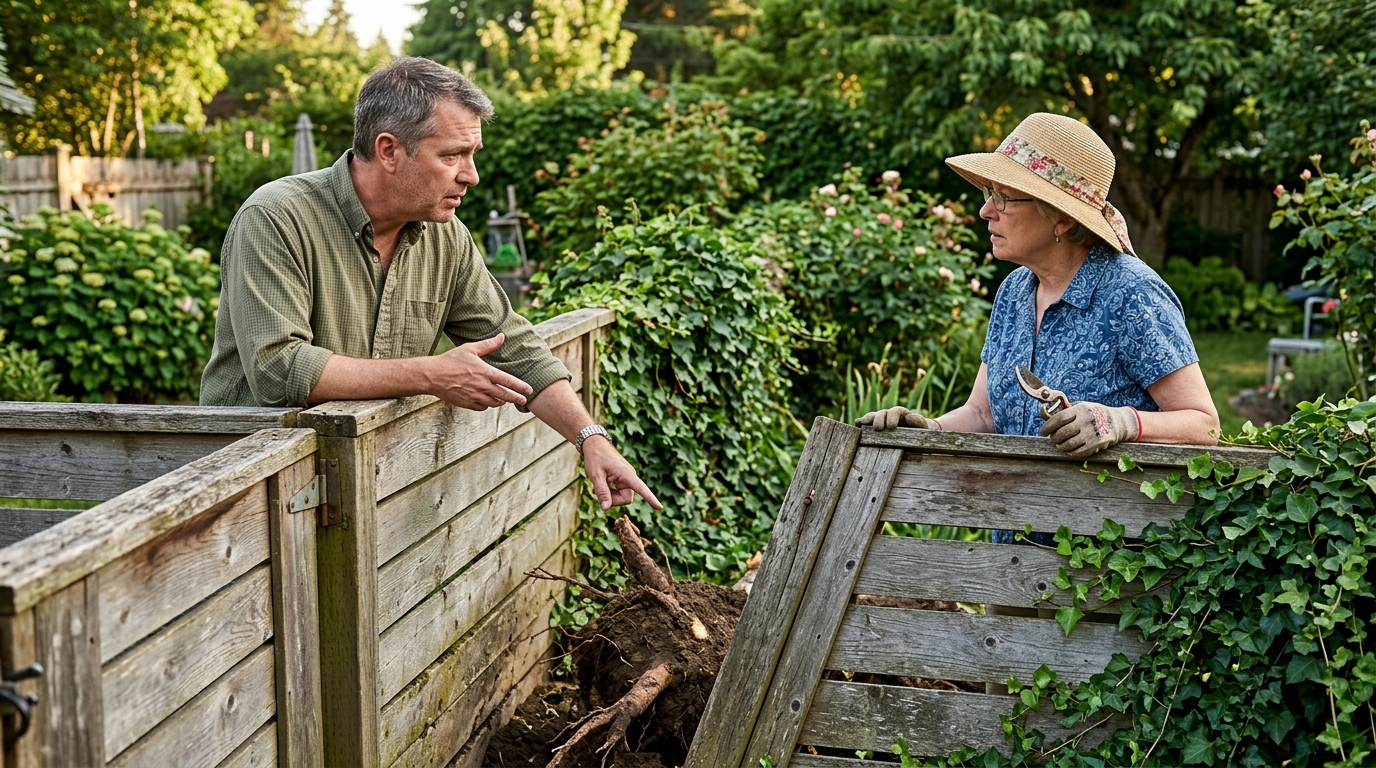
Managing shared boundary fences requires a clear understanding of local regulations. Many regional statutes generally presume that both property owners are equally responsible for the costs of maintaining or replacing a shared fence. As a landlord, this means you are usually on the hook for half the bill when a wooden fence begins to rot or lean. I always recommend keeping an open line of communication with your neighbor before any work begins. Providing a thirty day written notice with a detailed cost estimate is not just polite, it is often a legal requirement to ensure you can recover those shared expenses.
When you are looking at long term liability and security, the type of fencing you choose makes a massive difference for your rental business. While traditional wood is common, many property managers are moving toward high durability materials like reinforced steel or heavy duty aluminum to minimize legal risks. These robust options provide a clear physical barrier that prevents trespassing and protects you from habitability claims related to property security. Investing in a stronger fence might cost more upfront, but it significantly reduces the chances of expensive neighbor disputes or tenant injuries down the road.
Navigating these repairs without ending up in a courtroom comes down to being proactive and professional. I suggest documenting the current state of the fence with photos and getting multiple quotes to show your neighbor that the requested costs are fair. If a neighbor is hesitant to pay, remind them that a sturdy and attractive fence increases the property value for both of you. By focusing on high quality materials and clear written agreements, you can protect your investment while maintaining a positive relationship with the people next door. Keeping things friendly and transparent is always the best way to handle these shared property responsibilities.
Upgrading to commercial-grade security fencing is one of the smartest moves you can make to protect your rental business from legal headaches. While standard residential materials might look nice, they often lack the structural integrity needed to withstand heavy use or determined intruders. By choosing high-durability materials like reinforced steel or heavy-duty aluminum, you create a formidable physical barrier that significantly reduces the risk of unauthorized access. This proactive approach shows that you are taking your duty of care seriously, which can be a vital defense if a security issue ever arises. It also means you spend less time worrying about minor repairs and more time focusing on your property management goals.
I always tell my clients that meeting local safety codes is not just about passing an inspection, it is about total peace of mind. Strict ordinances for pool enclosures and property perimeters are there for a reason, and falling short can lead to massive liability if an accident occurs. Investing in professional-grade fencing ensures your barriers won't sag or break over time, keeping you in constant compliance with the latest habitability standards. These upgrades act as an insurance policy for your reputation, helping you avoid the costly fines and lawsuits that come with negligence. When your property is secured with top-tier materials, you send a clear message to tenants and the community that safety is your number one priority.
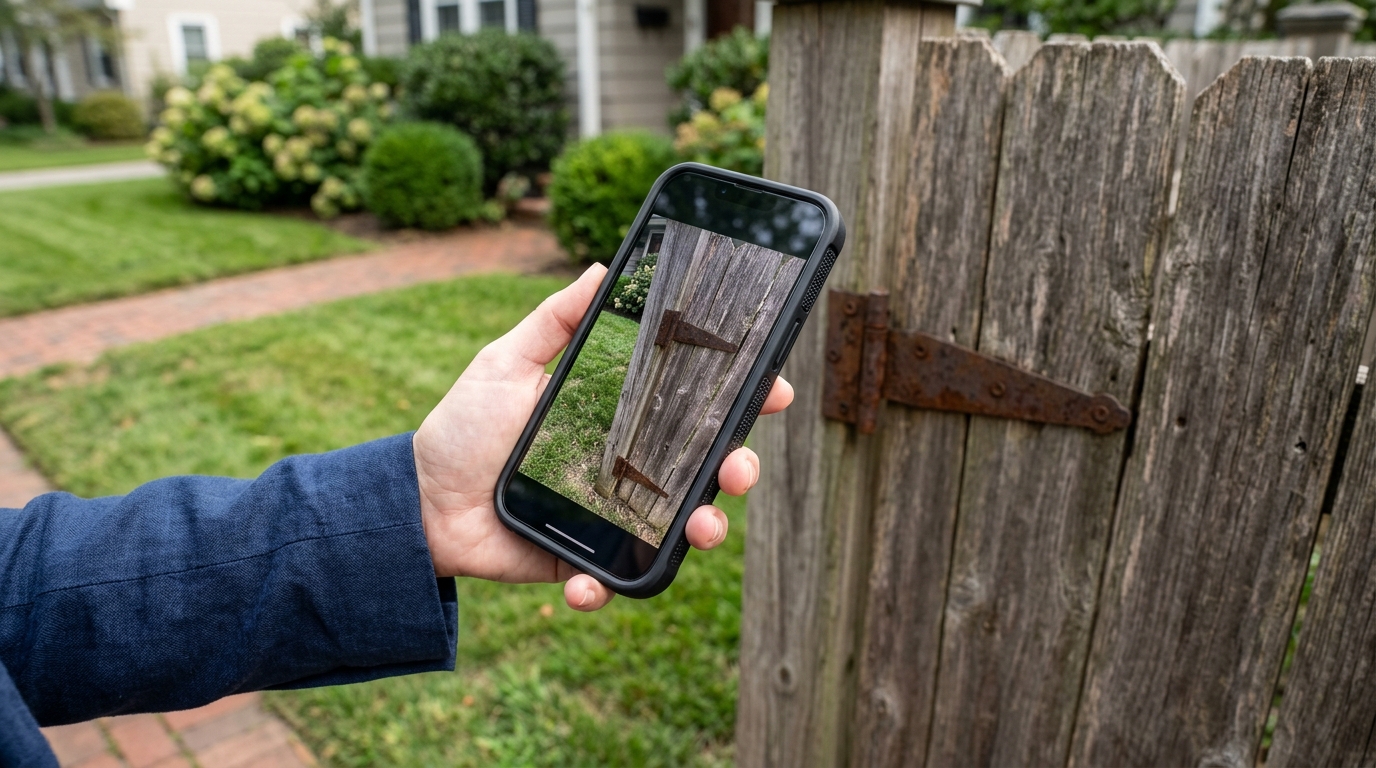
Protecting yourself from liability starts the very first day a tenant moves in. I always recommend using a detailed move-in checklist that specifically includes the fence, gates, and all locking hardware. Take clear, high-resolution photos of the entire perimeter to document that the structure is sturdy and the security latches are fully functional. When you and the tenant both sign off on the fence's condition, you create a solid paper trail. This document serves as your first line of defense if a security issue or damage claim arises later on.
Regular inspections are just as important as the initial walkthrough to keep your property safe. I make it a point to check the fence every few months for loose slats, rusted hinges, or signs of forced entry. If you spot a small issue during a routine visit, you can fix it before it turns into a major security risk or a legal headache. Keeping a simple log of these inspections shows that you are a proactive landlord who prioritizes safety. This consistent record proves you met your responsibility to maintain a secure environment for your tenants.
High-quality security fencing is a smart investment, but even the best materials need proper documentation. If a tenant's pet damages a panel or a guest hits the gate with a car, your records will clearly show the damage was not there before. Having this proof makes it much easier to hold the responsible party accountable for repair costs. It also helps you avoid disputes over wear and tear versus intentional damage. By staying organized with your paperwork, you protect your bottom line and ensure the property remains a secure place to live.
Ultimately, protecting your rental property comes down to being proactive rather than reactive. When you invest in high-quality, durable security fencing, you are doing more than just marking a boundary. You are building a physical barrier against potential lawsuits and safety hazards. By choosing materials that stand up to heavy use and harsh weather, you significantly lower the chances of a structural failure. This straightforward approach keeps your tenants safe and gives you peace of mind knowing your assets are well protected.
Regular maintenance checks are the secret to keeping your liability risks as low as possible. I always recommend walking the perimeter once or twice a year to catch small issues before they turn into expensive legal headaches. If you fix a loose post or a sharp edge today, you prevent a serious injury or a security breach tomorrow. This level of care shows your tenants that you value their safety and helps property managers avoid unnecessary disputes. Clear communication and solid materials are your best tools for a successful, low stress rental experience.
If a storm or heavy winds knock down a fence panel, the landlord is usually responsible for the repairs. Since weather damage is considered an act of nature and falls under general property maintenance, it is the owner's job to keep the perimeter secure. I always suggest fixing these issues quickly to keep the property safe and maintain a good relationship with your tenants.
When a tenant's dog chews through slats or digs under the fence, the repair costs fall on the tenant. This is considered damage beyond normal wear and tear because it was caused by their specific living situation. I recommend documenting the damage with photos and getting a clear repair estimate to show the tenant why they are being charged.
Yes, landlords are responsible for fixing fences that fail due to aging, rot, or shifting soil. These issues are part of everyday wear and tear that comes with owning a property over many years. Regular inspections help you catch a rotting post early so you can replace it before the whole fence collapses.
You certainly can because the tenant is generally responsible for the actions of their guests while on the property. Since hitting a fence with a vehicle is a clear case of negligence, the tenant or their guest's insurance should cover the fix. I find it best to handle these situations with a direct conversation and a copy of the repair bill.
If a tenant leans heavy items like wood or machinery against the fence and causes it to lean, they are liable for the damage. Fences are built to be boundaries, not storage supports, so this qualifies as improper use of the property. I suggest reminding tenants during move-in that the fence needs to stay clear of heavy weight to avoid extra charges.
The lease is the ultimate guide for who pays for what, so it is vital to have clear language about fence upkeep. Choosing the right Fencing For Rental Properties can be a money sucker for property owners, but the law usually requires landlords to handle structural safety. Before starting a repair, it is helpful to determine which fence is mine to ensure you are only maintaining your own legal assets. I always tell folks to double check their contracts to ensure there are no surprises when a board snaps. When planning long-term upgrades, you might wonder what type of fence is the most durable for your specific climate and property needs.
A wood fence is a big investment that adds privacy and charm to your home, but nobody wants to see that beautiful cedar or pine start to rot after just a decade. While the average fence usually lasts about 15 years, focusing on extending its life can actually double that time, keeping your yard looking great for 30 years or more. It all comes down to choosing the right materials and staying ahead of the weather before it has a chance to do any damage.
Think of your fence as a living part of your property that needs a little bit of love to stay strong against the elements. By using modern protective treatments and a few simple maintenance habits, you can stop rot and insects in their tracks. It does not take a professional crew or a massive budget to get these results. With a few practical steps, you can ensure your fence remains a sturdy, beautiful boundary for your family for decades to come.
Choosing the right wood species is the single most important decision you can make when planning a long term fence investment. I always recommend starting with naturally rot resistant options like cedar or redwood because they contain organic oils that repel insects and moisture. While these materials have a higher upfront cost compared to basic pine, they can easily last twenty five to thirty years with proper care. If you are debating whether to repair an old spruce fence or replace it entirely, switching to a premium species is usually the more cost effective choice over time. You will spend much less on repairs and premature replacements, making it a smarter financial move for your property.
The most common cause of fence failure happens right at the ground line where the wood meets the soil and moisture. To prevent this, I suggest using modern tools like steel posts or heavy duty ground line sleeves to create a barrier against rot. Steel posts are practically indestructible and eliminate the risk of your fence snapping during a heavy windstorm. If you prefer the look of traditional wood posts, protective sleeves act like a waterproof boot to keep the base dry and solid. These simple additions can double the life of your structure, ensuring your investment stays upright and beautiful for decades to come.
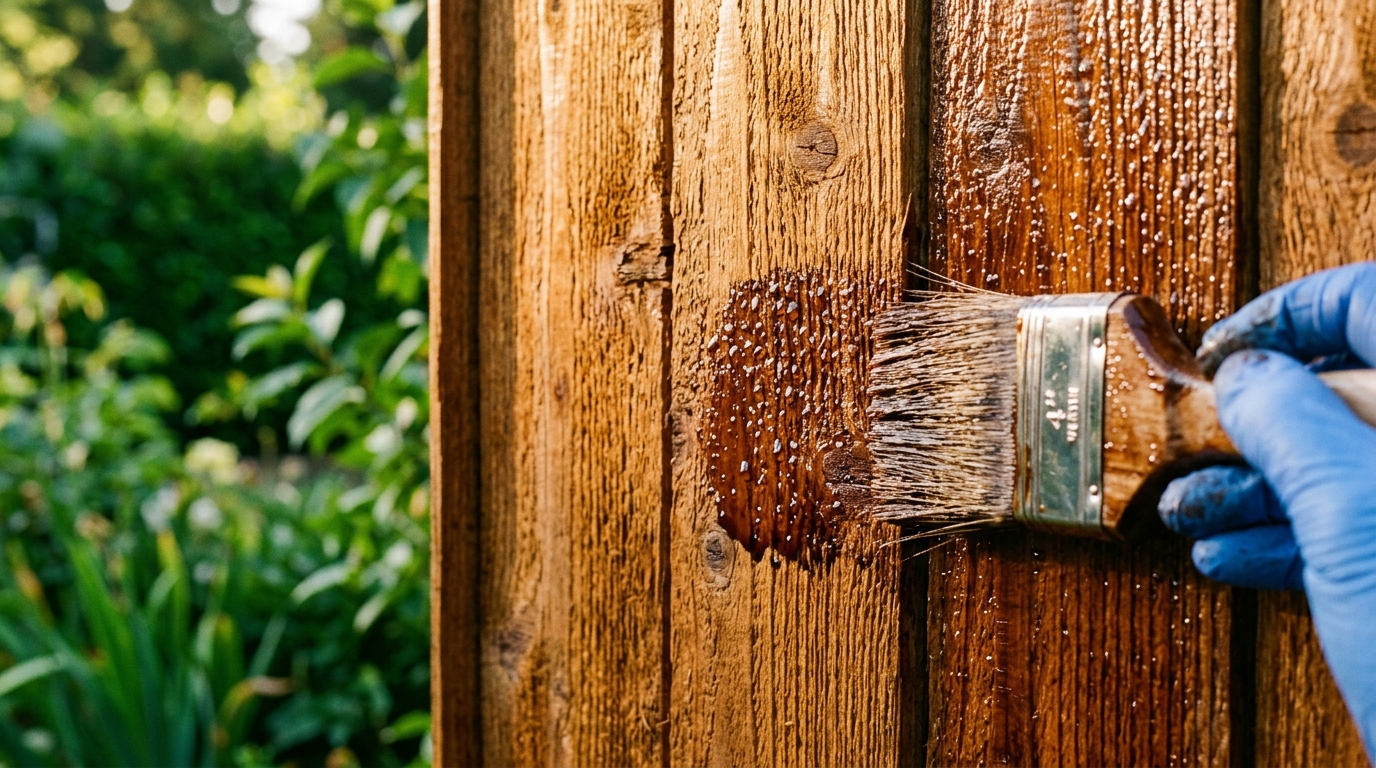
Think of a professional sealant as a high performance raincoat for your fence pickets. Without this protection, wood acts like a sponge, soaking up every rainstorm and morning dew until it begins to swell and warp. This constant cycle of getting wet and drying out is what causes the deep cracks and structural failures that force most homeowners into an early replacement. By applying a high quality stain, we create a durable moisture barrier that keeps moisture from penetrating the fibers. This simple step can easily push the lifespan of a standard cedar fence from fifteen years toward the thirty year mark.
Choosing to invest in professional sealing now is significantly more affordable than the cost of a full fence tear out and rebuild. When we apply these modern protective coatings, we are not just changing the color, we are actually stabilizing the wood on a cellular level. You will notice that water beads up and rolls off the surface instead of soaking in and causing rot. This proactive maintenance keeps your boards straight and your posts sturdy, saving you thousands of dollars in future construction costs. It is the most effective way to ensure your current investment stays beautiful and functional for decades to come.
Keeping your fence in top shape starts with a few simple habits that prevent moisture from settling into the wood. Every season, I recommend walking the perimeter to clear away wet leaves, mulch, or tall grass that has piled up against the bottom rails. When organic debris sits against the pickets, it creates a sponge effect that invites structural rot and wood-destroying insects. Taking ten minutes to sweep these areas clean can easily add several years to the life of your panels. It is one of those small chores that makes a massive difference in whether you are repairing a post or replacing the whole line.
You should also take a close look at your irrigation system to ensure your sprinklers are not giving your fence a daily soaking. Constant water exposure from a misplaced nozzle will strip away protective stains and cause the wood to warp or decay much faster than normal. I suggest adjusting your spray heads so they aim toward the lawn and away from the vertical boards. If you notice green moss or dark water stains forming, it is a clear sign that the wood is staying too damp. Catching these moisture issues early allows you to keep your current structure sturdy rather than shopping for a full replacement.
Regularly checking the hardware and gate alignment is the final step in a solid maintenance routine. Wind and settling ground can put extra stress on your posts, especially if the gates are dragging or the hinges are loose. I always tell homeowners to maintain a wood fence by tightening any sagging screws and ensuring the gate latches smoothly without forcing it. This prevents the weight of the wood from pulling the entire section out of alignment. By staying on top of these quick checks, you can confidently extend your fence's lifespan well toward that thirty year mark.
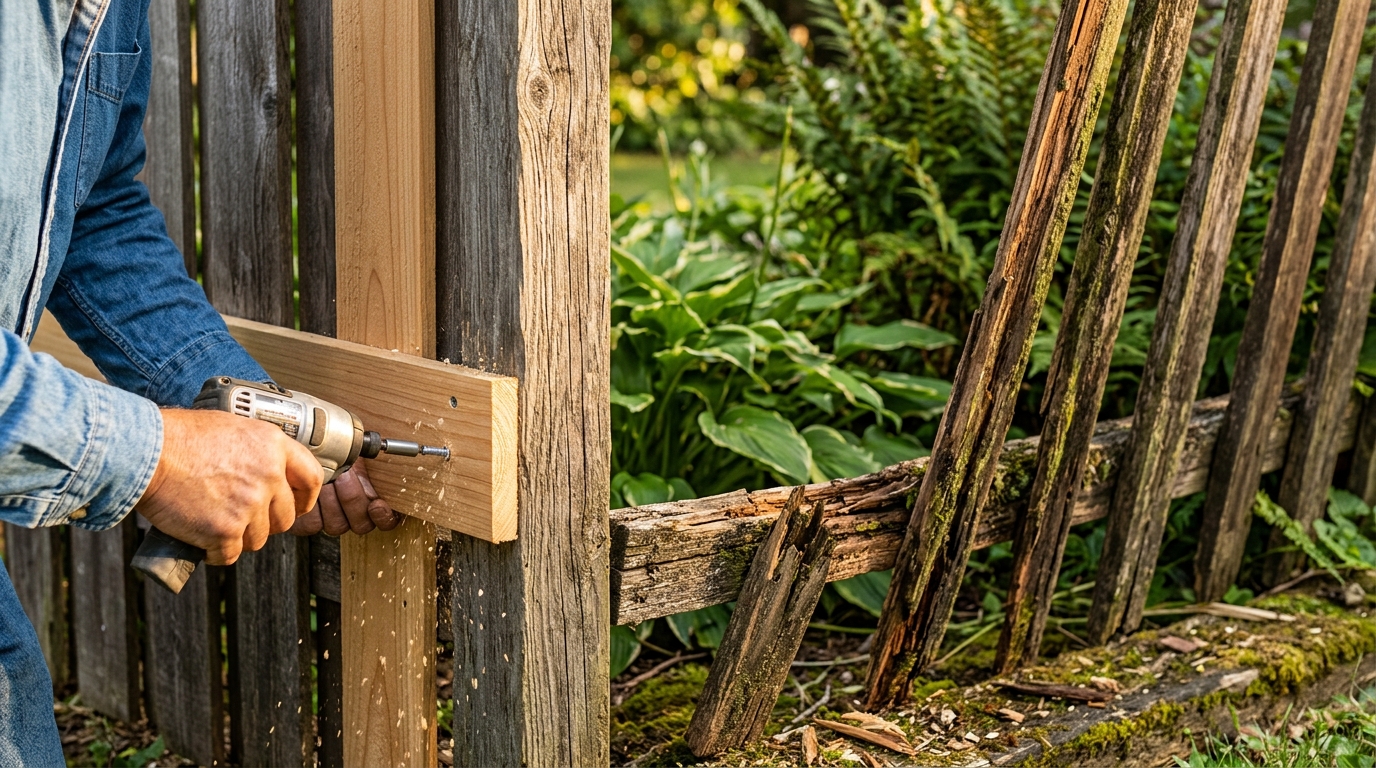
Determining whether to patch up your current fence or start fresh often comes down to the one third rule of thumb. If more than thirty percent of your fence panels or posts are showing signs of rot, sagging, or structural failure, the cost of individual repairs will quickly approach the price of a full replacement. Fixing a single rail or replacing a couple of pickets is a great way to save money in the short term, but these small fixes can become a repetitive cycle if the wood is reaching the end of its natural life. I always recommend looking closely at the support posts, because if the foundation is failing, no amount of surface repairs will keep the fence standing through another season.
Investing in a total replacement might feel like a big step, but it often makes the most financial sense when you consider the long term value of your home. A brand new install allows you to take advantage of modern protective technologies and high quality materials like cedar that can last up to forty years with the right care. You will save yourself the headache of constant weekend projects and the recurring costs of buying small batches of lumber and hardware. Choosing a full replacement also ensures a uniform look that boosts your curb appeal, which is something a patchwork of old and new wood simply cannot provide.
If you are still unsure about which path to take, take a moment to walk the entire perimeter and check the wood at the ground level. Wood that feels soft or crumbles when poked with a screwdriver is a clear sign that the internal structure is compromised beyond a simple fix. While I love helping homeowners extend the life of their fences through strategic maintenance, I also want to make sure you are not throwing good money after bad. We can look at your specific situation together to see if a few targeted repairs will do the trick or if it is time to stain a wood fence that will protect your privacy for the next three decades.
Deciding whether to patch up your old fence or start fresh is a big choice, but the numbers show that consistent care is always worth the effort. By staying on top of modern staining and sealing, you can nearly double the life of your wood from fifteen years to over twenty-five years. This proactive approach saves you thousands of dollars in replacement costs and keeps your property value high. Think of your fence as a living part of your home that needs a little love to stay strong against the elements. Taking these steps now ensures your investment remains a beautiful and functional part of your yard for decades to come.
If you are looking at your current fence and wondering how long does a wood fence last, remember that a sturdy frame is often worth saving. Most wood fences can be revitalized with a deep clean and a fresh coat of high quality sealant, even if they look a bit weathered. However, if you are seeing widespread rot or structural leaning, it might be time to discuss a more durable replacement using modern pressure treated materials. I am here to help you weigh those options and find the most cost effective solution for your specific situation. Let’s make sure your backyard stays private, secure, and looking its absolute best.
While a standard fence usually lasts about 15 years, you can actually double that time with the right care. By choosing durable materials and staying on top of maintenance, I have seen fences stay strong and beautiful for 30 years or more.
I always recommend going with cedar or redwood because they have natural oils that fight off rot and bugs. These premium woods might cost a bit more upfront, but they save you a fortune in repairs and replacements over the long run.
Most fences fail right at the ground line where the wood sits in damp soil and starts to rot. To stop this, I suggest using steel posts or heavy duty sleeves to keep the wood away from direct moisture.
If you are constantly fixing an old spruce fence, it is usually smarter and cheaper to replace it with a rot resistant species. You will spend much less time and money on upkeep when you start with a high quality wood like cedar.
You definitely do not need a professional crew or a huge budget to keep your fence in great shape. With some simple maintenance habits and modern protective treatments, you can easily handle these tasks yourself.
The best way to fight the elements is to use modern protective sealants and keep a close eye on any signs of wear. Think of your fence as a living part of your yard that just needs a little consistent love to stay sturdy for decades.
When you’re looking to secure a business or a busy complex, understanding commercial gate opener pricing is about more than just checking a price tag. It’s easy to assume the size of your gate is the main cost driver, but the real factor is how often that gate needs to move every single day. While a basic unit might look like a bargain, a high-traffic site needs a rugged system that won’t burn out under pressure.
You can expect to see equipment costs range anywhere from $2,500 for a standard apartment complex to over $8,000 for a heavy-duty industrial hub. My goal is to help you find that sweet spot where your hardware matches your daily workload so you aren't paying for repairs down the road. Investing in the right duty cycle now ensures your facility stays secure and your traffic flows smoothly without any unexpected headaches.
When you are budgeting for a new gate system, the biggest price driver isn't always the weight of the gate itself but how often it needs to open and close every day. For a small office or a quiet HOA with limited daily traffic, a light commercial opener usually costs between $1,200 and $2,500. These units are great for low-volume spots where the motor has plenty of time to cool down between uses. If you try to save money by putting a light-duty motor at a busy apartment complex, you will likely end up spending more on repairs and early replacements. It is much better to match the equipment to your actual traffic flow from the start.
For high-traffic locations like large business parks or distribution centers, you really need a heavy-duty industrial hub system that can handle constant cycles without breaking a sweat. These robust operators typically range from $4,500 to over $8,000 for the hardware alone because they are built with high-grade components meant for continuous use. While the upfront cost feels higher, these systems are designed to last for years under intense pressure. I always tell my clients that investing in a higher tier now prevents the headache of a gate that gets stuck during rush hour. Picking the right duty cycle ensures your entry point stays reliable and your maintenance costs stay low.
The style of your gate also plays a role in the final equipment price you will see on your quote. Generally speaking, commercial slide gate operators tend to be a bit more expensive than swing gate arms due to the heavy-duty chains and internal gear systems they require. If you are looking at specialized high-security sites that need anti-climb features or high-speed opening, those total packages can jump into a much higher price bracket. Always keep in mind that these estimates cover the motor and basic hardware, so you should leave a little extra room in your budget for professional installation. Taking the time to understand these price tiers helps you make a smart investment that keeps your property secure.
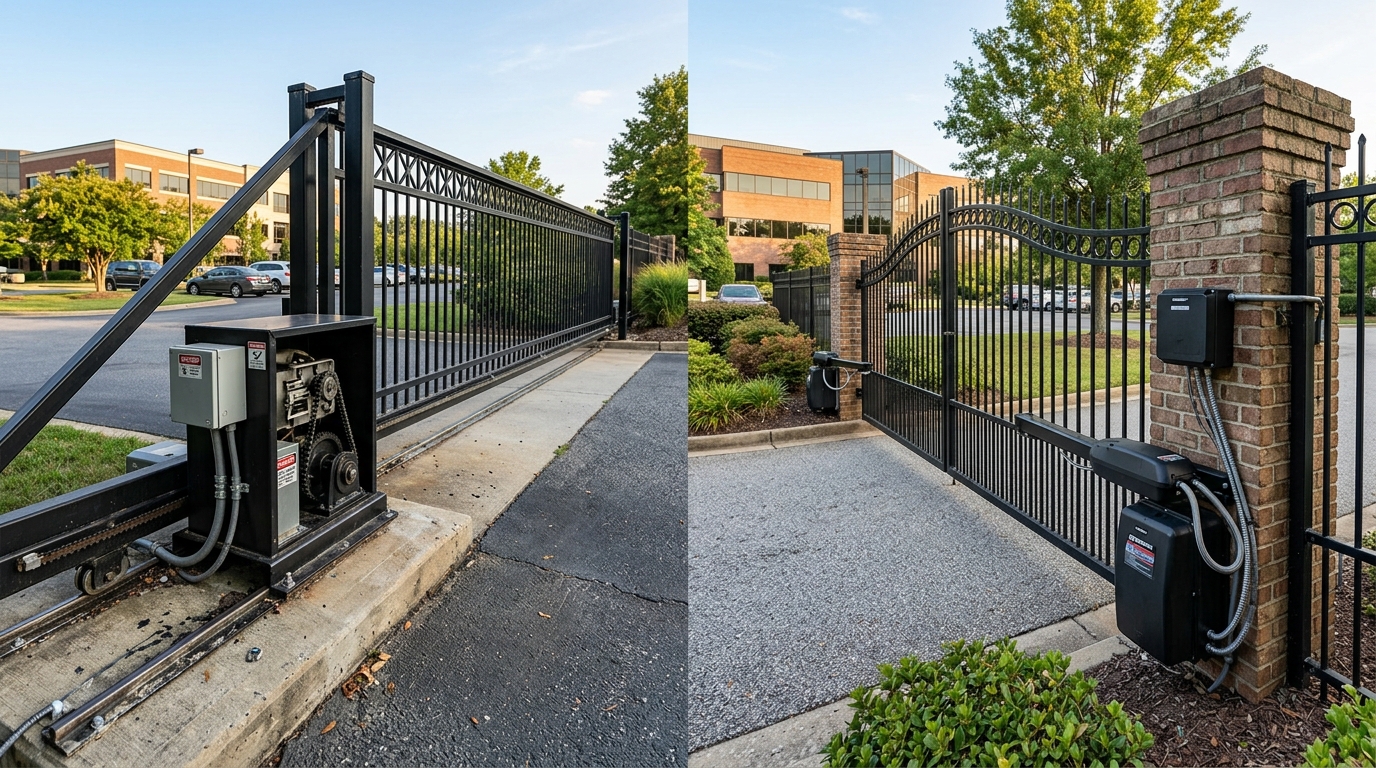
When you are weighing the costs between slide and swing gate operators, the first thing to consider is the mechanical demand of the movement itself. Slide gate motors generally sit at a higher price point because they have to pull the entire weight of the gate along a track, often requiring more torque and heavy-duty internal gearing. For a standard commercial setting, you can expect the equipment for a slide system to start around 2,500 dollars and climb quickly if you need high-speed functionality. These units are built to handle the constant friction and debris that come with ground-level tracks, which is why the hardware is a bit more of an investment upfront.
Swing gate operators offer a different pricing structure because they often come in pairs for double-entry points, which can drive up your total equipment cost. While a single light-duty swing arm might seem more affordable, a true commercial-grade setup designed for high-traffic business parks usually lands in the 2,500 to 4,500 dollar range. You also have to think about the space involved, as swing gates require more powerful hydraulic or electromechanical arms to fight wind resistance during the opening cycle. Choosing between the two often comes down to your property layout, but keep in mind that the more complex the movement, the more you will likely spend on the motor.
Regardless of which motion you choose, the duty cycle is the real factor that dictates where you fall on the pricing scale. A heavy-duty industrial slide operator for a logistics hub can easily reach 8,000 dollars because it is designed to run hundreds of times a day without overheating. Swing gates for high-security yards face similar price jumps when you add in the structural reinforcements needed for anti-climb features. I always tell my clients to focus on how many times that gate will move each hour rather than just the length of the frame. Investing in a motor that matches your traffic volume will save you from expensive repairs and early replacements down the road.
When you are budgeting for a commercial gate system, the labor costs can vary significantly depending on whether you are upgrading an old motor or starting from scratch. For a straightforward motor replacement on an existing, functional gate, you can generally expect to pay between $750 and $1,500 in professional labor fees. This process is usually quicker because the concrete pads, electrical wiring, and gate tracks are already in place and ready to go. My best advice is to ensure your current gate hinges and rollers are in perfect shape before the new operator is installed. If the hardware is binding or dragging, it will burn out your expensive new motor much faster than it should.
Starting a brand-new site setup is a much larger undertaking that requires a higher investment in specialized labor. For these comprehensive installations, professional installation fees often range from $2,500 to $5,000 or more depending on the complexity of the project. This price covers the heavy lifting like trenching for high-voltage power lines, pouring reinforced concrete mounting pads, and installing safety loops in the pavement. You are also paying for the expertise required to program complex access control systems and integrate safety sensors that prevent accidents. A professional crew will ensure the entire system meets local building codes and safety standards for high-traffic areas.
The total price of your installation will ultimately depend on how much infrastructure is already available at your entry point. If a technician needs to run electrical conduit several hundred feet from your building to the gate, the labor costs will naturally climb toward the higher end of the scale. I always recommend getting a detailed site survey to identify any underground obstacles or power requirements before the work begins. Investing in a quality professional installation up front saves you from the headache of frequent repairs and downtime later on. A well-installed system keeps your business running smoothly and ensures your property stays secure around the clock.
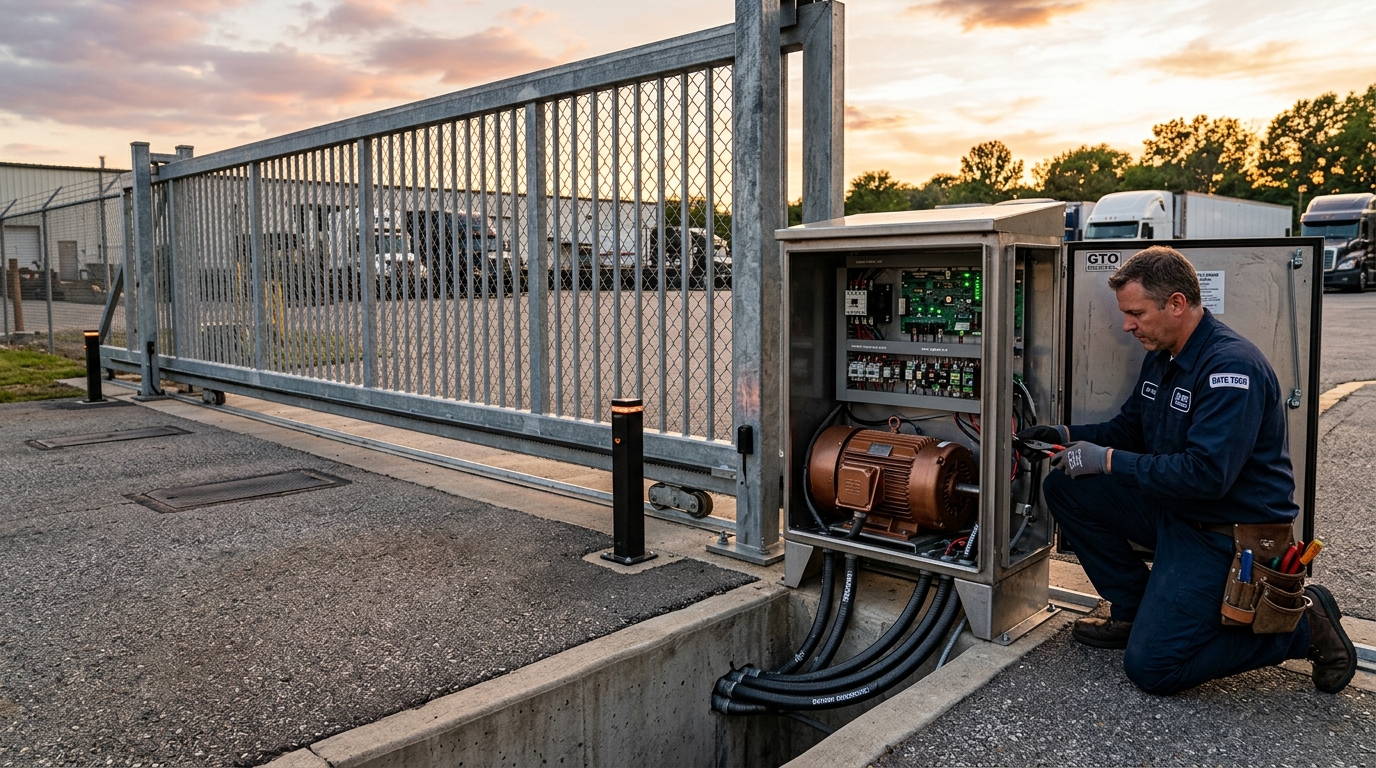
When you look at the base price of a commercial gate operator, it is easy to forget that the motor is just one piece of the puzzle. To keep your property safe and compliant with modern standards, you will need to budget for essential safety sensors like photo eyes or sensing edges. These components prevent the gate from closing on vehicles or pedestrians, which protects you from costly liability and equipment damage. Depending on the size of your entry, adding these safety layers can add several hundred or even a few thousand dollars to your total bill. I always recommend prioritizing these features because skipping them often leads to much higher expenses down the road.
Beyond safety, the way your team or tenants actually enter the property will impact your final investment. Keypad access, proximity card readers, and telephone entry systems are popular choices that vary significantly in price. You might want a simple code based system for a small office or a sophisticated cloud based setup for a large apartment complex. High traffic sites often benefit from long range transmitters or smartphone integration to keep traffic flowing smoothly during rush hour. These convenience features ensure your gate works for you rather than becoming a bottleneck for your daily operations. Understanding the benefits of having a fence at your commercial business alongside an automated gate helps you create a complete security perimeter.
Finally, I want to remind you that your initial purchase is only the beginning of the system's lifecycle. High traffic commercial gates undergo immense stress, so setting aside a budget for routine preventative maintenance is a smart business move. Regular checkups can catch worn chains or failing batteries before they cause an expensive emergency breakdown. I suggest factoring in the cost of a biannual service plan to extend the life of your operator and protect your investment. Taking care of the small things now prevents the big, budget breaking repairs that happen when a system is neglected.
Investing in a commercial gate opener is really about protecting your time and your bottom line. While it is tempting to choose a lighter system to save on those initial equipment costs, a motor that is underpowered for your traffic volume will likely fail within a year or two. I always recommend looking at your daily cycle count first to ensure you are buying for your actual needs rather than just the gate's weight. Spending a bit more upfront for a standard or heavy duty unit usually pays for itself by avoiding constant repair calls and frustrated tenants.
You should also keep in mind that the price tag on the box is only one part of the total investment. Professional installation and integrated access controls, like keypads or smartphone entry, add a layer of security that protects your property long after the bill is paid. Installing a high-quality electric gate in Los Angeles or any busy metropolitan area ensures your system will run smoothly for years with just basic seasonal maintenance. When comparing different Gate Openers, take the time to choose a reliable unit that fits your specific traffic flow, and you will have one less thing to worry about as a property manager.
For most standard commercial setups like apartment complexes, you are looking at equipment costs starting around $2,500. If you run a heavy duty industrial site with constant traffic, those high end systems can reach $8,000 or more for the hardware alone.
I really advise against cutting corners on the motor size because a light duty unit will burn out quickly under heavy use. You might save money today, but you will end up paying much more in frequent repairs and early replacement costs down the road.
While the weight and size of your gate matter, the actual daily traffic volume is the biggest price driver. We look at the duty cycle to make sure the motor can handle how many times it opens and closes without overheating.
For a quiet HOA or a small office with limited daily visitors, a light commercial opener usually costs between $1,200 and $2,500. These units work perfectly when the motor has enough time to cool down between each cycle.
Industrial systems cost between $4,500 and $8,000 because they use high grade components designed for continuous use. These rugged machines are built to work all day long at distribution centers or large hubs without breaking a sweat.
The goal is to find the sweet spot where your hardware perfectly matches your daily workload. Investing in a system with the right duty cycle now ensures your traffic flows smoothly and prevents those annoying, unexpected headaches later.
Choosing the right perimeter for your home is a big decision, and lately, it usually comes down to the classic debate of vinyl vs iron fencing. You want something that looks great and keeps your family safe, but you also have to think about your weekend schedule and your wallet. I’ve seen many homeowners struggle with this choice because while one offers total privacy, the other provides a level of timeless strength that is hard to beat.
I always tell my friends to look past the initial price tag and think about how much work they want to do ten years from now. Vinyl is fantastic if you want to set it and forget it with just a quick rinse every spring. On the other hand, iron and its modern metal cousins are the gold standard for security and can easily last a lifetime if you give them a little love. It really comes down to whether you prioritize a secluded backyard retreat or a sturdy, ornamental boundary that stands the test of time.
When you are looking to turn your backyard into a personal sanctuary, vinyl privacy fencing is usually the first choice I recommend. These solid panels act like a wall for your property, blocking out neighbors and keeping your kids or pets tucked safely out of sight. Since the material is non-porous and colored all the way through, you won't have to worry about staining or painting it every few years. It is a fantastic option if you want to set it and forget it while enjoying a quiet afternoon in total visual privacy. A simple rinse with a garden hose is usually all it takes to keep these panels looking brand new for decades.
On the other hand, iron and steel fencing offer a level of raw strength and classic beauty that vinyl just cannot match. While you lose the visual privacy of a solid panel, you gain an incredibly tough perimeter that is nearly impossible to break through. This open design is perfect if you have a beautiful view you want to preserve or if you need to keep a close eye on the street for security reasons. Modern metal fences are treated to resist the elements, so they can stand tall through extreme heat and freezing winters without warping or cracking. It is a premium investment that adds a high-end, sophisticated look to any home while providing unmatched peace of mind.
Choosing between the two really comes down to whether you value a hidden retreat or a fortified boundary. If you have a pool or live on a busy corner, the total coverage of vinyl helps your space feel much more intimate and relaxed. However, if your main goal is to create a permanent, high-security barrier that lasts for a century, the weight and durability of iron are the way to go. I often tell homeowners to think about their long-term goals and how much time they actually want to spend on maintenance. Both materials are top-tier choices, but they serve very different lifestyles and practical needs.
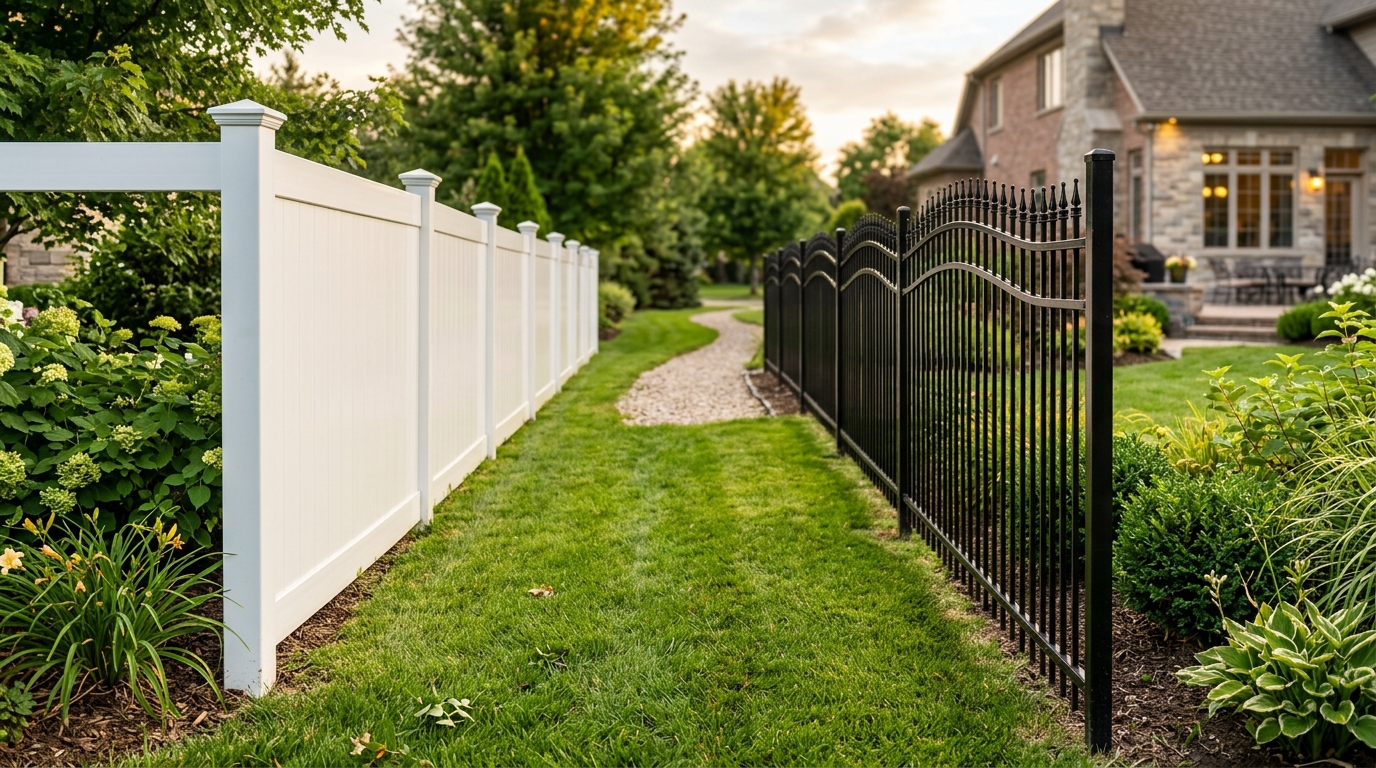
When you look at the initial price tag, vinyl fencing is almost always the more budget friendly option for homeowners today. You can expect to pay significantly less per linear foot for a high quality vinyl fence installation compared to ornamental iron or steel. This makes vinyl a fantastic choice if you want to secure a large perimeter without breaking the bank right now. It provides immediate curb appeal and privacy for a fraction of the investment required for metal alternatives. For many families, the upfront savings allow for other backyard upgrades like landscaping or a new patio.
Iron fencing sits at a much higher price point, but it is truly a "buy it once" investment that can last for a century. While vinyl is durable and handles moisture well, it can eventually become brittle or warp under extreme weather conditions over several decades. Iron or steel products are built to withstand the elements and provide a level of security that synthetic materials simply cannot match. If you plan on staying in your home for the long haul, the higher initial cost of metal actually balances out over time. You won't be looking at a full replacement in thirty years, which saves you a massive amount of money in the future.
Choosing between these two materials really comes down to your personal timeline and how you view long term value. Vinyl is the king of low maintenance and keeps your costs low today, which is perfect for most residential needs. However, if you want something that your grandchildren might still see standing, the premium price of iron pays for itself through sheer longevity. I always tell my clients to consider how long they plan to live on the property before making the final call. Both options add great value to your home, so it really depends on whether you prefer immediate savings or a permanent architectural feature.
If you are looking for the ultimate "set it and forget it" option, vinyl fencing is going to be your best friend. I always tell my clients that maintenance for PVC is as simple as grabbing your garden hose on a sunny afternoon. You just need to give it a quick rinse every few months to knock off any dust, grass clippings, or dirt that might have splashed up. Because the color is baked right into the material, you never have to worry about scraping off old flakes or applying a fresh coat of paint. It is a fantastic choice if you want a beautiful perimeter without adding more chores to your weekend to-do list.
Wrought iron and steel fences offer unmatched structural strength, but they do require a little more hands-on attention to stay in top shape. I recommend doing a quick walk-around once or twice a year to check for any small chips in the finish or signs of surface rust. If you catch a scratch early, a tiny bit of touch-up paint is usually all it takes to keep the barrier looking sharp and professional. While it takes more effort than vinyl, this routine care is what allows metal fencing to last for a century or more. Most of my customers find that the extra security and timeless look are well worth the occasional afternoon of maintenance.
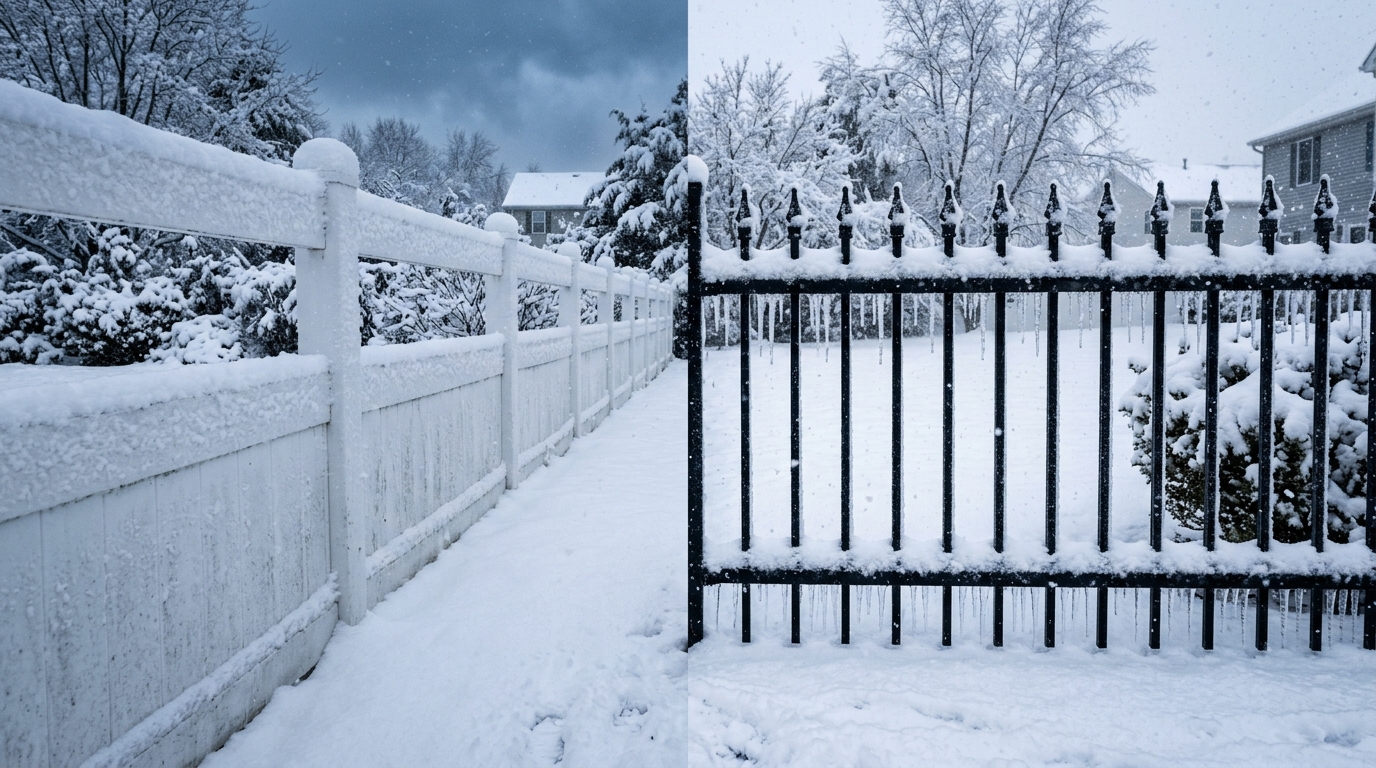
When you are dealing with a climate that swings from humid summers to freezing winters, vinyl fencing really shines as a moisture-resistant champion. I love recommending vinyl for homeowners who are tired of dealing with rot, peeling paint, or warped wood after a rainy season. Because it is non-porous, it will not soak up water or harbor mold, and modern UV inhibitors keep it from turning yellow in the sun. It is the ultimate "set it and forget it" option if you want a fence that looks just as clean after a decade of storms as it did on day one. You can simply spray it down with a garden hose to remove any dirt or debris that accumulates during the changing seasons.
On the other hand, if your property sits in an open area where heavy wind loads and extreme temperature spikes are the norm, iron fencing is virtually unbeatable. While vinyl can occasionally become brittle in deep freezes or sag under intense heat, iron stays perfectly rigid and secure regardless of the thermometer reading. The weight and strength of metal mean it will not rattle or buckle when those high-speed gusts come whipping through your yard. It offers a level of structural integrity that gives you total peace of mind during severe weather events. Even though it requires a bit more check-up to prevent rust and corrosion, its ability to stand firm against the elements is why it remains the gold standard for long-term durability.
Choosing the right fence ultimately comes down to how you plan to use your outdoor space and what kind of long-term commitment you want to make. If your main goal is to create a private sanctuary where the kids can play without the neighbors watching, vinyl is your best bet. It offers that classic, clean look and requires almost zero effort to keep it looking new year after year. You will save money on the initial installation, which makes it a fantastic high-value choice for most residential backyards. This material is perfect for busy homeowners who want to set it and forget it while enjoying a beautiful perimeter.
On the other hand, iron and high-quality steel are the clear winners if you are prioritizing security and a timeless, ornamental style. These materials are built to last a century, making them a smart investment for property owners who want the ultimate level of durability. While the upfront cost is higher, you are paying for a fence that can withstand extreme weather and provide a level of protection that plastic simply cannot match. If you do not mind a little bit of touch-up work over the decades to prevent rust, the strength and elegance of metal are truly unmatched.
I generally recommend vinyl for anyone looking for a balance of privacy and affordability without the headache of ongoing chores. It is the modern standard for a reason, especially since today's high-grade PVC is much tougher than the versions from years ago. However, if you are securing a commercial property or a luxury estate where the fence needs to be a permanent architectural statement, why choose wrought iron fence for your home? Think about your daily life and how much time you want to spend on maintenance before you make your final call. Both options are excellent upgrades that will significantly boost your property value for years to come.
Vinyl is the clear winner for privacy because the solid panels act like a wall for your property. It blocks the view from neighbors and keeps your backyard feeling like a secluded sanctuary. Iron has an open design that is beautiful, but it will not keep people from seeing into your yard.
Vinyl is a great choice if you want to set it and forget it. It is non-porous and the color goes all the way through, so you never have to paint or stain it. A quick rinse with a garden hose every spring is usually all you need to keep it looking brand new.
Iron and steel are the gold standard when it comes to raw strength and keeping your home secure. It is incredibly tough and nearly impossible to break through compared to other materials. If you want a sturdy perimeter that stands the test of time, iron is your best bet.
Vinyl is very durable and can last for decades without showing much wear and tear. Since it does not rot or rust, it stays looking fresh with very little effort on your part. It is a smart long-term investment for homeowners who want to avoid heavy weekend chores. A vinyl privacy fence installation is a great way to ensure your yard stays protected and beautiful for years.
Modern metal fencing is built to be very hardy, but it does require a little love to stay in top shape. You may need to touch up the finish occasionally to prevent rust and keep it looking classic. If you give it that small amount of attention, an iron fence can easily last a lifetime.
It really comes down to whether you prioritize a private backyard retreat or an ornamental boundary with maximum strength. Think about your schedule and whether you prefer a quick hose-down or a more hands-on approach to maintenance. Both are excellent choices, so pick the one that fits your lifestyle and your vision for your property.
Choosing the right barrier for your property is a big decision, and you want something that looks great without becoming a weekend chore. I always tell folks that the real secret to a long-lasting perimeter lies in the finish, which is why understanding powder coated fence benefits is so important. Unlike standard paint that just sits on the surface, this coating is thermally bonded to the metal, creating a tough armor that won't chip or peel when the weather gets rough.
Think of it as a permanent shield that keeps your investment looking brand new for decades. You get a fence that stands up to harsh sun and freezing temperatures without the constant need for sanding or repainting. It is the most practical way to get a high-end look that actually lasts twenty to thirty years. You are not just putting up a boundary; you are choosing a low-maintenance solution that saves you time and money in the long run.
The magic of powder coating really comes down to how it is applied and cured onto the metal surface. I always tell my clients to think of it as a flexible suit of armor rather than just a layer of paint. During the process, an electrostatic charge pulls the dry powder onto the metal so it wraps around every corner and crevice perfectly. Then, the fence goes into a high heat oven where that powder melts and fuses into a solid, continuous shield. This thermal bonding ensures the finish won't peel or flake off like traditional liquid paint often does after a few seasons.
This unique bonding process is exactly why powder coated fences are such a smart investment for homeowners near the coast. Salt air and humidity are normally a nightmare for metal, but this thick coating creates a non-porous barrier that is blocking salt air and humidity from reaching the core material. Because the finish is cured at such high temperatures, it remains flexible enough to expand and contract as the weather changes without cracking. You are essentially paying for peace of mind because you won't have to spend your weekends sanding down rust spots or repainting the pickets every few years.
When you look at the long-term value, a high-quality powder finish easily justifies its slightly higher upfront cost. These fences are designed to stay looking brand new for twenty or thirty years with almost zero maintenance. You get a surface that is incredibly difficult to scratch or chip, even if the kids are playing nearby or the lawnmower kicks up a stray rock. It is a one-time solution that protects your property and your wallet by eliminating the need for constant repairs. Choosing a finish that meets professional durability standards is the best way to ensure your fence stays beautiful and strong for decades to come.
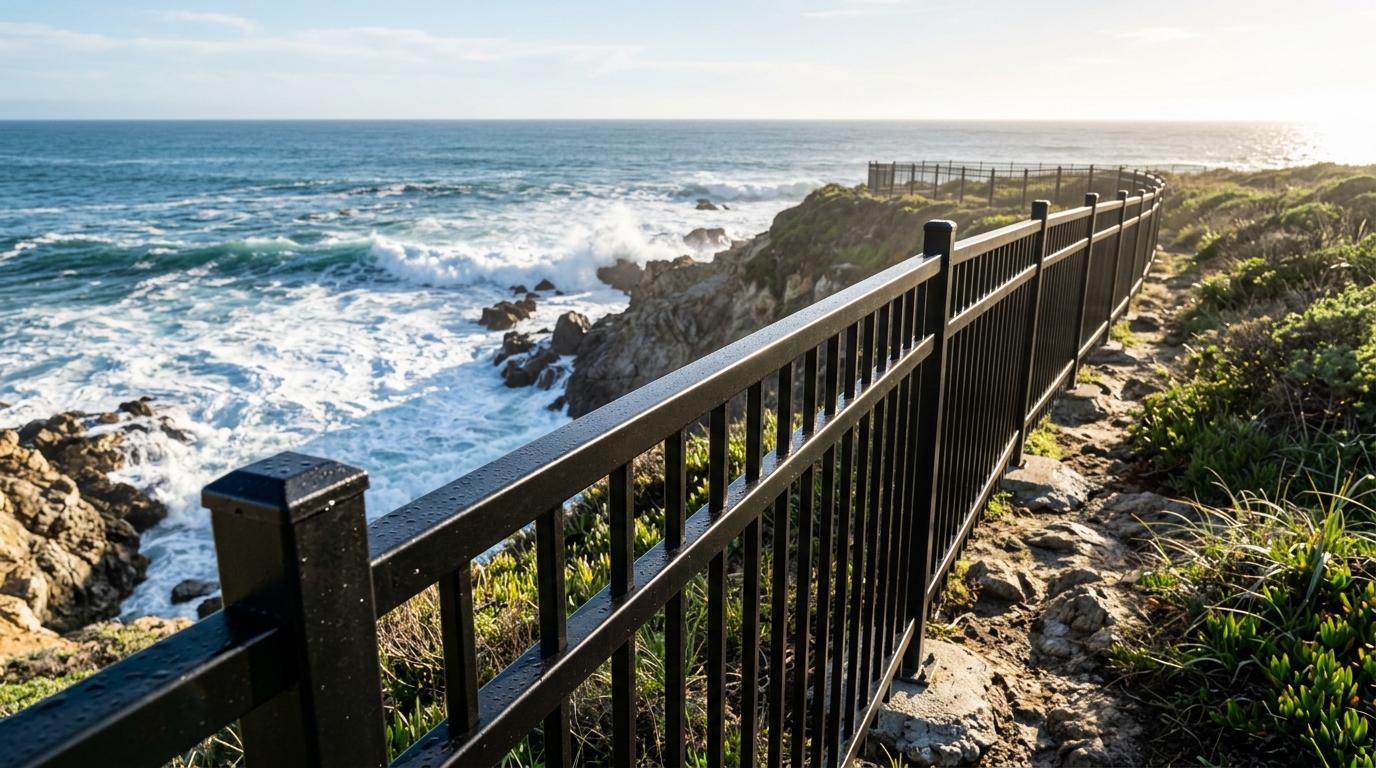
Living near the coast is a dream, but the constant spray of salt air can be a nightmare for standard metal fences. If you have ever seen a fence start to bubble, peel, or turn white and chalky, you are looking at the effects of salt crystallization and harsh UV rays. High-tier powder coating acts as a heavy-duty shield that is thermally bonded to the metal, creating a surface that is much tougher than traditional paint. This process ensures that the salt cannot find a way to the raw metal underneath, which effectively stops rust before it can even start. Investing in a premium finish now means you are protecting your property from the corrosive environment that usually destroys lesser materials in just a few years.
The real value of a high-quality powder finish is the massive amount of time and money you save on maintenance. Instead of spending your weekends sanding down rust spots or repainting faded sections, you can simply rinse your fence with fresh water to keep it looking brand new. These coatings are specifically engineered to handle intense sun exposure without losing their color or structural integrity. A fence treated with these standards can easily last twenty to thirty years, making the initial cost a smart long-term investment in your home's curb appeal. It is the best way to ensure your barrier stays strong and beautiful despite the relentless coastal weather.
One of the best things about choosing a powder coated fence is that you can finally say goodbye to the endless cycle of sanding and repainting. Unlike traditional liquid paint that tends to flake or peel after a few seasons, this finish is thermally bonded to the metal to create a thick, flexible armor. I have seen these fences stand up to harsh coastal salt air and intense sun for decades without losing their luster. You are essentially making a one-time investment that pays for itself by eliminating the cost of maintenance supplies and professional painters. It is a huge relief to know your property will look sharp year after year with nothing more than an occasional rinse from a garden hose.
Beyond the financial savings, I really appreciate how this process protects our local environment and your family's health. Traditional paints are often packed with volatile organic compounds, or VOCs, which release harmful vapors into the air during application and as they dry. Powder coating is a dry process that contains no solvents, meaning there are zero toxic emissions to worry about. Because the coating is so durable, you also avoid the risk of paint chips or lead-based flakes leaching into your soil or groundwater. It is the perfect choice if you want a high-performance barrier that is as kind to the earth as it is to your wallet.
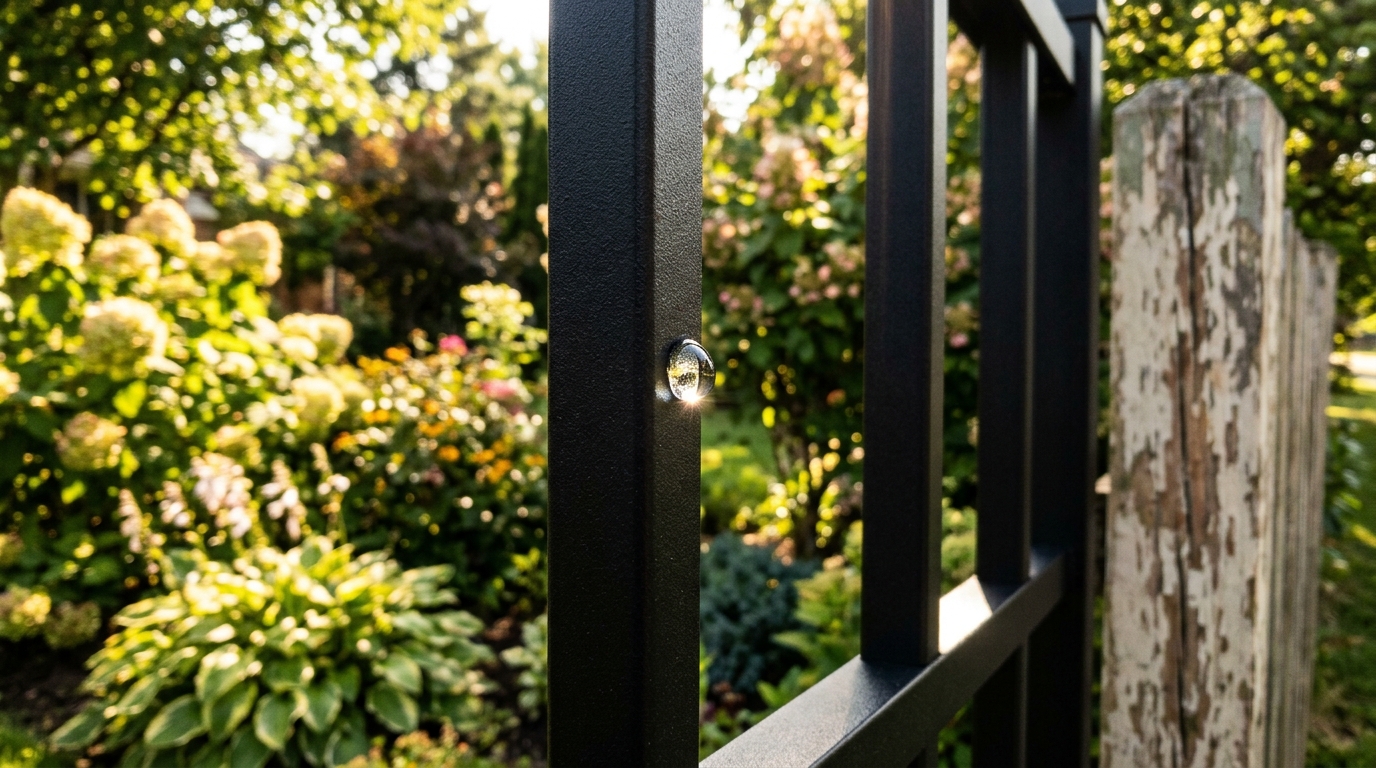
When you look at the price tag for a professional powder finish, it is easy to focus only on that initial investment. However, the real value becomes clear when you realize this coating acts like a thermal bonded suit of armor for your metal. While traditional liquid paint might save you a few dollars today, it often begins to peel or fade within just a few years, especially in harsh environments. Powder coating is designed to last twenty to thirty years because it is literally baked onto the surface. This means you are paying for decades of protection rather than just a temporary cosmetic fix.
If you live in a coastal area with salt air or a region with intense sun, durability is your best friend. These high-quality finishes are specifically formulated to resist the UV rays and moisture that cause standard fences to rust and crumble. You will find that the maintenance costs practically disappear because you are not spending every other weekend sanding down rust spots or repainting sections. Instead of a recurring chore, your fence becomes a one-time project that stays looking new year after year. When you divide that upfront cost over a twenty-five-year lifespan, it is easily the most durable choice you can make.
Choosing this finish is ultimately about peace of mind and long-term savings. You are protecting the structural integrity of your property while ensuring your curb appeal never takes a hit. It is much more expensive to tear out and replace a rusted fence in ten years than it is to do it right the first time with a professional coating. I always tell homeowners to think of it as an insurance policy for their backyard. You get a beautiful, low-maintenance barrier that stands up to the elements and keeps your hard-earned money in your pocket over the long haul.
Choosing a powder coated fence is truly a set-it-and-forget-it decision that pays off for decades. While the initial cost might be slightly higher than basic paint, the long-term return on your investment is undeniable. You are essentially buying peace of mind because this finish acts like a flexible suit of armor for your metal. It resists the chipping and scratching that usually leads to rust, especially if you live in a coastal area with salty air. You won't have to spend your weekends sanding down flakes or repainting sections just to keep it looking decent.
The lasting curb appeal of this finish comes from its incredible ability to stand up to harsh sunlight and weather. Because the powder is thermally bonded to the metal, it stays vibrant and smooth for twenty to thirty years without the chalking or fading seen with liquid paints. I always tell homeowners that why choose wrought iron fence for your home is often answered by the durability of these professional finishes. You can simply enjoy your yard knowing your perimeter is protected by a high-performance barrier. It is a practical, straightforward solution that keeps your home looking its best while saving you money on repairs down the road.
Unlike regular paint that just sits on the surface, powder coating is thermally bonded to the metal in a high-heat oven. This creates a tough suit of armor that won't chip, peel, or flake off when the weather gets rough. You get a much more durable finish that stays looking brand new for decades.
You can expect a high-quality powder coated fence to last anywhere from twenty to thirty years. Because the finish is so resilient, it protects the underlying metal from rust and wear much longer than traditional coatings. It is a long-term investment that truly stands the test of time.
Not at all, and that is the best part about it. You can skip the weekend chores of sanding and repainting because the finish is designed to be permanent. A simple rinse with a garden hose every now and then is usually all you need to keep it looking sharp.
It is actually the smartest choice for coastal homes because the coating is non-porous. It creates a thick barrier that keeps salt air and humidity from reaching the metal core. This prevents the corrosion and rust that usually destroy fences in salty environments.
Powder coating is built to stand up to harsh UV rays without losing its luster. The thermal bonding process helps the color stay vibrant even in intense heat and sun. You won't have to worry about your fence looking dull or washed out after a few summers.
I always tell folks that it saves you a lot of money and frustration in the long run. Since you won't be buying paint or hiring help for repairs every few years, the fence eventually pays for itself. You are choosing a low-maintenance solution that protects your property and your wallet. If you are ready to upgrade your property, you can request a free estimate to see how affordable a professional finish can be.
When you're managing a home, a sturdy fence does more than just mark a boundary; it provides privacy and peace of mind for your tenants. Understanding rental property fencing requirements is essential since rules often vary by city and state. While you usually aren't forced to build a new fence, you are legally responsible for keeping any existing structures safe and upright under the warranty of habitability.
Think of your fence as a key part of the property’s safety toolkit that needs regular check-ups just like your plumbing. A leaning post or a jagged board isn't just an eyesore, it’s a liability that could lead to accidents or neighbor disputes. Keeping things in good repair protects your investment and ensures your tenants feel secure in their space. Most of the time, staying compliant is as simple as staying on top of wear and tear before it becomes a major project.
When it comes to managing multi-family units or long-term rentals, pool safety is a legal necessity to protect your business. Most state statutes require a perimeter fence that stands at least four feet high, though some local codes may demand even more height to prevent climbing. You need to ensure there are no gaps or horizontal rails that could act as a ladder for small children. Keeping these barriers in top shape is part of your duty to maintain a habitable and safe environment. By meeting these height standards, you significantly reduce your liability and keep your tenants safe from preventable accidents.
The gate is the most important part of your pool enclosure and requires the most frequent inspections. To stay compliant with safety laws, every gate must be self-closing and self-latching so it never accidentally stays propped open. The latch mechanism should be placed high enough that a toddler cannot reach it from the ground. I always recommend testing these gates regularly during your routine property walkthroughs to ensure the springs haven't lost their tension. A gate that fails to latch properly is a major red flag that could lead to serious legal complications.
Staying on top of these specific requirements helps you operate as a professional housing provider. It is much easier to invest in high-quality, compliant fencing now than to deal with the fallout of a safety violation later. Clear communication with your tenants about pool area rules also helps maintain the integrity of the hardware you have installed. Remember that while tenants are responsible for their guests, the structural integrity of the safety barrier always rests on your shoulders. Keeping your property up to code is the best way to ensure long-term success and peace of mind.
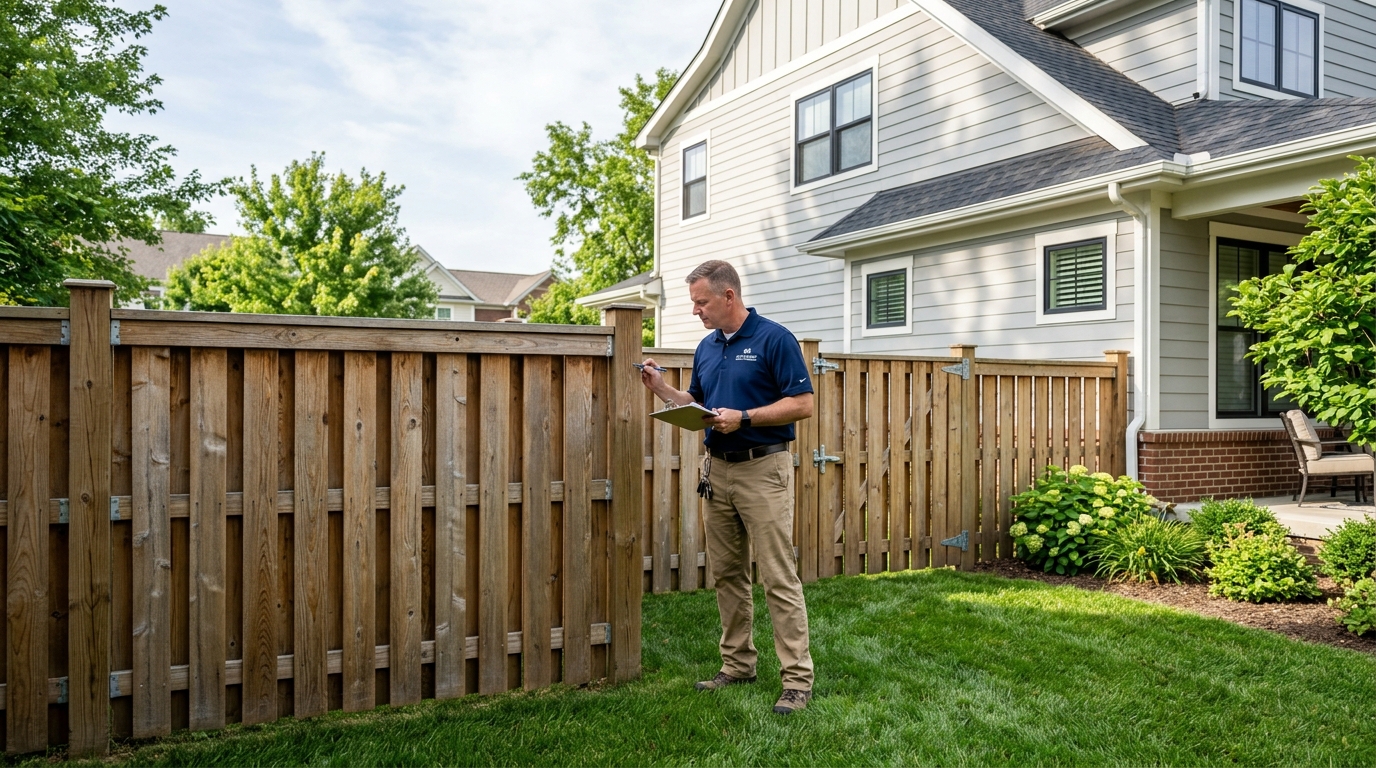
Maintaining a rental property means keeping the structure safe and functional to meet standard warranty of habitability laws. As a landlord, you are generally responsible for any repairs that arise from natural aging or standard wear and tear. If a fence starts to lean because the posts are rotting or a storm knocks down a panel, it falls on you to fix it promptly. A broken fence is more than just an eyesore since it can quickly become it’s a liability or a safety hazard for your tenants. Taking care of these structural issues early helps you avoid legal headaches and keeps your property value high.
Distinguishing between routine maintenance and tenant negligence is a key part of managing your overhead costs. While you handle the effects of wind and sun, your tenants are typically responsible if they or their guests cause direct damage. For example, if a tenant accidentally backs their car into the fence or allows a pet to chew through the pickets, you can usually charge those repair costs back to them. I always recommend documenting the condition of the fence during move-in and move-out inspections to make these conversations much easier. Clear communication about these expectations helps maintain a professional relationship while protecting your investment.
Local municipal codes often dictate the specific height and material requirements for any fencing you install on your lot. Some areas even have laws that require you to share maintenance costs with the person owning the property next door. Staying on top of these local rules ensures that your property remains compliant and avoids any unnecessary fines from the city. Keeping your perimeter secure and well maintained shows your tenants that you care about their safety and the quality of their home. By staying proactive with your repairs, you create a better living environment and reduce the risk of long term structural problems.
Before you dig any post holes, you need to check in with your local building department to see what the rules are for your specific area. Most municipalities have strict height limits, usually capping backyard fences at six feet and front yard fences at three or four feet to keep sightlines clear for drivers. Since you are managing a rental property, staying within these limits is vital for avoiding fines and ensuring your property remains fully compliant with city codes. I always recommend pulling a quick permit if required, as this protects your investment and proves you followed the law if a dispute ever arises. Keeping things by the book now will save you a lot of headaches and potential liability issues down the road.
Dealing with property lines can be tricky, but understanding local laws makes the process much smoother for landlords. In many states, the law assumes that both you and your neighbor share equal responsibility for maintaining and paying for a fence that sits on the property line. It is a good idea to have a friendly chat with the neighbor before you start construction to discuss the style and share the estimated costs. This proactive approach helps prevent boundary disputes and ensures that the financial burden of a new fence is distributed fairly. Clear communication keeps the neighborhood happy and ensures your rental property stays secure without causing unnecessary friction.
Maintaining a sturdy fence is also a key part of your responsibility to provide a safe and habitable environment for your tenants. A leaning or broken fence is more than just an eyesore, it is a serious liability risk that could lead to injuries or security breaches. I suggest performing regular inspections of the fence posts and panels to catch rot or damage before it becomes a major structural problem. If you are unsure which fence is mine or yours, consult your property survey before performing repairs. If the damage is caused by normal wear and tear, the cost of the repair generally falls on you as the property owner. By staying on top of these small fixes, you keep your tenants safe and protect the long term value of your rental units.
Staying ahead of fence maintenance is one of the smartest moves you can make as a property manager to protect your bottom line. By conducting regular, proactive inspections, you catch small issues like loose boards or leaning posts before they turn into major safety hazards or code violations. Knowing how to properly maintain a fence ensures you meet habitability standards and keeps your tenants safe from potential accidents. This simple habit helps you avoid the stress of sudden legal headaches and keeps your property looking professional. It is much easier to tighten a few screws today than it is to deal with a liability claim or a costly emergency replacement later on.
Investing in your fencing does more than just check a compliance box, it actively preserves the long-term value of your investment. When researching fencing for rental properties, you'll find that a well-maintained fence boosts curb appeal and gives residents a sense of security that makes them want to stay longer. When you show that you care about the structural integrity of the property, you attract higher-quality tenants who are more likely to respect the home. Consistent upkeep also prevents minor wear and tear from spiraling into structural failures that require massive capital outlays. Ultimately, a little bit of foresight goes a long way in keeping your rental business profitable and your community thriving.
In most cases, you aren't legally forced to install a brand new fence if one doesn't exist. However, you are responsible for keeping any current structures safe and upright under the warranty of habitability. Think of it as a key part of your property’s safety toolkit that needs regular check-ups.
Most state laws require a pool perimeter fence to be at least four feet high, though some local codes might ask for more height. You must ensure there are no horizontal rails that a child could use as a ladder to climb over. Meeting these standards is a legal necessity to protect your business and your tenants.
To stay on the right side of the law, every pool gate must be self-closing and self-latching. The latch needs to be high enough that a toddler cannot reach it from the ground. I recommend testing these gates often since they are the most critical part of your safety enclosure.
You should check your fencing just as often as you check your plumbing or roof. Look for leaning posts or jagged boards before they turn into a major liability or a neighbor dispute. Staying on top of wear and tear keeps your investment protected and your tenants feeling secure.
A broken or unstable fence is more than an eyesore, it is a safety hazard that falls under your duty to provide a habitable environment. Keeping your barriers in good repair reduces your liability and prevents accidents. It is much easier to fix a loose board now than to deal with a legal issue later.
No, the latch must be a specific self-latching mechanism that secures itself every time the gate swings shut. It is vital that the gate never stays propped open by accident. Always make sure the hardware is sturdy and out of reach of small children to ensure full compliance.
If you’re looking to turn your backyard into a private oasis without breaking the bank, you’ve probably noticed that traditional wood or vinyl can get expensive fast. I’ve found that looking into the bamboo privacy screen cost is a smart move because it offers a high-end, eco-friendly look for a fraction of the price of hardwood. It’s a versatile solution that works whether you're starting from scratch or just want to spruce up an old chain-link fence.
You can generally expect to pay between $6 and $22 per linear foot for materials, depending on the thickness and color you choose. If you decide to bring in a pro for the installation, those total costs usually land between $10 and $30 per linear foot. My goal is to help you understand exactly where your money goes so you can plan a project that fits your budget and looks great for years to come.
When you are planning out your budget for a bamboo privacy screen, you can generally expect to spend between 1,500 and 4,500 dollars for a standard backyard project. This range covers about 150 linear feet of fencing, which is a common size for most residential lots and accessory dwelling units. If you decide to handle the assembly yourself, your material costs will likely fall between 6 and 22 dollars per linear foot depending on the thickness and color of the poles you choose. I find that this is a fantastic, eco-friendly way to get a modern look without the heavy price tag of high-end hardwood or composite materials.
Professional installation adds a layer of convenience and polish to the project, typically bringing the total cost to 10 to 30 dollars per linear foot. This price usually includes the labor for securing the panels and all the necessary mounting hardware to ensure the screen stays sturdy against the wind. While doing it yourself saves money, hiring a pro can be worth it if you are attaching the bamboo to a tricky surface or need a perfectly level finish. I always suggest weighing the time you have available against the labor costs to see which path fits your lifestyle best.
The type of bamboo you select plays a major role in where you land on the pricing scale. Rolled bamboo is often the most budget-friendly choice because it is easy to transport and quick to install over existing chain link or wooden fences. If you are looking for a more structural or premium aesthetic, solid bamboo panels or live bamboo planters will naturally sit at the higher end of the market rates. No matter which style you pick, you are investing in a sustainable material that offers a much softer and more natural feel than traditional vinyl or metal options.
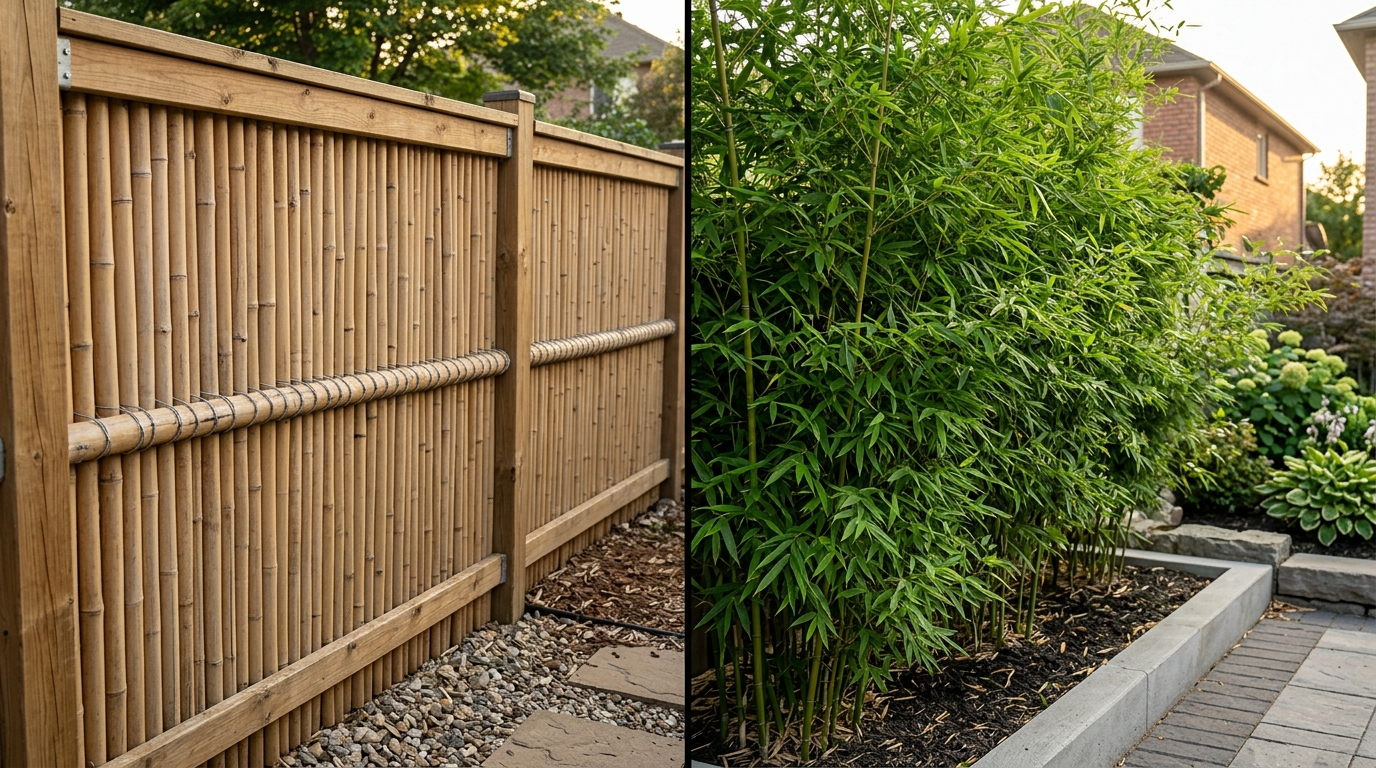
If you are looking for an immediate solution that won't break the bank, rolled bamboo fencing is your best bet for a quick privacy upgrade. This material typically costs between $6 and $22 per linear foot, making it a budget-friendly alternative to expensive hardwood or vinyl. It is incredibly easy to install by simply attaching the pre-wired rolls to an existing chain link or wooden fence. You get instant coverage the moment you finish the project, which is perfect for property owners or renters who need privacy right now. While it is the most affordable upfront, keep in mind that these natural poles will eventually weather and may need replacement every few years.
Live clumping bamboo offers a premium, eco-friendly look but requires a larger initial investment and a bit of patience. You will generally pay more for high-quality nursery plants, often ranging from $50 to $150 per container depending on the size and species. While the material cost per foot is higher than rolled options, these plants create a permanent, self-renewing wall of green that adds significant value to your property. You also have to consider the privacy fence cost of soil amendments, irrigation, and perhaps a root barrier to keep everything contained. It is a long-term play for homeowners who want a sustainable, modern aesthetic that grows more beautiful over time.
Choosing between the two really comes down to whether you value your time or your wallet more in the short term. Rolled bamboo is the clear winner for those who want a weekend DIY project with a predictable, low price tag. Live screens are better for those who view their backyard as an investment and don't mind waiting a season or two for the plants to fill in. Both options provide a much more natural and sustainable feel than traditional fencing materials. By weighing these costs against your specific timeline, you can create a private oasis that fits your budget perfectly.
If you are looking for the most budget-friendly way to add privacy to your home or backyard, natural Tonkin bamboo is your best bet. This standard light-tan variety is incredibly popular because it offers a clean, organic look without breaking the bank. On average, you can expect to pay on the lower end of the price scale, often between six and twelve dollars per linear foot for materials. It is a fantastic choice for DIYers who want a sustainable, modern aesthetic while keeping their initial investment low. While it is affordable, keep in mind that these natural poles may lighten over time if they are not treated with a UV-resistant sealer.
For those who want a more sophisticated or modern appearance, carbonized bamboo and rare black varieties are excellent premium upgrades. Carbonization involves a heat treatment process that undergoes a chemical change to turn the sugars in the wood a deep, rich brown. This process adds a layer of durability and price, typically pushing your material costs toward the higher end of the twenty-dollar range. If you really want to stand out, natural black bamboo offers a stunning dark chocolate hue that looks incredible against modern landscaping. These specialty colors definitely cost more upfront, but they provide a high-end designer look that traditional wood or vinyl simply cannot match.
Deciding between these options usually comes down to your long-term vision for the space and your current project budget. I always recommend thinking about how the color will complement your existing structures, like a new patio deck. While the natural tan is a classic and cost-effective winner, the heat-treated and darker varieties often require less frequent staining to maintain their deep tones. Investing a bit more now in a premium color can save you effort later and instantly boost your property's curb appeal. No matter which path you choose, you are getting an eco-friendly privacy solution that feels much more custom than a standard hardware store fence.
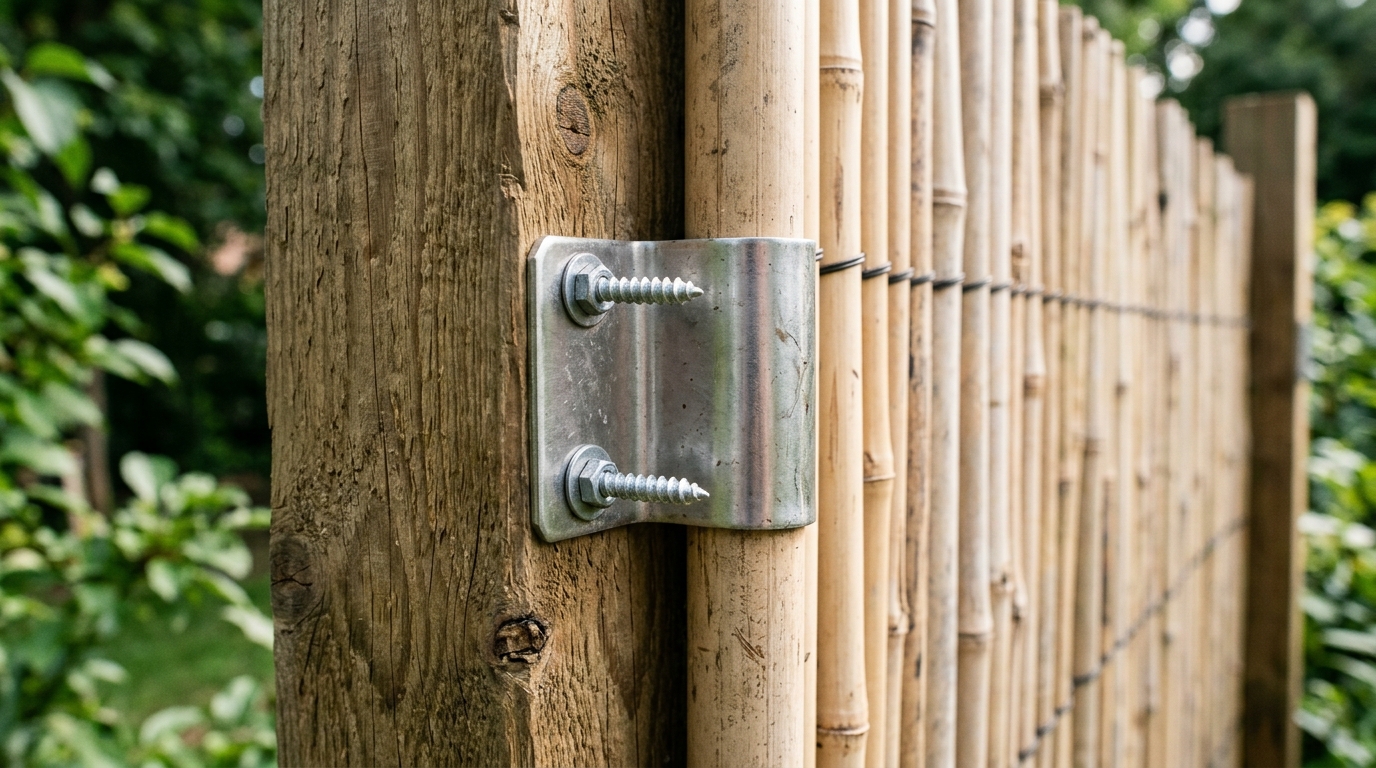
When you are calculating your budget, it is easy to focus only on the price of the bamboo rolls, but the support structure is what truly keeps your investment upright. You will need to account for sturdy pressure-treated posts or metal poles to act as the backbone of the screen, especially if you are not attaching it to an existing fence. These posts usually need to be spaced every six to eight feet to prevent sagging or leaning over time. Depending on your soil, you might also need to buy bags of concrete mix to secure those posts firmly into the ground. These structural items can add several dollars per linear foot to your total project cost.
The hardware you choose for fastening the bamboo is another hidden expenses item that adds up quickly across a large area. I always recommend using heavy-duty galvanized wire or stainless steel ties because they resist rust and won't snap under the pressure of wind. If you are mounting the screen to a wall or a wooden frame, you will need specific mounting brackets and exterior-grade screws that can handle the weight of the bamboo. Buying cheap fasteners is a common mistake that leads to stains on the bamboo or the screen falling down after a single season.
Proper tensioning and bracing are the final pieces of the puzzle that ensure your privacy screen stays tight and professional looking. You might find that you need horizontal support rails to give the bamboo a flat surface to rest against, which prevents the material from curling or warping. These extra pieces of lumber or metal trim help create a polished look that mimics a high-end custom installation. By planning for these hardware and support costs upfront, you can avoid frustrating trips to the store and keep your eco-friendly project on track.
Investing in a bamboo privacy screen is a smart move if you want a modern, eco-friendly look without the high price tag of hardwood or composite fencing. For most standard backyard projects, you can expect to spend between $1,500 and $4,500 for a full 150-foot installation. If you are comfortable taking on a DIY project, sticking to rolled bamboo materials can keep your costs as low as $6 per linear foot. This makes it one of the most affordable ways to build a fence for a private patio space while staying sustainable. I always recommend checking your existing structure first to see if it can support the weight of the bamboo rolls.
To get the best value for your money, focus on the quality of the bamboo diameter and the weather-resistant coatings. Higher-quality poles might cost a bit more upfront, but they will save you money over time because they resist splitting and fading in the sun. If you are hiring a pro, try to bundle the installation with other small yard tasks to get a better labor rate. Remember that a little bit of sealant goes a long way in protecting your investment for years to come. You are getting a high-end, tropical aesthetic that looks much more expensive than the actual receipt suggests.
You can generally expect to spend between $6 and $22 per linear foot for the materials alone. This price range depends mostly on the thickness of the bamboo poles and the specific color you choose for your backyard.
If you decide to bring in a pro, your total costs will usually land between $10 and $30 per linear foot. This price covers the labor for securing the panels and includes all the necessary mounting hardware to keep everything sturdy.
For a standard residential lot with about 150 linear feet of fencing, you should budget between $1,500 and $4,500. This is a great way to get a high-end look while spending much less than you would on hardwood or composite materials.
Yes, looking into bamboo is a very smart move because it offers an eco-friendly look for a fraction of the price of hardwood or vinyl. It is a versatile solution that works perfectly whether you are starting from scratch or just covering an old chain-link fence.
The thickness and color of the poles are the main factors that move your material costs between the $6 and $22 per foot range. I recommend choosing a style that fits your aesthetic while keeping these small price differences in mind for your budget.
When you hire a pro, the cost includes the expert labor needed to align the panels perfectly and the hardware required for a secure fit. This extra investment ensures your screen stays upright and looks polished even when the wind picks up.
Installing a privacy fence in Los Angeles or any urban area is a great way to ensure your backyard is not open for all prying eyes while maintaining a beautiful landscape. If you prefer a more traditional look, consulting with a Wood Fence Company can help you compare the costs of cedar or redwood against bamboo options.
Choosing the right entrance for your property usually comes down to one big decision: cantilever vs overhead gates. Both options are great for high-traffic areas because they slide out of the way without needing a track on the ground, but they work in very different ways. I’ve seen plenty of folks get stuck picking the wrong one simply because they didn't consider their specific space or terrain.
If you have plenty of room to the side but uneven ground, a cantilever gate is usually your best friend. However, if you're dealing with massive, heavy gates or a tight footprint, an overhead track might be the better way to go. It really comes down to balancing your available vertical clearance against your horizontal side room. Taking a moment to look at your layout now will save you a lot of maintenance headaches down the road.
When you are looking at a cantilever gate, the magic happens through a clever counterbalance system. Instead of the gate sliding along a track on the ground, it uses a longer tail section that stays tucked behind your fence line to anchor the weight. This design allows the gate to float across your driveway without ever touching the pavement, which is a lifesaver if you have uneven terrain or a steep slope. You will need about fifty percent more side room to accommodate that extra tail length, but the tradeoff is a system that stays reliable even when snow or debris piles up.
Overhead track systems take a different approach by hanging the gate from a heavy duty beam that spans the entire entrance. Because the weight is supported from above, these gates can be incredibly heavy and wide without putting too much stress on the moving parts. You do not need the extra side clearance that a cantilever requires, making this a great choice for tight property lines where every inch of space counts. The main thing to keep in mind is the height of the beam, as you want to make sure it is tall enough for your largest delivery trucks to pass through safely.
Deciding between these two usually comes down to your specific property layout and what kind of traffic you expect. If you have plenty of room to the side but your driveway is bumpy or unpaved, the cantilever is likely your best friend because it avoids ground contact entirely. On the other hand, if you are working in a cramped industrial alley where side space is a luxury, an overhead system provides a sturdy solution that stays within your footprint. Both options are great for high traffic areas because they are built to last and require much less cleaning than a traditional ground track.
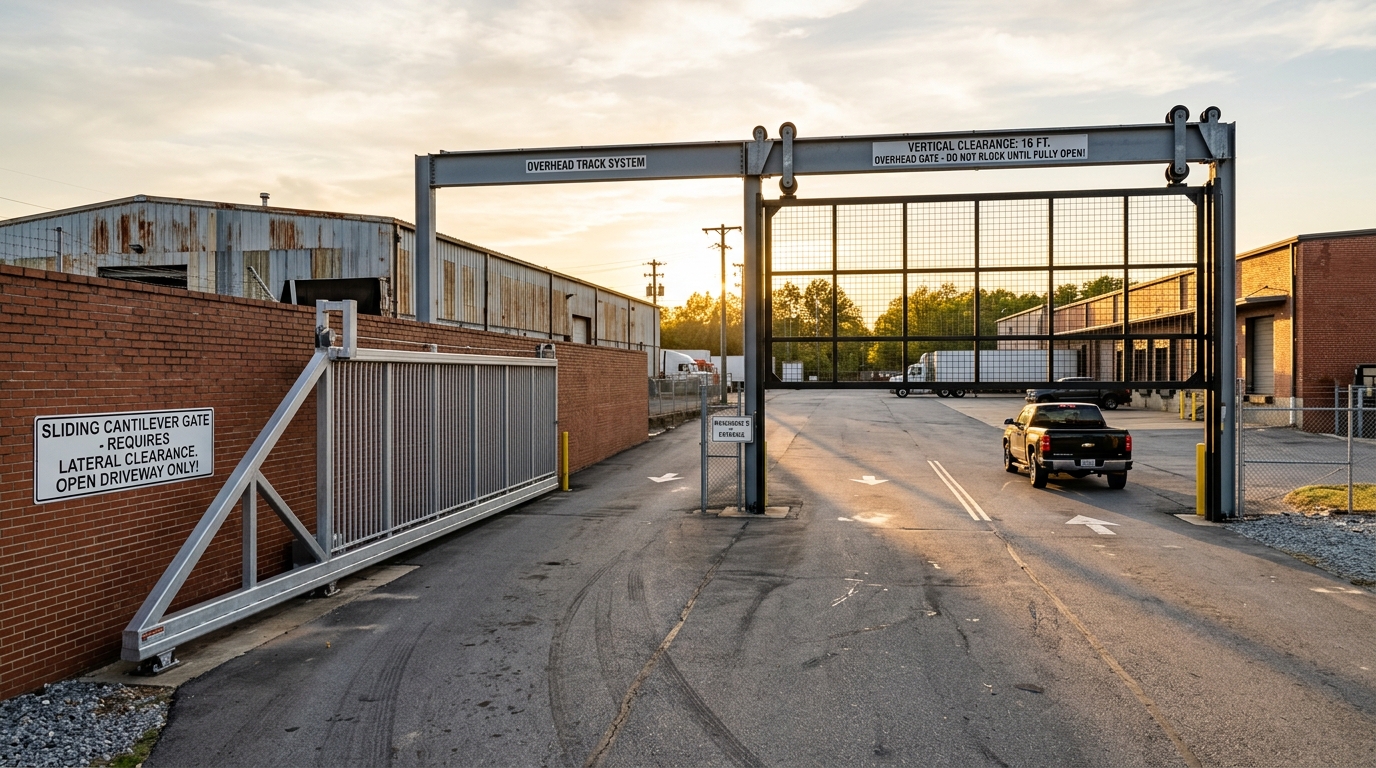
When you are planning your gate installation, the first thing I want you to look at is the side room available along your fence line. Cantilever gates are a fantastic trackless option, but they require a significant amount of extra lateral space to function properly. Because these gates use a counterbalance tail to stay suspended, you will typically need about fifty percent more width than the actual driveway opening. If your property has a narrow footprint or sits right against a neighboring building, you might find that a cantilever system simply has nowhere to slide when it opens.
If your side room is limited but you still need a heavy duty solution, an overhead gate might be the better fit for your layout. These systems use a sturdy overhead beam to support the gate, which eliminates the need for that long counterbalance tail sticking out to the side. However, you have to be mindful of your vertical clearance because that overhead beam sets a permanent height limit for every vehicle passing through. I always tell business owners to measure their tallest delivery trucks or pieces of equipment before committing to this design. You do not want to realize after the installation that your own fleet cannot make it under the support structure.
Choosing between these two comes down to where you can afford to lose a little bit of space. A cantilever gate keeps your sky open for tall machinery but eats up a lot of horizontal real estate along your perimeter. On the other hand, an overhead gate is a space saver on the ground but creates a ceiling that can be a dealbreaker for high profile vehicles. I recommend grabbing a tape measure and marking out both the lateral slide area and the potential height of a crossbeam. Seeing those physical limits in person usually makes the right choice for your specific property much clearer.
When you are dealing with a property that has gravel, dirt, or uneven terrain, a cantilever gate is usually your best friend. These systems are engineered to slide across the opening without ever touching the ground, relying on a counterbalance tail and rollers for support. Because they do not require a track on the pavement, you do not have to worry about snow, ice, or debris jamming the mechanism. They are the perfect choice for busy commercial sites where the ground is less than perfect or where regular maintenance is a concern. You just need to make sure you have enough side room for that extra counterbalance tail to slide back when the gate opens.
If your project involves massive steel gates or exceptionally heavy loads, an overhead gate is the heavy lifter of the group. These systems use a sturdy overhead beam and trolleys to hang the gate, which allows them to support weights that would make a cantilever system sag. While you do have to consider the height of the vehicles passing underneath, the vertical support makes these incredibly stable for high-security or industrial applications. They are fantastic for tight spaces because they do not require the long counterbalance tail that cantilevers do. I always recommend these for business owners who need a compact footprint but have some serious weight to move every single day.
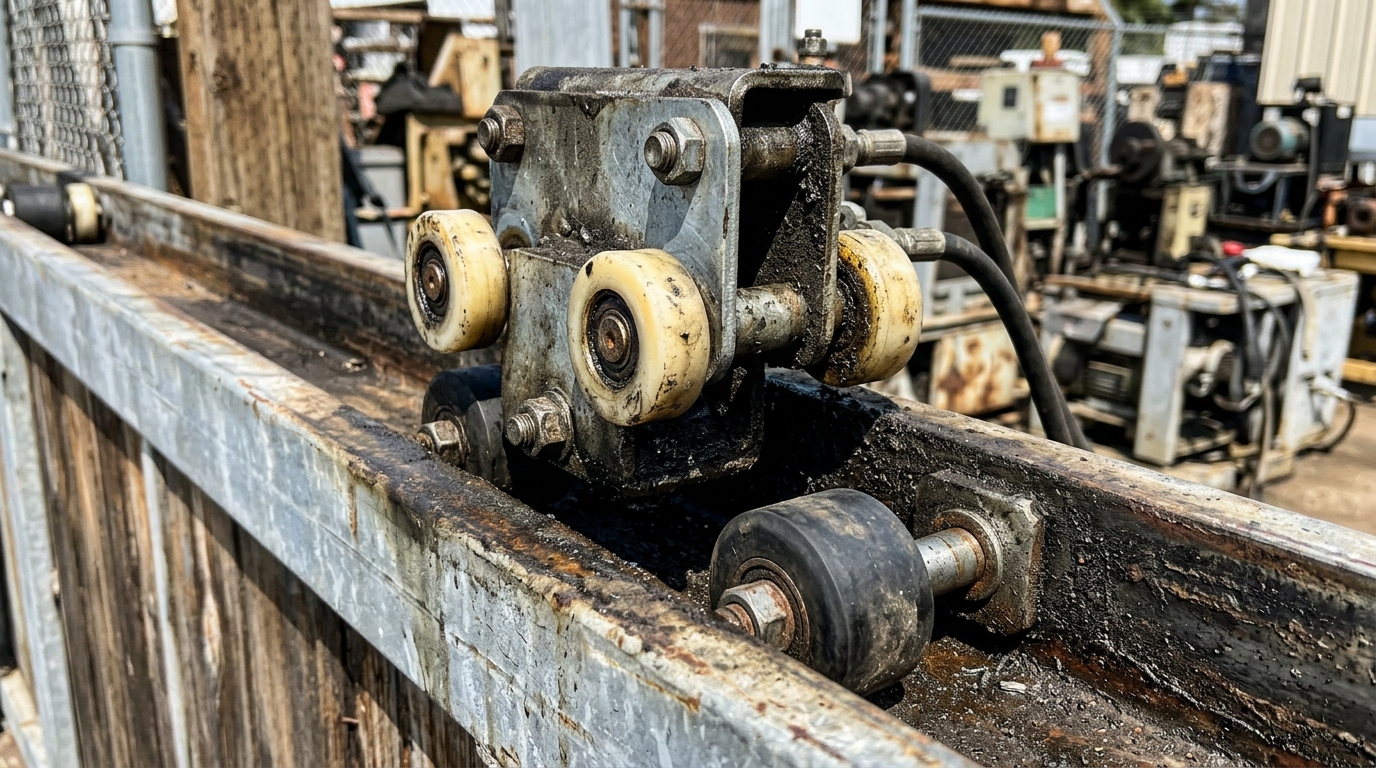
Maintaining a cantilever system is mostly about keeping an eye on those floating rollers and the space beneath the gate. Since these gates don't touch the ground, you won't have to worry about scrubbing a track, but you do need to make sure the counterbalance tail stays clear of debris. In the winter, I always tell my clients to clear out any heavy snow drifts that might pile up under the gate frame. If ice or packed snow builds up too high, it can rub against the bottom of the gate and put unnecessary strain on your motor. A quick visual check once a week to ensure the rollers are spinning freely is usually all it takes to keep things moving.
Overhead gates require a different approach because the most important components are way up in the air. You will need a sturdy ladder to inspect the overhead trolley and the track it slides through on a regular basis. Dust, bird nests, or old grease can build up inside that high track, which might cause the gate to stutter or hang up. I recommend wiping the track clean and checking for any signs of wear on the trolley wheels at least twice a year. Because these systems often handle much heavier commercial gates, catching a small alignment issue early can save you from a very expensive repair down the road.
Choosing between these two often comes down to how much time you want to spend on a ladder versus a shovel. Cantilever gates are great for busy owners who prefer low-to-the-ground maintenance, while overhead systems are perfect if you have the height clearance and don't mind the occasional vertical inspection. Both systems are incredibly reliable if you stay on top of the basics and don't let dirt accumulate in the moving parts. Just remember that a little bit of lubricant and a watchful eye will keep your property secure and your gate running quietly for years.
Choosing between these two systems really comes down to your property’s unique footprint and your daily operational needs. If you have plenty of lateral space along your fence line but deal with uneven gravel or sloped pavement, a cantilever gate is likely your best bet. It stays completely off the ground without needing an overhead beam, which makes it perfect for sites where tall trucks or cranes need unlimited vertical clearance. You just have to make sure you have that extra room for the counterbalance tail to slide back when the gate opens.
On the other hand, an overhead gate is the go-to solution when every inch of horizontal space is precious. Since the gate hangs from a sturdy top track, you do not need a long counterbalance tail taking up room on the side of your driveway. This setup is incredibly durable and can handle the heaviest industrial gates with ease, provided your vehicles can safely pass under the support beam. It is a smartest upgrade for high-traffic commercial lots where side room is limited but the ground stays relatively level between the support posts.
Ultimately, you should think about your long-term maintenance goals and the specific types of traffic entering your facility. Cantilever gates are famous for their low-maintenance design since they have fewer moving parts exposed to the elements. However, if you are moving massive loads or extremely heavy equipment, the structural integrity of an overhead system offers unmatched reliability. For those considering Metal Gates Installation In Los Angeles, take a quick measurement of your side clearance and check your height requirements to see which trade-off makes the most sense for your budget. If you are looking for an Electric Gate in Los Angeles, once you identify your main priority, the right choice for your business will become clear.
The main difference is how the gate is supported while it moves. A cantilever gate uses a counterbalance tail to float across the opening, while an overhead gate hangs from a structural beam installed above the driveway.
If you are tight on side room, an overhead track system is your best bet. It does not require the long counterbalance tail that a cantilever gate needs, so it fits perfectly on properties with narrow boundaries.
Yes, cantilever gates are perfect for uneven terrain or gravel driveways because they never touch the ground. Since the gate stays suspended, you will not have to worry about it getting stuck on rocks or dragging against a slope.
You definitely need to consider the height of the support beam for an overhead gate. You must ensure the beam is high enough to allow your largest vehicles, like delivery trucks or trailers, to pass safely underneath without hitting it.
Cantilever gates are usually much easier to deal with in the snow and ice. Because the gate is elevated, you do not have to clear a ground track every time it snows just to get your gate to open.
Absolutely, overhead tracks are designed to handle massive weight with ease. Because the gate is supported from a heavy duty beam above, it can span wide distances without the sagging issues you might see on driveway gates in Los Angeles or other systems. Understanding the Benefits of a Sliding Driveway Gate In Los Angeles can help you decide if a top-supported or side-supported sliding mechanism is right for your property.
We’ve all been there, you’re heading out for the day, hit the remote, and your gate starts jerking or makes a grinding sound that makes the neighbors look over. Keeping your entrance running smoothly doesn't have to be a chore, but these sliding gate maintenance tips are the secret to avoiding a costly breakdown. Since debris in the tracks is still the biggest reason these systems fail, a little bit of proactive care goes a long way in keeping your home secure and your morning commute stress-free.
Think of your gate like a car; it needs a little love to stay reliable and efficient year after year. Taking just a few minutes each month can actually double the life of your hardware and even cut down on your energy bills. I’ve seen plenty of gates wear out years too early just because of a bit of hidden rust or dirt, so I want to show you the easiest ways to keep things moving. It’s all about simple habits that keep your rollers spinning and your sensors clear without needing a toolbox full of heavy equipment.
A clean track is the foundation of a healthy sliding gate system and the easiest way to prevent expensive motor repairs. When dirt, stones, or fallen leaves pack into the groove, your gate motor has to work twice as hard to push the gate along its path. This extra strain leads to premature wear on the internal gears and can eventually cause the motor to burn out entirely. By keeping the path clear, you ensure the wheels glide smoothly without any resistance or jerky movements. I always tell my clients that five minutes of sweeping can save you hundreds of dollars in professional service calls down the road.
I recommend making a quick sweep of the tracks part of your weekly routine to stay ahead of any buildup. Use a stiff-bristle brush or a heavy-duty outdoor broom to push out debris that gets wedged in the corners. If you notice packed mud or stubborn grime, a quick spray with a garden hose can help loosen things up before you wipe it dry. Pay close attention to the areas near the gate stops, as these spots tend to collect the most gravel and organic matter. Once the track is clear, you will immediately notice how much quieter and more responsive your gate becomes during operation.
While it might be tempting to apply grease to the track to make it slide faster, you should actually keep the metal surface dry. Wet lubricants like oil or heavy grease act like a magnet for dust and sand, creating a grinding paste that wears down your rollers. If you feel like the gate needs a little extra help, focus your lubrication efforts on the internal bearings of the wheels instead. A clean, dry track is the industry standard for a reliable system that stands up to daily use. Keeping this area spotless is the most effective way to protect your investment and maintain your property's security.
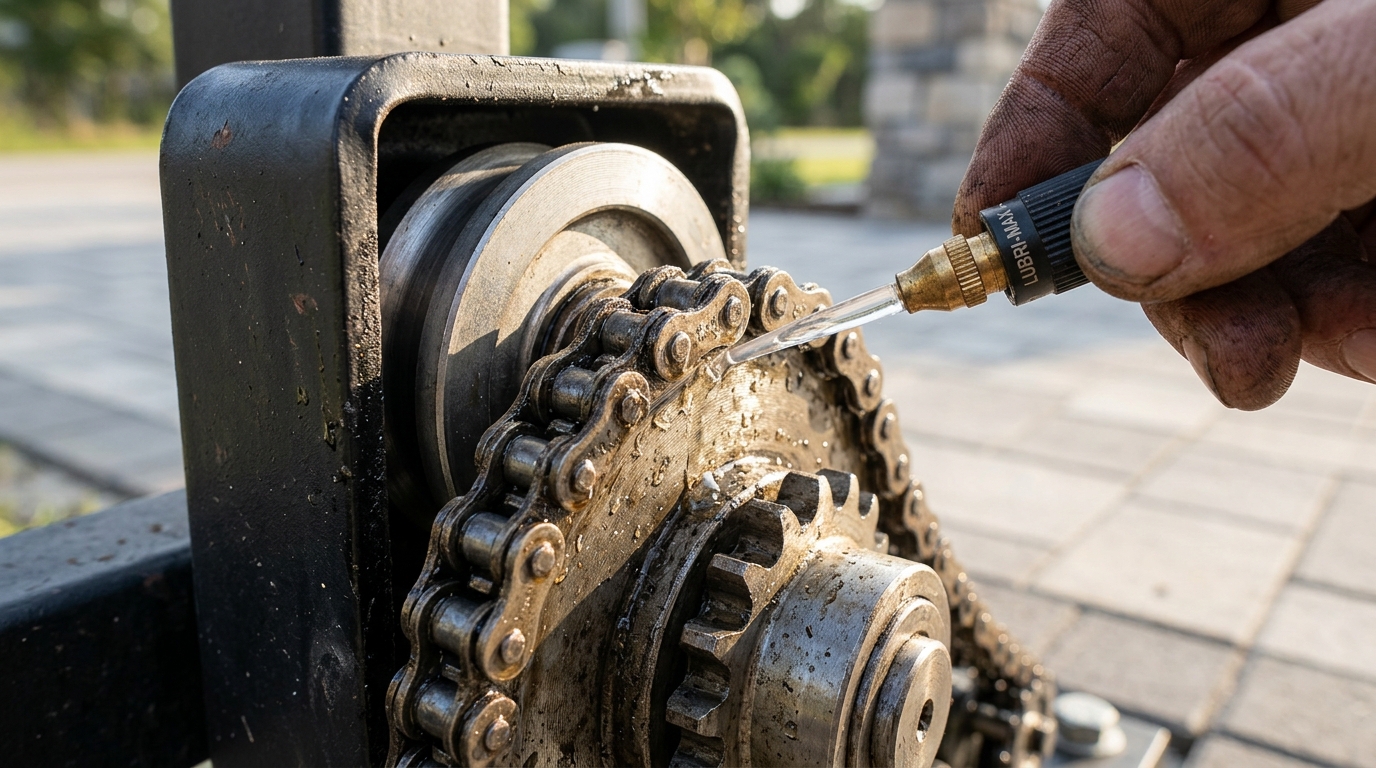
Selecting the right lubricant is the secret to keeping your gate running quietly and preventing expensive motor repairs down the road. While it might be tempting to grab a standard oil-based spray from the garage, these products actually act like a magnet for the dirt and grit that naturally settles on your driveway. Over time, that oily residue turns into a thick, abrasive paste that grinds down your rollers and puts unnecessary strain on the motor. I always recommend using a high-quality silicone spray or white lithium grease instead. These options provide a slick barrier that repels moisture and dust, ensuring your hardware stays clean and protected against the elements.
Applying your lubricant correctly is just as important as the product you choose for the job. You should focus your efforts on the internal bearings of the rollers and the pivot points of the chain rather than soaking the entire track. A light, even coat every three to six months is usually enough to maintain that effortless glide we all want for our home security. If you notice the gate starting to squeak or jerk during operation, it is a clear sign that the moving parts are thirsty for a fresh application. Taking five minutes to handle this simple task can extend the life of your equipment by years and keep your daily routine running smoothly.
Your safety sensors are the most critical part of your sliding gate system because they prevent accidents before they happen. To keep them working perfectly, I recommend starting with a simple cleaning routine using a soft, damp cloth to wipe away dust, cobwebs, or mud from the lenses. These small devices live close to the ground, so they easily get blocked by garden debris or splashing rain. Even a tiny smudge can interfere with the infrared beam and cause your gate to act up or stop moving entirely. Taking a moment to clear their vision ensures the system can accurately detect anything in its path.
Testing the auto-reverse safety sensors is just as straightforward and should be done every single month. To do this, start the gate closing and simply wave a long object, like a broom handle or a piece of cardboard, across the path of the sensors. A healthy system will recognize the obstruction instantly and trigger the gate to stop and reverse its direction. If the gate continues to close despite blocking the infrared beam, it is a clear sign that the safety sensors or wiring need professional attention. Keeping this safety feature in top shape protects your vehicles from dents and, more importantly, keeps your family and pets safe.
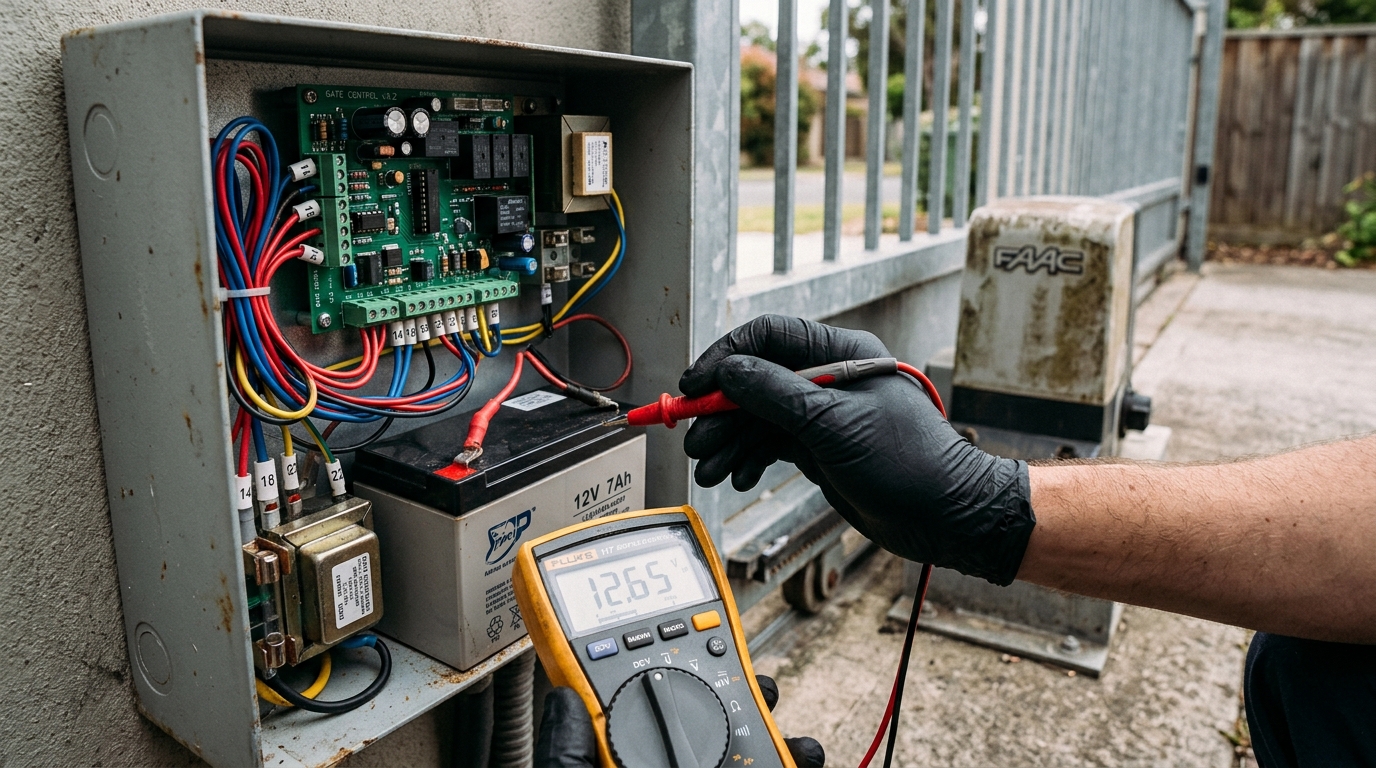
Keeping your gate's motor box clean and dry is one of the best ways to prevent electrical failures and expensive repairs. When you open the housing, you should look closely for any signs of frayed or chewed wires, which are often the work of small pests like rodents or insects looking for a warm place to nest. These tiny visitors can cause significant electrical shorts or even fire hazards if they chew through the protective insulation. I also recommend checking for any moisture buildup or corrosion on the terminals, as damp environments can quickly degrade your system's performance. If you see any loose connections or evidence of nesting, it is a clear sign that your gate needs some professional attention.
The health of your backup battery is just as important as the wiring, especially since modern solar powered systems rely so heavily on consistent energy storage. You can usually tell a battery is reaching the end of its life if the gate moves noticeably slower than usual or struggles to complete a full cycle during a power outage. Most gate batteries last about three to five years, but extreme weather can shorten that lifespan significantly. I suggest testing the battery response at least once a quarter to make sure you are never locked out of your own property. If the casing looks swollen or you notice a leak, please give us a call right away to handle the replacement safely.
While basic visual checks are easy to do yourself, electrical systems can be tricky and sometimes dangerous to handle without the right tools. Our team can perform a deep check into your motor’s diagnostics to catch small glitches before they turn into a total system failure. We check the voltage levels and ensure every connection is tightened to factory specifications, giving you total peace of mind. Regular professional tune-ups not only keep your warranty valid but also ensure your sensors and safety features are working exactly as they should. Taking these small steps now will save you from the headache of a gate that refuses to budge when you are in a hurry.
Taking care of your sliding gate is one of the smartest ways to protect your property investment while ensuring your home stays secure. These simple habits, like sweeping the track and checking the sensors, prevent small issues from turning into expensive emergency repairs. When your gate operates smoothly, it reduces the strain on the motor and helps the entire system last for years longer than a neglected one. I have seen how a little bit of monthly attention keeps a high value asset running like new. It really comes down to staying consistent so you never have to worry about being locked out or leaving your driveway vulnerable.
Investing in a regular maintenance routine gives you total peace of mind every time you press that remote. Since modern systems are becoming more advanced with solar power and smart sensors, keeping the mechanical parts clean is more important than ever. You want to make sure your gate remains a reliable barrier that opens effortlessly when you arrive home. If you ever feel like the upkeep is becoming too much to handle alone, professional service plans are a great way to ensure your track and motor get expert care. Keeping an electric gate in top shape is the best way to guarantee your sliding driveway gate is always ready to perform when you need it most.
I recommend making a quick sweep of the tracks part of your weekly routine to stay ahead of any buildup. Using a stiff bristle brush or a heavy duty outdoor broom only takes five minutes but prevents your motor from working twice as hard. This simple habit keeps your wheels gliding smoothly and saves you from expensive professional service calls.
A grinding sound usually means there is debris like stones, dirt, or leaves packed into the track groove. When these materials get wedged in, they create resistance that strains the internal gears of your motor. Clearing the path immediately will stop the noise and prevent the motor from burning out entirely.
Yes, a quick spray with a garden hose is great for loosening packed mud or stubborn grime that a broom cannot reach. Just make sure you are not blasting water directly into the electrical components of the motor or the sensors. Keeping the hardware clean this way ensures your rollers keep spinning without any jerky movements.
Taking a few minutes each month for proactive care can actually double the life of your hardware and cut down on energy bills. By reducing the strain on your motor, you avoid costly breakdowns and prevent parts from wearing out years too early. It is much cheaper to sweep a track than it is to replace a burned out motor or damaged gears.
Ignoring debris causes your gate motor to struggle, which leads to premature wear on the hardware. Over time, this extra strain can cause the system to fail completely or lead to hidden rust and dirt buildup. A little bit of proactive care is the best secret to keeping your home secure and your morning commute stress free.
You do not need a toolbox full of heavy equipment to keep your gate running like new. A stiff bristle brush, a standard outdoor broom, and a garden hose are usually all you need for basic upkeep. These simple tools help you keep the sensors clear and the tracks debris free without any technical hassle.
Choosing the right commercial high security fencing is no longer just about putting up a boundary; it is about building a smart defense system that works for you. Modern options are engineered to do three specific things: deter intruders, delay any breakthroughs, and help you detect trouble before it starts. Whether you are meeting new insurance rules or just want better peace of mind, a solid fence is your first line of defense in a world where security needs are constantly changing.
I have seen how much a high-quality installation can change the way a business operates. You want something practical that stands up to tools and climbing without looking like a fortress. By focusing on industry-standard materials like anti-climb mesh, you can get a system that is incredibly tough but remains straightforward to maintain. It is all about finding that sweet spot where heavy-duty performance meets everyday reliability.
When I talk to clients about high security fencing, I always explain that it is much more than just a taller barrier. Think of it as an engineered system designed to buy your security team precious time through the deter, delay, and detect strategy. By using anti-climb materials like 358 anti-climb mesh, you are sending a clear message to intruders that your facility is a difficult target. This visual deterrent often stops an incident before it even begins. If someone does try to scale the fence, the tight wire spacing makes it nearly impossible to get a foothold or use standard cutting tools.
Once an intruder makes a move, the focus shifts to delaying their progress as much as possible. High security fencing is built to withstand forced entry attempts from power tools and bolt cutters, meeting strict performance standards like ASTM F2781. These extra minutes of resistance are critical because they allow your staff to respond before any real damage occurs. I often recommend integrating digital sensors or surveillance cameras directly onto the fence line to enhance this process. This setup ensures that any vibration or cut is immediately flagged by your monitoring system.
Balancing these three elements creates a comprehensive ring of protection around your most valuable assets. It is not just about keeping people out, but about creating a smart perimeter that works with your overall security plan. Modern industrial projects rely on these systems to meet insurance requirements and federal safety regulations. When you invest in a professional grade barrier, you are choosing a solution that is durable, reliable, and easy to maintain. I believe that a well designed fence is the most honest and effective way to secure your business for the long haul.
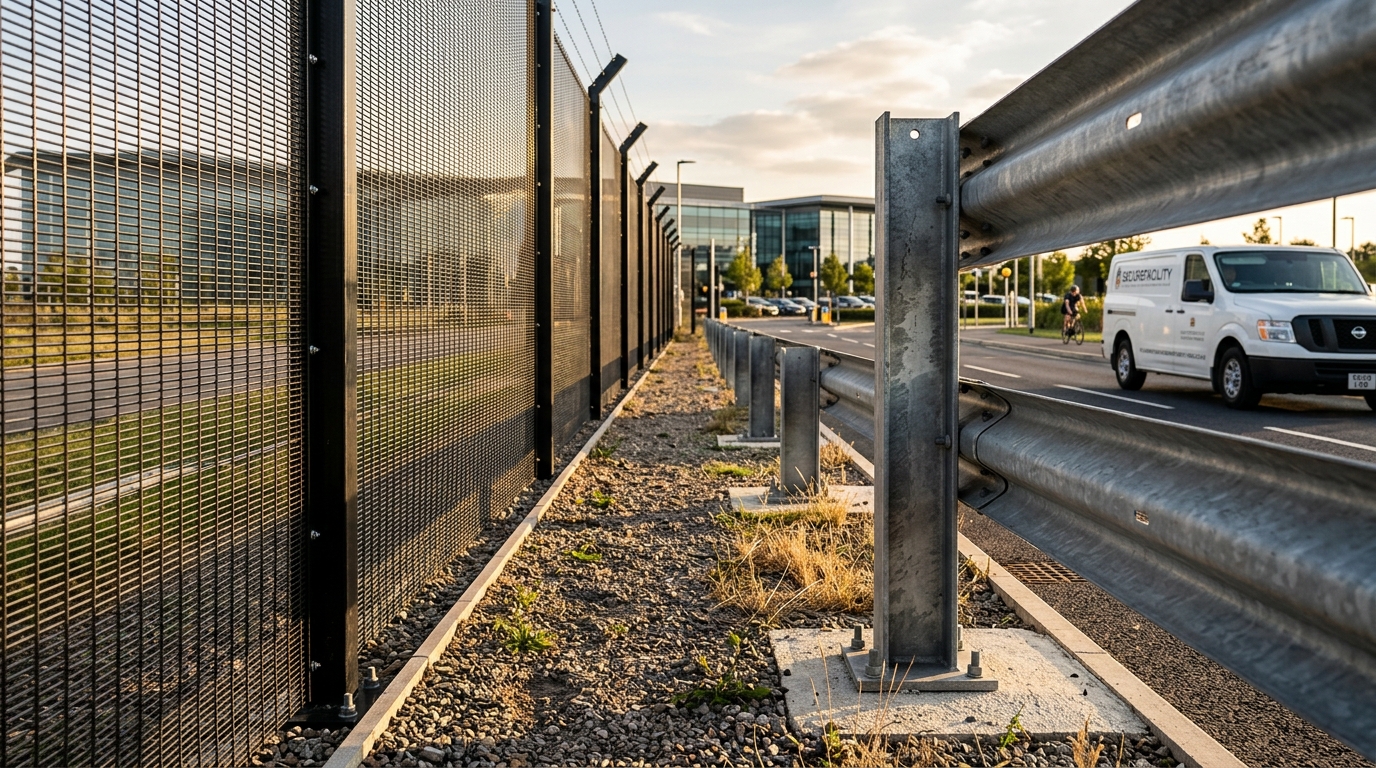
When you are looking to secure a high-value industrial site, you generally have to choose between stopping people or stopping vehicles. The 358 mesh is usually my first recommendation if your biggest worry is unauthorized foot traffic or intruders trying to cut their way inside. This anti-climb mesh gets its name from the tight wire spacing that makes it nearly impossible to get a finger hold or fit a pair of bolt cutters through the gaps. It provides a clean, professional look while acting as a massive deterrent for anyone thinking about scaling your perimeter. Because the wires are so close together, it delays intruders long enough for your security cameras or guards to respond before a breach actually happens.
On the other hand, some projects require a much more aggressive approach to prevent ram-raiding or accidental vehicle impacts. This is where crash rated barriers and heavy-duty steel bollard systems come into play to protect your infrastructure from kinetic force. While mesh fences are great for visibility and stopping climbers, they are not engineered to stop a multi-ton truck moving at high speeds. If your facility sits near a busy road or holds sensitive assets that could be targeted by a vehicle, you need the reinforced foundations and structural steel that only a crash rated system provides. These systems are often required by insurance providers or federal regulations to ensure that a perimeter remains intact even under extreme physical pressure.
Choosing the right system really comes down to a simple assessment of your specific site risks and your total budget. I often see clients mix these two technologies by installing 358 mesh along the majority of the boundary while placing crash rated barriers at vulnerable entry points or near the main office. This hybrid approach gives you the best of both worlds without overspending on heavy steel where it might not be necessary. You want a setup that feels robust and reliable, giving you peace of mind that your facility is locked down against every type of threat. Always remember that learning how to choose the best fence for commercial properties is an investment in your business's future, so taking the time to match the hardware to your actual needs is the smartest move you can make.
When you are looking at high-security specs, the ASTM F2781 standard is the ruler we use to measure how much fight a fence has in it. Instead of just looking at how tall a fence is, this rating tells us exactly how long it takes for someone with a specific set of tools to break through. I like to think of it as a timer that tells you how much breathing room your security team has to react. If a fence has a high rating, it means it can stand up to everything from basic bolt cutters to heavy duty power tools. Choosing the right level ensures you are not just buying a wall, but buying precious minutes of response time.
One of the most common ways we meet these tough standards is by using 358 mesh, which is the gold standard for industrial protection. The name refers to the tight spacing of the wires that makes it nearly impossible to get a toehold or a fingerhold for climbing. Because the gaps are so small, most manual cutting tools cannot even get a grip on the wire to start a breach. It is a simple design that solves two problems at once by being both anti-climb and anti-cut. This is the kind of practical engineering that keeps your site safe without needing a complicated setup.
I always tell my clients that the best fence is one that makes a persistent intruder decide your property is just not worth the effort. By following these forced entry standards, you are creating a layered defense that deters people before they even touch the perimeter. You want a system that works in harmony with your cameras and sensors, giving your digital tools the time they need to alert you. It is all about finding that sweet spot where the physical barrier is strong enough to delay an attack until help arrives. This approach takes the guesswork out of your security plan and gives you real peace of mind.
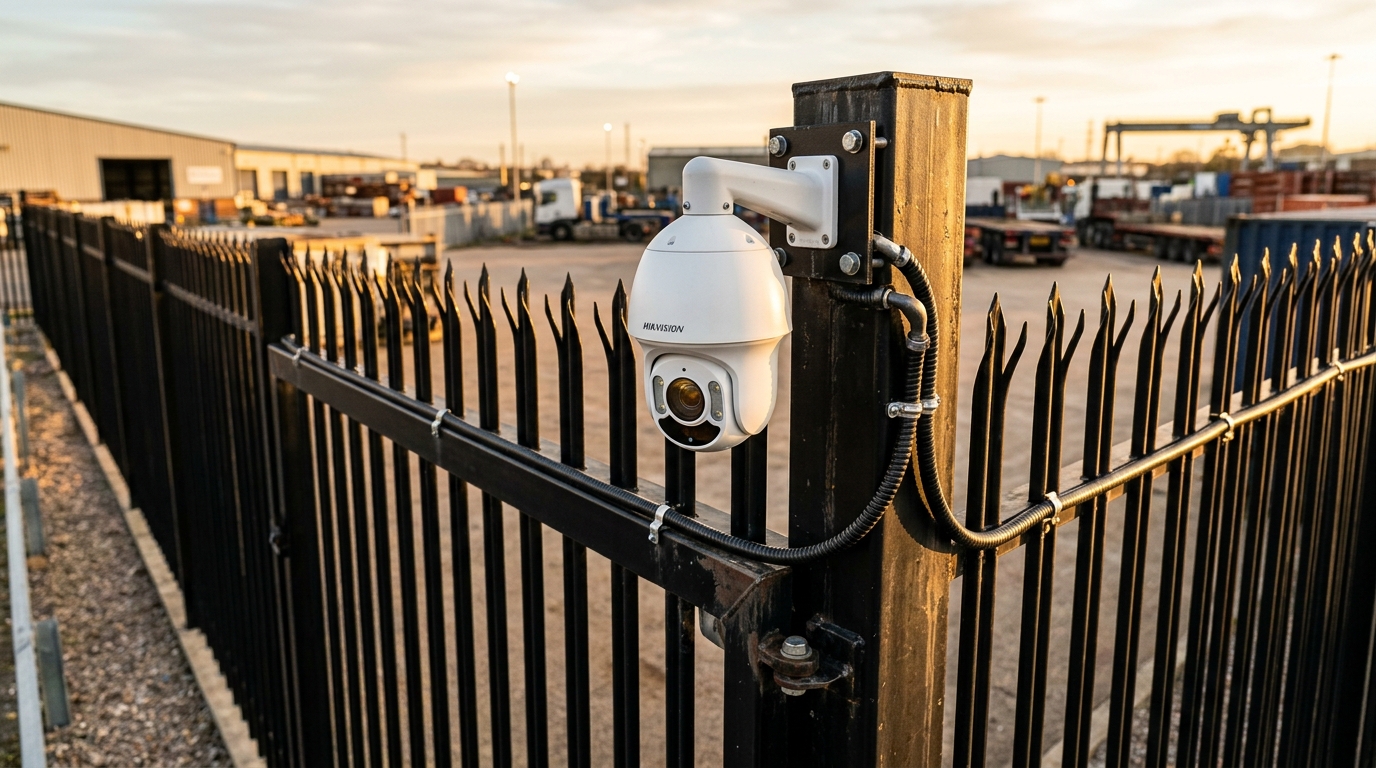
A strong physical barrier is your first line of defense, but it becomes much more effective when you add eyes to the perimeter. I always tell my clients that a high security fence should do more than just stand there; it should act as a nervous system for your entire property. By mounting high definition cameras and motion sensors directly onto your 358 mesh or palisade fencing, you turn a passive wall into a proactive security tool. This setup allows you to see exactly what is happening the moment someone approaches the boundary. It gives you the precious time needed to respond before a breach even occurs.
Modern technology makes it easy to sync your smart technology with the physical layout of your industrial site. I recommend using thermal imaging or infrared cameras that can see through total darkness or heavy rain along the fence line. You can also install vibration sensors that alert your phone or security team if someone tries to cut or climb the wire. These smart sensors are calibrated to ignore wind or small animals, so you do not have to deal with annoying false alarms. This integration ensures that your security budget is working hard around the clock without needing a constant human guard.
When you pair digital surveillance with a heavy duty fence, you create a layered defense that discourages even the most determined intruders. Most criminals will take one look at a tall, anti climb fence equipped with visible cameras and decide your business is not worth the risk. It is all about creating a psychological deterrent that matches the physical strength of the steel. If someone does try to test your perimeter, your integrated system records every movement for insurance or law enforcement needs. This smart approach gives you total peace of mind and keeps your high value assets truly protected.
Ultimately, choosing a high security fence is about much more than just putting up a barrier around your property. It is a strategic move that protects your equipment, your data, and your team from potential threats. By focusing on systems that meet rigorous standards like the anti climb 358 mesh, you are investing in a solution that discourages intruders before they even try to get close. This proactive approach saves you from the massive headaches and financial losses that come with security breaches or property damage. I always tell my clients that a well planned perimeter is the first and most important line of defense for any serious industrial operation.
Think of this installation as a long term asset that actually adds value to your business over time. High quality materials and engineered designs mean you will spend less on constant repairs and more time focusing on your daily operations. Modern fencing also helps you stay ahead of federal regulations and can even lead to better terms with your insurance provider. When you combine physical strength with smart technology like sensors or cameras, you create a complete security web. It gives you that much needed peace of mind knowing your bottom line is shielded by the best tools available today.
Getting the right fence in place might feel like a big step, but it is one of the smartest ways to future proof your facility. You want a system that is tough enough to delay an intruder and smart enough to detect trouble the moment it starts. Taking the time to understand these performance standards ensures you are not just buying wire and posts, but a professional grade security fence system. It is all about creating a safe environment where your business can thrive without outside interference. Once the job is done, you can rest easy knowing your investment is working for you around the clock.
Think of this as a three step plan to keep your property safe. The fence first discourages people from trying to enter, then physically slows them down if they try, and finally works with technology to alert you the moment something happens.
Anti-climb mesh, often called 358 mesh, has wire spacing so tight that you cannot get a finger or a toehold to climb it. It is also incredibly tough to cut with standard hand tools, which makes it much more secure than your average backyard or warehouse fence.
Not at all, and that is a common concern I hear from many business owners. You can get a very clean, professional look that provides heavy duty protection without making your facility feel uninviting to your actual customers.
Many insurance providers now require specific security standards to be met for coverage or better rates. Understanding the benefits of having a fence at your commercial business shows your provider that you are serious about risk management and protecting your assets.
Yes, these systems are designed to be a foundation for your total security setup. You can easily mount digital sensors or cameras directly to the structure to create a smart perimeter that talks to your security team in real time.
I always recommend high quality materials because they are actually very easy to look after. By choosing the right finishes and sturdy engineering, you get a system that stays reliable for years without needing constant repairs or heavy maintenance. For many projects, commercial fence and industrial chain link fencing remains a popular alternative when balancing cost with long-term durability.
When you’re looking to upgrade your backyard, the choice between cedar vs redwood fencing is usually the first big decision you’ll face. Both of these premium softwoods look stunning and naturally fight off rot and pests without the need for harsh chemicals. It really comes down to finding that perfect balance between the upfront cost and how many decades of service you want from your investment.
Redwood is the heavier, tougher sibling of the two, offering a bit more density and a longer lifespan if your budget allows for it. Cedar is a fantastic, more affordable alternative that still brings that classic warmth and durability to your property line. I always tell homeowners to look at their local climate and long-term plans before picking a side.
When you are investing in a premium wood fence, you want to know that your money is buying years of worry-free performance. Both Western Red Cedar and California Redwood are famous for their natural chemistry, which includes special oils and tannins that act as a built-in defense system. These organic compounds work around the clock to repel hungry insects and prevent the wood from rotting when exposed to moisture. While both species are excellent at staying straight and resisting decay, redwood generally has a higher concentration of these protective tannins. This chemical advantage is a big reason why many homeowners see it as the gold standard for longevity.
The physical density of the wood also plays a major role in how long your fence will stand tall against the elements. Redwood is naturally harder and denser than cedar, measured at about 450 pounds on the Janka hardness rating scale compared to cedar's 350 pounds. This extra density means the wood is less likely to warp, split, or suffer from surface damage over time. Because it is structurally tougher, a well-maintained redwood fence can easily last 30 years or more. Cedar is still a fantastic performer that usually lasts up to 25 years, but that extra decade of life is often what justifies the higher price tag for redwood.
Choosing between these two really comes down to how long you plan on staying in your home and your specific local climate. If you live in a particularly damp area or want the absolute maximum lifespan possible, the extra investment in redwood pays off through its superior durability. Cedar offers a beautiful, high-end look at a slightly more accessible price point and still outperforms almost any other wood on the market. I always tell my clients that you cannot go wrong with either choice, but redwood is the way to go if you want the ultimate solution. Both materials provide a natural beauty that pressure-treated wood simply cannot match.
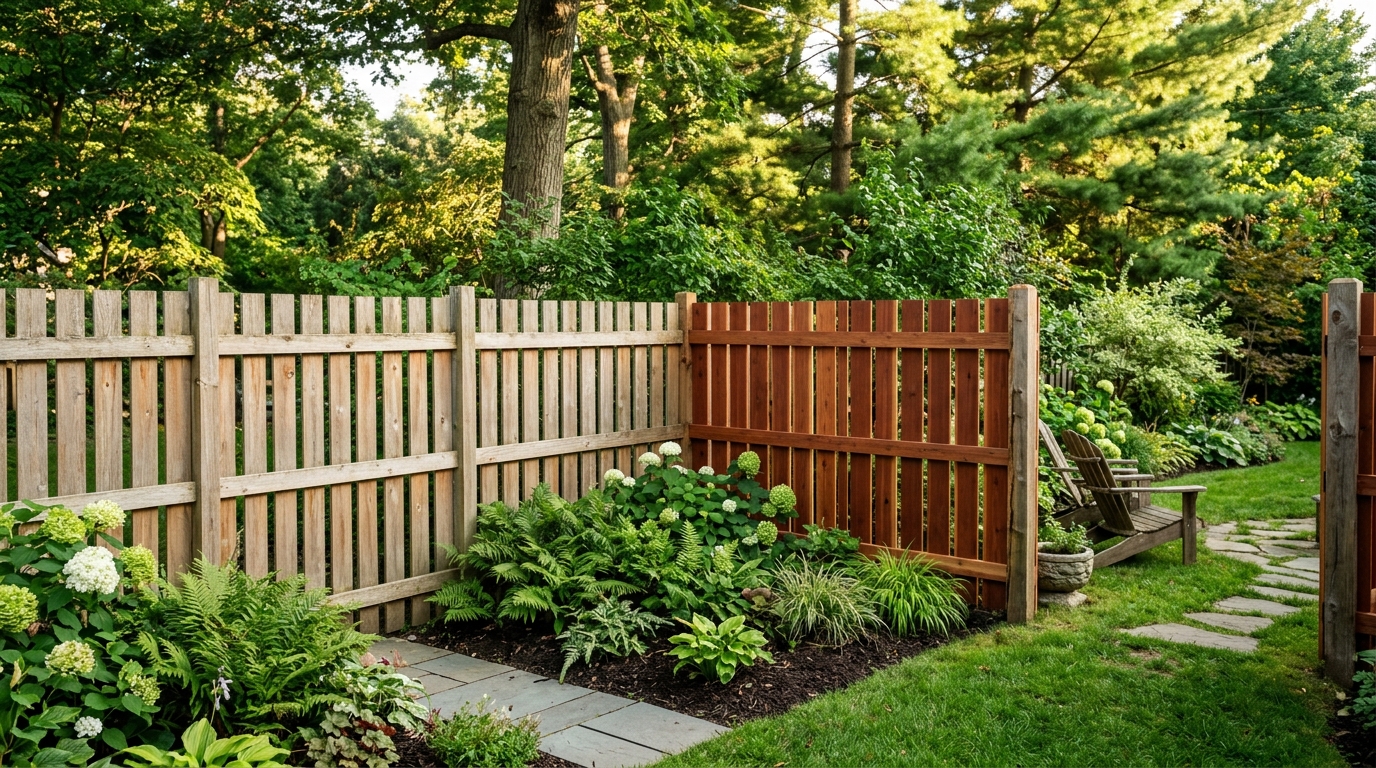
When you are standing in your backyard trying to envision the perfect boundary, the natural color of the wood is often the first thing you will notice. Western Red Cedar is a fantastic choice if you want a lighter, more versatile look that leans toward warm ambers and golden honey tones. It has a wonderful way of brightening up a space, making smaller yards feel a bit more open and airy. Over time, if you choose not to stain it, cedar will gracefully weather into a soft, silvery gray that looks very natural in coastal or rustic settings. This wood is perfect for homeowners who want a classic, inviting glow that complements green lawns and colorful flower beds.
If you are looking for something with a bit more drama and luxury, California Redwood offers a stunning palette of deep burgundies and rich chocolate browns. The heartwood of redwood is famous for its dark, reddish hues that create a sophisticated and high end feel for any property. This deep color provides a beautiful contrast against modern architecture or stone landscaping elements. Because redwood is denser and more uniform in its grain, the color often appears more consistent across the entire length of the fence. Choosing redwood is really about making a bold statement with a material that looks expensive and stays vibrant for years.
The best way to decide between these two premium woods is to look at the existing colors of your home’s exterior. If your house features warm earth tones or tan siding, the golden hues of cedar will likely blend in seamlessly. On the other hand, homes with dark trim, gray stone, or white brick often look best when paired with the deep, cooling reds found in redwood. Both options are going to look beautiful, but thinking about your long term vision for the wood’s finish is key. Whether you want the sunny warmth of cedar or the regal depth of redwood, you are investing in a natural beauty that synthetic materials just cannot replicate.
When you are looking at the price tags for your new fence, you will likely notice that redwood usually sits at a higher price point than western red cedar. This price gap typically ranges from 15 to 25 percent, which can add up quickly depending on the size of your yard. While cedar is a fantastic baseline for a premium wood fence, redwood fencing in Los Angeles is often considered the gold standard for West Coast projects. I always tell my clients that this upfront cost is not just for the name, but for the actual physical properties of the wood itself. Redwood is noticeably denser and heavier than cedar, which translates to a sturdier structure once it is installed.
The reason redwood commands a premium investment comes down to its impressive durability and longevity. With a Janka hardness rating of around 450 pounds, it is significantly tougher than cedar, which usually lands closer to 350 pounds. This extra density helps the wood resist warping, shrinking, and checking over many seasons of sun and rain. You are essentially paying for a longer lifespan, as a well maintained redwood fence can easily last a decade longer than a cedar one. It is a classic case of spending a bit more today to avoid replacement costs down the road.
Availability can also play a big role in your final budget, especially depending on where you live. Since redwood grows in a specific region, shipping costs can sometimes drive the price up if you are far from the source. Cedar is often more widely available and easier to source in bulk, making it a reliable choice for larger projects on a tighter timeline. I recommend checking with your local supplier to see what is currently in stock before you make a final decision. Choosing the right material is all about finding that sweet spot between what you want to spend now and how long you want the fence to stand.
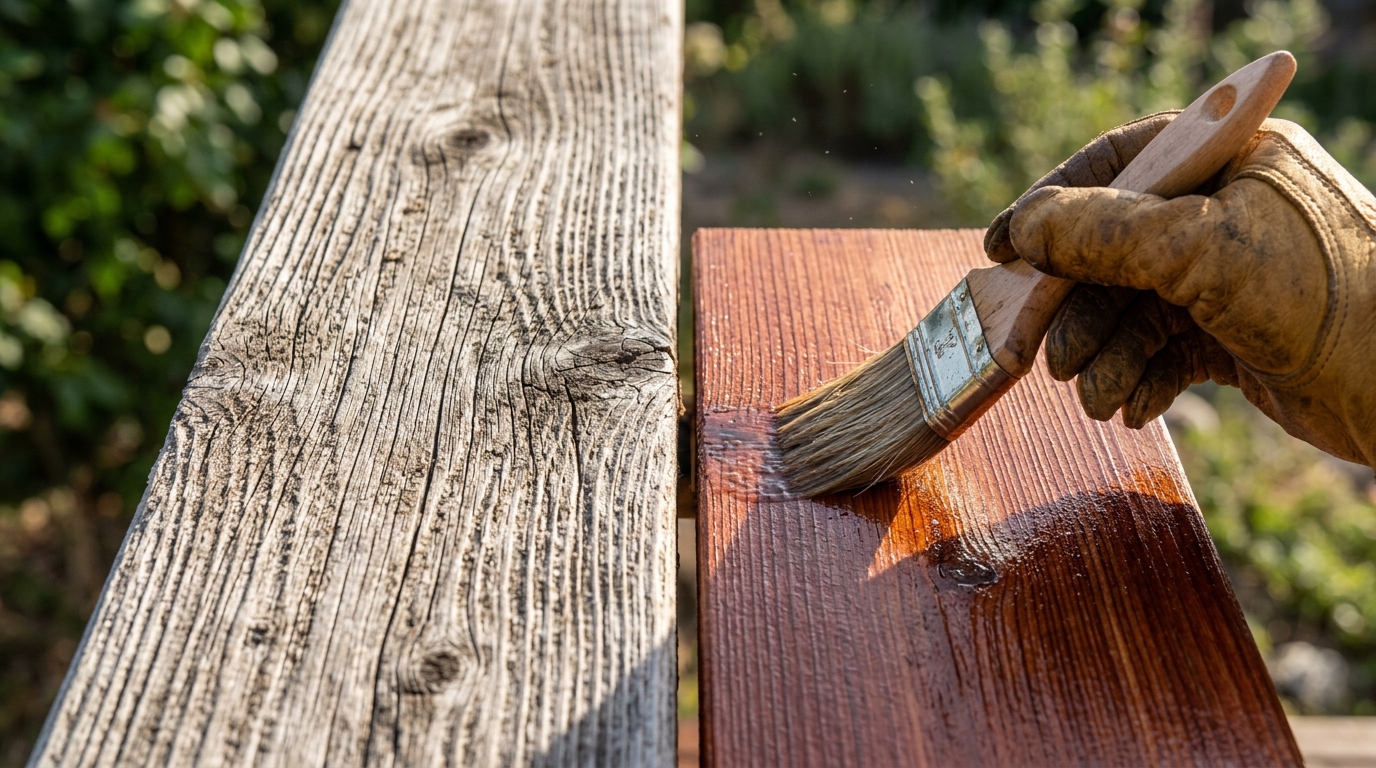
To keep either of these premium woods looking their best, I recommend a simple routine of cleaning and sealing every few years. You should start by giving the boards a gentle wash with a mild oxygen bleach solution to remove surface dirt and graying fibers without damaging the wood. Once the fence is completely dry, applying a high quality UV inhibiting sealer will lock in those rich natural tones and prevent the sun from bleaching the surface. This process is straightforward and goes a long way in protecting your investment from the elements. While redwood is naturally more dense and durable, both species will reward you with a much longer lifespan if you stay on top of this basic upkeep.
When it comes to long term stability, redwood generally has a slight edge because it contains less moisture and is less prone to shrinking or swelling. Its higher density means it stays straight and true, which is a major plus if you are worried about boards warping or pulling away from the rails over time. Cedar is also very stable compared to cheaper woods, but it can occasionally develop minor cracks or checking as it seasons in the sun. In my experience, the extra cost for redwood often pays for itself through reduced structural movement and a more consistent appearance as the years go by. Both choices are excellent, but understanding how to stain these subtle differences in how they age helps you choose the right fit for your home.
Deciding between these two premium woods really comes down to how you view your home investment. If you want a beautiful, classic look that fits a standard high end budget, Western Red Cedar is a fantastic choice that will serve you well for up to two decades. It offers excellent natural resistance to insects and rot while keeping your initial costs more manageable. Most homeowners find that cedar provides the perfect middle ground between affordability and luxury. You will get a fence that looks great and smells amazing without breaking the bank on materials.
Redwood is the clear winner if you are looking for the absolute best durability and a deeper, richer color profile. Because it is naturally more dense and harder than cedar, it stands up better to physical wear and the elements over thirty years or more. You should expect to pay about fifteen to twenty five percent more upfront for this species, but the longevity often pays for itself in the long run. It is the ideal option for those who plan on staying in their forever home and want a fence that stays straight and strong. I recommend choosing redwood if your priority is maximum performance and a high end aesthetic that lasts a lifetime.
Ultimately, you cannot go wrong with either of these West Coast favorites because they both outperform standard pressure treated lumber by a mile. Think about your long term plans for the property and how much you value that extra decade of life before making your final call. If you prefer a lighter tone and a lower price point, go with cedar for a reliable and attractive boundary. If you want the most robust wood available with a stunning reddish hue, invest in redwood for total peace of mind. Both options will leave you with a gorgeous new fence that significantly boosts your curb appeal.
Redwood is the winner when it comes to total lifespan because it is denser and packed with more protective tannins. While cedar is a great choice that lasts a long time, you can expect a well-maintained redwood fence to stand tall for thirty years or more.
Both woods have natural oils that act like a built-in defense system against insects and decay without using harsh chemicals. Redwood generally has a higher concentration of these tannins, which gives it a slight edge in staying rot-free over the decades.
Cedar is your best bet if you want a premium, beautiful wood fence without the higher price tag of redwood. It offers that classic look and great durability at a much more affordable upfront cost for most homeowners.
Redwood is naturally harder and denser than cedar, which helps it stay straight and resist splitting or warping. Cedar is still very stable compared to cheaper woods, but redwood is the gold standard if you want the toughest material possible.
I always suggest looking at your local climate and how long you plan to stay in your home. If you want a forever fence and have the budget, go with redwood, but choose cedar for a beautiful and durable result that saves you money now. For those seeking a modern aesthetic, a horizontal wood fence can be constructed using either material to create a unique look for your property.
You do not need to use harsh chemical treatments because these softwoods are naturally resistant to the elements. Their organic chemistry does the hard work for you, though a simple sealer can help maintain their color as they age. If you are planning a DIY maintenance day, you might wonder, "how much fence stain do I need" to ensure full coverage for the entire perimeter.
Keeping your furry best friend safe and contained is a top priority. The world of dog kennel fence installation is changing fast as we head into 2026. Whether you are dealing with a clever escape artist or just trying to secure a sprawling backyard, old-school wooden slats aren't your only option anymore. Today’s setups focus on a mix of high-tech digital signals and reinforced physical barriers that offer much better reliability than the DIY kits of the past.
If you have a large property, you’ve likely noticed that traditional timber fencing costs have skyrocketed, often reaching upwards of $10,000 for a full perimeter. Modern professional hidden fences provide a much more budget-friendly alternative. These systems usually land between $1,800 and $3,500 while offering 100% signal consistency. It’s all about finding that perfect balance between cost-efficiency and the peace of mind that comes from knowing your dog is secure.
Choosing the right material for your dog's enclosure is the most important step in ensuring a long-lasting and secure space. Chain-link remains a classic choice for many homeowners because it is incredibly durable and allows your pet to see their surroundings clearly. While it is cost-effective for larger areas, you should always opt for a thicker gauge wire to prevent stronger breeds from bending the mesh. If you have a dog that loves to climb, consider adding a tension wire or a top rail to keep the structure rigid and safe. It is a practical, no-nonsense option that stands up to the elements without needing much maintenance over the years.
For those looking for maximum security and a modern look, modular steel panels are becoming the gold standard for professional kennel installations. These pre-fabricated sections are powder-coated to resist rust and are designed with narrow vertical bars that prevent even the most determined escape artists from getting a foothold. Because they are modular, they allow for a very flexible layout that can be adjusted or expanded as your needs change. They offer a much cleaner aesthetic than traditional wire and provide the kind of heavy-duty containment that gives you total peace of mind. The bolt-together design ensures that the entire structure remains stable even if your dog likes to jump or lean against the walls.
If you prefer a more natural look that blends into your landscaping, reinforced timber is a fantastic sturdy alternative. Unlike standard garden fencing, a professional kennel build uses thick, pressure-treated posts and heavy-duty slats that can withstand scratching and chewing. To make it truly secure, I often recommend adding a wire mesh liner on the interior side to prevent any gaps from forming over time. Timber provides excellent wind protection and a bit of privacy, which can help calm dogs that get stressed by seeing outside distractions. It is a beautiful way to create a high-security zone that feels like a permanent part of your home's outdoor architecture.
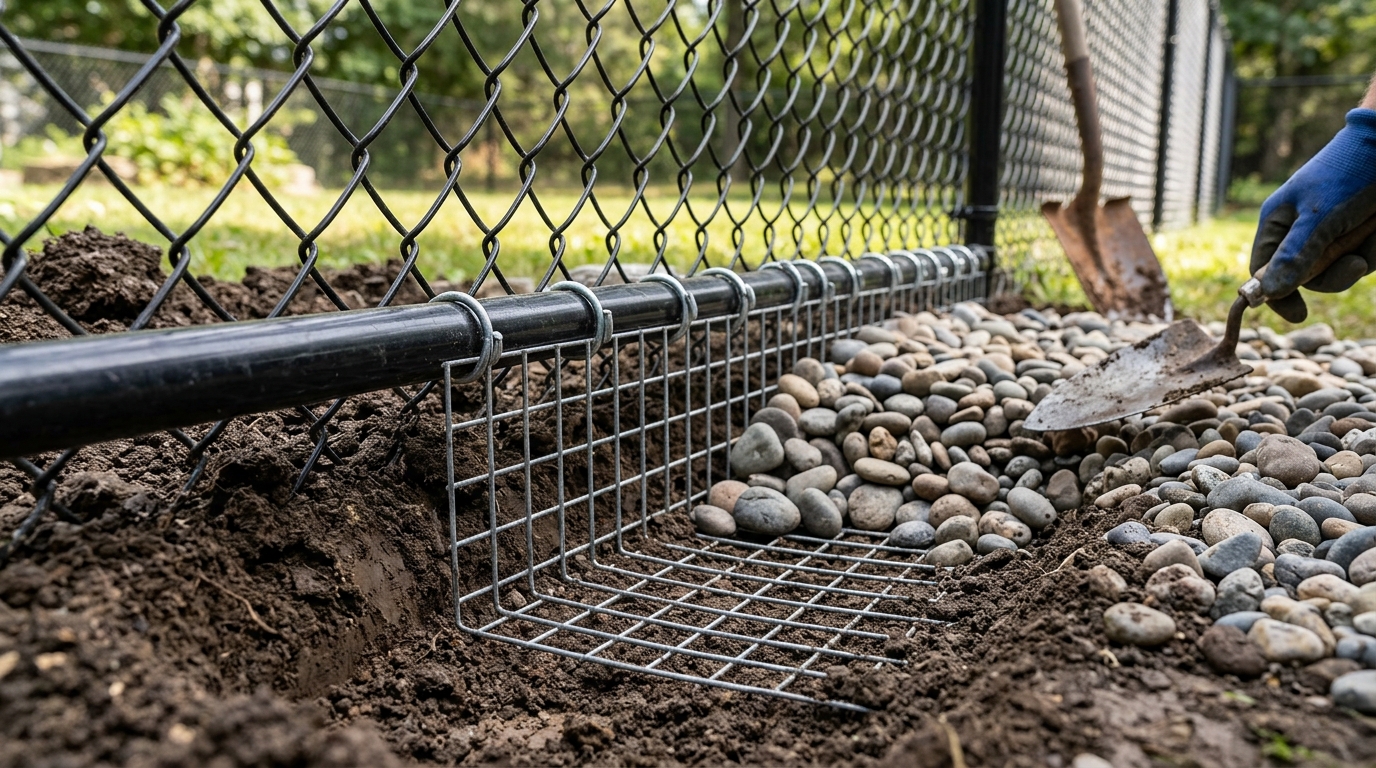
When we build a professional-grade kennel, we have to think like a dog, which usually means looking straight at the ground. Even the strongest fence won't do much good if your pup can simply tunnel their way out in a matter of minutes. To prevent this, we focus on reinforcing the base of the perimeter with heavy-duty hardware cloth. We bury this wire mesh about twelve inches deep and flare it inward toward the kennel area. This creates an underground L shape that stops a digging dog in their tracks, ensuring they stay safely inside the enclosure.
For homeowners who want the most permanent and secure solution, concrete footings are the way to go. We pour a solid concrete curb directly under the fence line, which creates a physical barrier that no paws can get through. This method is especially popular for high-traffic facilities or for dogs with a strong drive to escape. Not only does it stop the digging, but it also makes the entire structure more stable and easier to weed-trim around. It is a one-time investment that provides total peace of mind for years to come.
In 2025, we are seeing more people combine these physical barriers with modern modular designs for maximum safety. Professional installation ensures that there are no gaps between the fence panels and the ground where a small dog might squeeze through. We also pay close attention to the corners and gate areas, as these are the spots where escape artists tend to focus their energy. By reinforcing these weak points during the initial build, we create a secure environment that handles even the most persistent chewers and diggers. This proactive approach saves you from the stress of a lost pet and keeps your backyard looking great.
We are taking dog kennel fence installation to the next level by blending heavy duty physical barriers with the latest digital containment technology. While a sturdy fence provides the essential structural foundation, we reinforce that boundary with professional grade FM radio signals to ensure your pet stays exactly where they belong. These modern systems are a far cry from old DIY kits because they offer 100 percent signal consistency without the interference issues of the past. By combining a visible structure with an invisible layer of protection, we create a redundant safety net that gives you total confidence in your dog's security.
Modern technology also allows us to put the status of your kennel right in the palm of your hand through mobile app integration. You can receive instant alerts on your phone if your dog tests the boundary or if there is ever a break in the signal line. This setup is especially practical for larger properties where traditional timber fencing might be cost prohibitive or difficult to monitor constantly. We focus on a professional installation that typically ranges from 1,800 to 3,500 dollars, providing a high tech solution that is often more reliable than a standard fence alone.
Our approach centers on making sure your high intent containment needs are met with a system that is both smart and simple to use. We guide you through the process of setting up the mobile alerts so you can keep tabs on your pet even when you are away from home. This combination of a physical kennel and smart tech prevents common escape artist behaviors like digging or jumping. You get the peace of mind that comes from a professional build, backed by the most reliable security tools available in 2025 and 2026.
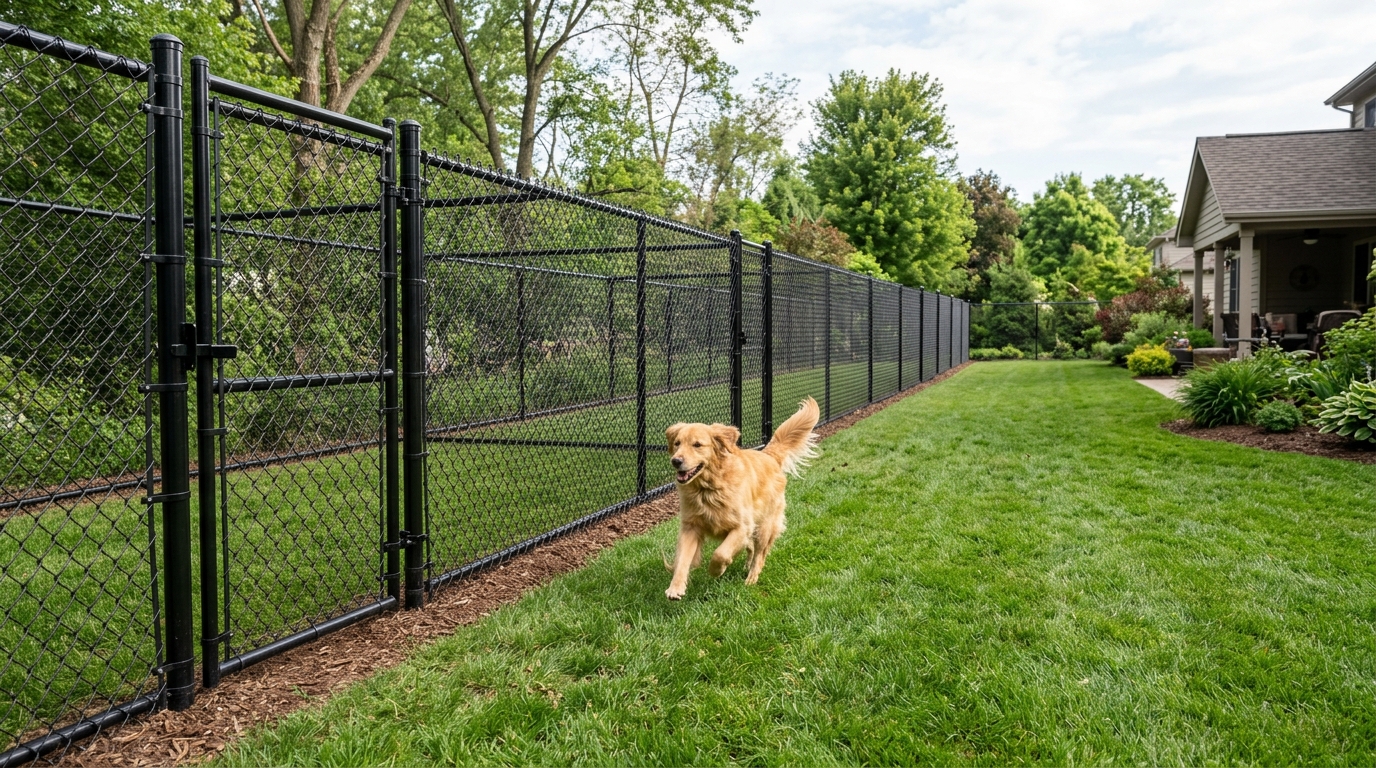
When you are planning a professional kennel installation, you have to think about more than just the footprint of the structure. I always recommend calculating your square footage based on your dog's adult size and energy level to ensure they have enough room to pivot and run without hitting the walls. A good rule of thumb is to provide at least ten square feet for every inch of your dog's height, though more is always better for high energy breeds. You want to create a space that feels like a secure retreat rather than a cramped enclosure. Professional builds in 2025 often incorporate modular designs that allow you to expand the area if you add another pet to your family later on.
Gate placement is just as important as the total size because it dictates how you and your dog interact with the space. I suggest installing gates in a corner or a central point that allows for a double entry system to prevent any accidental escapes when you are coming or going. You should also consider the path you take to clean the run or refill water bowls, as a poorly placed gate can make daily chores feel like a hassle. Strategic placement ensures that the flow of movement stays natural and keeps your dog from feeling trapped in a dead end. Adding reinforced latches and heavy duty hinges will provide that extra layer of security that modern homeowners expect from a high quality installation.
If you are working with a larger property, you might even consider a hybrid approach that combines a physical kennel with a professional hidden fence system. This setup gives your dog a secure, structured place to rest while allowing them the freedom to roam a larger perimeter under digital supervision. These advanced FM radio systems are incredibly reliable and often cost much less than fencing in several acres with traditional timber or chain link. When deciding what kind of fence to install, choosing the right gate hardware and sizing the primary run correctly ensures your investment lasts for years while keeping your furry friend safe and happy.
Investing in a professional dog kennel fence installation is one of the smartest ways to upgrade your property while giving your pet the freedom they deserve. A well-built enclosure does more than just keep your dog from wandering off, as it acts as a permanent, high-quality structure that adds real value to your home. When you choose a secure, physical facility over a simple yard fence, you are creating a dedicated space that manages your pet's safety with precision. This specialized setup ensures that even the most determined escape artists stay right where they belong. It is a practical improvement that offers long-term peace of mind for any homeowner who views their dog as a true family member.
Modern kennel designs have come a long way, and the latest options for 2025 and heading into 2026 focus on blending high-tech security with modular durability. You can now integrate advanced signaling systems or reinforced physical barriers that are specifically designed to prevent digging or jumping. Choosing a professional installation means you get a system that is tailored to your specific land and your dog's unique personality. While the initial cost might be higher than a basic DIY kit, the reliability of a professional build prevents expensive accidents and saves you from constant repairs down the road. You are not just buying a fence, you are installing a specialized containment solution that works every single time.
Ultimately, the goal is to create a stress-free environment where your four-legged friend can play safely without constant supervision. Seeing your dog enjoy their own secure space makes the entire installation process worth the effort. You will feel much more confident knowing that your pet is protected by a facility built to the highest safety standards. With the help of a chain link fence company, your new kennel will serve your family for many years to come. It is the best way to balance your need for a beautiful backyard with your responsibility to keep your pet secure and happy.
Traditional timber fencing can cost you upwards of $10,000 for a large yard. If you want to save money without losing reliability, professional hidden fences usually run between $1,800 and $3,500. It is a great way to get 100% signal consistency while keeping your budget under control.
Yes, galvanized chain link fence is a classic and cost-effective choice that lets your dog see what is going on around them. Just make sure you choose a thicker gauge wire so stronger dogs cannot bend it. You can also add a top rail or tension wire to keep the fence rigid and secure for years.
Modular steel panels are the gold standard if you are dealing with a determined escape artist. These panels use narrow vertical bars that make it nearly impossible for a dog to get a foothold. They are also powder-coated to resist rust, so they stay looking modern and clean for a long time.
While DIY kits are available, I recommend professional installation to ensure your signal stays consistent. Modern setups use a mix of digital signals and reinforced barriers that require a precise touch. Going pro gives you the peace of mind that the system will actually work when your dog tests the limits.
The best way to prevent digging is to secure the bottom of your enclosure with a tension wire or a buried footer. For modular steel setups, the weight and design of the panels often discourage digging naturally. It is all about creating a solid physical boundary that goes just a bit deeper than the surface.
Modern professional hidden fences are incredibly reliable and offer much better signal consistency than older models. They are perfect for sprawling backyards where a physical fence might be too expensive to build. Why aluminum fencing is a great option for dog owners is a common question, as it provides a budget-friendly solution that keeps your furry friend safe across your entire property.
VIEW OUR WORK
LEARN MORE
CONNECT WITH US