
A gate can look secure and still create serious risks for children, pets, and anyone walking or driving through it. A residential gate safety inspection helps uncover problems such as weak hinges, faulty sensors, unsafe gaps, poor access controls, or an automatic gate that fails to stop and reverse. I start by identifying the gate type because an automated driveway gate, pool gate, pedestrian gate, and indoor child-safety gate each require different checks.
I focus on the details that matter most: stable construction, safe movement, reliable release systems, clear warnings, and proper separation between vehicles and pedestrians. For automated gates, I also check the operator, entrapment protection, controls, and compliance with applicable U.S. safety standards. A careful inspection can help prevent injuries, reduce repair costs, and give you confidence every time the gate opens or closes.
I start every residential gate safety inspection by determining whether the gate is an automated driveway or vehicular gate. These gates need more than a visual check because the operator, controls, sensors, hinges, rollers, and closing force all affect safety. I test whether the gate stops and reverses when it meets an obstruction. I also look for entrapment hazards, accessible pinch points, warning signs, a manual release, and a separate pedestrian route. UL 325 is the main U.S. safety standard for gate operators, while ASTM F2200 addresses the construction of automated vehicular gates. I also compare the installation with current local code requirements because unsafe operation can create injury risks and liability concerns.
Manual pedestrian gates usually have fewer mechanical parts, but they still need a careful inspection. I check that the gate is stable, swings or slides as intended, latches securely, and does not create sharp edges, pinch points, or gaps that could trap fingers or a child’s head. Pool barrier gates need an even closer review because their main purpose is to prevent unsupervised access to the water. I verify that the gate is self-closing and self-latching, opens away from the pool where required, and has the correct height, spacing, and latch location under applicable local pool codes. The gate’s location and daily use determine which measurements and safety features matter most.
Indoor child-safety gates are a separate category, so I do not inspect them like driveway or pool gates. I focus on the gate’s mounting, pressure or hardware installation, locking method, stability, and suitability for the opening, stairs, or room where it is used. A gate that works well in a doorway may be unsafe at the top of stairs, especially if it can be pushed out or creates a trip hazard. Once I identify the type, I can apply the right inspection criteria and explain which repairs are urgent, which maintenance tasks can help prevent failures, and which items may require code review or professional correction. This approach gives homeowners a practical record of the gate’s condition instead of treating every gate as if it had the same risks.
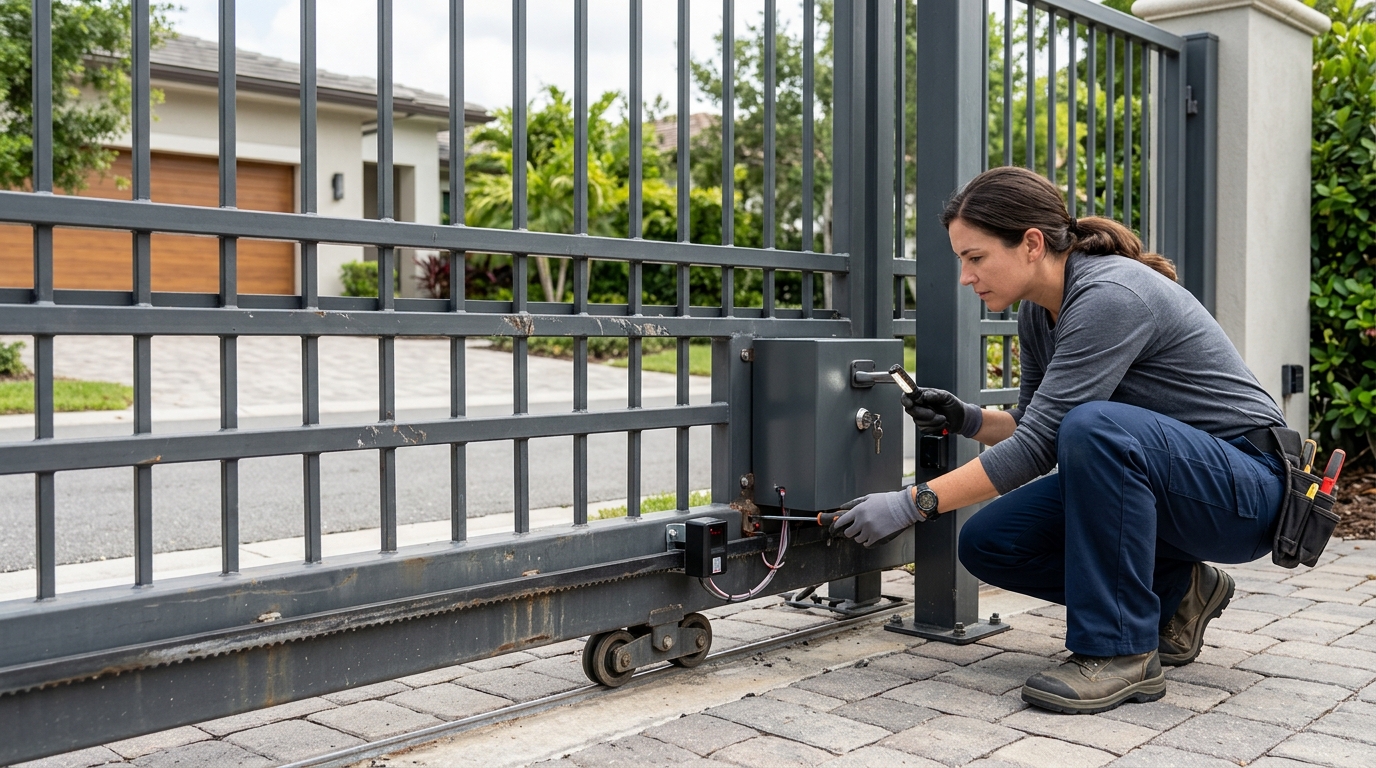
During a residential gate safety inspection, I start with the gate itself. I check the frame, hinges, rollers, and tracks for cracks, looseness, rust, wear, or anything that could make the gate bind or sag. The operator should be securely mounted and properly sized for the gate. Wiring, conduit, controls, and power connections should also be protected and in good condition. I look for required warning signs, a working manual release, and a separate pedestrian access route so people do not need to walk through the vehicle gate.
Next, I test the gate’s entrapment protection instead of relying on a visual check alone. Photo-eye sensors should detect a person, vehicle, or object in the opening, and contact sensors should respond if the gate meets an obstruction. When either safety device is triggered, the gate should stop and reverse promptly without excessive force or delay. I also check that remotes, keypads, and other controls are positioned and programmed to reduce accidental activation, especially where children or visitors may be present.
A thorough inspection can uncover problems that may lead to injuries, property damage, downtime, or liability concerns. I compare the installation with the operator’s safety requirements and applicable local rules, including standards commonly associated with UL 325 and ASTM F2200 for automated vehicular gates. If the gate fails a sensor test, does not reverse quickly, or has damaged structural or electrical parts, I recommend taking it out of service until the issue is corrected. Keeping inspection records and addressing repairs promptly also gives homeowners and property managers a clearer path toward ongoing maintenance and code compliance.
During a residential gate safety inspection, I first identify the gate type and how it is used. An automated driveway gate has different requirements than a manual pedestrian gate or pool barrier gate, so the inspection needs to match the actual risk. For automated gates, I review the operator, controls, entrapment protection, warning signs, manual release, hinges, rollers, and overall gate structure. UL 325 commonly applies to the gate operator, while ASTM F2200 addresses the construction and safety features of automated vehicular gates. I also check local building codes and the manufacturer’s requirements because those rules can affect what must be installed, tested, or repaired.
A key part of the inspection is confirming that the gate responds safely when it meets an obstruction. I test whether it stops and reverses properly, and I look for unsafe gaps, pinch points, damaged wiring, weak supports, or controls that children could reach too easily. Separate pedestrian access is also important because people should not have to walk through a moving vehicle gate. If the operator is outdated, lacks current safety features, or no longer meets the manufacturer’s instructions, replacement may be safer and more practical than repeated repairs. Code requirements can vary by location, so I recommend confirming specific requirements with the local building department when a project involves installation, major changes, or permitting.
Good inspection records help show that the property has been cared for responsibly. I document the gate’s condition, test results, code concerns, recommended repairs, and the date each repair or maintenance visit is completed. Promptly correcting a failed safety test is important, but routine professional maintenance can also help identify worn parts before they create an injury risk. Keep operator manuals, service reports, permits, and repair invoices together so you have a clear history of responsible upkeep. Records cannot eliminate liability, but consistent inspections, timely repairs, and an up-to-date safety system can help reduce avoidable risks.
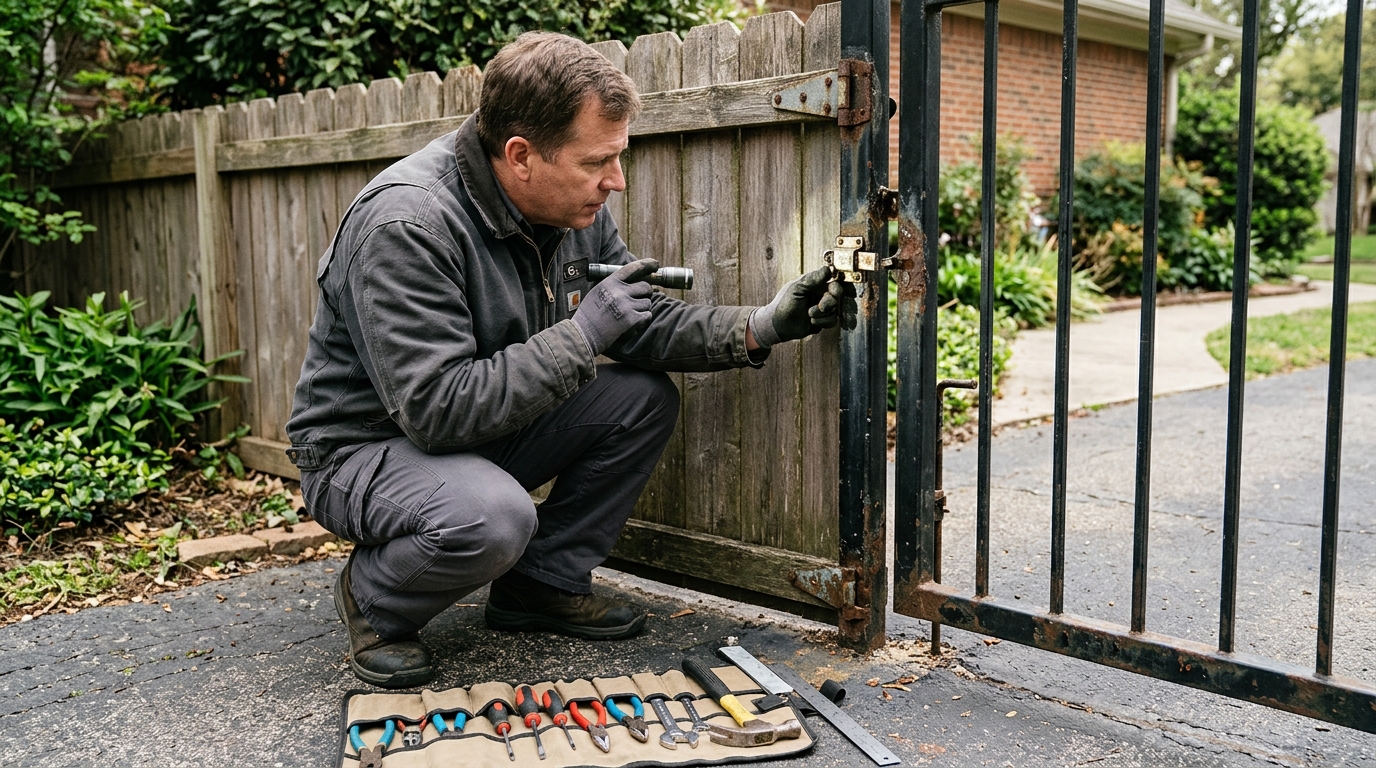
After a residential gate safety inspection, I provide a clear record of what I found, what I tested, and what needs attention. The report typically covers reversal protection, structural stability, exposed wiring, operator function, warning signs, manual release, and the safety of the controls. I also note whether the gate creates an entrapment risk or lacks a separate, safer pedestrian access point. This documentation gives you a practical repair plan and helps show that safety concerns were identified and addressed responsibly.
I prioritize repairs based on the level of risk, not simply on appearance. Failed reversal protection, damaged hinges or posts, exposed wiring, unsafe control placement, and gates that do not stop properly require immediate attention because they can cause serious injury or property damage. I also recommend replacing an operator manufactured before March 2000 because older equipment may lack important modern safety features and may not meet current expectations for safe operation. Until urgent problems are corrected, I may recommend taking the gate out of service or limiting access.
Some findings can be handled through adjustment, maintenance, or replacement of a worn component, while others point to a larger upgrade. I explain each option in plain language, including whether the repair is temporary, whether monitoring is appropriate, and when full gate or operator replacement makes more sense. After repairs, I recommend a follow-up test to confirm that the gate stops and reverses reliably under normal conditions. Regular inspections and prompt attention to new damage can reduce liability concerns and help keep the system dependable.
A residential gate safety inspection gives me a practical way to confirm that the gate is stable, operates as intended, and protects everyone who uses it. I recommend scheduling an inspection with a qualified professional who understands the specific gate type, whether it is an automated driveway gate, pedestrian gate, pool barrier, or child-safety gate. For automated gates, the inspection should include the operator, entrapment protection, controls, warning signs, manual release, and the gate’s ability to stop and reverse when an obstruction is detected. The inspector should also consider applicable local codes and standards, including UL 325 and ASTM F2200 where they apply. This thorough review can uncover risks that might otherwise contribute to an injury, property damage, or a liability claim.
After the inspection, I suggest keeping the written report, repair invoices, test results, and dates of future service in one easy-to-find file. Clear records show that safety concerns are being taken seriously and make it easier to track recurring problems. Any defect involving movement, hinges, sensors, access controls, wiring, or structural damage should be corrected promptly rather than postponed. If the gate cannot be operated safely, I recommend limiting access or taking it out of service until repairs are complete. Regular inspections and documented maintenance provide greater confidence that the gate remains safe, reliable, and ready for everyday use.
A residential gate safety inspection is a careful review of the gate, hardware, movement, access controls, and surrounding area. I look for hazards that may affect children, pets, pedestrians, or vehicles, including weak hinges, unsafe gaps, faulty sensors, pinch points, and failed stop or reverse functions.
Every type of residential gate should be inspected, but each one needs a different set of checks. I inspect automated driveway gates, manual pedestrian gates, pool gates, and indoor child-safety gates for safe construction, reliable latching, proper clearances, and age-appropriate protection.
I check the operator, hinges, rollers, controls, sensors, closing force, warning signs, and manual release. I also test whether the gate stops and reverses when it meets an obstruction, and I look for entrapment hazards, accessible pinch points, and a safe route for pedestrians.
An automatic gate must stop and reverse when it detects an obstruction. This feature helps prevent a person, child, pet, or vehicle from becoming trapped or struck. If the gate continues moving, reverses too slowly, or requires excessive force, stop using it until it is repaired.
I check that the gate is stable, moves smoothly, and closes and latches securely every time. I also look for sharp edges, loose hardware, finger-trapping points, unsafe gaps, and openings that could allow a child or pet to pass through or become stuck.
Pool gates need dependable self-closing and self-latching features, along with proper height, spacing, and separation from climbable objects. I also check that the latch is out of reach for young children and compare the gate with current local pool-barrier requirements because rules can vary by location.
You can perform basic checks, such as testing the latch, looking for loose parts, checking gaps, and confirming that an automatic gate stops and reverses. For powered gates, electrical components, closing force, entrapment protection, and repairs, I recommend a qualified professional who can evaluate the installation against applicable safety standards and local codes.
I recommend a basic inspection at least once a year and a quick safety check whenever the gate behaves differently, makes unusual sounds, or receives impact damage. Automated gates may need more frequent attention because sensors, operators, rollers, and controls can wear over time. Inspect the gate immediately after any repair, storm, collision, or change to the surrounding area.
Installing a new gate is one of the best ways to boost your home’s curb appeal, but the most common question I hear is how long the project actually takes. Your driveway gate installation timeline can range from a single afternoon for a simple manual gate to several months for a custom automated masterpiece. Understanding these stages up front helps you plan for everything from utility marking to that final satisfying click of the latch.
The truth is that the biggest delays usually happen before a single hole is even dug. Between waiting on HOA approvals and the time it takes to custom-build your gate in the shop, the invisible work often takes longer than the physical installation. I want to help you set realistic expectations so you can handle the permits and site prep without any stressful surprises.
The first few weeks of your driveway gate project are all about laying a solid foundation through proper planning and approvals. If you live in a neighborhood with a Home Owners Association, your first stop is getting their green light on your design and materials. These architectural review boards usually meet once or twice a month, so you should expect this step to take anywhere from two to four weeks. I always recommend submitting your plans early to avoid any surprise delays that could push back your actual start date. Taking the time to get these HOA approvals now prevents expensive headaches or forced removals once the gate is already standing.
Once your paperwork is in order, we have to look beneath the surface before any shovels hit the dirt. You will need to call 811 to have your local utility lines marked, which is a free service that ensures we don't hit water, gas, or power lines while digging post holes. This process typically takes about two to four business days for the crews to come out and spray-paint the ground. It is a simple but mandatory safety step that keeps your home and the neighborhood safe during the construction phase. I find that checking this off your list early gives you peace of mind as we move into the physical work.
During this same two to four week window, I also suggest checking with your local building department to see if a permit is required for your specific gate height or motor. Some cities are very quick with over the counter permits, while others might take a couple of weeks to process the application. Having these documents ready to go means that as soon as your gate arrives, there is nothing standing in the way of the installation. Managing these logistical pieces upfront allows the rest of the timeline to flow much smoother. This preparation ensures that your project stays on track and avoids any unnecessary legal or safety interruptions.
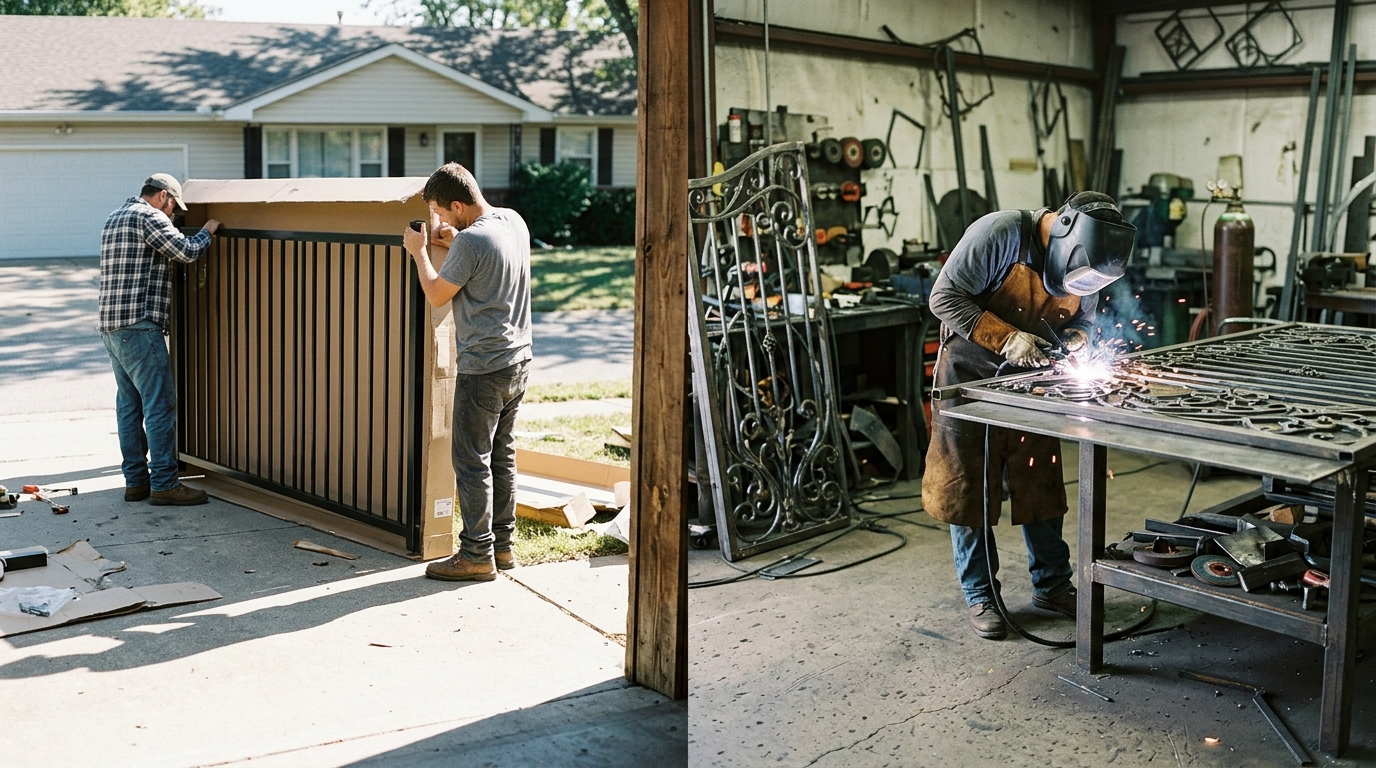
When you are planning your project, the first big decision involves choosing between a prefabricated gate and a custom architectural design. Prefabricated gates are usually kept in stock or manufactured in large batches, meaning they can often arrive at your property in just a few days or weeks. These off-the-shelf options are perfect if you are on a tight schedule and need to secure your driveway quickly. While you might have fewer style choices, the speed of delivery is a massive advantage for homeowners who want to start the physical installation process almost immediately.
If you have a specific vision for your home, a custom gate is likely the way to go, but you must account for a much longer lead time. These unique pieces are built from scratch to your exact specifications, which often requires six to fourteen weeks of fabrication time. This window allows for precise welding, specialized powder coating, and detailed quality checks that ensure your gate lasts for decades. I always tell my clients to view this period as an investment in their property value, even though it requires a bit more patience during the planning phase.
Understanding these timelines helps you coordinate other parts of your construction schedule, such as masonry work or electrical wiring. If you choose a custom design, you can use those three months of fabrication time to pull permits and get your HOA approvals in order. On the other hand, if you go with a prefab model, you need to have your utility lines marked and your installers ready to go right away. Matching your expectations to these manufacturing realities ensures that your project stays on track without any stressful surprises.
The physical installation is the most exciting part of the process because you finally get to see your vision come to life. For most custom projects, this stage typically takes between three and seven days depending on the complexity of your site. We start by digging deep concrete footings and setting the heavy duty posts in concrete to ensure everything is perfectly level. It is important to let that concrete cure properly so the gate stays straight for years to come. Once the foundation is solid, we hang the gate panels and make sure the swing or slide is smooth and balanced.
After the gate is physically in place, we focus our attention on the automation and safety features. This part of the timeline involves running electrical lines and mounting the motor that will do all the heavy lifting. I will spend time programming your remote openers, keypad codes, and any smartphone integrations you requested. We also take safety very seriously, so we carefully test the safety sensors and auto reverse functions to protect your vehicles and family. By the end of the week, your property will be secure and your new system will be ready for daily use.
Deciding on the right gate is the biggest factor in how quickly you can start using your new entrance. If you choose a prefabricated model, you can often wrap up the entire project in about three to five weeks. This path is perfect for those who want a quick security upgrade without a long wait for manufacturing. You will spend most of that time handling paperwork and waiting for utility lines to be marked before the quick one or two day installation.
Custom projects require a bit more patience but offer a tailored look that truly fits your property. Because these gates are built from scratch, you should plan for a total timeline of three to five months. The fabrication process alone can take up to fourteen weeks, so it is important to get your order in early. While the wait is longer, the result is a professional, high quality installation that meets your exact specifications and adds significant value to your home.
No matter which path you take, knowing these timelines helps you schedule your life around the construction. Most of the work happens behind the scenes during the planning and fabrication phases, meaning the actual disruption to your driveway is usually less than a week. Once your permits are in hand and the utilities are clear, you are just a few steps away from a more secure and beautiful property. Understanding the installation process ensures that you can move forward with confidence, knowing exactly what to expect as your new gate becomes a reality.
The total time can range from a single afternoon for a basic manual gate to several months for a custom automated system. Most of the time is actually spent on planning and waiting for custom parts rather than the physical labor. I recommend budgeting at least four to eight weeks for the average project from start to finish.
HOAs usually have specific rules about materials and designs that you must follow to avoid fines or being forced to remove the gate. Since these boards often meet only once a month, getting their green light can take two to four weeks. It is a vital step that ensures your new gate stays standing without any legal headaches.
Before I can dig any post holes, I have to make sure we will not hit gas, water, or power lines. You simply call 811 to have local crews come out and spray paint the ground. This free safety service typically takes two to four business days to complete.
Yes, because a custom gate has to be built in a shop before it ever reaches your driveway. This invisible work can add several weeks to your timeline depending on how busy the fabricator is. Once the gate is actually built and delivered, the physical installation usually goes quite quickly.
The best way to keep things moving is to submit your HOA and permit paperwork as early as possible. You should also have your design and materials picked out before you call for utility markings. Being prepared with your choices helps me avoid delays once the construction phase begins.
If the 811 markings show a line directly under your gate path, we may need to adjust the placement of your posts. This can add a few days to the planning stage as we find a new safe spot to dig. It is much better to find this out early than to accidentally hit a pipe during the install. Installing an Electric Gate in Los Angeles requires careful attention to these underground details to ensure a safe and efficient setup.
When you are ready to begin, a professional driveway gate installation will ensure that every technical detail is handled correctly from the start.
Choosing the right perimeter for your home is a big decision, and lately, it usually comes down to the classic debate of vinyl vs iron fencing. You want something that looks great and keeps your family safe, but you also have to think about your weekend schedule and your wallet. I’ve seen many homeowners struggle with this choice because while one offers total privacy, the other provides a level of timeless strength that is hard to beat.
I always tell my friends to look past the initial price tag and think about how much work they want to do ten years from now. Vinyl is fantastic if you want to set it and forget it with just a quick rinse every spring. On the other hand, iron and its modern metal cousins are the gold standard for security and can easily last a lifetime if you give them a little love. It really comes down to whether you prioritize a secluded backyard retreat or a sturdy, ornamental boundary that stands the test of time.
When you are looking to turn your backyard into a personal sanctuary, vinyl privacy fencing is usually the first choice I recommend. These solid panels act like a wall for your property, blocking out neighbors and keeping your kids or pets tucked safely out of sight. Since the material is non-porous and colored all the way through, you won't have to worry about staining or painting it every few years. It is a fantastic option if you want to set it and forget it while enjoying a quiet afternoon in total visual privacy. A simple rinse with a garden hose is usually all it takes to keep these panels looking brand new for decades.
On the other hand, iron and steel fencing offer a level of raw strength and classic beauty that vinyl just cannot match. While you lose the visual privacy of a solid panel, you gain an incredibly tough perimeter that is nearly impossible to break through. This open design is perfect if you have a beautiful view you want to preserve or if you need to keep a close eye on the street for security reasons. Modern metal fences are treated to resist the elements, so they can stand tall through extreme heat and freezing winters without warping or cracking. It is a premium investment that adds a high-end, sophisticated look to any home while providing unmatched peace of mind.
Choosing between the two really comes down to whether you value a hidden retreat or a fortified boundary. If you have a pool or live on a busy corner, the total coverage of vinyl helps your space feel much more intimate and relaxed. However, if your main goal is to create a permanent, high-security barrier that lasts for a century, the weight and durability of iron are the way to go. I often tell homeowners to think about their long-term goals and how much time they actually want to spend on maintenance. Both materials are top-tier choices, but they serve very different lifestyles and practical needs.
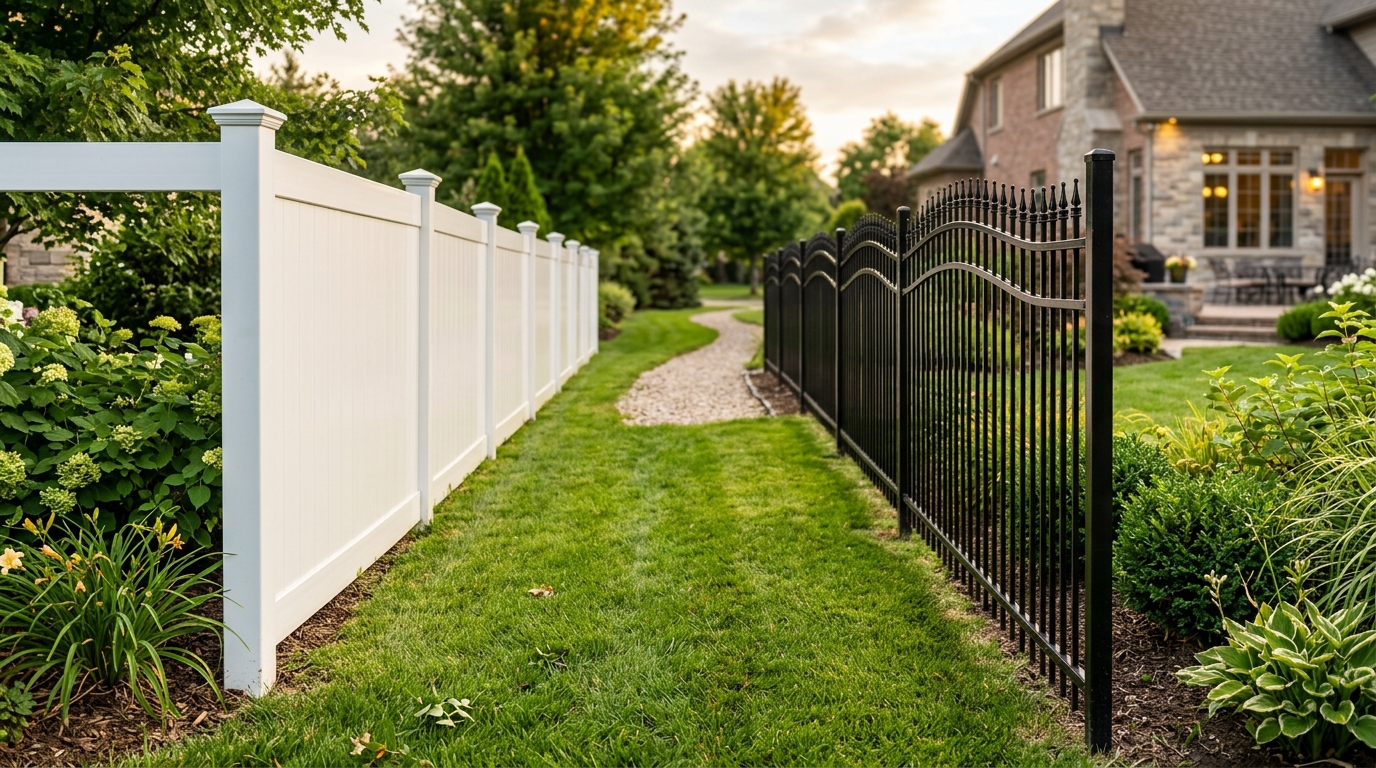
When you look at the initial price tag, vinyl fencing is almost always the more budget friendly option for homeowners today. You can expect to pay significantly less per linear foot for a high quality vinyl fence installation compared to ornamental iron or steel. This makes vinyl a fantastic choice if you want to secure a large perimeter without breaking the bank right now. It provides immediate curb appeal and privacy for a fraction of the investment required for metal alternatives. For many families, the upfront savings allow for other backyard upgrades like landscaping or a new patio.
Iron fencing sits at a much higher price point, but it is truly a "buy it once" investment that can last for a century. While vinyl is durable and handles moisture well, it can eventually become brittle or warp under extreme weather conditions over several decades. Iron or steel products are built to withstand the elements and provide a level of security that synthetic materials simply cannot match. If you plan on staying in your home for the long haul, the higher initial cost of metal actually balances out over time. You won't be looking at a full replacement in thirty years, which saves you a massive amount of money in the future.
Choosing between these two materials really comes down to your personal timeline and how you view long term value. Vinyl is the king of low maintenance and keeps your costs low today, which is perfect for most residential needs. However, if you want something that your grandchildren might still see standing, the premium price of iron pays for itself through sheer longevity. I always tell my clients to consider how long they plan to live on the property before making the final call. Both options add great value to your home, so it really depends on whether you prefer immediate savings or a permanent architectural feature.
If you are looking for the ultimate "set it and forget it" option, vinyl fencing is going to be your best friend. I always tell my clients that maintenance for PVC is as simple as grabbing your garden hose on a sunny afternoon. You just need to give it a quick rinse every few months to knock off any dust, grass clippings, or dirt that might have splashed up. Because the color is baked right into the material, you never have to worry about scraping off old flakes or applying a fresh coat of paint. It is a fantastic choice if you want a beautiful perimeter without adding more chores to your weekend to-do list.
Wrought iron and steel fences offer unmatched structural strength, but they do require a little more hands-on attention to stay in top shape. I recommend doing a quick walk-around once or twice a year to check for any small chips in the finish or signs of surface rust. If you catch a scratch early, a tiny bit of touch-up paint is usually all it takes to keep the barrier looking sharp and professional. While it takes more effort than vinyl, this routine care is what allows metal fencing to last for a century or more. Most of my customers find that the extra security and timeless look are well worth the occasional afternoon of maintenance.
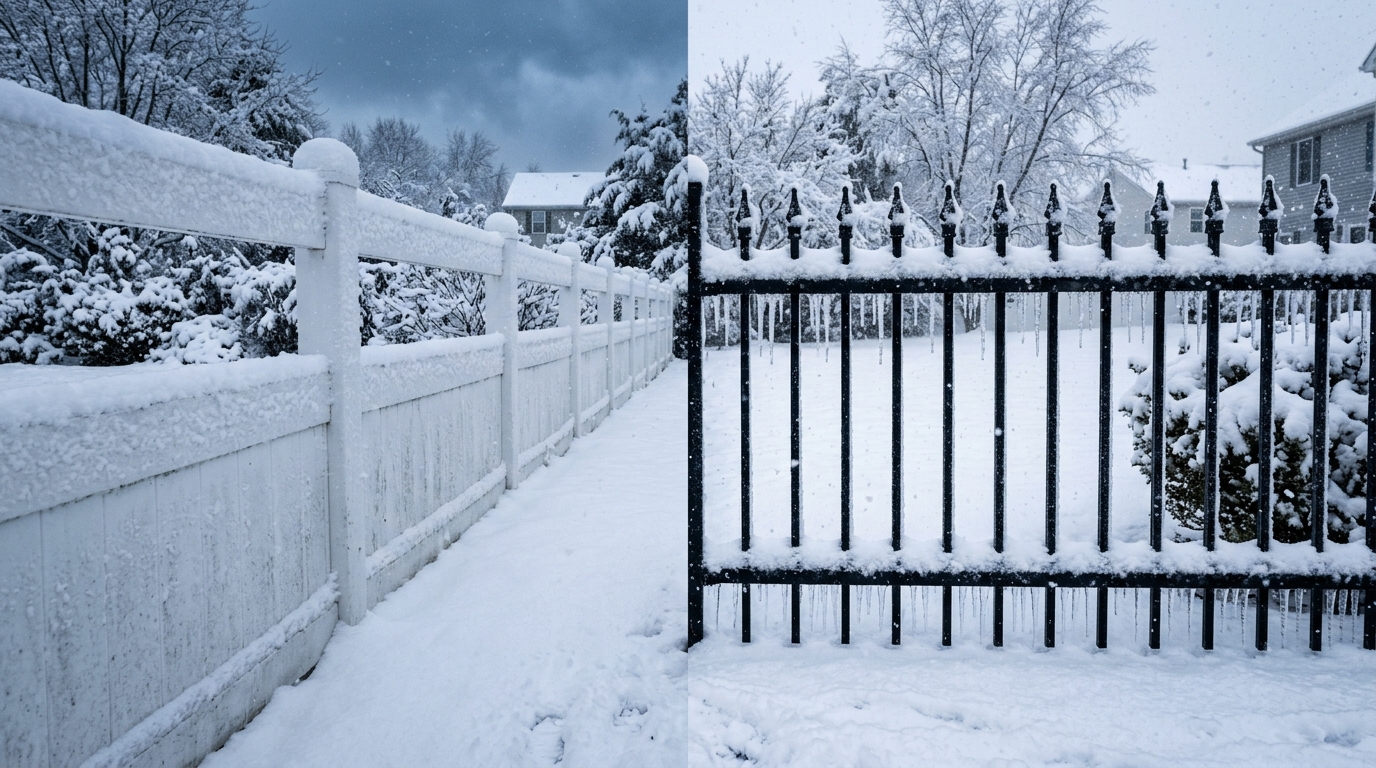
When you are dealing with a climate that swings from humid summers to freezing winters, vinyl fencing really shines as a moisture-resistant champion. I love recommending vinyl for homeowners who are tired of dealing with rot, peeling paint, or warped wood after a rainy season. Because it is non-porous, it will not soak up water or harbor mold, and modern UV inhibitors keep it from turning yellow in the sun. It is the ultimate "set it and forget it" option if you want a fence that looks just as clean after a decade of storms as it did on day one. You can simply spray it down with a garden hose to remove any dirt or debris that accumulates during the changing seasons.
On the other hand, if your property sits in an open area where heavy wind loads and extreme temperature spikes are the norm, iron fencing is virtually unbeatable. While vinyl can occasionally become brittle in deep freezes or sag under intense heat, iron stays perfectly rigid and secure regardless of the thermometer reading. The weight and strength of metal mean it will not rattle or buckle when those high-speed gusts come whipping through your yard. It offers a level of structural integrity that gives you total peace of mind during severe weather events. Even though it requires a bit more check-up to prevent rust and corrosion, its ability to stand firm against the elements is why it remains the gold standard for long-term durability.
Choosing the right fence ultimately comes down to how you plan to use your outdoor space and what kind of long-term commitment you want to make. If your main goal is to create a private sanctuary where the kids can play without the neighbors watching, vinyl is your best bet. It offers that classic, clean look and requires almost zero effort to keep it looking new year after year. You will save money on the initial installation, which makes it a fantastic high-value choice for most residential backyards. This material is perfect for busy homeowners who want to set it and forget it while enjoying a beautiful perimeter.
On the other hand, iron and high-quality steel are the clear winners if you are prioritizing security and a timeless, ornamental style. These materials are built to last a century, making them a smart investment for property owners who want the ultimate level of durability. While the upfront cost is higher, you are paying for a fence that can withstand extreme weather and provide a level of protection that plastic simply cannot match. If you do not mind a little bit of touch-up work over the decades to prevent rust, the strength and elegance of metal are truly unmatched.
I generally recommend vinyl for anyone looking for a balance of privacy and affordability without the headache of ongoing chores. It is the modern standard for a reason, especially since today's high-grade PVC is much tougher than the versions from years ago. However, if you are securing a commercial property or a luxury estate where the fence needs to be a permanent architectural statement, why choose wrought iron fence for your home? Think about your daily life and how much time you want to spend on maintenance before you make your final call. Both options are excellent upgrades that will significantly boost your property value for years to come.
Vinyl is the clear winner for privacy because the solid panels act like a wall for your property. It blocks the view from neighbors and keeps your backyard feeling like a secluded sanctuary. Iron has an open design that is beautiful, but it will not keep people from seeing into your yard.
Vinyl is a great choice if you want to set it and forget it. It is non-porous and the color goes all the way through, so you never have to paint or stain it. A quick rinse with a garden hose every spring is usually all you need to keep it looking brand new.
Iron and steel are the gold standard when it comes to raw strength and keeping your home secure. It is incredibly tough and nearly impossible to break through compared to other materials. If you want a sturdy perimeter that stands the test of time, iron is your best bet.
Vinyl is very durable and can last for decades without showing much wear and tear. Since it does not rot or rust, it stays looking fresh with very little effort on your part. It is a smart long-term investment for homeowners who want to avoid heavy weekend chores. A vinyl privacy fence installation is a great way to ensure your yard stays protected and beautiful for years.
Modern metal fencing is built to be very hardy, but it does require a little love to stay in top shape. You may need to touch up the finish occasionally to prevent rust and keep it looking classic. If you give it that small amount of attention, an iron fence can easily last a lifetime.
It really comes down to whether you prioritize a private backyard retreat or an ornamental boundary with maximum strength. Think about your schedule and whether you prefer a quick hose-down or a more hands-on approach to maintenance. Both are excellent choices, so pick the one that fits your lifestyle and your vision for your property.
Choosing the right entrance for your property usually comes down to one big decision: cantilever vs overhead gates. Both options are great for high-traffic areas because they slide out of the way without needing a track on the ground, but they work in very different ways. I’ve seen plenty of folks get stuck picking the wrong one simply because they didn't consider their specific space or terrain.
If you have plenty of room to the side but uneven ground, a cantilever gate is usually your best friend. However, if you're dealing with massive, heavy gates or a tight footprint, an overhead track might be the better way to go. It really comes down to balancing your available vertical clearance against your horizontal side room. Taking a moment to look at your layout now will save you a lot of maintenance headaches down the road.
When you are looking at a cantilever gate, the magic happens through a clever counterbalance system. Instead of the gate sliding along a track on the ground, it uses a longer tail section that stays tucked behind your fence line to anchor the weight. This design allows the gate to float across your driveway without ever touching the pavement, which is a lifesaver if you have uneven terrain or a steep slope. You will need about fifty percent more side room to accommodate that extra tail length, but the tradeoff is a system that stays reliable even when snow or debris piles up.
Overhead track systems take a different approach by hanging the gate from a heavy duty beam that spans the entire entrance. Because the weight is supported from above, these gates can be incredibly heavy and wide without putting too much stress on the moving parts. You do not need the extra side clearance that a cantilever requires, making this a great choice for tight property lines where every inch of space counts. The main thing to keep in mind is the height of the beam, as you want to make sure it is tall enough for your largest delivery trucks to pass through safely.
Deciding between these two usually comes down to your specific property layout and what kind of traffic you expect. If you have plenty of room to the side but your driveway is bumpy or unpaved, the cantilever is likely your best friend because it avoids ground contact entirely. On the other hand, if you are working in a cramped industrial alley where side space is a luxury, an overhead system provides a sturdy solution that stays within your footprint. Both options are great for high traffic areas because they are built to last and require much less cleaning than a traditional ground track.
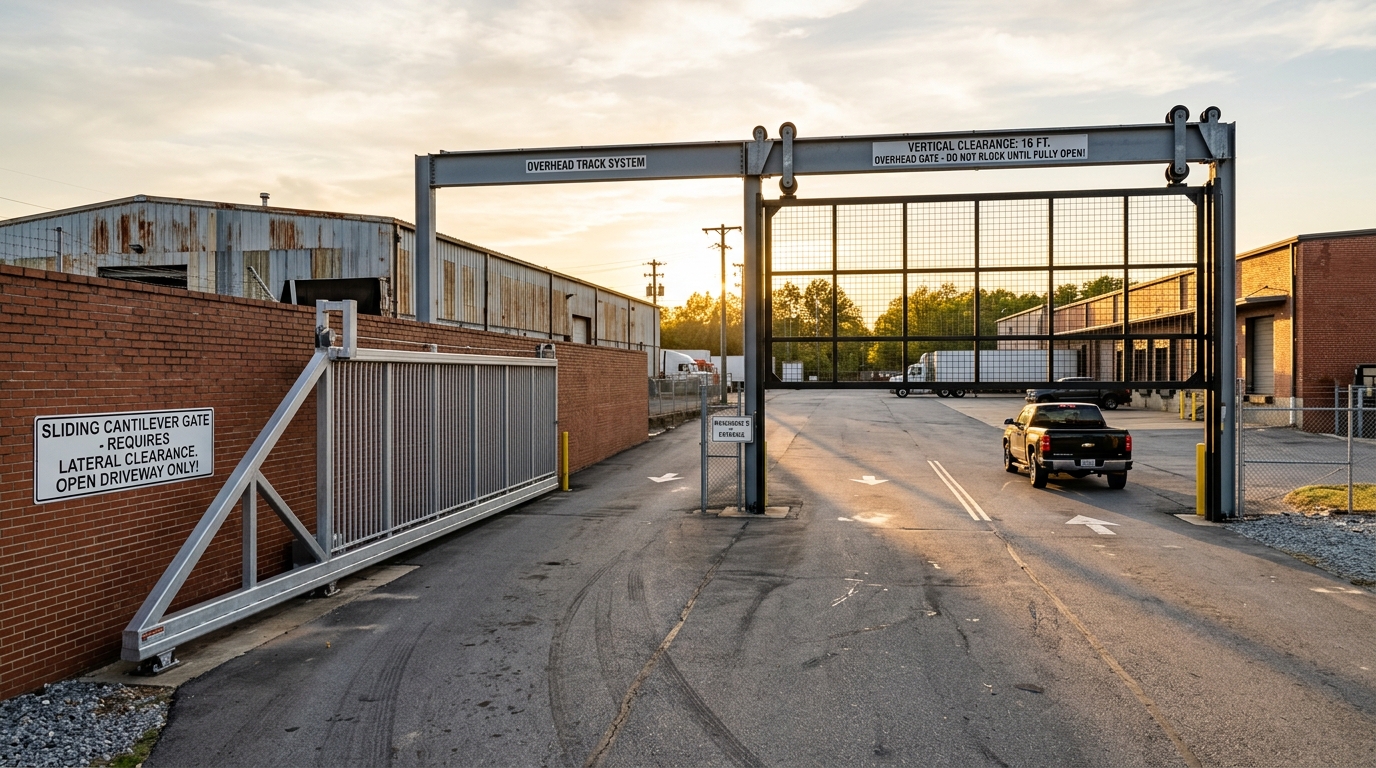
When you are planning your gate installation, the first thing I want you to look at is the side room available along your fence line. Cantilever gates are a fantastic trackless option, but they require a significant amount of extra lateral space to function properly. Because these gates use a counterbalance tail to stay suspended, you will typically need about fifty percent more width than the actual driveway opening. If your property has a narrow footprint or sits right against a neighboring building, you might find that a cantilever system simply has nowhere to slide when it opens.
If your side room is limited but you still need a heavy duty solution, an overhead gate might be the better fit for your layout. These systems use a sturdy overhead beam to support the gate, which eliminates the need for that long counterbalance tail sticking out to the side. However, you have to be mindful of your vertical clearance because that overhead beam sets a permanent height limit for every vehicle passing through. I always tell business owners to measure their tallest delivery trucks or pieces of equipment before committing to this design. You do not want to realize after the installation that your own fleet cannot make it under the support structure.
Choosing between these two comes down to where you can afford to lose a little bit of space. A cantilever gate keeps your sky open for tall machinery but eats up a lot of horizontal real estate along your perimeter. On the other hand, an overhead gate is a space saver on the ground but creates a ceiling that can be a dealbreaker for high profile vehicles. I recommend grabbing a tape measure and marking out both the lateral slide area and the potential height of a crossbeam. Seeing those physical limits in person usually makes the right choice for your specific property much clearer.
When you are dealing with a property that has gravel, dirt, or uneven terrain, a cantilever gate is usually your best friend. These systems are engineered to slide across the opening without ever touching the ground, relying on a counterbalance tail and rollers for support. Because they do not require a track on the pavement, you do not have to worry about snow, ice, or debris jamming the mechanism. They are the perfect choice for busy commercial sites where the ground is less than perfect or where regular maintenance is a concern. You just need to make sure you have enough side room for that extra counterbalance tail to slide back when the gate opens.
If your project involves massive steel gates or exceptionally heavy loads, an overhead gate is the heavy lifter of the group. These systems use a sturdy overhead beam and trolleys to hang the gate, which allows them to support weights that would make a cantilever system sag. While you do have to consider the height of the vehicles passing underneath, the vertical support makes these incredibly stable for high-security or industrial applications. They are fantastic for tight spaces because they do not require the long counterbalance tail that cantilevers do. I always recommend these for business owners who need a compact footprint but have some serious weight to move every single day.
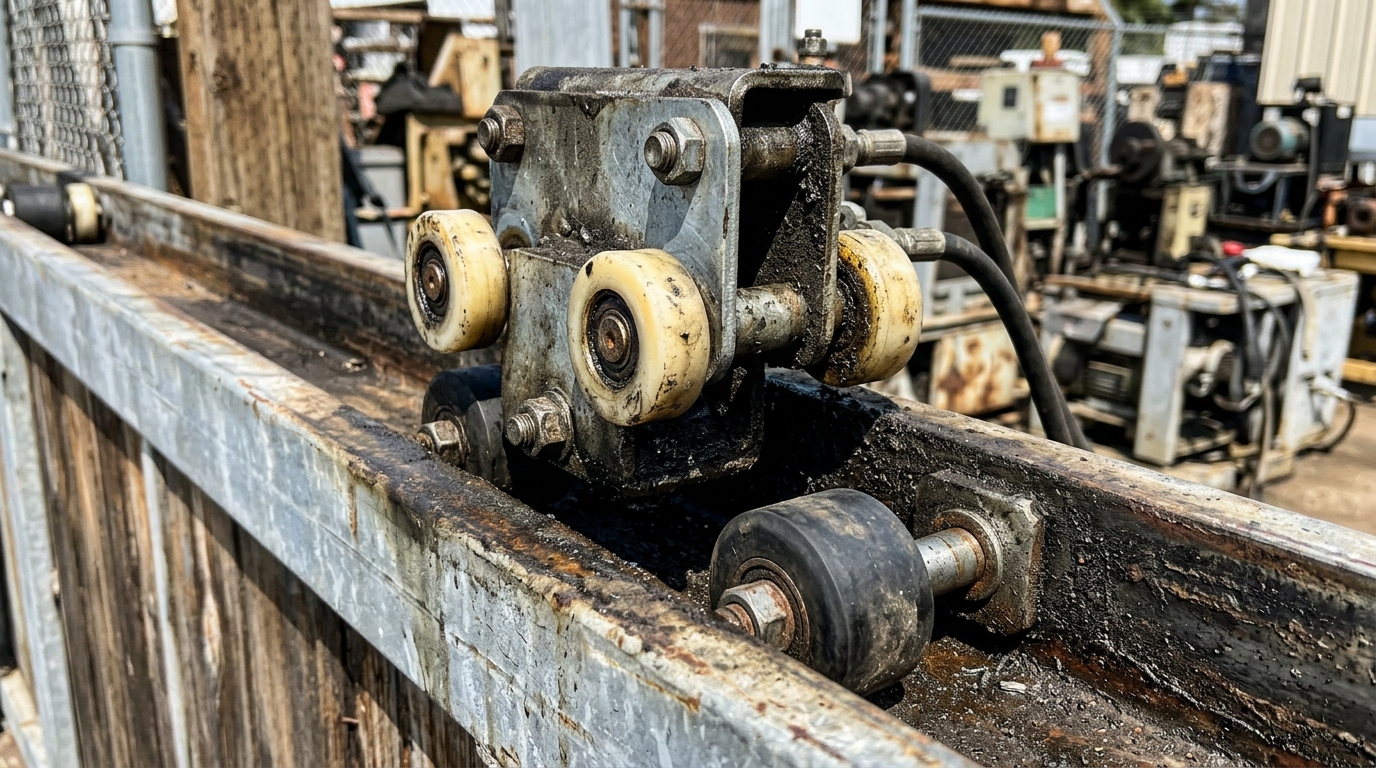
Maintaining a cantilever system is mostly about keeping an eye on those floating rollers and the space beneath the gate. Since these gates don't touch the ground, you won't have to worry about scrubbing a track, but you do need to make sure the counterbalance tail stays clear of debris. In the winter, I always tell my clients to clear out any heavy snow drifts that might pile up under the gate frame. If ice or packed snow builds up too high, it can rub against the bottom of the gate and put unnecessary strain on your motor. A quick visual check once a week to ensure the rollers are spinning freely is usually all it takes to keep things moving.
Overhead gates require a different approach because the most important components are way up in the air. You will need a sturdy ladder to inspect the overhead trolley and the track it slides through on a regular basis. Dust, bird nests, or old grease can build up inside that high track, which might cause the gate to stutter or hang up. I recommend wiping the track clean and checking for any signs of wear on the trolley wheels at least twice a year. Because these systems often handle much heavier commercial gates, catching a small alignment issue early can save you from a very expensive repair down the road.
Choosing between these two often comes down to how much time you want to spend on a ladder versus a shovel. Cantilever gates are great for busy owners who prefer low-to-the-ground maintenance, while overhead systems are perfect if you have the height clearance and don't mind the occasional vertical inspection. Both systems are incredibly reliable if you stay on top of the basics and don't let dirt accumulate in the moving parts. Just remember that a little bit of lubricant and a watchful eye will keep your property secure and your gate running quietly for years.
Choosing between these two systems really comes down to your property’s unique footprint and your daily operational needs. If you have plenty of lateral space along your fence line but deal with uneven gravel or sloped pavement, a cantilever gate is likely your best bet. It stays completely off the ground without needing an overhead beam, which makes it perfect for sites where tall trucks or cranes need unlimited vertical clearance. You just have to make sure you have that extra room for the counterbalance tail to slide back when the gate opens.
On the other hand, an overhead gate is the go-to solution when every inch of horizontal space is precious. Since the gate hangs from a sturdy top track, you do not need a long counterbalance tail taking up room on the side of your driveway. This setup is incredibly durable and can handle the heaviest industrial gates with ease, provided your vehicles can safely pass under the support beam. It is a smartest upgrade for high-traffic commercial lots where side room is limited but the ground stays relatively level between the support posts.
Ultimately, you should think about your long-term maintenance goals and the specific types of traffic entering your facility. Cantilever gates are famous for their low-maintenance design since they have fewer moving parts exposed to the elements. However, if you are moving massive loads or extremely heavy equipment, the structural integrity of an overhead system offers unmatched reliability. For those considering Metal Gates Installation In Los Angeles, take a quick measurement of your side clearance and check your height requirements to see which trade-off makes the most sense for your budget. If you are looking for an Electric Gate in Los Angeles, once you identify your main priority, the right choice for your business will become clear.
The main difference is how the gate is supported while it moves. A cantilever gate uses a counterbalance tail to float across the opening, while an overhead gate hangs from a structural beam installed above the driveway.
If you are tight on side room, an overhead track system is your best bet. It does not require the long counterbalance tail that a cantilever gate needs, so it fits perfectly on properties with narrow boundaries.
Yes, cantilever gates are perfect for uneven terrain or gravel driveways because they never touch the ground. Since the gate stays suspended, you will not have to worry about it getting stuck on rocks or dragging against a slope.
You definitely need to consider the height of the support beam for an overhead gate. You must ensure the beam is high enough to allow your largest vehicles, like delivery trucks or trailers, to pass safely underneath without hitting it.
Cantilever gates are usually much easier to deal with in the snow and ice. Because the gate is elevated, you do not have to clear a ground track every time it snows just to get your gate to open.
Absolutely, overhead tracks are designed to handle massive weight with ease. Because the gate is supported from a heavy duty beam above, it can span wide distances without the sagging issues you might see on driveway gates in Los Angeles or other systems. Understanding the Benefits of a Sliding Driveway Gate In Los Angeles can help you decide if a top-supported or side-supported sliding mechanism is right for your property.
We’ve all been there, you’re heading out for the day, hit the remote, and your gate starts jerking or makes a grinding sound that makes the neighbors look over. Keeping your entrance running smoothly doesn't have to be a chore, but these sliding gate maintenance tips are the secret to avoiding a costly breakdown. Since debris in the tracks is still the biggest reason these systems fail, a little bit of proactive care goes a long way in keeping your home secure and your morning commute stress-free.
Think of your gate like a car; it needs a little love to stay reliable and efficient year after year. Taking just a few minutes each month can actually double the life of your hardware and even cut down on your energy bills. I’ve seen plenty of gates wear out years too early just because of a bit of hidden rust or dirt, so I want to show you the easiest ways to keep things moving. It’s all about simple habits that keep your rollers spinning and your sensors clear without needing a toolbox full of heavy equipment.
A clean track is the foundation of a healthy sliding gate system and the easiest way to prevent expensive motor repairs. When dirt, stones, or fallen leaves pack into the groove, your gate motor has to work twice as hard to push the gate along its path. This extra strain leads to premature wear on the internal gears and can eventually cause the motor to burn out entirely. By keeping the path clear, you ensure the wheels glide smoothly without any resistance or jerky movements. I always tell my clients that five minutes of sweeping can save you hundreds of dollars in professional service calls down the road.
I recommend making a quick sweep of the tracks part of your weekly routine to stay ahead of any buildup. Use a stiff-bristle brush or a heavy-duty outdoor broom to push out debris that gets wedged in the corners. If you notice packed mud or stubborn grime, a quick spray with a garden hose can help loosen things up before you wipe it dry. Pay close attention to the areas near the gate stops, as these spots tend to collect the most gravel and organic matter. Once the track is clear, you will immediately notice how much quieter and more responsive your gate becomes during operation.
While it might be tempting to apply grease to the track to make it slide faster, you should actually keep the metal surface dry. Wet lubricants like oil or heavy grease act like a magnet for dust and sand, creating a grinding paste that wears down your rollers. If you feel like the gate needs a little extra help, focus your lubrication efforts on the internal bearings of the wheels instead. A clean, dry track is the industry standard for a reliable system that stands up to daily use. Keeping this area spotless is the most effective way to protect your investment and maintain your property's security.
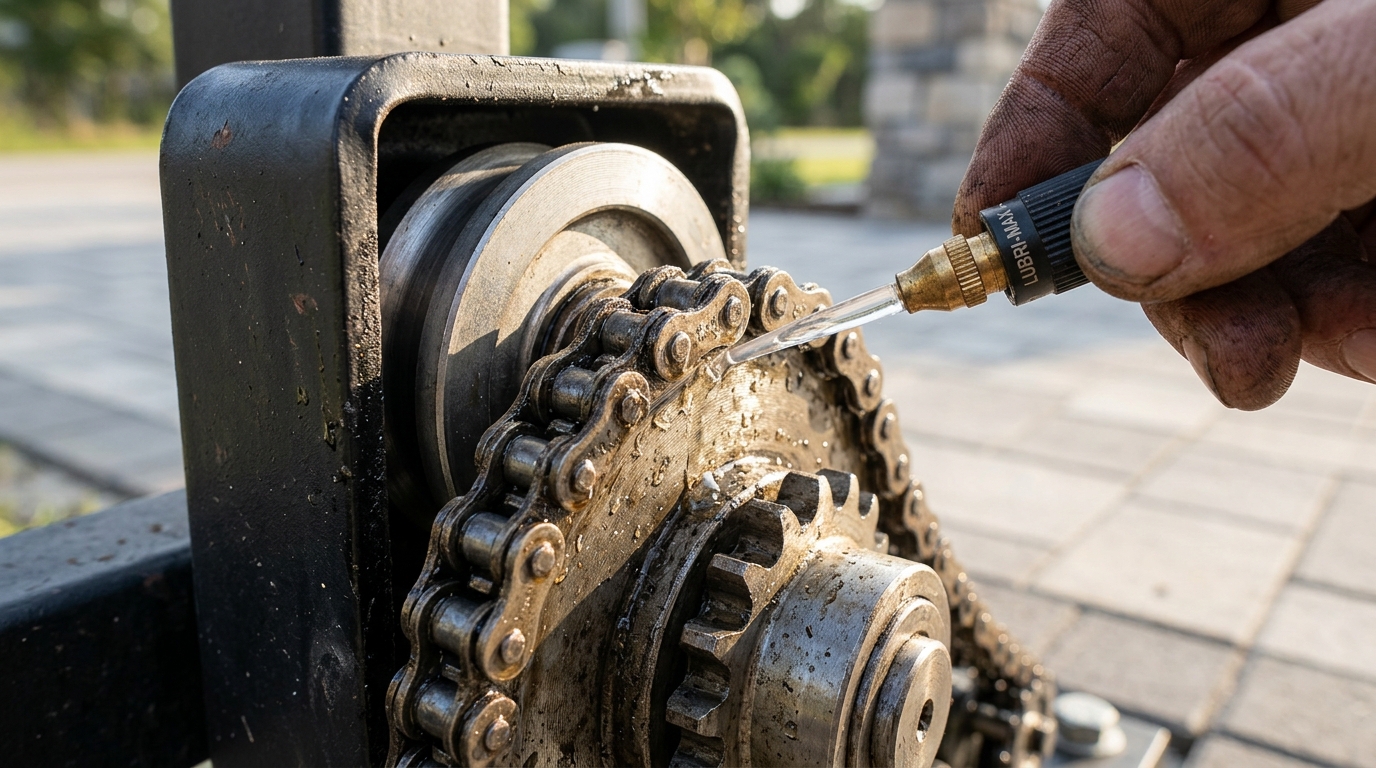
Selecting the right lubricant is the secret to keeping your gate running quietly and preventing expensive motor repairs down the road. While it might be tempting to grab a standard oil-based spray from the garage, these products actually act like a magnet for the dirt and grit that naturally settles on your driveway. Over time, that oily residue turns into a thick, abrasive paste that grinds down your rollers and puts unnecessary strain on the motor. I always recommend using a high-quality silicone spray or white lithium grease instead. These options provide a slick barrier that repels moisture and dust, ensuring your hardware stays clean and protected against the elements.
Applying your lubricant correctly is just as important as the product you choose for the job. You should focus your efforts on the internal bearings of the rollers and the pivot points of the chain rather than soaking the entire track. A light, even coat every three to six months is usually enough to maintain that effortless glide we all want for our home security. If you notice the gate starting to squeak or jerk during operation, it is a clear sign that the moving parts are thirsty for a fresh application. Taking five minutes to handle this simple task can extend the life of your equipment by years and keep your daily routine running smoothly.
Your safety sensors are the most critical part of your sliding gate system because they prevent accidents before they happen. To keep them working perfectly, I recommend starting with a simple cleaning routine using a soft, damp cloth to wipe away dust, cobwebs, or mud from the lenses. These small devices live close to the ground, so they easily get blocked by garden debris or splashing rain. Even a tiny smudge can interfere with the infrared beam and cause your gate to act up or stop moving entirely. Taking a moment to clear their vision ensures the system can accurately detect anything in its path.
Testing the auto-reverse safety sensors is just as straightforward and should be done every single month. To do this, start the gate closing and simply wave a long object, like a broom handle or a piece of cardboard, across the path of the sensors. A healthy system will recognize the obstruction instantly and trigger the gate to stop and reverse its direction. If the gate continues to close despite blocking the infrared beam, it is a clear sign that the safety sensors or wiring need professional attention. Keeping this safety feature in top shape protects your vehicles from dents and, more importantly, keeps your family and pets safe.
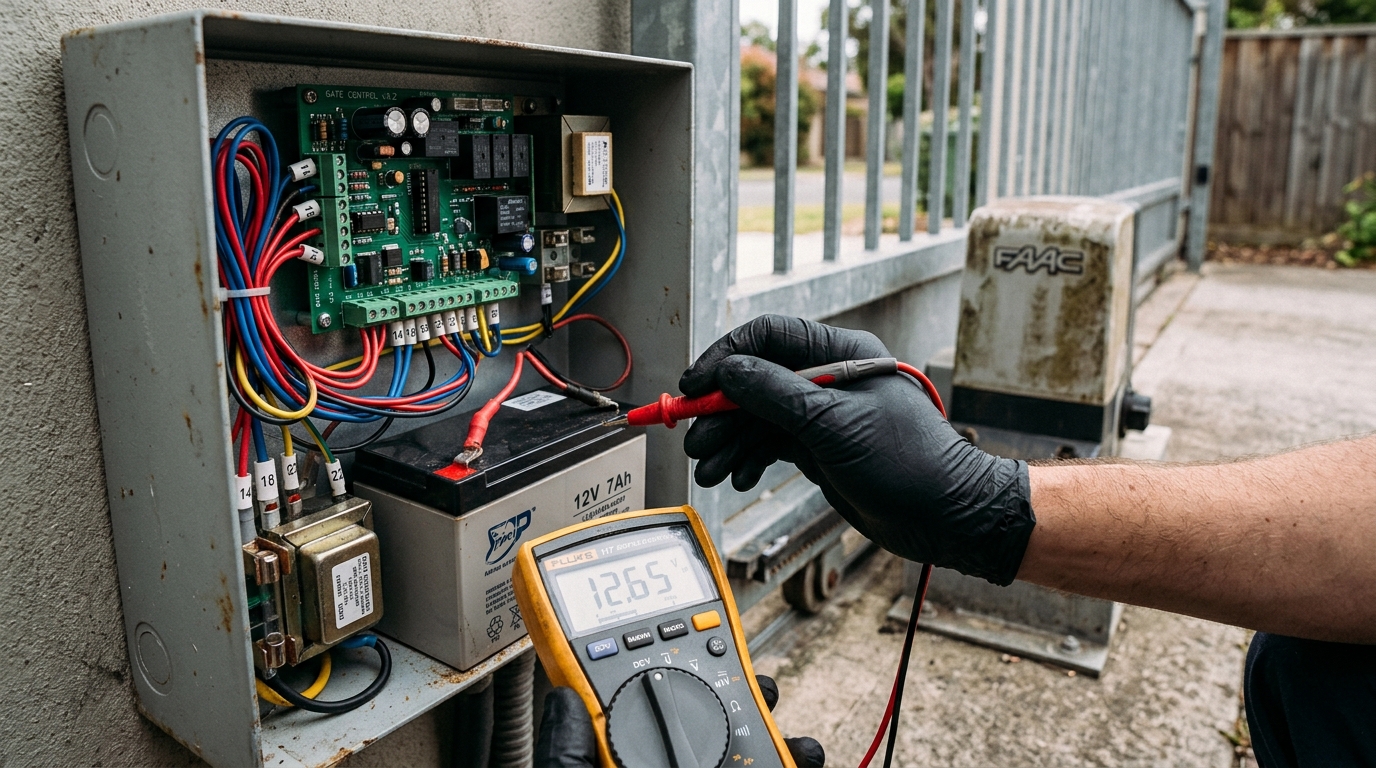
Keeping your gate's motor box clean and dry is one of the best ways to prevent electrical failures and expensive repairs. When you open the housing, you should look closely for any signs of frayed or chewed wires, which are often the work of small pests like rodents or insects looking for a warm place to nest. These tiny visitors can cause significant electrical shorts or even fire hazards if they chew through the protective insulation. I also recommend checking for any moisture buildup or corrosion on the terminals, as damp environments can quickly degrade your system's performance. If you see any loose connections or evidence of nesting, it is a clear sign that your gate needs some professional attention.
The health of your backup battery is just as important as the wiring, especially since modern solar powered systems rely so heavily on consistent energy storage. You can usually tell a battery is reaching the end of its life if the gate moves noticeably slower than usual or struggles to complete a full cycle during a power outage. Most gate batteries last about three to five years, but extreme weather can shorten that lifespan significantly. I suggest testing the battery response at least once a quarter to make sure you are never locked out of your own property. If the casing looks swollen or you notice a leak, please give us a call right away to handle the replacement safely.
While basic visual checks are easy to do yourself, electrical systems can be tricky and sometimes dangerous to handle without the right tools. Our team can perform a deep check into your motor’s diagnostics to catch small glitches before they turn into a total system failure. We check the voltage levels and ensure every connection is tightened to factory specifications, giving you total peace of mind. Regular professional tune-ups not only keep your warranty valid but also ensure your sensors and safety features are working exactly as they should. Taking these small steps now will save you from the headache of a gate that refuses to budge when you are in a hurry.
Taking care of your sliding gate is one of the smartest ways to protect your property investment while ensuring your home stays secure. These simple habits, like sweeping the track and checking the sensors, prevent small issues from turning into expensive emergency repairs. When your gate operates smoothly, it reduces the strain on the motor and helps the entire system last for years longer than a neglected one. I have seen how a little bit of monthly attention keeps a high value asset running like new. It really comes down to staying consistent so you never have to worry about being locked out or leaving your driveway vulnerable.
Investing in a regular maintenance routine gives you total peace of mind every time you press that remote. Since modern systems are becoming more advanced with solar power and smart sensors, keeping the mechanical parts clean is more important than ever. You want to make sure your gate remains a reliable barrier that opens effortlessly when you arrive home. If you ever feel like the upkeep is becoming too much to handle alone, professional service plans are a great way to ensure your track and motor get expert care. Keeping an electric gate in top shape is the best way to guarantee your sliding driveway gate is always ready to perform when you need it most.
I recommend making a quick sweep of the tracks part of your weekly routine to stay ahead of any buildup. Using a stiff bristle brush or a heavy duty outdoor broom only takes five minutes but prevents your motor from working twice as hard. This simple habit keeps your wheels gliding smoothly and saves you from expensive professional service calls.
A grinding sound usually means there is debris like stones, dirt, or leaves packed into the track groove. When these materials get wedged in, they create resistance that strains the internal gears of your motor. Clearing the path immediately will stop the noise and prevent the motor from burning out entirely.
Yes, a quick spray with a garden hose is great for loosening packed mud or stubborn grime that a broom cannot reach. Just make sure you are not blasting water directly into the electrical components of the motor or the sensors. Keeping the hardware clean this way ensures your rollers keep spinning without any jerky movements.
Taking a few minutes each month for proactive care can actually double the life of your hardware and cut down on energy bills. By reducing the strain on your motor, you avoid costly breakdowns and prevent parts from wearing out years too early. It is much cheaper to sweep a track than it is to replace a burned out motor or damaged gears.
Ignoring debris causes your gate motor to struggle, which leads to premature wear on the hardware. Over time, this extra strain can cause the system to fail completely or lead to hidden rust and dirt buildup. A little bit of proactive care is the best secret to keeping your home secure and your morning commute stress free.
You do not need a toolbox full of heavy equipment to keep your gate running like new. A stiff bristle brush, a standard outdoor broom, and a garden hose are usually all you need for basic upkeep. These simple tools help you keep the sensors clear and the tracks debris free without any technical hassle.
If you’ve ever felt like your driveway is just a bit too cramped for a traditional entrance, you aren't alone. Many homeowners are turning to automatic sliding driveway gates because they offer a sleek, space-saving solution that feels like a natural upgrade for any property. Instead of swinging wide and eating up your parking space, these gates glide neatly along your fence line. It’s a practical way to boost your home’s curb appeal while keeping things simple and efficient.
Beyond just looking great, these systems are a powerhouse for home security. Because they slide into a fixed track or cantilever system, they are much harder for an intruder to force open than a standard gate. They are also the perfect fix for those tricky, sloped driveways where a swinging gate would just hit the pavement. You get peace of mind and a smoother daily routine without needing a massive estate to make it work.
If you are dealing with a short driveway where every inch of pavement matters, a sliding gate system is often the smartest move you can make. Traditional swing gates require a massive amount of clearance to arc open, which often forces you to park your car way back from the entrance. By choosing a horizontal slide design, the gate simply glides along your existing fence line or wall without taking up any usable driveway space. This setup allows you to maximize your square footage and keep your vehicles tucked safely inside the property line. It is a practical way to get the security you want without sacrificing your parking area.
Homeowners with steep or uneven terrain also find that sliding systems solve a lot of common installation headaches. A swing gate can easily bottom out or get stuck if the ground rises behind it, but a sliding gate stays level as it moves sideways. I often recommend these for properties where adding a fence on a slope would make a standard gate impossible to operate safely. Because the gate moves parallel to the boundary, gravity does not put the same kind of strain on the motor that it would on a swinging arm. You get a smooth, reliable opening every time, regardless of how much your driveway tilts or rolls.
Setting up an automatic sliding gate is really about marrying the right hardware with a powerful gate opener. The track and rollers allow the heavy gate to move with very little friction, which helps your automation system last much longer. These setups are also naturally more secure because they are tucked into a recessed channel, making them incredibly difficult for an intruder to force open. You get the peace of mind that comes with a heavy duty barrier and the convenience of a remote entry system all in one package. It is a straightforward solution that turns a tricky area into a functional and secure entryway.
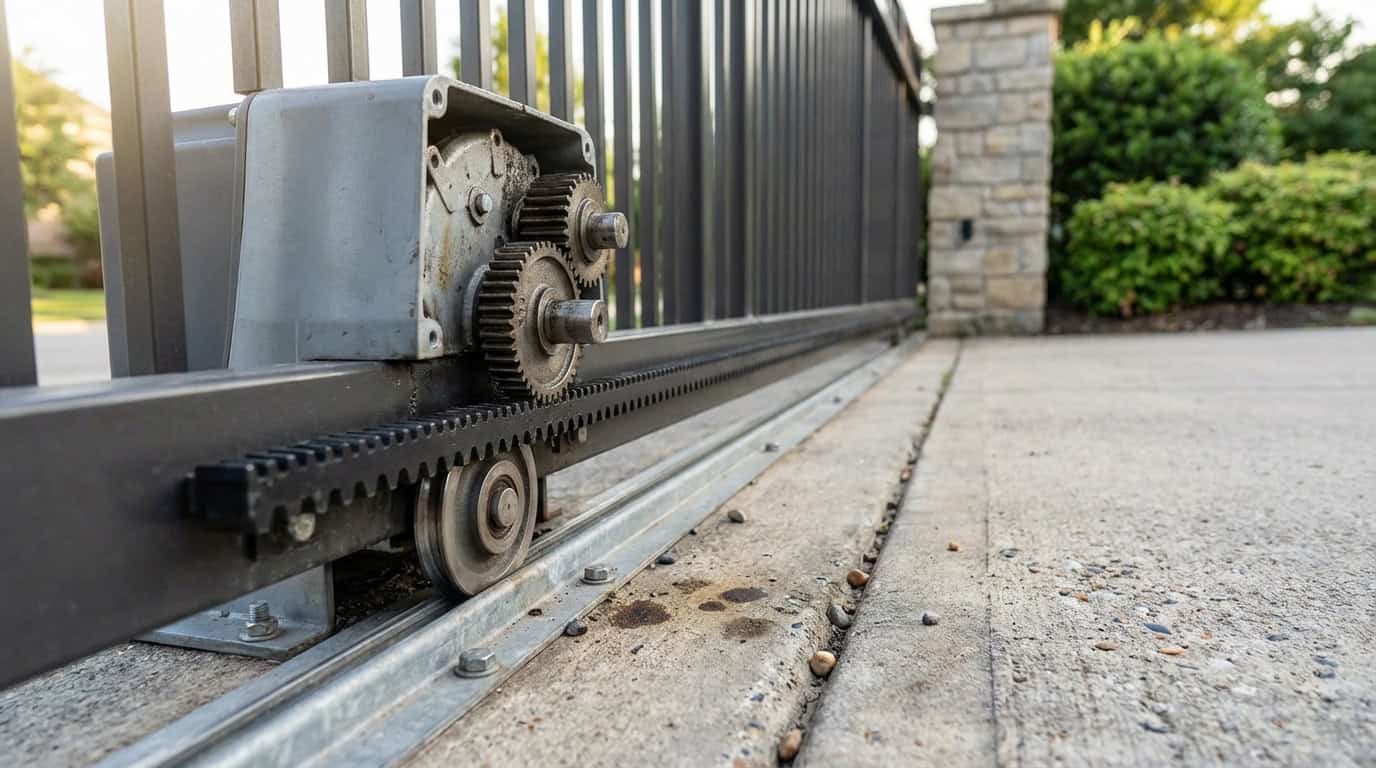
Selecting the right motor for your sliding gate is the most important step in ensuring long term reliability. You need a gate operator that is matching the motor to the weight and length of your gate frame, as an undersized motor will burn out quickly under the constant strain. I usually recommend looking for a unit with a battery backup so you are never locked out during a power failure. The motor connects to the gate using a gear rack, which is a notched rail that allows the teeth of the operator to grip and move the structure. Plastic racks are quieter for residential areas, while steel racks offer more durability for heavy duty setups.
The track hardware is what actually guides your gate along the ground, so it needs to be a clear, level path and clear of debris. Most systems use a V-groove track bolted into the concrete, which provides a sturdy path for the gate wheels to roll on. If you live in an area with a lot of snow or dirt, you might consider a cantilever system that suspends the gate in the air without a ground track. Regardless of the style you choose, using high quality rollers with sealed bearings will prevent squeaking and keep the movement feeling effortless. These components work together to turn a heavy piece of metal into a smooth, automated security feature.
When I talk to homeowners about upgrading their security, I always point to the heavy duty locking mechanisms that come with a complete sliding gate installation. These systems often use powerful magnetic locks that can withstand thousands of pounds of force, making it nearly impossible for an intruder to nudge the gate open. I also make sure to include safety sensors that act like a second pair of eyes for your driveway. These clever devices detect if a car, a pet, or a person is in the path of the gate and will stop the motion immediately to prevent any accidents. It is this combination of physical strength and smart technology that gives you real peace of mind every time you pull into your garage.
Beyond just keeping people out, I love how modern automation makes getting into your own home so much easier. You no longer have to fumble with a clunky plastic remote or step out into the rain to open the entrance manually. Most of the systems I install now connect directly to your smartphone through a secure app, allowing you to open the gate from anywhere. This is incredibly handy if you need to let a delivery driver or a guest in while you are still at work or running errands. You can even set up notifications so your phone gives you a little buzz whenever the gate is opened or closed, keeping you totally in the loop.
Getting the technology right is the final piece of the puzzle when we are putting together your full gate system. We integrate the motor, the track, and the software so they all speak the same language and work without any glitches. I always recommend choosing a system that allows for backup battery power just in case the neighborhood loses electricity during a storm. This ensures that your security features never take a day off and your home remains accessible no matter what. By focusing on these high tech access options, we turn a simple sliding barrier into a truly smart gate that works for your specific lifestyle.
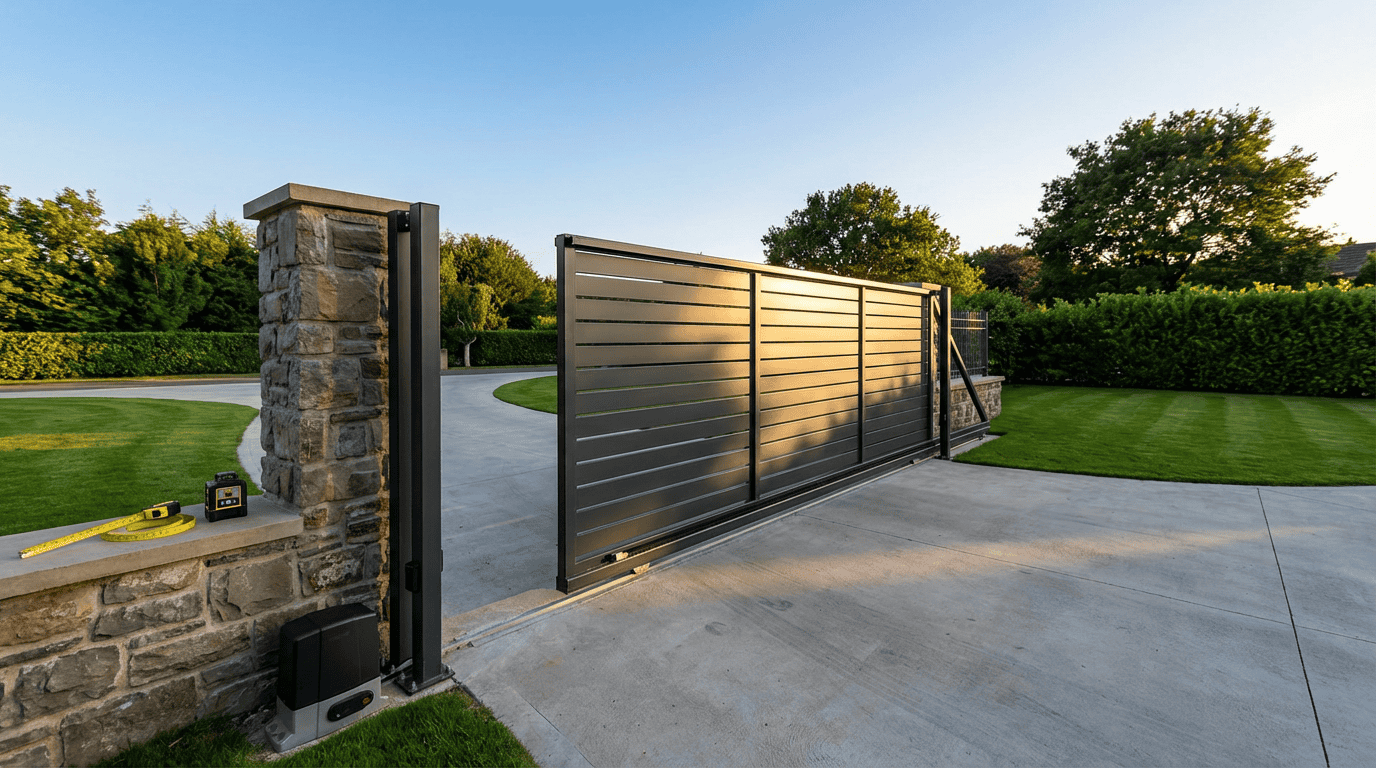
Before you pick out a specific gate design, you need to grab a tape measure and check your side clearance. A sliding gate needs a clear, flat path to travel along that is at least the length of the gate itself plus a few extra feet for the motor and counterweight. I always tell folks to look out for obstructions like trees, utility meters, or sloping ground that might block the gate's track. If your property line is tight, you might need to consider a telescopic system, but a standard slide usually works best for most driveways. Getting these measurements right now ensures the professional installation goes smoothly without any surprises on delivery day.
Setting up the electrical foundation is the next big step in your planning process. You will generally need a dedicated circuit to power the gate operator, so it is a good idea to chat with an electrician early on. Running conduit underground before you pour any new concrete or finish your landscaping will save you a lot of headaches and money later. I also recommend thinking about where you want your access controls, such as keypads or intercoms, so you can run those wires at the same time. Having your power and data lines ready to go allows the installers to focus on mounting the hardware and getting your new system running perfectly.
Investing in an automatic sliding gate is one of the smartest upgrades you can make for your home's entrance. By combining the physical strength of a heavy duty gate with the modern convenience of a high quality opener, you create a seamless entry experience. You will no longer have to worry about jumping out of your car in the rain or struggling with heavy manual latches. This complete system works together to give you total control over who enters your property with just the press of a button. It is a practical way to simplify your morning commute while adding the perfect driveway gate to your property.
Beyond the daily convenience, these automated systems offer an incredible sense of security and peace of mind. Because sliding gates are built to stay on a fixed track, they are much harder for intruders to force open compared to traditional swing gates. The automation technology acts as a reliable digital guard that keeps your kids and pets safe inside the yard. You can rest easy knowing your perimeter is locked tight without you having to lift a finger. It is a long term investment that protects your family and boosts your property value at the same time.
Choosing a sliding setup is also the perfect solution if you are working with a tricky area or a short driveway. Since the gate moves sideways along your fence line, you do not have to clear out a large area for a gate to swing inward. This allows you to use every inch of your driveway for parking or landscaping without any obstructions. If you want a reliable entrance that works perfectly every time, a sliding driveway gate system is the way to go. It truly changes the way you interact with your home and makes every arrival feel a little more welcoming.
A sliding gate is the best choice if you have a short driveway or limited space. It glides along your fence line instead of swinging inward, which lets you park your car much closer to the entrance. It is a simple way to boost your home’s curb appeal and get more use out of your property.
Yes, sliding gates are the perfect solution for uneven or steep ground. Since the gate moves sideways, it will not bottom out or hit the pavement like a swinging gate would. I recommend these systems for any property where the terrain makes a standard gate impossible to use.
These gates are a powerhouse for home security because they are set into a fixed track or cantilever system. This design makes it much harder for an intruder to force the gate open compared to a standard swing gate. You get extra peace of mind knowing your entrance is sturdy and reliable.
You will need a clear, straight run along your fence or wall that is slightly longer than the width of the gate itself. This space allows the gate to slide back completely without hitting any obstacles. It is a great way to use narrow areas of your yard that usually go to waste.
Most automatic systems come with a manual release key that lets you open the gate by hand if the power goes out. Many models also offer battery backup options to keep things running smoothly during a storm. You will never be locked in or out of your own home.
You can choose between a traditional track system or a cantilever design that hangs over the driveway. A track is very common and reliable, while a cantilever system is great if you want to avoid burying anything in the pavement. Both options provide a smooth and efficient way to secure your Electric Gate in Los Angeles: The Benefits of Adding One home.
When considering the best materials for constructing a durable and aesthetically pleasing driveway gate, it's essential to understand why a steel framework is ideal for wood driveway gates. Combining the strength of steel with the natural beauty of wood creates a gate that not only stands the test of time but also enhances your property's curb appeal. This article explores the key reasons why integrating a steel framework into your wood driveway gate is a smart choice for homeowners looking for long-lasting security and style.
Balancing robustness and allure in design, a steel framework paired with wood excels for driveway gates. Steel's strength acts as the gate's backbone, supporting the aesthetic charm of wood like redwood or oak. This blend prevents sagging, a frequent issue with wooden gates, especially when weather takes its toll. Steel allows for diverse designs, from sleek modern to classic, without sacrificing function.
Let's face it; wooden gates alone can be a bit high-maintenance. Why a steel framework is ideal for wood driveway gates is that steel frameworks reduce this burden significantly. They provide the necessary support, ensuring gates remain aligned and functional. With steel, you don't have to worry about warping or cracking; it's like having a reliable friend who always has your back. This sturdy foundation means your gate can withstand the test of time—and the elements.
Design flexibility is another feather in steel's cap. Incorporating steel permits intricate designs, offering a unique canvas for creativity. Whether you aim for a contemporary look or a timeless classic, steel provides the flexibility to explore various styles without compromising integrity. It opens a world of possibilities, allowing you to customize the gate to complement your home's architecture.
Moreover, a steel framework significantly reduces the maintenance load. While wood may need the occasional touch-up, the steel structure remains largely fuss-free. This means less time worrying about upkeep and more time enjoying the beauty and functionality of your gate. Think of it as a long-term investment in peace of mind.
Choosing the right type of steel is crucial, as it directly impacts the gate's longevity and performance. Why a steel framework is ideal for wood driveway gates is that galvanized steel offers excellent resistance to rust, making it ideal for general climates. Stainless steel, with its polished finish, is better suited for more humid or coastal areas. The decision should hinge on your specific environmental conditions and maintenance preferences.
The fusion of steel and wood in driveway gates is a testament to the power of combining strength with beauty. With the right materials, your gate becomes not just a functional barrier but a work of art, standing strong for years to come.
Steel reinforcement offers remarkable benefits that enhance the functionality and aesthetic of driveway gates. Firstly, the remarkable strength of steel is evident as it can withstand significant pressure without bending or breaking. This makes it a perfect backbone for wooden driveway gates, ensuring they remain robust and aligned.
Steel's longevity is another point in its favor. Since it doesn’t rot or succumb to pest damage like wood, it sustains its structural integrity over time. This means fewer repairs and replacements, saving you money and headaches. The long-term reliability is a key reason why a steel framework is ideal for wood driveway gates.
Additionally, steel provides flexibility in design. It allows for creative freedom in crafting gates that are both functional and visually appealing. Whether aiming for a traditional look or a more modern design, steel can be shaped and finished to meet these desired outcomes. This versatility is a major draw, blending style with practicality.
When considering maintenance, steel gates are a clear winner. Why a steel framework is ideal for wood driveway gates is that, while wood may need a bit of TLC, steel remains steadfast with minimal upkeep. Less maintenance translates to more time spent enjoying your gate rather than maintaining it. This ease of care enhances the appeal of a steel framework for wood driveway gates.
A steel frame also excels in weight distribution. By evenly distributing the weight of wooden panels, it prevents sagging and keeps the gate operating smoothly. This balance is essential for maintaining the gate’s function over the years.
Moreover, steel reinforcement supports sustainability efforts. By extending the life of your gate, it reduces waste and resource consumption. This eco-friendly advantage adds another feather in the cap of steel's benefits.
When planning your driveway gate, consider these advantages:
Incorporating steel into your gate design is like adding a superhero cape to your wood. It’s a blend of beauty and brawn that stands the test of time. If you’re seeking a gate that offers both style and substance, steel is your answer.
Choosing the best steel type for your gate involves assessing both functional and aesthetic needs. Why a steel framework is ideal for wood driveway gates is that it allows you to have a gate that not only looks exquisite but also withstands the elements. The right steel can make this vision a reality.
Galvanized steel offers a practical choice for many. It's treated to resist corrosion, extending the life of your gate. Picture your gate standing tall, unyielding to rust, season after season. For those residing in coastal areas, stainless steel might be your knight in shining armor. Its exceptional rust resistance ensures your investment remains pristine despite the salty air. Plus, that polished finish? It’s like the cherry on top, adding a touch of elegance.
But hold your horses—price can be a sticking point. While stainless steel offers superior benefits, it does come with a heftier price tag. Galvanized steel, however, strikes a balance between cost and durability, making it a popular choice for budget-conscious homeowners.
Think about maintenance, too. A beautifully crafted gate shouldn’t become a burden. Galvanized steel requires minimal upkeep, leaving more time for you to enjoy life's finer things. Stainless steel, while also low-maintenance, might demand occasional polishing to keep its shine—a small price for its stellar performance.
Don’t forget structural considerations. The steel's thickness and tensile strength should match the gate’s demands. A robust frame keeps your gate as strong as an ox, supporting expansive wood panels with ease. It's akin to having a backbone that won’t falter under pressure.
And what about style? Steel doesn’t just mean cold, industrial vibes. It’s a versatile material that can adapt to both modern and traditional aesthetics. Picture steel accentuating the rich texture of wood, creating a harmonious blend of materials that turns heads.
In sum, selecting the optimal steel means balancing cost, environment, and aesthetic goals. Whether you prioritize resilience or a sleek finish, steel offers a range of options to suit different needs and preferences. Remember, your gate isn’t just a barrier; it’s a statement of style and strength.
In conclusion, opting for a steel framework in your wood driveway gates offers a winning combination of durability, strength, and timeless appeal. The marriage of steel’s resilience with wood’s natural beauty creates a gate that not only protects your property but also elevates its overall aesthetic.
For those ready to transform their driveway with a gate that embodies both form and function, Los Angeles Fence Builders are the experts you can trust. Our professional driveway installation services ensure that your wood gates, reinforced with steel, are installed with precision and care, guaranteeing a long-lasting, elegant entrance to your home. Choose Los Angeles Fence Builders to bring your vision of the perfect driveway gate to life. Contact us today for a free estimate.
Can driveway gates open outwards? This seemingly simple question hides a world of considerations and implications for homeowners, architects, and designers alike. Driveway gates serve as the first line of defense for properties, offering security, privacy, and aesthetic appeal. However, the direction in which these gates swing can significantly impact their functionality, safety, and legal compliance.
In this article, we delve into the nuances of driveway gate design and explore the feasibility, benefits, and potential challenges of installing gates that open outward. Whether you're pondering a new gate installation or seeking solutions for an existing setup, understanding the dynamics of outward-opening driveway gates is essential for making informed decisions about your property's security and accessibility.
Considering the gate direction for driveway gates is of utmost importance due to its impact on functionality and layout. The gate direction determines how vehicles enter and exit the driveway, affecting the overall convenience and safety of the space.
The functionality of a driveway gate heavily relies on its direction. The gate should be designed to allow easy and efficient access for vehicles, making it essential to consider which way the traffic flows. Installing a gate that opens towards the inside of the driveway can minimize obstruction and provide a more seamless transition for vehicles entering and leaving. Conversely, a gate opening outwards may pose challenges, as vehicles turning onto the driveway could be blocked by the gate swing.
The layout of the driveway also depends on the gate direction. The space available for maneuvering and parking vehicles can be influenced by how the gate opens. Understanding the gate direction during the design process allows homeowners to plan and optimize the layout accordingly.
Various challenges and benefits come with different gate directions. Inward-opening gates can provide increased security, as they are less susceptible to forced entry. However, they may require more space within the driveway, limiting parking options. Outward-opening gates, on the other hand, may offer better visibility for drivers when exiting the driveway but can potentially hinder vehicle maneuverability.
All in all, considering the gate direction is crucial when designing driveway gates. Taking into account functionality, layout, and the associated challenges and benefits helps ensure a practical and efficient setup for homeowners.
Choosing outward swinging driveway gates offers numerous advantages for homeowners in the United States. These gates not only provide enhanced security but also improve accessibility and offer the potential for automated gate systems.
One of the key benefits of outward swinging driveway gates is their ability to enhance security. These gates provide an additional layer of protection for your property by acting as a deterrent to potential intruders. With their sturdy construction and robust locking mechanisms, they offer peace of mind and safeguard your home and belongings.
Improved accessibility is another advantage of choosing outward swinging driveway gates. With these gates, you can easily enter and exit your property without having to maneuver around a gate that swings inward. This convenience is particularly beneficial for individuals with limited mobility or those who frequently need to drive larger vehicles through the gate.
Furthermore, outward swinging gates offer the potential for automated systems. By incorporating automated gate openers, you can easily control access to your property and enjoy the convenience of opening and closing the gate with the push of a button. This automation not only provides added convenience but also enhances the overall functionality of your driveway gate.
Before choosing an outward opening gate for your property, there are several important factors to consider. These factors include checking local council rules, ensuring the driveway width is adequate, and having enough space in front of the property.
Firstly, it is crucial to check the local council rules and regulations regarding gate installation. Some councils may have restrictions on the type or design of gates allowed in certain areas. By familiarizing yourself with these rules, you can avoid any potential legal issues or complications in the future.
Secondly, the driveway width needs to be taken into consideration. Outward opening gates require space to swing open, so it is essential to ensure that your driveway is wide enough to accommodate this. Otherwise, the gate may not open fully or may cause obstruction to vehicles entering or exiting the property.
Lastly, having enough space in front of the property is also crucial when considering an outward opening gate. This is because the gate will need clearance space to open fully without hitting any surrounding structures or objects. It is important to measure the available space and consider any landscaping or features that may limit the gate's arc of swing.
In summary, choosing an outward opening gate requires careful consideration of various factors. Checking the local council rules, ensuring the driveway width is sufficient, and having enough space in front of the property are all essential aspects to evaluate before making a final decision. By taking these factors into account, you can select an outward opening gate that is both practical and compliant with regulations.
Potential obstructions that could hinder the swing of an outward opening gate can be identified based on the provided background information.
Firstly, the driveway slope could pose a potential obstruction. If the driveway has a steep slope, it might limit the swing of the gate. A gate swinging outward needs space to open freely without hitting the ground or any other objects. A steep slope could restrict the gate's movement, making it difficult to open or close.
Secondly, the front boundary line may also hinder the outward gate swing. If the gate is located close to the front boundary line, there might be limited space for it to swing open. This could prevent the gate from opening fully or cause it to hit the boundary line, resulting in damage to the gate or the boundary.
Thirdly, any additional fencing or structures near the gate could obstruct its swing. If there are fences, walls, or other structures close to the gate, they might restrict its outward movement. The gate needs sufficient space without any obstructions to open smoothly.
It is important to consider these potential obstructions when planning the installation of an outward opening gate. Taking into account the driveway slope, the proximity to the front boundary line, and the presence of any extra fencing or structures will ensure that the gate can swing freely and function properly.
There are several types of driveway gates that are designed to open outwards, each with their own unique advantages and considerations.
One common type is the swing gate, which is hinged on one side and swings open like a door. Swing gates are often made of metal or wood, and they can be single-leaf or double-leaf. One advantage of swing gates is that they provide a wide opening, allowing for easy access for vehicles. They also have a classic and aesthetically pleasing appearance. However, swing gates require sufficient space for the gate to swing open, so consideration must be given to the available space on the property.
Another type of driveway gate that opens outwards is the sliding gate. Sliding gates operate on a track and slide horizontally to open. This type of gate is often made of metal and provides a sleek and modern look. Sliding gates are ideal for properties with limited space, as they do not require additional space for the gate to swing open. However, sliding gates can be more expensive to install and may require periodic maintenance to keep the track functioning properly.
When considering a driveway gate that opens outwards, it is important to consider factors such as the available space, budget, desired aesthetic, and maintenance requirements. Consulting with a professional gate installer can help ensure that the right gate type is chosen for the specific needs and preferences of the property owner.
Hiring a professional gate installer is highly recommended to ensure the successful installation of outward swinging driveway gates. Professional installers have the expertise and experience to handle various aspects of the installation process, including gate sizing, alignment, and proper installation of support structures. They can also provide valuable guidance on selecting the right gate design and materials that align with both the aesthetic and functional requirements of the property.
In conclusion, the inquiry into whether driveway gates can open outwards reveals a myriad of considerations that impact design, functionality, and compliance. Throughout this examination, we've delved into the complexities surrounding outward-opening gates, weighing their benefits against potential challenges. As homeowners navigate this decision-making process, seeking expert guidance becomes paramount.
Los Angeles Fence Builders stands as a beacon of expertise in driveway gate services, offering comprehensive solutions tailored to individual needs. From design consultation to installation, their team ensures that every aspect of the outward-opening gate meets high standards of quality, functionality, and compliance with local regulations. By leveraging our expertise, homeowners can confidently enhance their property's security, privacy, and curb appeal with driveway gates that open outwards, realizing the full potential of their investment. Contact us today to know more.
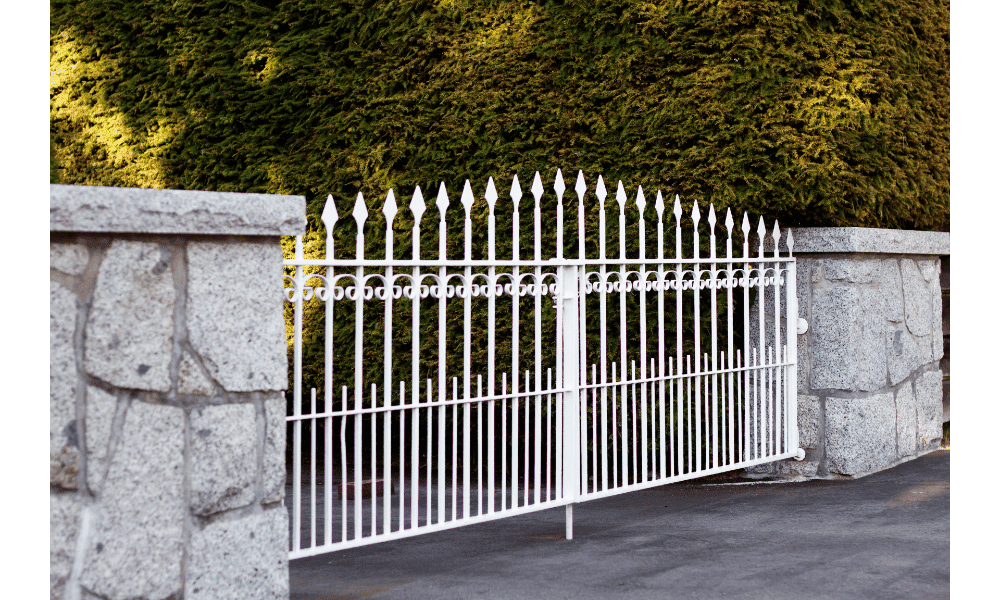
One of the reasons to get a driveway gate is to boost your home's curb appeal and provide an extra layer of security. Choosing the right material is crucial.
Los Angeles Fence Builders, a trusted provider of driveway gates, is ready to install a driveway gate using different materials, each with unique pros and cons.
Wood gates are cherished for their natural and timeless appeal, which boosts your home's aesthetic significantly. They are versatile, fitting a variety of architectural styles, and can be either stained or painted for additional protection and visual appeal.
However, maintaining them can be a bit demanding to keep them safe from weather conditions and pests. They can be a pricier option initially, but the privacy they offer often justifies the cost, especially for families with children and pets.
Durable and long-lasting, wrought iron driveway gates provide an elegant and sophisticated look to any home. These gates add an extra layer of security, keeping unwanted visitors out.
However, their heavy weight might require a more potent motor for automatic driveway gates, and they can be susceptible to rust if not properly maintained.
Aluminum gates are lightweight and easy to install, which makes them a popular choice for homeowners. They resist corrosion, making them perfect for homes near the coast, and can offer a long-term solution with minimal maintenance.
On the downside, they may not provide as much security as heavier materials and their design options are somewhat limited.
For homeowners prioritizing low maintenance, vinyl driveway gates could be the perfect choice. They resist rotting, warping, and insect damage and come in a wide range of styles and colors.
On the downside, they may not be as sturdy as wood or metal gates, and prolonged exposure to the sun can cause them to fade or become brittle over time.
Installing a gate protecting your home or security gates involves weighing up your specific needs and preferences. The choice of material will ultimately depend on your personal taste, budget, and the purpose the gate will serve.
At Los Angeles Fence Builders, we can install driveway gates add curb appeal but also adds security, ensuring anyone who enters your property does so with your permission.
This added security of driveway gate to your home, is especially important if your peace of mind if you have young children or pets, and can be a major selling point for potential buyers. With an open and close system tailored to your needs, an automatic driveway gate can be both a convenient and secure addition to your home.
Sliding Driveway Gate. The driveway to a property is an important part of the overall design of a house or business. Whether for residential, commercial, or industrial use. When selecting the ideal type of gate, we often seek one that provides structural strength against wind and burglary.
For enhanced security, a gate that compliments the size and the slope of our driveways. Also, one that is fairly easy to open and close. To use a swinging door on a sharply inclined ground level of a driveway means the user has to work against gravity when opening or closing the gate. A good gate should also positively blends with the overall visual appeal of landscaping in our property.
In this article, we seek to establish what instances would require the homeowner to install a sliding gate.
To open or close a sliding driveway gate requires only space along with the linear frame or track of the gate. In contrast, a swinging door will need to cover a wider area. This is equal to a quarter of a circle where the length of the gate is the radius of the quadrant. The longer the gate the more the space required to swing the gate when opening or closing.
In instances where the land is to be utilized economically, installing a sliding gate instead will save on overall space. Besides, sliding driveway gates are also befitting where the driveway gap is quite large. This is also because a sliding driveway gate does not swing or hang on its weight when opening or closing. Rather, the gate moves along wheels fitted within the sliding tracks.
The space required by a swinging gate to open is directly related to the time taken to open the gate. The longer the distance covered by the swinging of the gate the more to the time taken to open the gate.
Ease in use is one of the eye-catching features of a sliding gate simply because it has been designed to open with great ease. Also, with minimal spatial requirements.
This feature has enabled automation of the sliding door using mobile-control options that include GSM intercom. An innovative technology designed to help the user to open and close the gate with even greater ease and without compromising the safety and security of your home.
The most prominent feature of all real estate is that it is heterogeneous in nature; all real estate is different from any other in terms of topography among other features such as location. Properties in different localities will slope differently in various sections of the property of which driveways are just but a section.
Imagine opening and closing a swing gate where the driveway is slanted whether from the inside to the outside or from the outside to the inside of the property. In both cases, the operation of the swing gate is not that easy because, at some point, the user of the gate will have to work against the force of gravity. If you think about it, it is quite similar to moving a load up a hill.
With sliding gates, the weight in opening the gate does not rest on the user but rather on rolling wheels set on sliding tracks making it easy to open and close the gate.
By operation, a swing gate might also work against wind forces depending on wind direction. For a gate, the surface of the gate acts as a resistance to air/wind current. If a storm is blowing inwards, it becomes heavier to close the gate. The opposite is also quite true
In contrast, a sliding door opens by sliding inwards along the walling and with every slide inside a pocket in a wall. Using less surface area of the gate is exposed to wind forces and wind simply flows through the drive-way gap.
A sliding gate can be automated with control systems that are inventive and has the effect of improving the appearance and increasing the value of the property as well.
A sliding driveway gate looks pretty well and modern from both sides of the driveway; from the inside and external of the property.
Sliding doors can be modified with automatic controls that may include video intercoms. Video intercoms are part of a video installation system that brings about communication between the point of entrance to a compound (at the gate) and the internal confines of the house. Therefore, a homeowner can grant or deny access to the property. This is simply by relying on video technology. Without having to leave the comfort of their house
When we automate gate operations, we not only improve home privacy and but also contribute to more security against home theft and illegal access.
Sliding doors are mounted on some form of wheels that are also set to turn along gate tracks. The use of wheels reduces friction and avoids unnecessary abrasive forces on the lower frame of the gate that could be brought by a rough and patchy ground on the driveway.
With swinging doors, the lower frame often comes into contact with hard rocks or the abrasive topsoil content which will only increase the rate of wear and tear of the swinging gate. The lower frame will slowly lose structural strength as will require periodic repainting as part of maintenance planning.
A sliding driveway gate might have higher customization costs and have more moving parts than the swinging gate. However, the instances where the sliding gate is ideal for use over the swinging gate are higher. A sliding gate also has the benefit of ease of use and will fit in many Los Angeles style homes. That is where land values are high and space must be economically used.
Despite the possible complex design of a sliding door, we find there is a lot of vital value that can be realized from an automated gate over the conventional swinging gate.
Here at Los Angeles Fence Builders, we build custom sliding driveway gates to fit the need of any client. Our team of talented fabricators and welders are highly skilled to build any type of gate. We would be honored to be able to serve you at your home or business. If you are interested in having us build you a new sliding driveway gate contact us today! (424) 625-8561. Or, simply fill out the form below!
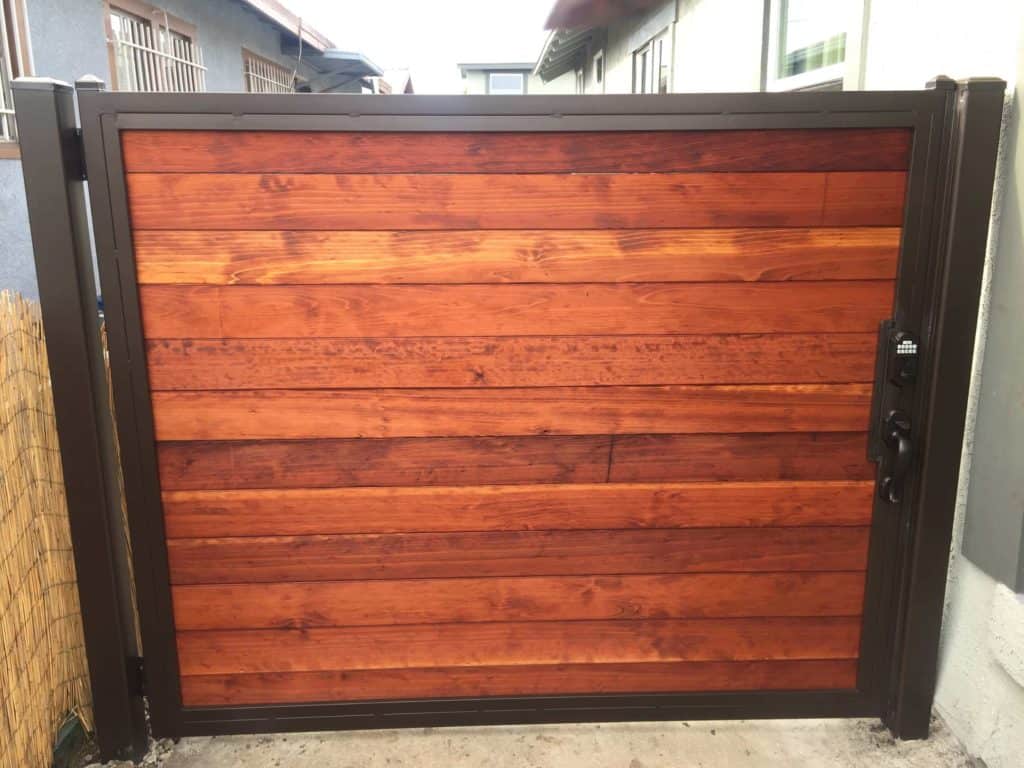
Driveway Gates In Los Angeles - Do you live in Los Angeles, Ca, and searching for the most appropriate gate for either your business or home? Worry no more! Since there are so many options for you to choose from, we have created a list to help you discover the best gate for your property. Everyone, however, has different tastes and preferences; hence, somethings may be appealing to you and not someone else.
There are several designs to choose from, not to mention that they all fit both a modern and contemporary style. Gates are meant to be investments, especially if you want to install one at home. It will come in handy when you decide that you want to sell your home because buyers are intrigued by such add-ons. Here is a list of the top 5 driveways gates for homes and businesses in Los Angeles.
Are you tired of neighbors peeking in on your property? Most people who live in Los Angeles tend to be very nosy, and it is up to you to put that to an end. These automatic driveway gates are incredible in terms of how they protect your privacy. They instantly hinder people from entering your property. If you have had encounters with people walking in your yard or property, it is time that you install an automatic gate. Electric gates are extremely convenient and allow you to open and close without having to get out of the car. It is as easy as pressing a button. Electic Driveway Gates are not just convenient but also add tons of curb appeal. If you are wanting to add a new driveaway gate or automate your existing gate we can help you do this easily.
If you have been thinking about getting a sliding driveway gate installed, but you are stressed about the amount of space required for it, you should think twice. It consumes little space because it can be drawn in and back to position without swinging outward, thus taking up space. It is very simple to operate because it is only a matter of sliding it forth and back. If you are interested in having your gate located closer to the point of access, this style of driveway gate will work perfectly for you.
Do not let your steep driveway put an end to your dream of having this gate on your property. Sliding driveway gates do well in areas with limited space and slops. This is because it will not be moving towards the house rather parallel to the road.
When it comes to opening this gate, be sure that you have enough space for the gate to swing freely. If your gate is longer than 8 feet we recommend either a double swing gate or a sliding driveway gate. Many often worry that swing gates will eventually squeak over time, however, using a lubricating spray should be applied once a year for proper maintenance.
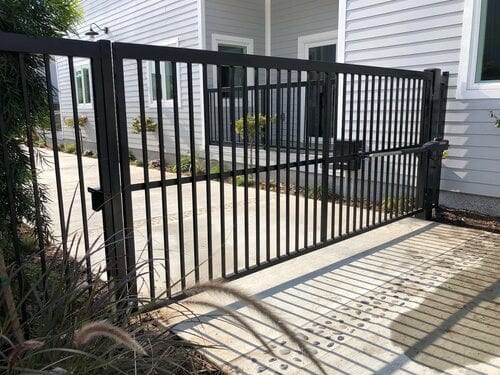
This will reduce noise and how smooth the gate moves overall. This will also prevent rusting, which is a good thing. Unlike a sliding gate, a swing gate is easy to install and even easier when you have the right team of experts doing the job (wink, wink). It only requires hinges, which will be installed on the outer posts. Swing gates are some of the most common and affordable Driveway Gates In Los Angeles and for this reason, it has made our top 5 list.
Can you remember the day that you locked the keys inside your home and became stranded after work? That can all be prevented by leveling up and installing a keypad for your driveway gate. You will undoubtedly love this gate since it will not have you rely on having the keys when running errands. Keyless entry systems are becoming more affordable, which is just another reason to have one installed. Go for it already; what do you have to lose anyway?
Besides that, the security of both you and your family is ensured because you will keep getting updates pertaining to your property wherever you at. Keyless entry systems give homeowners the pleasure of monitoring and controlling who gets in and out by using a phone. Isn’t that amazing? Break-ins also tend to be rare because it is easier to break a padlock than gain access to your keypad entry home.
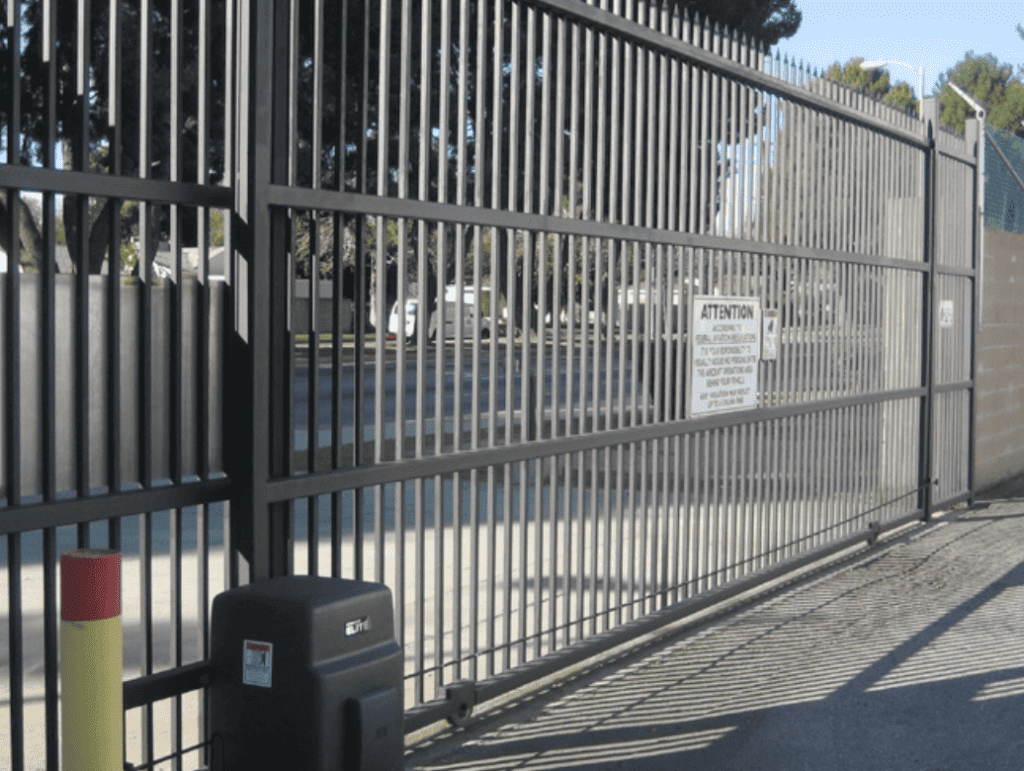
Commercial gates summarize other types of gates that include vertical tilt gates, slide gates, and swing gates. We can be easily customized and automated to the owner’s liking. Los Angeles Fence Builders is the #1 Driveway Gate Company in Los Angeles for both Commercial and Residential installations. These commercial gates can also come in several designs so that they can complement many settings of your business or warehouse. This is because not all settings can have the gates mentioned above installed; hence you should keep this in mind. Do not forget the primary reason for upgrading or installing a commercial gate is to improve and enhance security.
We hope we have shown the advantages of having these top driveway gates installed in either your home or workplace. We know that you will make the best decision for yourself. However, It never hurts to seek the advice of an expert. Give us a call or fill out a form! We will be sure to help you navigate the installation process. If you still have the old fashioned gate, perhaps it is time that you upgrade! Lastly, for more information about Driveway Gates In Los Angeles Call Us or Fill Out the form on this page!
Driveway Gates in Pacific Palisades - In Pacific Palisades, CA there are many happy residents. This is an area that is located on the Westside of Los Angeles. It is really close to the UCLA campus which is just 9 minutes away and people enjoy having both the beach and the mountains very close in proximity too. That is why so many people love living in Pacific Palisades, Ca. They have the best of both worlds so to speak and they find that there are plenty of things to see and do in the area. Between dining at restaurants, enjoying both day and night activities, people have a lot to keep them busy.
Housing in the area is relatively reasonable for over 25,000 people that call this area their home. Although it is a relatively safe place to live, people are also interested in getting driveway gates to protect themselves and their properties. They know that they will find just what they need when they deal with our company that specializes in driveway gates in Pacific Palisades that are completed just right.
Los Angeles Fence Builders install driveway gates for both residents and business owners in Pacific Palisades, CA. People love the way that we complete difficult jobs. In the end, they always recommend us to their friends, neighbors, coworkers, and relatives. Our team treats each project as their own home and leaves no detail unfinished. Here are the services that we offer:
For residential gates, our services cannot be beaten. We are experts at what they do and there isn't a job that is too difficult for us. Adding a gate to your residence adds curb appeal and convenience to your home. Along with installing custom driveway gates we also install intercoms and keypads. This makes your home the most high-tech and secure home in Pacific Palisades.
We install security gates that are made from the highest quality materials. Our clients know that we use the latest techniques and equipment to get the job done right. Our security gates are installed to make sure only approved entrances are allowed each and every time.
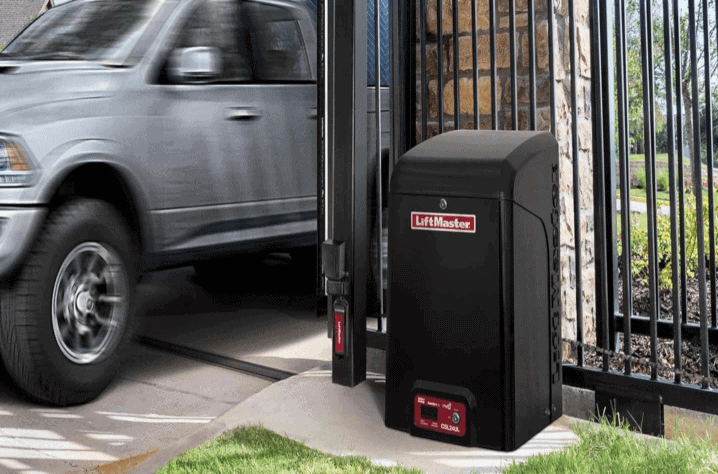
Our company completes are a large volume of automatic gates in the Pacific Palisades area. People really love the work that we do for them. If you have an existing gate and would like to add a motor for convenience or security we are the team that can get it done for you. We use only the most reliable motors with a 2-year warranty.
There is also a need for manual gates in the Pacific Palisades area for both residents and business owners. We are there for them when they need us to complete the installation of manual gates for their properties.
In some cases, our clients require a different type of gate. They can let us know the specifics and we will do it for them. We don't shy away from any kind of driveway gate installation or repair.
We have the best prices in the area for installing driveway gates. Our clients are extremely pleased with our rates and they love how our team of professionals are experts at what they do. They are trained and experienced with driveway gates and the price we charge is fair. We will discuss the job after we take a look at it so that a customer always knows what they are in store for before we complete any work. They will be treated very fairly and always with the respect that they deserve when they do business with us.
Since our workers are very passionate about what they do, they are very cordial when dealing with our customers. They will explain in full detail all the work that is going into the driveway gate that they are getting. Specifics will be given so that a person or business owner knows exactly what is happening with their particular job. It is something that our workers enjoy doing so that is why we highly encourage the interaction between our customers and our workers. Lastly, we find that it is highly beneficial for both parties involved.
We are the most trusted Driveway Gate Company in Pacific Palisades. Our customers are always treated right. If they ever have any questions, they will receive the answers that they need in order to make informed decisions. They can get the advice of our professionals who will gladly assist them. If there are any issues or problems associated with our services, we take care of it right away. Our customers know that their satisfaction is of the utmost importance to us at all times. We want them to be happy with the work that we do so that they will tell other people that they know to come to us for their driveway gate needs.
Los Angeles Fence Builders is a company that takes great pride in what we do. By offering are reasonably priced services to the people and businesses in Pacific Palisades, CA, they will be able to have the protection that a driveway gate will provide for them. Since this is of high importance to many people, we are there for them when they need us. They just need to contact us so that we can begin the process of giving them the best driveway gate that they have ever dealt with. We look forward to assisting them in any way that we can and offering them the very best customer service. When it comes to a Driveway Gates in Pacific Palisades, you can count on us. Call Today for a free estimate!
The Perfect Driveway Gate - Are you looking for a driveway gate company? Work with us and you'll get a new gate that is totally worth the investment. You want to do your research on gate types so you can get one that is nice and suits you. Here are some tips so you can get a driveway gate installed that you'll love.
We are located in Los Angeles, CA so you can work with us if you're in or around that area. It's a good idea to let us know when you want a gate put in. This is because we can send someone out right away. This will make your dream a reality. Even if we're not right near you we can travel a little to get the job done. Let us know what you need over the phone. After that, we will come to visit you in person and discuss your driveway gate!
Should you get an automatic gate or a manual one? Have you been wanting to drive up to your home without doing anything more than pressing a button? Then, you're going to want to go with an automatic gate. A manual one is going to require you to open it yourself without electronics helping you out. You can lock either gate so they are both a safe option, it's just a matter of what you'd prefer. Most people will like automatic gates but they can add to the overall cost.
The perfect driveway gate can be made out of a lot of different materials. The types we offer come in wood, wrought iron, vinyl, and chain link. Think of what you'd like the most. Do you like the look of it? All of the materials we use can last you a long time if you keep them in good shape. The only thing to watch out for is running into the gate on accident. (We've seen this a few times).
When you have a gate that you want to replace, you shouldn't do the work on your own. You may think that it's just a matter of taking the old gate out and putting a new one in its place, but if you don't install a gate properly it will end up having a lot of problems later on down the road. For instance, if it gets windy and you didn't install a gate properly, you're going to find that it is likely to fall. When you have a gate put in by us, you don't have to worry about it having these types of issues.
Let us know what your budget is and then we can let you know what kind of gate will work best for you. Of course, if you want us to use an expensive type of wood then it's going to cost more than something like a vinyl gate. But, if you want the gate to last and look nice you're going to probably want to spend a little more than the cheapest gate you can get. It's really up to you and what you want to get but we can help you choose based on your budget if need be.
Your gate needs to protect your property. You can get a gate that is tall so that people are less likely to climb over it. Of course, it's a good idea to get a secure gate even if you're not worried about people getting in. Also, if you'll want to make sure that it will stay locked when you lock it.
If you damage your gate, let us know and we can come out and get it back in working order. For example, if you back into the gate on accident and need a part of it replaced, we can do the work. Don't wait too long to get a gate repaired because you need to make sure it doesn't have a lot of problems that stem from the original problem that you noticed in the first place.
Now you know that you can work with our driveway gate company and come out happy with the results. You want to take your time with this so you can get a gate that you know is great for your home or business. Contact us right away if you have any other questions!
We install all kinds of gates all over Los Angeles, Ca. From residential gates to commercial gates. Contact Us Today for a Free Estimate! Call To Learn More About Installing The Perfect Driveway Gate for your Home or Business.
VIEW OUR WORK
LEARN MORE
CONNECT WITH US