
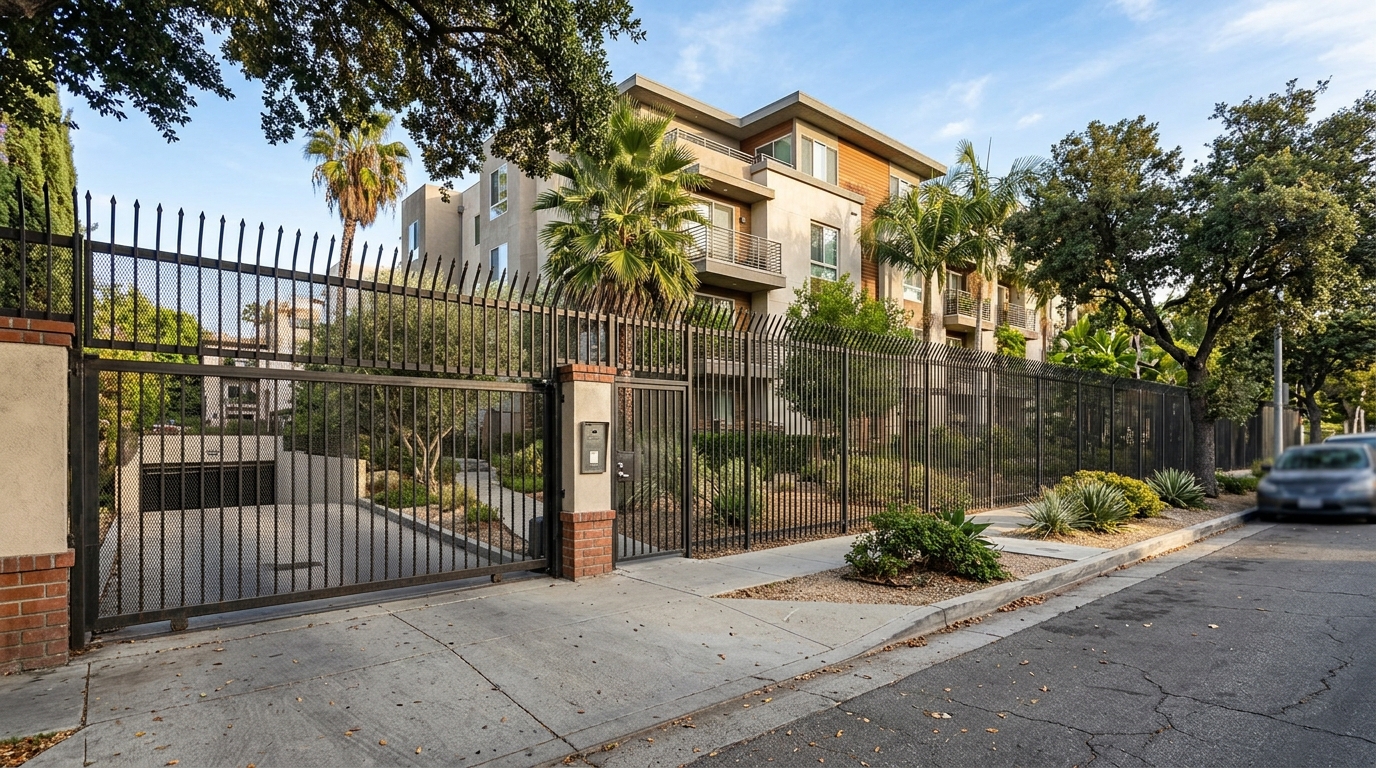
Apartment complex security fencing can do more than mark a property line. It can help residents feel safer, guide visitors, and discourage unwanted access. I view fencing as one part of a broader security plan that works alongside controlled gates, good lighting, cameras, and clear sightlines. The right design adds protection without making the property feel closed off or difficult to navigate.
Before choosing materials or gate systems, I consider daily traffic, emergency access, accessibility, maintenance, and local building and fire requirements. A strong fence is only useful when it is easy to manage, quick to repair, and designed around how residents and first responders actually use the property.
I start Los Angeles multifamily fence planning by walking the entire property and mapping how people, vehicles, and service providers move through the site. I look at property boundaries, parking areas, pedestrian paths, alley access, and connections to nearby streets or neighboring properties. This often reveals gaps that are easy to miss on a site plan, such as a poorly defined side entrance, a low fence beside a parking area, or a gate that stays propped open. I also check landscaping, lighting, cameras, and visibility so new apartment complex security fencing does not create hidden corners. The goal is to protect the property while keeping important areas open and easy to observe.
CPTED principles help me plan visible, well-managed entrances instead of simply specifying a taller barrier. I usually focus on a limited number of clear entry points, durable vehicle and pedestrian gates, and fencing that supports natural surveillance from homes, walkways, and parking areas. Landscaping should frame entrances without blocking sightlines, while lighting, intercoms, and cameras can reinforce access control where residents and guests need additional guidance. I also review existing weaknesses, including damaged panels, climbable features, unsecured alley gates, and doors that do not close or latch reliably. A well-designed fence should direct movement and improve accountability, not make residents feel boxed in.
Durability and daily operation matter just as much as the initial layout in a high-density rental community. I plan for frequent use, vehicle contact, coastal and urban exposure, graffiti cleanup, and quick repairs so a small failure does not become a lasting security problem. Gate locations must also preserve emergency egress, fire-department access, accessibility, and required clearances, with final details reviewed by the appropriate local authorities. Before construction, I compare the proposed fence with the property’s maintenance capacity and access-control procedures. That practical review helps create a security system that remains effective long after installation.
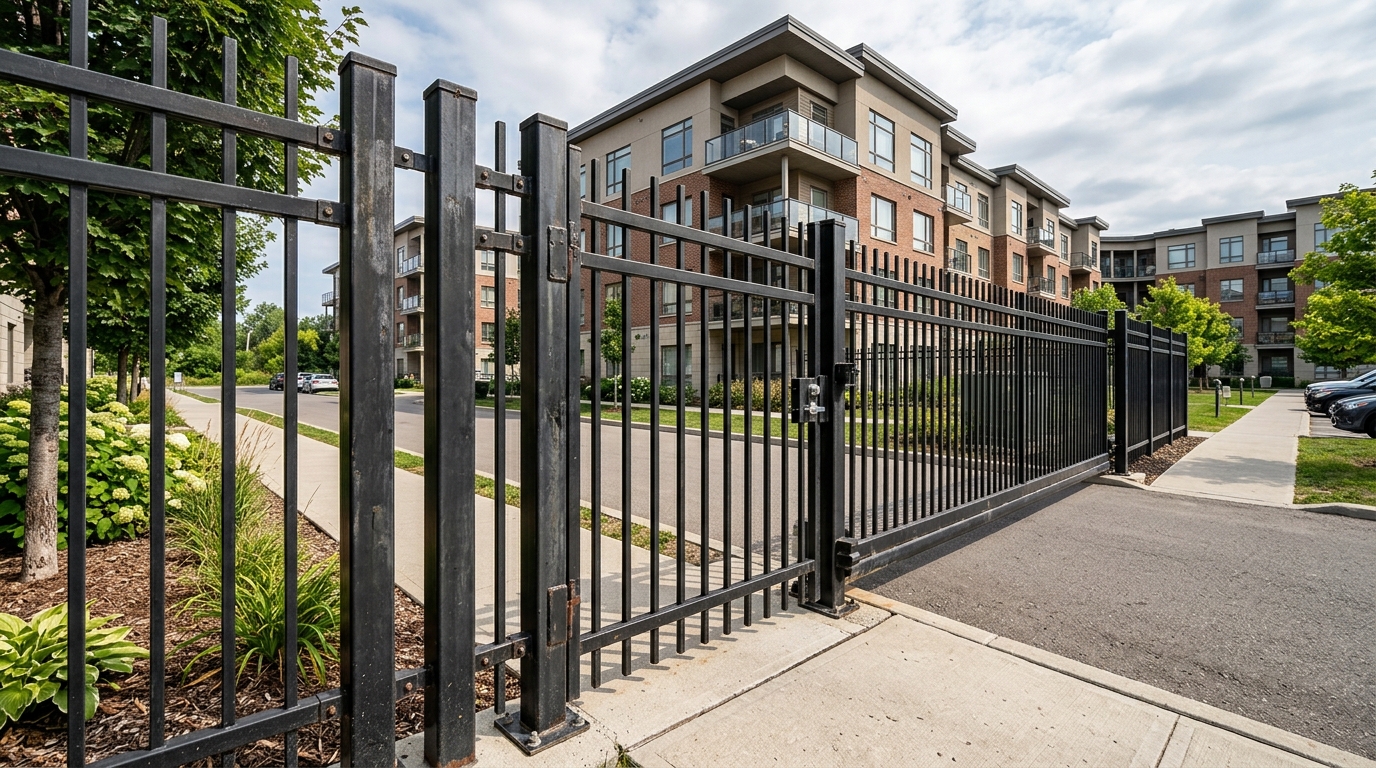
For most Los Angeles apartment communities, I find ornamental steel offers the best balance of security, durability, and appearance. Its rigid construction is harder to bend or cut than lighter fencing, while open pickets preserve visibility for residents, staff, and security cameras. Steel should receive a quality powder-coated or galvanized finish because coastal air, irrigation, and occasional moisture can lead to corrosion. It may cost more upfront, but it usually needs fewer major repairs than lower-grade materials, especially around busy gates and parking areas.
Welded wire and chain-link are practical choices when budget, visibility, and quick repairs matter most. Welded wire has a cleaner appearance and resists sagging, while chain-link is flexible, widely available, and simple to patch after vandalism or vehicle contact. Privacy slats can improve screening, but they may create hiding places and add wind load, so I use them selectively rather than around the entire property. Aluminum is another low-maintenance option because it resists rust well, although it is lighter and can be easier to dent or damage than steel.
For courtyards, pool areas, and ground-floor units that need more screening, privacy-focused fencing can help residents feel more comfortable, but it should not block lighting, cameras, or emergency visibility. I typically recommend matching the material to each zone instead of using one fence everywhere: ornamental steel at primary entrances, welded wire or chain-link along service edges, and carefully designed privacy panels where screening is truly needed. Whatever material you choose, durable posts, secure gate hardware, prompt graffiti removal, and routine inspections matter just as much as the fence itself. Local fire, accessibility, pool, and building requirements should also be reviewed before installation, since a strong fence still needs to support safe access and emergency response.
A well-planned apartment complex security fencing system uses every entrance as part of one connected access plan. I typically pair a durable vehicle gate with a separate pedestrian gate, then add keypads, fobs, intercoms, and cameras based on how residents and visitors actually move through the property. License-plate recognition can help approved vehicles enter smoothly, while an intercom gives guests a clear way to contact a resident before access is granted. In a busy Los Angeles rental community, commercial-grade gates and operators matter because repeated daily use can quickly expose weak hinges, worn hardware, and unreliable controls.
Emergency access should be designed at the same time as security, not added later. Residents need clearly marked exit routes that open without creating a dangerous delay, while fire-department access must remain available through approved gates, emergency controls, or designated access points. I also plan for accessible routes, including gate widths, operating force, and hardware that residents with mobility limitations can use comfortably. Local building and fire officials should review these details because requirements vary by property and jurisdiction.
Daily traffic patterns deserve just as much attention as the fence itself. I prefer to separate resident entry, guest access, package deliveries, and service vehicles whenever the site allows, so one stopped vehicle does not block everyone behind it. Cameras and intercoms should be positioned where drivers and pedestrians can use them without standing in active traffic lanes. Finally, I recommend backup power, routine inspections, and fast repairs because a security gate that fails open, fails closed, or traps residents can create safety concerns and frustrating bottlenecks.
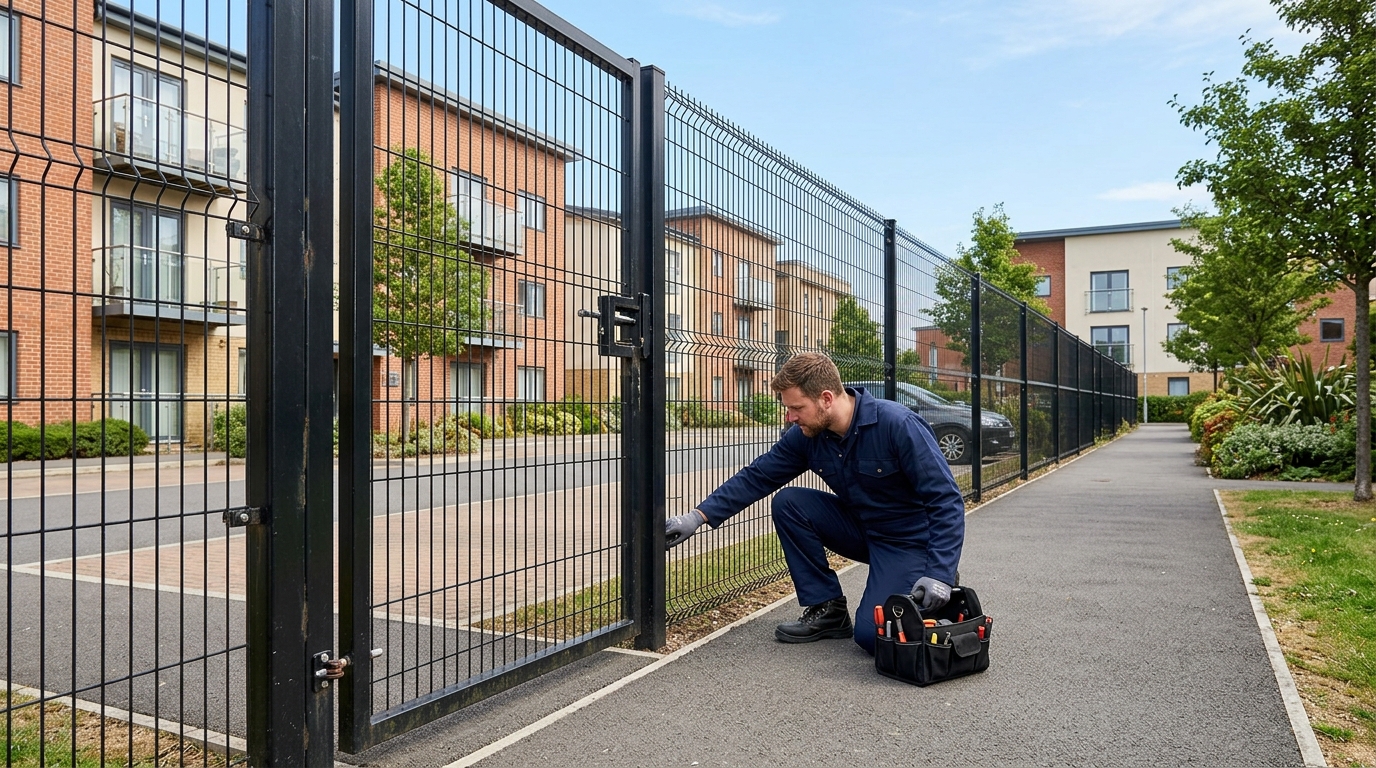
Before I approve an apartment complex security fencing plan, I first check the local review process for the property’s city and jurisdiction. In the Los Angeles rental market, zoning, building, fire, pool, accessibility, landlord-tenant, and neighborhood rules can affect fence height, placement, gates, visibility, and resident access. I also confirm that emergency egress and fire-department access remain clear, especially around parking areas, courtyards, and pool enclosures. Reviewing the site with local building and fire authorities before construction helps prevent costly changes after installation. It also gives owners a clear path for permits, approvals, and resident communication.
A durable fence should support the property’s broader security plan, not create hidden corners or difficult access points. I look for clearly defined boundaries, visible pedestrian and vehicle entrances, reliable gate hardware, and lighting that supports natural surveillance and camera coverage. For high-density communities, I prefer materials and finishes that can handle frequent use, weather exposure, and daily contact without quickly bending, loosening, or corroding. Gates should still allow compliant emergency access while controlling routine entry. These details help the system work consistently for residents, staff, and first responders.
Long-term ownership costs deserve the same attention as the initial installation price. I recommend scheduled inspections for rust, loose fasteners, damaged panels, sagging gates, broken locks, intercom issues, and lighting outages, with faster repairs at high-use entrances. Gate operators, hinges, closers, access controls, and safety sensors also need regular servicing so a small problem does not become a security gap. I set aside a maintenance budget for cleaning, protective coatings, replacement parts, and eventual component upgrades. A written inspection and repair schedule makes apartment fencing easier to manage and helps preserve its appearance, reliability, and value.
Choosing apartment complex security fencing in Los Angeles starts with looking at the entire property, not just the perimeter. I consider where residents, guests, deliveries, and vehicles enter, then match the fence style and gate controls to those daily patterns. A strong plan should support natural visibility, good lighting, cameras or intercoms, and dependable access control while preserving curb appeal. Clear boundaries and well-managed entrances can improve security, but fencing works best as one part of a broader CPTED strategy.
Before construction, I recommend confirming local zoning, building, fire, pool, accessibility, and landlord-tenant requirements for the property. Gates must allow safe emergency access and resident egress, while materials, coatings, posts, and hardware should be selected for heavy use, weather exposure, and easy maintenance. I also encourage property owners to review the full site with qualified fencing professionals and local permitting authorities before approving a design. The best final choice balances controlled access, resident safety, appearance, compliance, and long-term durability.
Apartment complex security fencing helps define property boundaries, guide residents and visitors, and discourage unwanted access. I treat it as one part of a broader security plan that can also include controlled gates, lighting, cameras, and clear sightlines.
I start by reviewing how residents, guests, vehicles, service workers, and emergency responders move through the property. The design should support visibility, accessibility, daily traffic, and easy maintenance instead of simply using the tallest or strongest barrier available.
I walk the entire property and map boundaries, parking areas, pedestrian paths, alleys, side entrances, and connections to nearby streets or neighboring properties. I also review landscaping, lighting, cameras, and existing gates to find weak points that may not be obvious on a site plan.
I use clear entry points, open sightlines, and fencing styles that provide protection while keeping the property easy to see and navigate. Landscaping should frame entrances rather than block them, and lighting or cameras can add security without creating a fortress-like appearance.
Controlled gates can help manage access when they are placed in the right locations and sized for normal traffic. I recommend separate, clearly marked pedestrian and vehicle access when possible, along with dependable hardware, intercoms, access controls, and a plan for deliveries and emergency entry.
CPTED focuses on natural surveillance, clear ownership of spaces, controlled access, and well-maintained surroundings. I apply these principles by limiting confusing entry points, preserving views from homes and parking areas, using lighting effectively, and avoiding fence layouts that create hidden corners.
I review local building, fire, accessibility, and property requirements before finalizing the design. The fence and gates must not block emergency access, create unsafe pedestrian routes, or interfere with required exits, and the project may need permits or approval from local authorities.
Regular inspections are important because a damaged panel, broken latch, failed access control, or gate that stays open can quickly create a security gap. I recommend scheduled maintenance, prompt repairs, trimming nearby landscaping, checking lighting and cameras, and updating access permissions as residents and staff change.
VIEW OUR WORK
LEARN MORE
CONNECT WITH US