
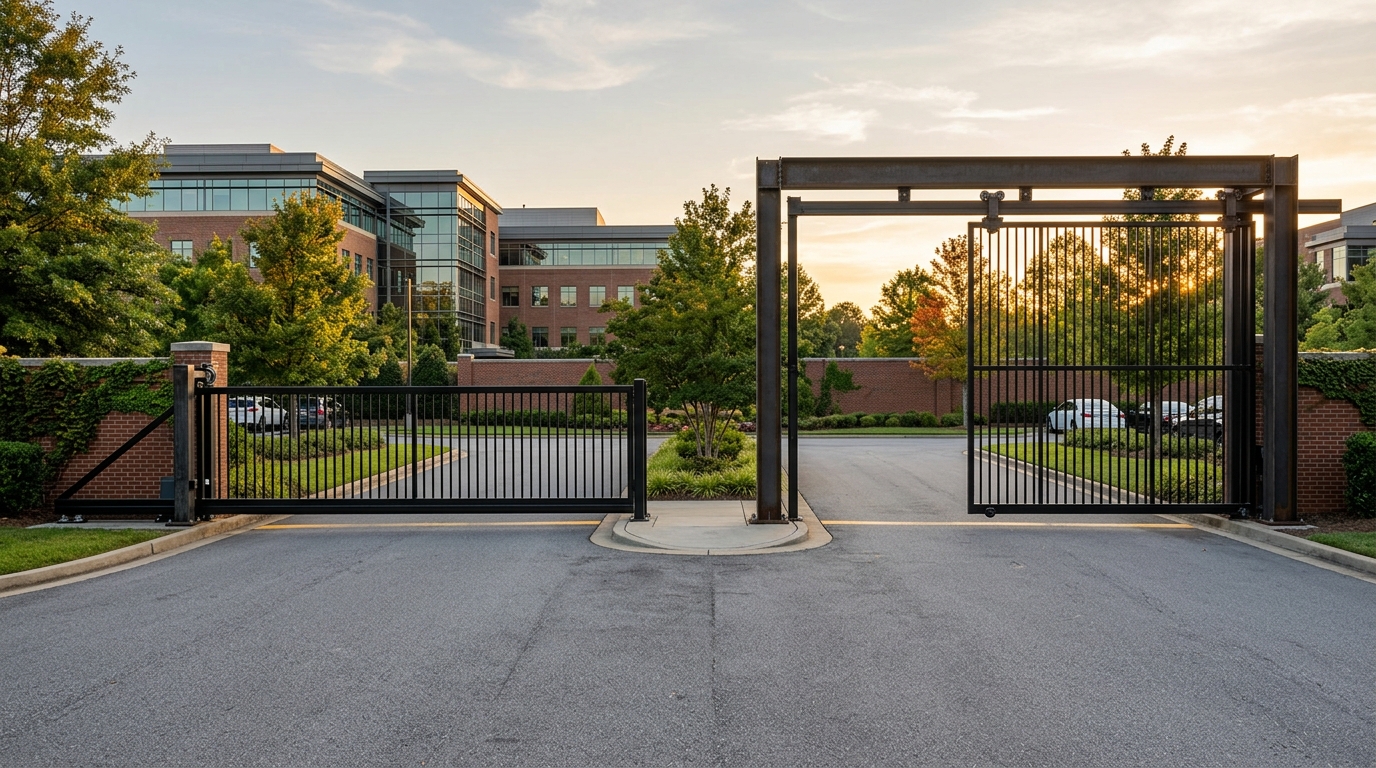
Choosing the right entrance for your property usually comes down to one big decision: cantilever vs overhead gates. Both options are great for high-traffic areas because they slide out of the way without needing a track on the ground, but they work in very different ways. I’ve seen plenty of folks get stuck picking the wrong one simply because they didn't consider their specific space or terrain.
If you have plenty of room to the side but uneven ground, a cantilever gate is usually your best friend. However, if you're dealing with massive, heavy gates or a tight footprint, an overhead track might be the better way to go. It really comes down to balancing your available vertical clearance against your horizontal side room. Taking a moment to look at your layout now will save you a lot of maintenance headaches down the road.
When you are looking at a cantilever gate, the magic happens through a clever counterbalance system. Instead of the gate sliding along a track on the ground, it uses a longer tail section that stays tucked behind your fence line to anchor the weight. This design allows the gate to float across your driveway without ever touching the pavement, which is a lifesaver if you have uneven terrain or a steep slope. You will need about fifty percent more side room to accommodate that extra tail length, but the tradeoff is a system that stays reliable even when snow or debris piles up.
Overhead track systems take a different approach by hanging the gate from a heavy duty beam that spans the entire entrance. Because the weight is supported from above, these gates can be incredibly heavy and wide without putting too much stress on the moving parts. You do not need the extra side clearance that a cantilever requires, making this a great choice for tight property lines where every inch of space counts. The main thing to keep in mind is the height of the beam, as you want to make sure it is tall enough for your largest delivery trucks to pass through safely.
Deciding between these two usually comes down to your specific property layout and what kind of traffic you expect. If you have plenty of room to the side but your driveway is bumpy or unpaved, the cantilever is likely your best friend because it avoids ground contact entirely. On the other hand, if you are working in a cramped industrial alley where side space is a luxury, an overhead system provides a sturdy solution that stays within your footprint. Both options are great for high traffic areas because they are built to last and require much less cleaning than a traditional ground track.
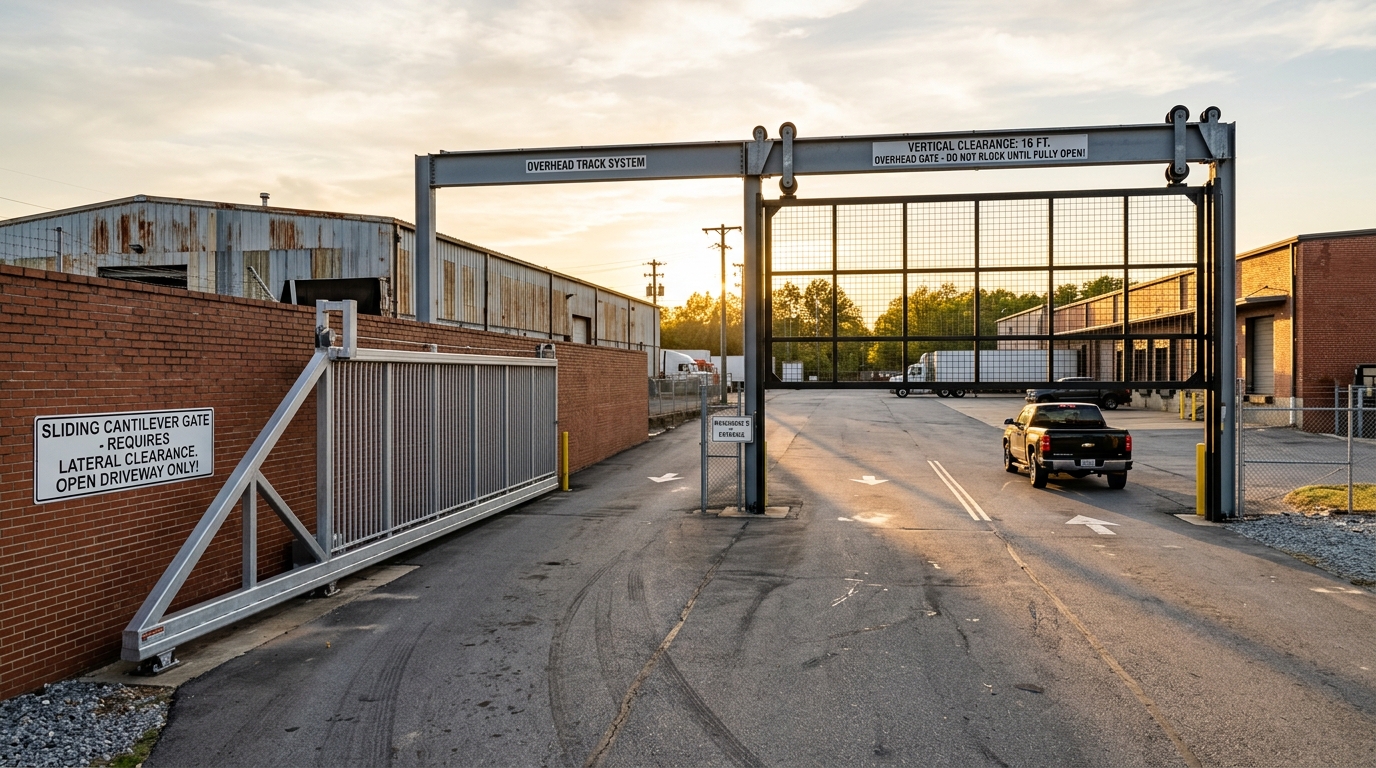
When you are planning your gate installation, the first thing I want you to look at is the side room available along your fence line. Cantilever gates are a fantastic trackless option, but they require a significant amount of extra lateral space to function properly. Because these gates use a counterbalance tail to stay suspended, you will typically need about fifty percent more width than the actual driveway opening. If your property has a narrow footprint or sits right against a neighboring building, you might find that a cantilever system simply has nowhere to slide when it opens.
If your side room is limited but you still need a heavy duty solution, an overhead gate might be the better fit for your layout. These systems use a sturdy overhead beam to support the gate, which eliminates the need for that long counterbalance tail sticking out to the side. However, you have to be mindful of your vertical clearance because that overhead beam sets a permanent height limit for every vehicle passing through. I always tell business owners to measure their tallest delivery trucks or pieces of equipment before committing to this design. You do not want to realize after the installation that your own fleet cannot make it under the support structure.
Choosing between these two comes down to where you can afford to lose a little bit of space. A cantilever gate keeps your sky open for tall machinery but eats up a lot of horizontal real estate along your perimeter. On the other hand, an overhead gate is a space saver on the ground but creates a ceiling that can be a dealbreaker for high profile vehicles. I recommend grabbing a tape measure and marking out both the lateral slide area and the potential height of a crossbeam. Seeing those physical limits in person usually makes the right choice for your specific property much clearer.
When you are dealing with a property that has gravel, dirt, or uneven terrain, a cantilever gate is usually your best friend. These systems are engineered to slide across the opening without ever touching the ground, relying on a counterbalance tail and rollers for support. Because they do not require a track on the pavement, you do not have to worry about snow, ice, or debris jamming the mechanism. They are the perfect choice for busy commercial sites where the ground is less than perfect or where regular maintenance is a concern. You just need to make sure you have enough side room for that extra counterbalance tail to slide back when the gate opens.
If your project involves massive steel gates or exceptionally heavy loads, an overhead gate is the heavy lifter of the group. These systems use a sturdy overhead beam and trolleys to hang the gate, which allows them to support weights that would make a cantilever system sag. While you do have to consider the height of the vehicles passing underneath, the vertical support makes these incredibly stable for high-security or industrial applications. They are fantastic for tight spaces because they do not require the long counterbalance tail that cantilevers do. I always recommend these for business owners who need a compact footprint but have some serious weight to move every single day.
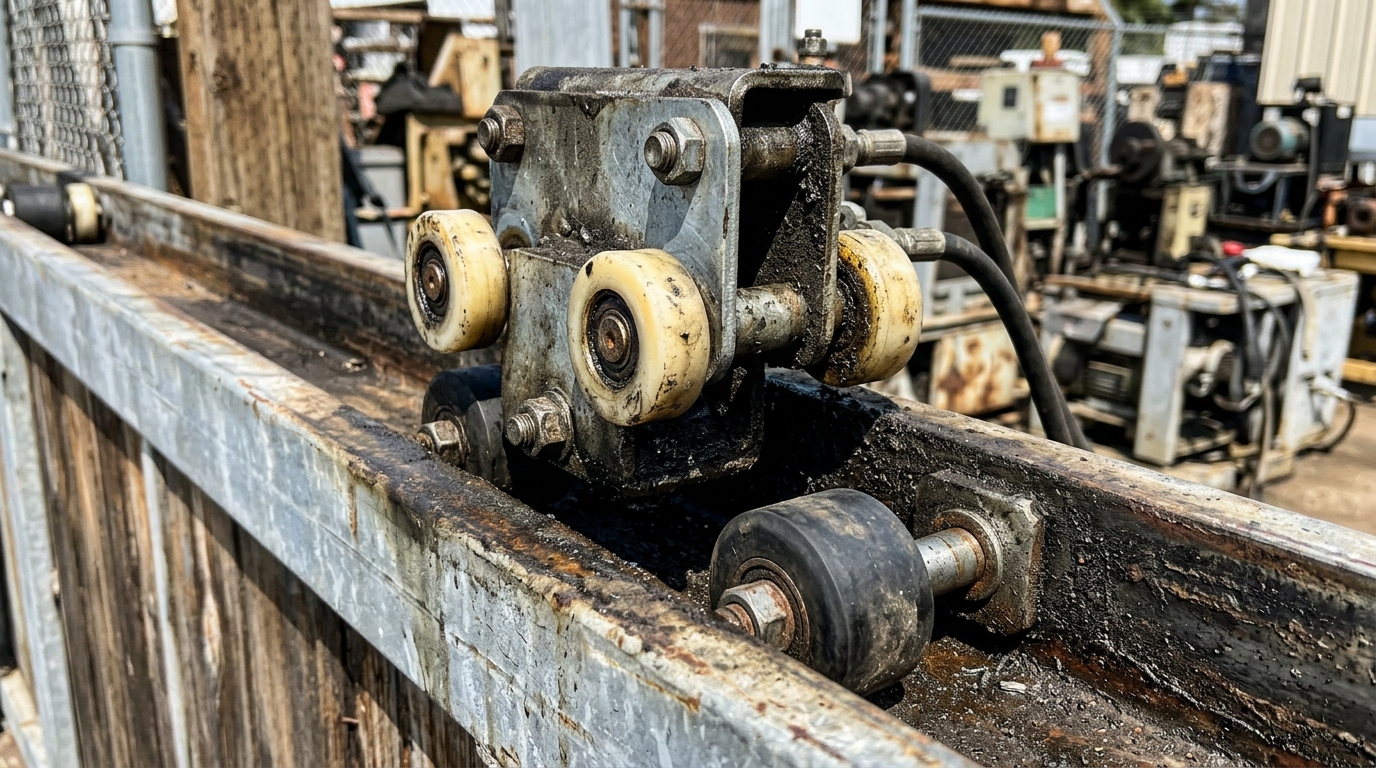
Maintaining a cantilever system is mostly about keeping an eye on those floating rollers and the space beneath the gate. Since these gates don't touch the ground, you won't have to worry about scrubbing a track, but you do need to make sure the counterbalance tail stays clear of debris. In the winter, I always tell my clients to clear out any heavy snow drifts that might pile up under the gate frame. If ice or packed snow builds up too high, it can rub against the bottom of the gate and put unnecessary strain on your motor. A quick visual check once a week to ensure the rollers are spinning freely is usually all it takes to keep things moving.
Overhead gates require a different approach because the most important components are way up in the air. You will need a sturdy ladder to inspect the overhead trolley and the track it slides through on a regular basis. Dust, bird nests, or old grease can build up inside that high track, which might cause the gate to stutter or hang up. I recommend wiping the track clean and checking for any signs of wear on the trolley wheels at least twice a year. Because these systems often handle much heavier commercial gates, catching a small alignment issue early can save you from a very expensive repair down the road.
Choosing between these two often comes down to how much time you want to spend on a ladder versus a shovel. Cantilever gates are great for busy owners who prefer low-to-the-ground maintenance, while overhead systems are perfect if you have the height clearance and don't mind the occasional vertical inspection. Both systems are incredibly reliable if you stay on top of the basics and don't let dirt accumulate in the moving parts. Just remember that a little bit of lubricant and a watchful eye will keep your property secure and your gate running quietly for years.
Choosing between these two systems really comes down to your property’s unique footprint and your daily operational needs. If you have plenty of lateral space along your fence line but deal with uneven gravel or sloped pavement, a cantilever gate is likely your best bet. It stays completely off the ground without needing an overhead beam, which makes it perfect for sites where tall trucks or cranes need unlimited vertical clearance. You just have to make sure you have that extra room for the counterbalance tail to slide back when the gate opens.
On the other hand, an overhead gate is the go-to solution when every inch of horizontal space is precious. Since the gate hangs from a sturdy top track, you do not need a long counterbalance tail taking up room on the side of your driveway. This setup is incredibly durable and can handle the heaviest industrial gates with ease, provided your vehicles can safely pass under the support beam. It is a smartest upgrade for high-traffic commercial lots where side room is limited but the ground stays relatively level between the support posts.
Ultimately, you should think about your long-term maintenance goals and the specific types of traffic entering your facility. Cantilever gates are famous for their low-maintenance design since they have fewer moving parts exposed to the elements. However, if you are moving massive loads or extremely heavy equipment, the structural integrity of an overhead system offers unmatched reliability. For those considering Metal Gates Installation In Los Angeles, take a quick measurement of your side clearance and check your height requirements to see which trade-off makes the most sense for your budget. If you are looking for an Electric Gate in Los Angeles, once you identify your main priority, the right choice for your business will become clear.
The main difference is how the gate is supported while it moves. A cantilever gate uses a counterbalance tail to float across the opening, while an overhead gate hangs from a structural beam installed above the driveway.
If you are tight on side room, an overhead track system is your best bet. It does not require the long counterbalance tail that a cantilever gate needs, so it fits perfectly on properties with narrow boundaries.
Yes, cantilever gates are perfect for uneven terrain or gravel driveways because they never touch the ground. Since the gate stays suspended, you will not have to worry about it getting stuck on rocks or dragging against a slope.
You definitely need to consider the height of the support beam for an overhead gate. You must ensure the beam is high enough to allow your largest vehicles, like delivery trucks or trailers, to pass safely underneath without hitting it.
Cantilever gates are usually much easier to deal with in the snow and ice. Because the gate is elevated, you do not have to clear a ground track every time it snows just to get your gate to open.
Absolutely, overhead tracks are designed to handle massive weight with ease. Because the gate is supported from a heavy duty beam above, it can span wide distances without the sagging issues you might see on driveway gates in Los Angeles or other systems. Understanding the Benefits of a Sliding Driveway Gate In Los Angeles can help you decide if a top-supported or side-supported sliding mechanism is right for your property.
VIEW OUR WORK
LEARN MORE
CONNECT WITH US