
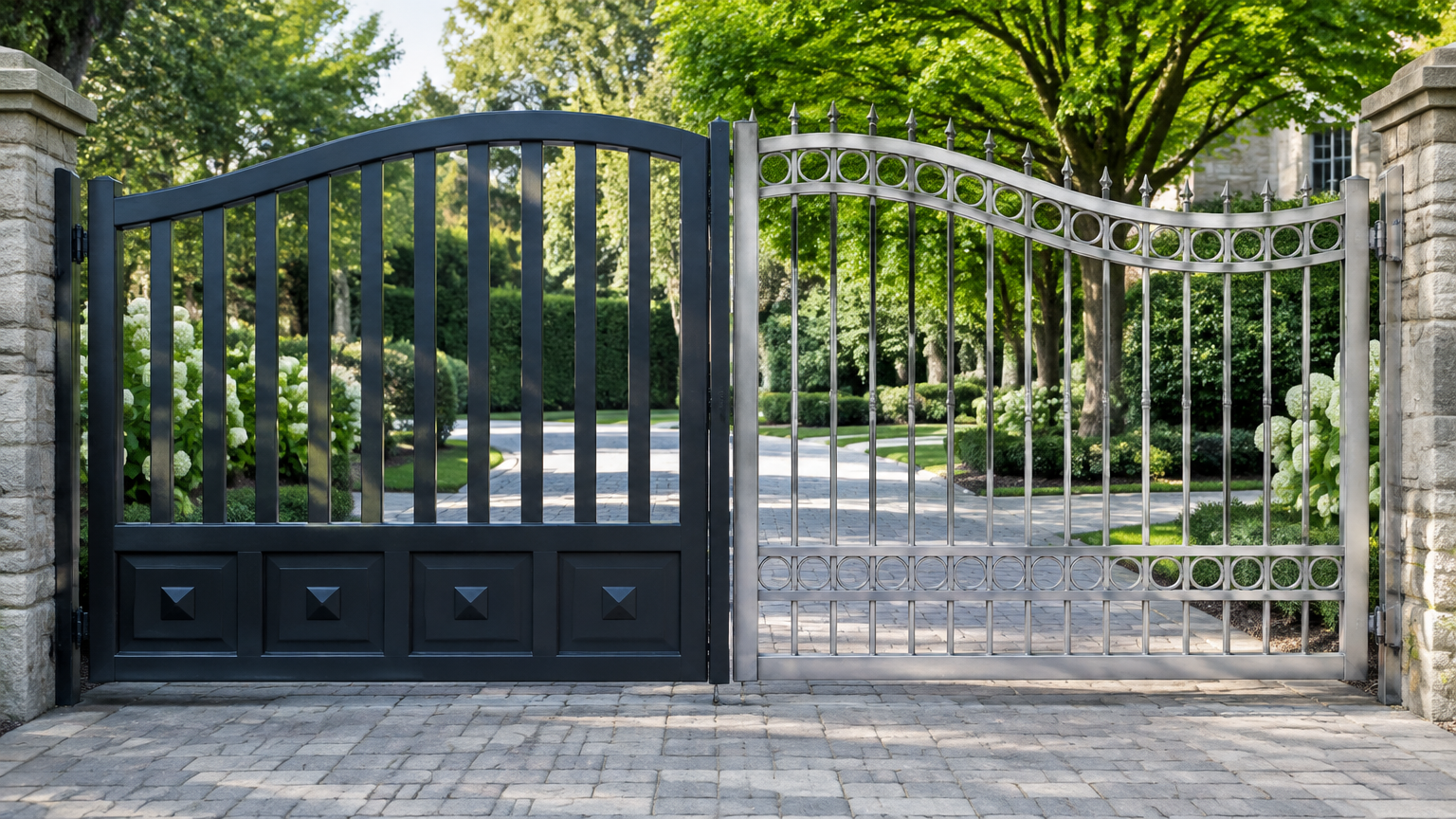
Steel and aluminum gates involve a trade-off. Steel often suits projects that call for a substantial, rigid build, while aluminum’s density is about one-third that of steel, making it lighter when reducing gate weight and resisting corrosion are priorities. Neither material guarantees strength or a long service life on its own. Design, dimensions, finish, hardware, and site exposure all affect performance. ASTM F2957-13(2025) covers structurally tested, architecturally coated tubular-picket aluminum fence systems.
Published U.S. security-gate installation estimates range from $600–$8,500 for steel and $2,000–$8,500 for aluminum, according to the HomeAdvisor security-gate cost guide. The ranges overlap, so they do not establish a universal bargain. A useful comparison also accounts for hinges or tracks, posts, finish, automation, and installation conditions. Los Angeles Fence Builders installs residential and commercial gates across Los Angeles and surrounding valley areas, including wrought-iron and high-security options. Comparing specifications and matching project scopes helps you weigh strength, rust protection, operation, and cost.
Steel often suits gates where a substantial, rigid build is a priority, while aluminum, with about one-third the density of steel, can suit projects where lower weight and corrosion resistance matter; frame design, dimensions, bracing, finish, and hardware determine actual performance.
Published U.S. security-gate installation estimates range from $600–$8,500 for steel and $2,000–$8,500 for aluminum, so compare itemized quotes with matching dimensions, finish, hardware, automation, access controls, and site work rather than assuming either material is cheaper.
Aluminum does not rust like iron-containing steel but can corrode, while steel’s rust resistance depends on protective galvanizing and coatings; inspect both materials’ finishes for damage and follow the finish manufacturer’s care guidance.
For automated vehicular gates, check that the complete system meets applicable requirements, and confirm any other applicable safety and local rules for the gate’s use and location.
Steel is often a good fit when strength and a substantial build matter most, while aluminum can suit projects where lower weight and corrosion resistance are priorities. Neither material is best for every gate. Construction, finish, dimensions, intended use, and site conditions all affect performance.
Aluminum’s density is about one-third that of steel, but density alone does not determine a finished gate’s strength. The frame’s dimensions, member thickness, bracing, joints, and hardware all help determine how well a gate handles its expected load. A light aluminum design can be engineered for a specific application, just as a steel gate can vary in rigidity and durability.
Steel and aluminum are available in different alloys, designs, and finishes. Compare complete gate specifications rather than relying on material names alone. Consider the frame construction, finish system, hardware, and any structural ratings that apply to the product. A detailed specification makes it easier to distinguish a well-built option from a gate chosen by material label alone.
Start with the load the gate must handle, including its size and frequency of use. Then consider exposure to moisture or corrosive conditions, the operating method, the appearance you want, and your upfront budget. A large automated gate, for example, has different design and hardware demands from a small pedestrian gate, regardless of whether its frame is steel or aluminum.
The comparison that follows looks at strength, corrosion protection, cost, and operation as separate factors. Considering each factor in relation to your site and gate specifications gives you a more useful basis for choosing than asking which metal is universally better.
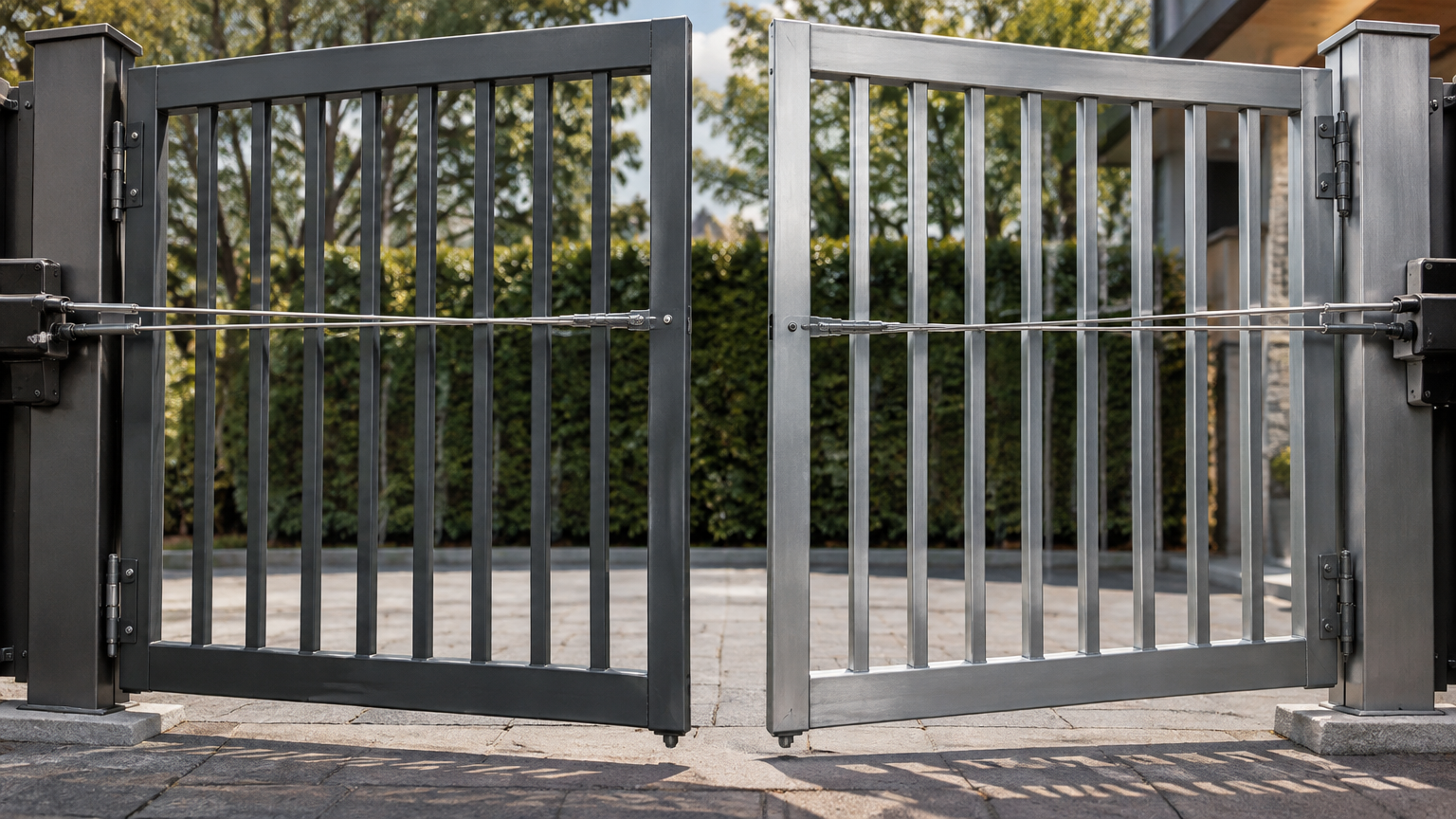
Steel can be a strong choice when a robust frame and demanding use are priorities, but a steel gate is not automatically stronger than every aluminum gate. Rigidity and impact resistance depend on the frame design, member dimensions, bracing, joints, and the gate’s intended duty. A well-designed aluminum frame may suit its application, while a poorly specified steel frame may not meet its demands. For an industrial or commercial gate, match the frame and hardware to the gate’s size, operating method, and expected use. Aluminum’s lower density can reduce gate weight, while steel may be suitable when a substantial frame is a priority. High-end residential projects also vary: a large entry gate and a smaller pedestrian gate have different structural demands, regardless of material. ASTM F2408-16 covers coated ornamental galvanized-steel fence systems and includes corrosion, impact, and weathering performance tests. The specification can help buyers assess a steel system’s tested performance, but it does not establish that every steel gate outperforms every aluminum gate.
Aluminum generally resists rust better because it does not rust like iron-containing steel. It can still corrode, and its performance depends on the alloy, environment, and quality and condition of its finish. Repeated water exposure, especially where moisture collects, makes finish quality and upkeep important for either material. Steel’s rust resistance depends on its protective system. Galvanizing helps shield the steel, and a compatible coating can add protection. ASTM F2408-16 specifies hot-dip galvanizing and coating-performance tests that include corrosion resistance, impact resistance, and weathering resistance in covered ornamental fence systems (ASTM International’s specification). Neither material is maintenance-free. The right inspection and care depend on the finish and site exposure. A gate in a sheltered area may face different conditions from one frequently exposed to rain or splashing water. Follow the finish manufacturer’s care guidance, and check for scratches, chips, peeling, or other coating damage rather than assuming the base metal alone determines service life. Damage matters because a compromised protective finish can leave the underlying material more exposed. On steel, exposed areas may rust. On aluminum, finish damage can reduce protection and affect appearance, though the metal does not rust like steel. Prompt attention to damaged coatings and periodic inspection can help preserve both a well-protected steel gate and a properly specified aluminum gate. The better choice depends on the gate’s exposure and finish system, not on a promise that either metal needs no upkeep.
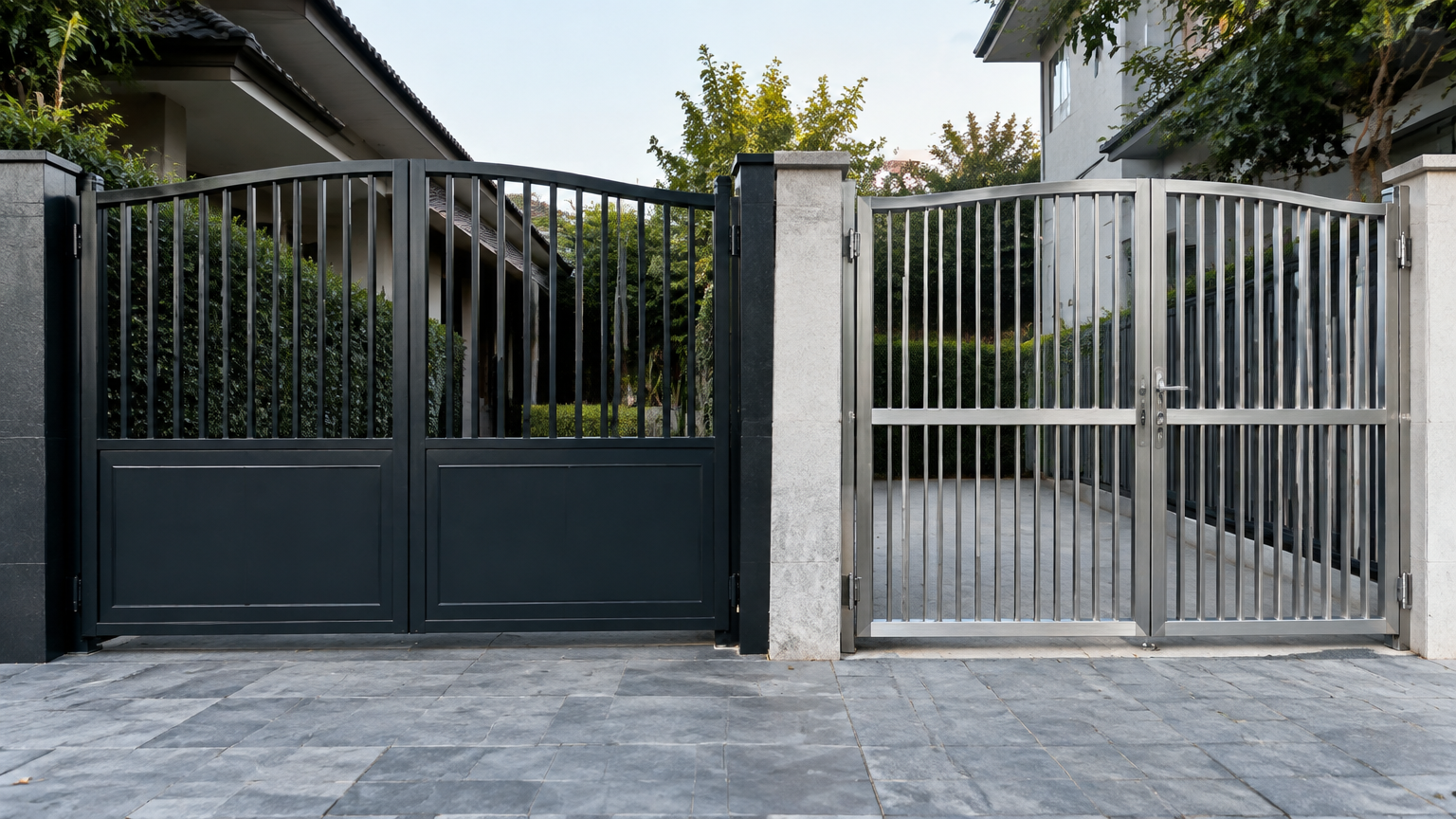
Steel and aluminum gate installation costs overlap, so neither material is always cheaper. The total depends on the project’s specifications and installation conditions. The HomeAdvisor security-gate cost guide lists U.S. installed-price ranges of $600–$8,500 for steel and $2,000–$8,500 for aluminum. Those broad ranges are not a direct like-for-like comparison. The guide also reports an overall security-gate installation average of $2,346 and a typical range of $879–$3,818, with costs varying by material, dimensions, and features.
A quote can change based on the gate’s dimensions and style, its finish, and whether the project includes an opener or access controls. A custom-sized vehicle gate with automated operation has a different scope from a basic pedestrian gate. Hardware also matters: hinges or tracks, latches, and other operating components must suit the gate design.
Installation conditions affect the total as well. Site preparation, post placement, and work to connect an opener or access-control system can add scope beyond the gate itself. Ask for estimates that specify the same dimensions, style, finish, hardware, automation, access controls, and site work. Comparing itemized quotes with matching specifications makes it easier to see whether a price difference comes from the material or a different project scope.
Weight and design affect the hinges, posts, tracks, operator, and installation needed for reliable gate movement. The complete gate system matters more than the metal alone. Aluminum’s lower density can make a gate lighter and may reduce demands on some support and operating hardware, but actual gate weight depends on its design and dimensions. A large, heavily ornamented aluminum gate may weigh more than a smaller or simpler steel gate.
Swing and slide layouts place different demands on a site. A swing gate turns on hinges attached to posts, so its dimensions and weight influence hinge selection and post support. A slide gate needs a suitable track or cantilever arrangement, along with hardware that guides it through its travel. Track condition and alignment, available clearance, and the chosen configuration affect installation and operation.
The operator must be specified for the gate’s actual weight, dimensions, movement, and expected use. Automated vehicular gates also need compatible safety and control components. ASTM F2200-24 covers automated vehicular swing and slide gates and states that automated vehicular gate systems must also comply with UL 325.. Choosing an opener by material alone does not establish that it will suit the gate or its hardware.
Design choices shape both appearance and function. Ornamental patterns can preserve visibility, while a more enclosed design may better suit privacy needs but can change the gate’s weight and operating demands. Steel and aluminum can each be formed into styles that complement different architectural looks; neither offers universally better design options. The frame, finish, infill, hardware, and overall proportions determine the finished character. Include those choices, the swing or slide layout, track or cantilever configuration, and operator compatibility in one specification so the gate and installation are planned as a coordinated system.
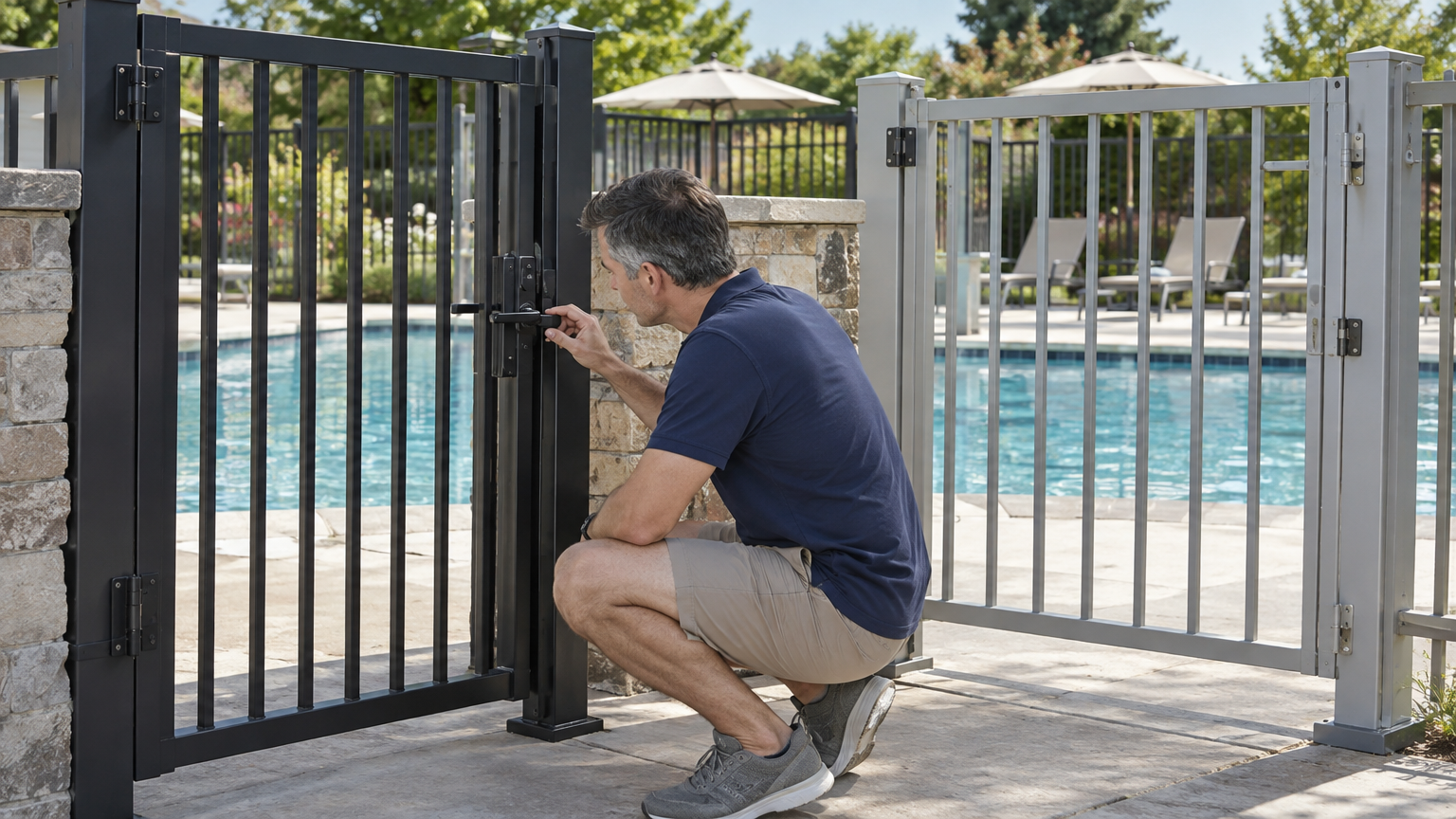
Commercial gate buyers should match the product specification to the gate’s use, configuration, and operating method, then confirm applicable permitting and safety requirements with the local jurisdiction. A metal choice alone does not establish that a gate meets the relevant specification or local rules. For residential pools, the U.S. Consumer Product Safety Commission’s guidance recommends a barrier at least 48 inches high and pedestrian gates that open away from the pool and are self-closing and self-latching. These are recommendations, not universal local code. Verify the binding rules for the property and jurisdiction.
Before requesting a gate quote, prepare a short site brief with the opening width and height, whether the gate will swing or slide, how it will be operated, and whether you need automation or access controls. Add photos of the opening, posts, driveway clearance, and any areas exposed to standing water or frequent splashing.
Use the brief to request steel and aluminum options for the same layout, finish, hardware, and installation scope. For a commercial site, describe the expected traffic and security needs. For a high-end residence, include the desired appearance and any privacy requirements. Ask the installer to identify the proposed frame, finish, hinges or track, and operator so you can compare complete systems rather than material labels.
If a pool, accessible route, or automated vehicle entrance is involved, identify that use before design begins and confirm which requirements apply to your property and jurisdiction. Los Angeles Fence Builders provides residential and commercial fence and gate installation across Los Angeles and surrounding valley areas, with options including wrought iron and high-security fencing. Send us your site brief and photos to request a project-specific gate estimate.
Aluminum gates can support privacy panels when the frame, connections, and hardware are specified for the panel and the finished gate’s weight. Because a more enclosed design can change operating demands, include the panel in the gate and operator specifications.
An existing gate opener may be reusable if it suits the replacement gate’s weight, dimensions, movement, and expected use. For automated vehicular gates, confirm that the complete system meets applicable safety requirements.
A coastal location does not automatically rule out a steel gate, but moisture and corrosive exposure make the protective finish especially important. Ask for details about the steel’s galvanizing and coating, and how the finish should be inspected and maintained. ASTM F2408-16 specifies corrosion-resistance testing for covered coated ornamental steel fence systems.
VIEW OUR WORK
LEARN MORE
CONNECT WITH US