
If you’re looking to upgrade your deck or balcony, you’ve likely noticed that exterior cable railing systems are everywhere right now. They offer a clean, modern look that keeps your property safe without blocking that beautiful view you worked so hard for. I love recommending these because they’ve evolved from complex commercial projects into something much more approachable for any homeowner.
Lately, the industry has made some great strides with DIY-friendly hardware and durable coatings that can handle any weather. You no longer need specialized heavy machinery to get a professional finish on your own. It’s all about using the right marine-grade materials and simple tensioning systems to create a space that feels open, airy, and built to last.
When you are building a high-end deck or balcony, I always recommend using 316 marine-grade stainless steel for your cables. This specific grade of steel is the standard because it contains molybdenum, which acts as a shield against salt spray and harsh weather. Even if you are not right on the coast, choosing this material ensures your railing stays bright and strong without those unsightly rust spots. It is the best way to protect your investment and keep that sleek, modern look for years. I find that 1/8 inch or 3/16 inch diameters work perfectly for residential projects because they provide incredible strength while remaining almost invisible to the eye.
To complete the system, you need to pair those cables with the right post materials to ensure long-term durability. I am a big fan of powder-coated aluminum posts because they are lightweight, incredibly sturdy, and naturally resistant to corrosion. The powder coating adds an extra layer of protection and allows you to choose a finish that matches your home's style perfectly. When you combine aluminum posts with stainless hardware, you create a low-maintenance barrier that handles the elements with ease. This combination is particularly popular for modern renovations where you want a clean, minimalist look without the constant upkeep of wood.
Picking the right components is all about creating a system where every piece works together to fight off the environment. I always tell my clients to look for swageless fittings if they want a DIY-friendly installation that looks professional and polished. These components allow you to tension the wires without specialized heavy machinery, making the assembly process much smoother. By focusing on high-quality materials from the start, you avoid the headache of repairs and replacements later. It really comes down to choosing components that offer both the structural integrity you need and the finish you want for your outdoor living space.
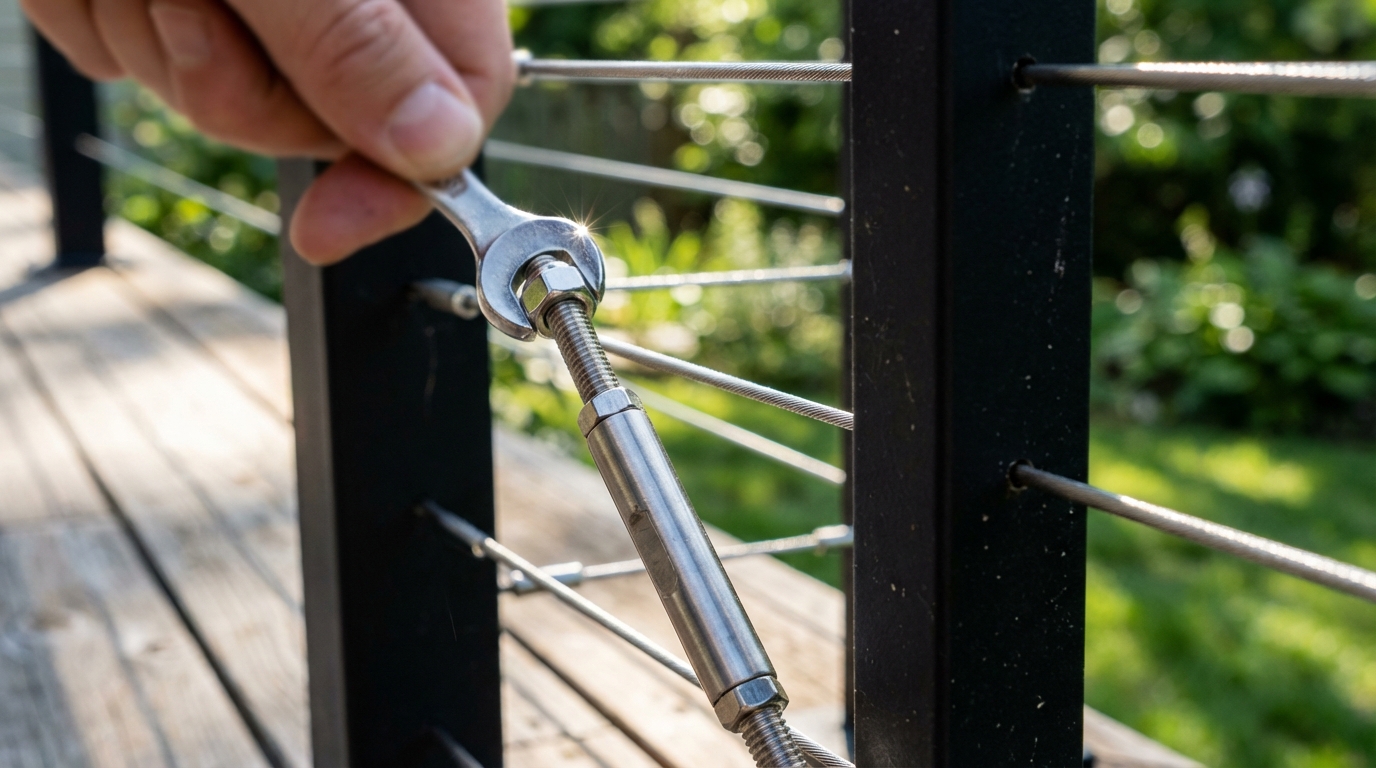
Achieving the perfect look for your modern balcony starts with getting the tension just right on your stainless steel cables. I always recommend starting from the center of your post run and working your way outward to ensure the pressure stays even across the entire system. You want the lines to be tight enough to eliminate any visible sag, but you should avoid over-tightening, which can actually warp your beautiful metal or wood posts. A simple way to check your work is the pluck test, where a properly tensioned cable should feel firm and produce a clear sound like a guitar string. Taking your time during this phase ensures that your railing looks professional and stays secure for years to come.
Safety is the most important part of any home project, and building codes are there to make sure your outdoor space is a worry-free zone. The most critical rule to remember is the four-inch sphere test, which means your cables must be spaced closely enough that a small ball cannot pass through them. Because cables have a bit of natural flexibility, I usually space them about three inches apart to account for any slight deflection under pressure. This tight spacing keeps the system compliant with standard residential codes while protecting children and pets from accidents. It is a small detail that makes a massive difference in the overall safety of your deck or balcony.
Properly managing the corners and end posts is the final secret to a sturdy and code-compliant exterior railing. These vertical posts act as the anchors for your entire system, so they need to be reinforced to handle the constant pull of the tensioned wires. I like to use heavy-duty corner posts or double-post configurations to prevent any bowing that could cause the cables to go slack over time. Using high-quality 316 marine-grade stainless steel hardware ensures that these connections stay strong even in tough weather conditions. When your framework is solid and your spacing is precise, you end up with a sleek finish that meets every safety requirement.
One of the best ways to elevate your deck's design is by incorporating a custom top rail, often referred to as a drink rail. This trend is popular for high-end renovations because it transforms your railing from a simple safety barrier into a functional social hub. By mounting a flat board on top of your posts, you create a perfect surface for guests to set down a glass of wine or a cup of coffee while enjoying the view. It bridges the gap between sleek modern design and the cozy, lived-in feel of a luxury home.
Mixing materials is the secret to achieving that high-end look without making your outdoor space feel too cold or industrial. I love pairing the thin, minimalist lines of stainless steel cables with the warmth of a natural wood or high-quality composite top rail. This combination allows you to match the railing to your home's existing siding or flooring, creating a seamless transition from indoors to outdoors. The metal provides that clean, modern edge, while the wood adds a touch of organic texture that feels inviting to the touch.
When you are planning this setup, focus on the durability and comfort of the materials you choose for the cap. Since this is where people will naturally lean and rest their hands, you want a smooth finish that can withstand the sun and coastal air. Using 316 marine-grade stainless steel for the cables ensures the system stays tensioned and rust-free, while the custom top rail provides the structural rigidity needed for a solid feel. It is a practical design choice that adds significant character and value to your property while keeping your sightlines completely open.
Investing in a high-quality exterior cable railing system is one of the most effective ways to elevate your home's modern aesthetic. While the sleek look might seem like something reserved for luxury architectural magazines, it is a completely achievable upgrade for your own deck or balcony. Choosing 316 marine-grade stainless steel ensures that your investment stays beautiful and rust-free for years to come. This professional finish provides a clean, unobstructed view that instantly makes any outdoor space feel more expansive. You really cannot beat the combination of safety and style that these systems offer for a contemporary renovation.
Achieving that polished, professional look is much simpler than it used to be thanks to modern swageless hardware. You do not need to be a master contractor to get those cables perfectly tensioned and aligned. By following a straightforward plan and using durable powder-coated posts, you can create a lasting boost to your property's curb appeal. This type of railing is a smart long-term choice because it requires very little maintenance compared to traditional wood or glass. You will love how the thin profile of the cables lets the natural beauty of your surroundings take center stage.
Taking the leap to install a cable railing system is a decision you will appreciate every time you step outside. It provides that crisp, clean line that defines the best of modern residential design while staying incredibly sturdy. Whether you are looking to increase your home value or just want a better view of the sunset, this setup delivers on every front. I am confident that once you see the final result, you will be amazed at how much it transforms the entire character of your home. It is a practical, stylish, and durable solution that truly stands the test of time.
I always recommend 316 marine-grade stainless steel because it contains molybdenum, which protects against rust and salt spray. It is the standard for keeping your deck looking sleek and professional for years. Even if you do not live near the ocean, it is the best way to ensure your investment stays bright and strong.
I find that 1/8 inch or 3/16 inch diameters are the perfect choice for most homes. These sizes are incredibly strong but thin enough to stay almost invisible. This allows you to keep your property safe without blocking any of your beautiful views.
Not anymore, because the industry has developed user-friendly hardware and simple tensioning systems. You no longer need heavy machinery or specialized tools to get a high-end finish on your own. It is now much more approachable for the average homeowner to install cable wire railing and achieve a professional look.
Aluminum posts are lightweight and sturdy, making them very easy to work with during installation. The powder coating adds a tough layer of protection against corrosion while letting you pick a color that matches your home. When you pair these posts with stainless hardware, you get a system that is built to last.
One of the best things about these systems is that they offer a clean and open look. Because the cables are so thin, they provide safety without creating a visual barrier. This makes your deck or balcony feel much more airy and modern.
Yes, these systems are designed specifically to withstand the elements by using durable coatings and marine-grade materials. They are built to handle everything from heavy rain to salt air without losing their strength. You can feel confident that your railing will stay secure and look great in any climate. We have even seen how a cable wire railing in Bel Air can withstand the elements while maintaining its high-end aesthetic.
What are the benefits of cable wire railings? This question often arises for homeowners and builders considering modern, stylish, and functional railing options. Cable wire railings offer a range of advantages that make them an increasingly popular choice for both interior and exterior applications.
From enhanced aesthetic appeal to improved safety and durability, cable wire railings provide numerous benefits that make them a standout option in contemporary design and construction. In this article, we will explore the key benefits of cable wire railings and why they might be the perfect solution for your next project.
Cable wire railings are leading in the modern railing world. They mix beauty with strength. Made mostly from stainless steel, these railings fit many styles. They work well inside and outside, matching various building designs.
They are known for their strong build. Stainless steel makes them last long and look modern. Their simple beauty is why they're so popular today.
Cable railings add a sleek touch to any area. Their slim lines offer a modern look unlike old wood railings. They make your space look better right away, making it more appealing.
Cable railings work well with many designs. They can have stainless steel posts or mix metal with wood. This gives a clean, updated feel without taking over the space.
It is critical to choose a railing that is strong and lasts long. Strong railing materials like stainless steel make cable railings extremely durable. They handle a lot of force and stay stable, showing they are tough even in hard situations.
The material composition of cable railings is the reason why they perform so well. They use top-quality stainless steel for both cables and posts. This doesn't just make the railing strong. It also means less upkeep is needed. Both homeowners and builders find this very useful.
These railings are also great at fighting off rust. This means they're perfect for any place, whether it's very wet or very cold. They last a long time because they can handle different weather well.
Cable wire railings stand out for their easy care. They need little work to keep up. This makes your life simpler.
These railings are easy to clean. Just wipe them with a cloth and gentle soap. Wood railings, on the other hand, need more work like repainting or staining to look good.
The durability of cable railings is impressive. They're made of stainless steel and strong finishes. These features ensure they last long and stay beautiful and strong, thanks to their smart design and premium materials.
Cable wire railings are great for making a space look better. They keep views clear and wide. This is because of their slim design. They fit well in both inside and outside areas.
They have a simple and neat design. This is good for places with beautiful views. Whether you're on a deck, patio, or balcony, these railings make your view better.
Cable railings offer lots of flexibility and customization. This makes them perfect for designing spaces that fit your needs. They have many design and installation choices. These choices cater to unique tastes and requirements.
Customizable railing systems are great because they fit many design styles. You can choose from sleek metal posts, tension kits, or various finishes. This way, cable railings can match any architectural style perfectly. You get to create a look that's just right for you.
Adding cable wire railings to your home can really boost its value. They have a modern look that catches the eye. They also make a home seem more luxurious and well-made to potential buyers.
Choosing to add these railings is a smart investment. They make a house worth more on the market. People looking to buy a house like things that last and are easy to take care of. Cable railings are just that. They help keep a home's value high over time.
These railings are modern and safe, adding to a home's appeal. They look good and keep people safe at the same time. Enhancing your home with them adds to its beauty and its worth. It's a smart move for anyone looking to improve their home.
When we compare railing options, we see big differences between cable railings and traditional ones. Traditional wood railings look classic but need a lot of upkeep. This includes sanding, painting, or staining often, which takes much time and money.
Cable railings, on the other hand, look modern and are easier to maintain. Their sleek design fits well with new architectural styles. They add a sophisticated touch that's hard with traditional railings. Also, they save money over time because they need less care.
Durability is also crucial when comparing railings. Cable railings, made of stainless steel, handle weather well and stay sturdy with little care. While installing any railing takes time, cable railings offer great long-term benefits. They are cost-effective and maintain their strength well.
The starting cost of cable railings may seem high. Especially when compared to traditional wood railings. However, the ongoing upkeep costs are much lower.
Wooden railings need a lot of care, like repainting and fixing. Cable railings, on the other hand, are easy to keep up.
They help save a lot of money over time. Even though metal posts cost more at first, you won't spend much on upkeep later.
Cable railings last longer, which is a big plus. They rarely need to be replaced or fixed. This saves money and keeps them looking good for years.
Thinking about the upfront costs versus these long-term benefits shows cable railings are a good money move.
Cable wire railings are used in many places. They fit well with many building styles. They ensure safety and improve how a place looks.
They are seen in outdoor places and inside homes, among other uses. They are chosen often because they are so flexible in design.
Decks and patios often use cable wire railings. These places are like outdoor living rooms. Cable wire railings let you enjoy the view without blocking it.
Their slim cables don't get in the way of seeing your yard. They are perfect for homes with great views. They make outdoor areas look better and work well.
Staircases and balconies also use cable wire railings often. They need to be both strong and nice to look at. These railings are safe and stylish at the same time.
They look modern and connect different floors smoothly. They can be shaped to fit straight or curved areas. They are great for any home or building, inside and out.
In conclusion, the numerous benefits of cable wire railings make them a standout choice for any property. Their sleek design, durability, low maintenance, and ability to enhance views make them a perfect addition to modern homes and commercial spaces alike. Whether for safety, style, or functionality, cable wire railings deliver exceptional value.
Ready to transform your space with the elegance and practicality of cable wire railings? Trust the expertise of Los Angeles Fence Builders. With our top-notch cable wire railing installation services, you can be confident that your new railings will be both stunning and secure. Contact Los Angeles Fence Builders today for a free estimate of cable wire railing.
Cable wire railing is an excellent way to enhance both the aesthetics and safety of your home. Whether you're looking to improve your deck, balcony, or staircase, installing cable wire railing gives a modern and sleek look that is perfect for any contemporary home. However, installing cable wire railing can be a challenging process, and it's essential to follow the right techniques to ensure a safe and secure installation.
In this section, we will provide a step-by-step guide on how to install cable wire railing with the help of a professional. Following these expert tips, you can complete your project in an efficient and reliable manner, leaving you with a beautiful and safe cable wire railing system that will last for years to come.
Before embarking on a cable wire railing installation project, it is essential to understand the components that make up the railing system.
The following are the essential components required for cable wire railing installation:
| Component | Function |
|---|---|
| Cable wires | Provide tension and support for the railing system. |
| Tensioners | Used to adjust the tension of the cable wire. |
| End posts | Hold the ends of the cable wires and provide stability to the railing system. |
| Intermediate posts | Provide intermediate support and stability to the railing system. |
| Washers and nuts | Secure the cable wires to the posts. |
It is important to note that different railing systems may have additional components, such as top rails and bottom rails.
Understanding the components of cable wire railing is crucial for the success of your DIY installation project. By knowing the function of each part, you can make informed decisions about the materials and tools you will need to get the job done right.
Before starting the cable wire railing installation, it is imperative to have precise measurements and a solid plan. In this section, we'll guide you through the step-by-step process of measuring and planning for your cable wire railing project.
Measure the entire length of the deck or balcony. This is where your cable wire railing will be installed. Write down the measurements and mark them on a sketch of your deck or balcony.
Next, decide where to place the posts for the cable wire railing. They should be installed no more than 4 feet apart to ensure stability. Use a ruler or measuring tape to mark the location of each post on your deck or balcony sketch.
Determine the number of horizontal cable wires you'll need between each post. A reasonable space between cables is 3 inches, so calculate the number of cables needed based on this measurement.
Measure the distance between each post to determine the length of cable needed. Multiply the distance by the number of cables to determine the total length of cable needed for your project.
Based on your measurements and plans, create a comprehensive list of materials and tools needed for the installation. This list should include the following:
Having a detailed list of materials and tools needed will help you purchase everything required before starting the installation process.
Following these steps will help ensure that the cable wire railing installation process proceeds smoothly. Keep in mind that proper measurements and planning are crucial to achieving a successful outcome.
Proper planning and using the right tools and materials can make all the difference when it comes to installing cable wire railing. Here are some essential tools and materials needed for a successful installation:
| Tools | Materials |
|---|---|
| Drill with bits, Wrench, Screwdriver, Level, Tape Measure, Cable cutter, Swage tool, Eye bolt wrench, Cable railing tension gauge, Hammer, Wire brushes | Cable wire railing kit with fittings and cable, Wood or metal posts, Mounting brackets, Washers and nuts, Wood or metal screws, Protective gloves and eyewear, Paint or stain (if desired) |
When choosing cable wire railing kits, be sure to select a kit that suits your installation needs. There are various kits available with different cable lengths and fittings. Reading the manufacturer's instructions carefully and ensuring that all tools and materials are on hand can make your installation process easier and quicker.
Before installing the cable wires, it is crucial to ensure that the posts and framework are stable and properly prepared. Following these steps will ensure a successful installation:
It is essential to make sure that the posts are properly secured to the framework to prevent any wobbling or shaking once the cables are installed. A wobbly railing system can compromise safety and may require professional assistance to fix.
| Tools | Materials |
|---|---|
| Measuring tape | Posts |
| Marker | Drill |
| Saw | Hardware |
| Level | |
| Drill bits |
Properly preparing the posts and framework is an important step in the cable wire railing installation process. It may be helpful to consult a professional for guidance, especially if working with a larger or more complex installation.
Now that you have all the necessary tools and materials, and your posts and framework are ready, it's time to install your cable wire railing. This section will provide you with step-by-step instructions on how to install cable wire railing in an easy way.
Note: It is important to follow these instructions carefully to ensure proper installation and safety.
Tip: It's always a good idea to double-check your work and ensure that all cables are properly secured and tensioned before using the railing.
If you're installing cable wire railing on stairs, the process is similar to installing it on a level surface, with a few additional steps:
Tip: When installing cable wire railing on stairs, it's important to make sure that the railing is properly secured to the floor and that the cables are properly tensioned to ensure safety.
After completing the installation, regular maintenance and safety checks are critical to ensure your cable wire railing continues to function safely and look great. Below are some essential tips and tricks to keep in mind:
By regularly performing these maintenance tasks and safety checks, you can ensure the longevity and safety of your cable wire railing.
Installing cable wire railing not only provides safety but also adds a modern and sleek look to your space. However, there are various ways to enhance the aesthetics of your cable wire railing to complement your personal style. Here are some ideas:
The finish of your cable wire railing can make a significant impact on the look of your space. Stainless steel is a popular choice due to its durability and sleekness. However, you can choose from a range of finishes, including matte black, brushed nickel, and bronze, depending on your preference.
If you want to add a pop of color, consider painting your cable wire railing. Be sure to use a paint that is suitable for exterior use and can withstand exposure to sunlight and changing weather conditions. Alternatively, you can choose cables with colored coatings to add subtle accents.
Accessories can add a decorative touch to your cable wire railing. Some options include post caps, end caps, and decorative collars. However, be sure not to obstruct the view or compromise the structural integrity of the railing system.
"Adding decorative elements to your cable wire railing can enhance the overall look and feel of your space, but be sure not to compromise the safety of the installation."
While installing cable wire railing, some issues may arise that can hinder the installation process. Here are some of the common issues with their possible solutions:
One of the most common issues with cable wire railing installation is uneven spacing between cables.
Solution: To fix this issue, start by loosening the turnbuckle where the uneven spacing is occurring. Then adjust the cable tension by tightening it to the same level as the other cables. Once the tension is equal, fasten the turnbuckle back in place.
Sagging cables is a common issue, which can occur when the tension is not tight enough.
Solution: Loosen the turnbuckle to create more tension on the cable. If this does not work, you may need to add additional tension to the cable by adjusting the turnbuckle at the opposite end. Use a tension gauge to ensure that the cable is at the correct tension level.
Loose anchor points are another common issue with cable wire railing installation.
Solution: Re-tighten all of the anchor points and check for any loose hardware, such as bolts or screws. If any hardware is missing or damaged, replace it immediately.
By following these simple troubleshooting tips, you'll be able to resolve many of the common issues that can arise during cable wire railing installation. If you encounter any other problems, it's always best to consult a professional to ensure the safe and proper installation of your railing system.
Installing cable wire railing is a great way to enhance the safety and the overall look of your space. However, it is vital to prioritize safety throughout the installation process. By following the step-by-step instructions provided in this article, you can ensure a secure and stable cable wire railing system.
Remember to measure accurately, plan carefully, and use the right tools and materials. Also, regularly perform maintenance and safety checks to keep the system in good condition and ensure continued safety.
If you encounter any installation issues, do not panic. Refer to the troubleshooting tips provided in this article to help you overcome any challenges. In case of major problems, consider seeking assistance from a professional. They can help resolve the issue and ensure a successful installation.
Cable wire railing offers a stylish and secure solution for many spaces. By following the steps outlined in this article, you can install it with ease and ensure its longevity. Always prioritize safety, proper installation, and regular maintenance to maintain the integrity of the system over time.
Cable wire railing is a type of railing system that uses stainless steel cables as the primary infill material. It offers a sleek and modern look, allowing unobstructed views while maintaining safety.
Cable wire railing provides several benefits, including durability, low maintenance, and high visibility. Cable wire railing is a popular choice also for its modern and minimalist aesthetic.
The height of your cable wire railing should comply with local building codes. It is typically recommended to have a minimum height of 36 inches for residential applications and 42 inches for commercial applications.
While some specialized tools may be helpful, basic tools such as a drill, wrench, and level are usually sufficient for cable wire railing installation. It is important to follow the manufacturer's instructions and use the appropriate tools for a secure installation.
Yes, cable wire railing can be installed on stairs. However, additional considerations may be necessary, such as adjusting the cable tension and ensuring proper stair tread spacing.
Regular cleaning and maintenance are important to keep your cable wire railing looking its best. Use a mild detergent and water solution to clean the cables and framework, and inspect for any signs of damage or loose connections. Avoid harsh cleaning agents that may damage the stainless steel cables.
Yes, cable wire railing can often be installed on existing structures. However, it is essential to ensure that the structure is suitable and can support the additional load and tension of the cables. Consulting with a professional or following manufacturer guidelines is recommended.
Cable wire spacing requirements may vary depending on local building codes and regulations. The spacing between individual cables should be small enough to prevent children from squeezing through, typically 3 to 4 inches apart. Always check local codes and guidelines to ensure compliance.
Yes, cable wire railing is suitable for coastal areas. The use of stainless steel cables ensures resistance to corrosion and rust, making it a durable option for environments with high moisture and salt exposure.
Yes, cable wire railing can be customized to suit your style and preferences. Options for customization include choosing different cable thicknesses, finishes, and adding accessories such as handrails or post caps.
VIEW OUR WORK
LEARN MORE
CONNECT WITH US