
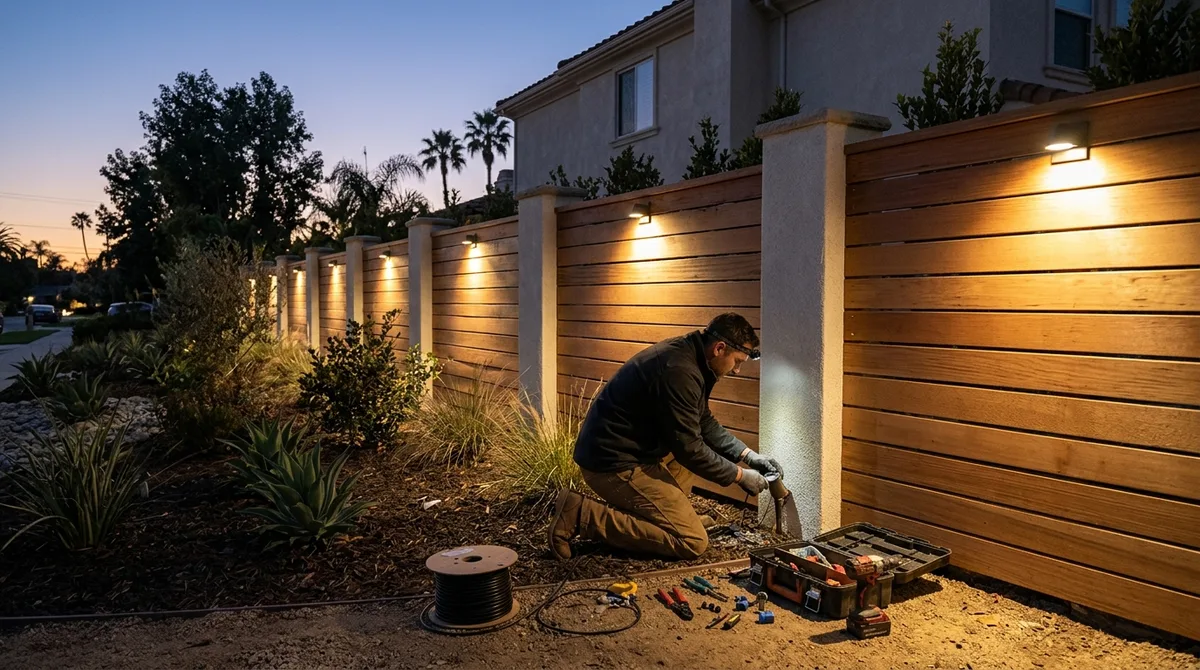
Fence lighting installation has no standard fence-specific price, but Los Angeles outdoor-lighting benchmarks are about $150–$400 per installed fixture and $1,700–$5,675 for a typical project. Treat those figures as budgeting references, not fence-line bids. A few lights near a gate can require a very different setup from a long fence line that needs new wiring, trenching, or controls.
Your quote will depend on fixture type and count, distance to power, transformer capacity, fence material, and access. These factors affect coverage and installation work, so two properties may need different systems. In Los Angeles City, electrical wiring requires a permit unless a code exception applies. Check the applicable requirements in Los Angeles Municipal Code Section 93.0201. Comparing the proposed scope and fixture count can help you judge what each estimate includes.
The per-fixture range gives you a unit-level reference for comparing proposals. The project range gives a broader sense of what an outdoor-lighting installation may cost. They describe different scales of pricing, so multiplying the fixture figure by your planned light count should not be treated as a complete project estimate.
Your fence-line quote will depend on fixture type and count, wiring distance, any trenching, transformer capacity, controls, fence material, and access. Each factor can change the equipment or installation work involved, and not every fence needs the same setup.
A short, accessible fence run with a simple layout may involve less work than a long run that needs buried wiring or added controls. The fixture count alone may not explain the difference between two estimates. One layout may need more wiring work or equipment to serve the same number of lights. Compare the proposed scope as well as the total, including the number and type of fixtures and the work needed to install them.
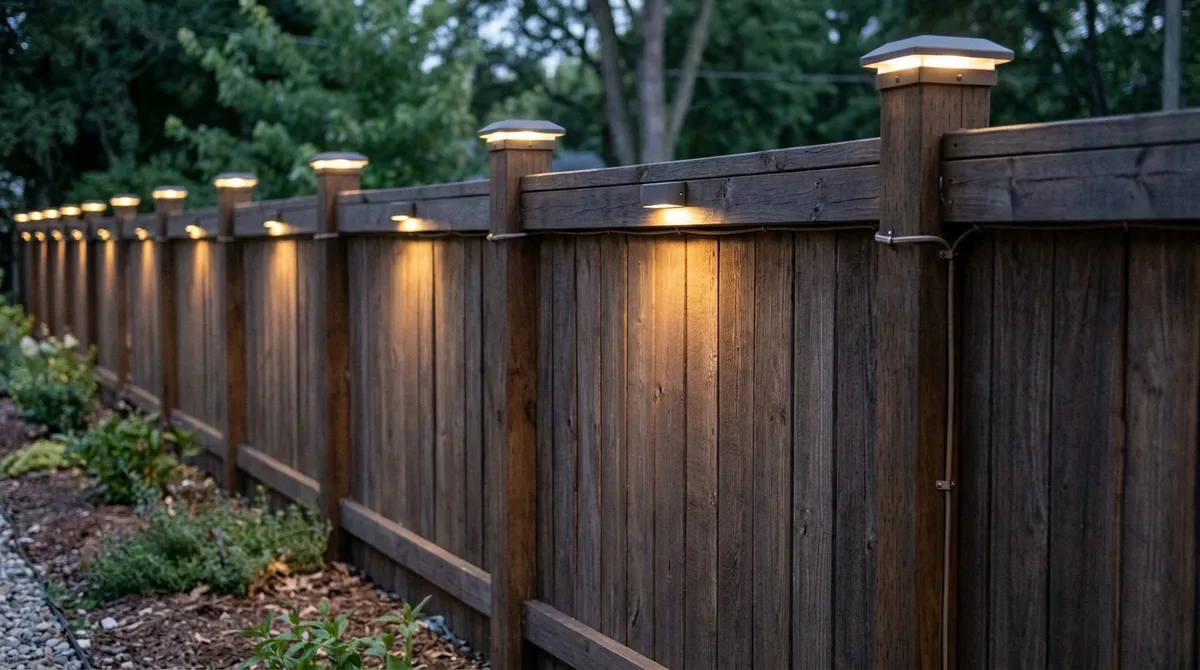
Solar, low-voltage, and line-voltage fixtures can all light a fence, but each uses a different power setup and may suit a different layout. Solar lights use a small panel and stored energy, so they avoid a connection to household wiring. Low-voltage lights connect by cable to a transformer that reduces the power level. Line-voltage fixtures connect to the property’s electrical supply and need wiring suited to that system.
Fixture style shapes where light falls. Post-cap lights sit on fence posts and can mark a boundary or brighten a gate entrance. Downlights attached to a post or rail direct light toward the ground, which can help illuminate a path beside the fence. Directional lights can aim at a gate, a corner, or a darker stretch instead of spreading light evenly along the whole fence.
The right fixture count and spacing depend on the fence’s turns, gates, nearby paths, and the visibility you want. A few carefully placed lights may focus attention on an entry, while a longer or uneven fence line may need more fixtures to reduce dark gaps. There is no universal spacing that fits every property. More fixtures can increase equipment and installation costs, while a layout with fewer lights may need careful aiming to cover priority areas.
Fence material and condition also affect mounting options and quote scope. Sound wood posts and rails may offer straightforward mounting points. Chain-link mesh, metal pickets, and vinyl sections may need different brackets or attachment points. An older, loose, or damaged section may need attention before it can support a fixture. A gate adds another consideration: the plan needs to account for the gate leaf, its movement, and how power reaches lights near the entry. A quote should identify fixture locations and the mounting approach, not just the total number of lights.
Wiring and access affect fence-lighting cost by determining how far power must travel, what equipment the system needs, and how much labor installation and surface restoration require.
Buried-cable trenching is estimated at $4–$12 per linear foot, with route length and surface conditions affecting the work involved. A direct run through open soil differs from a route that must cross paving, work around established landscaping, or reach a fence far from the power source. Angi’s outdoor-lighting cost guide gives the trenching estimate as a general budgeting reference.
Transformer capacity matters for low-voltage systems because the transformer must support the connected fixtures. Longer wiring runs and more fixture connections can add installation work, while a system that needs a larger transformer may require different equipment. Smart controls can also affect cost, depending on the controls selected and how they connect to the lighting system.
Tight side yards, slopes, gates, and limited working room can slow installation. Paving may need to be opened and restored if wiring must pass beneath it, and landscaping may need careful protection or repair. The fence’s position can also affect how installers reach mounting points and route cable without interfering with the fence or gate.
The work generally follows a sequence, though fence length and site conditions can change the schedule:
A typical outdoor-lighting project takes 1–3 days, but the scope and site conditions of a fence-line project affect the schedule. A short, accessible run may move faster than a long route involving trenching, paving, or difficult access.
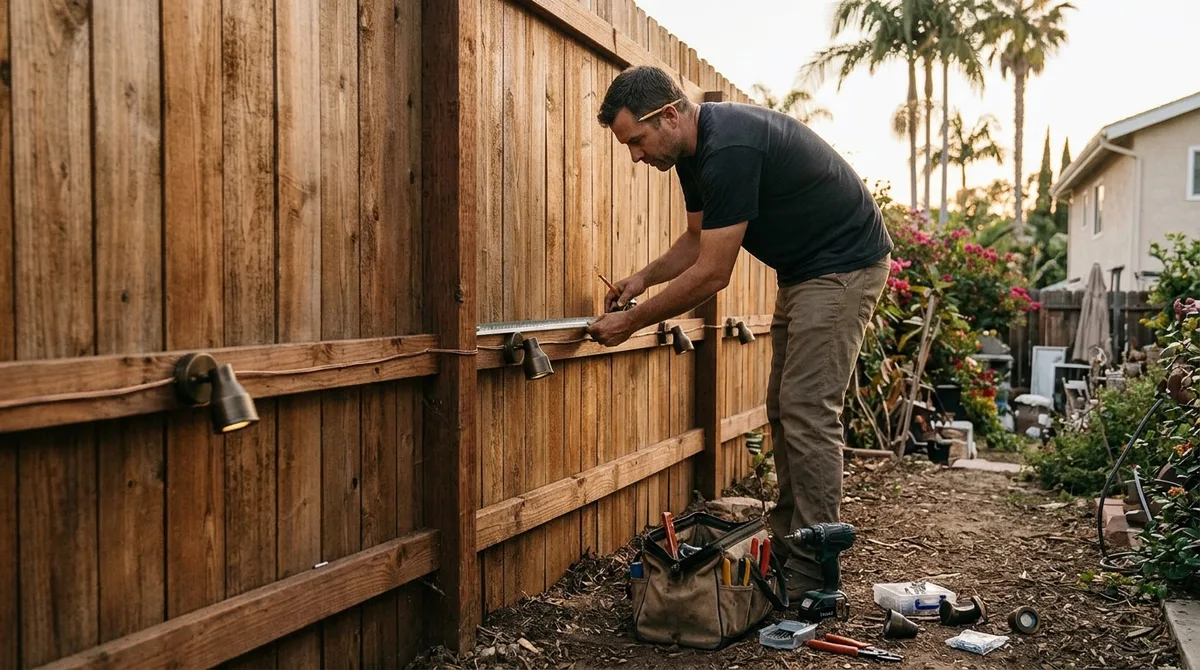
Yes. Fence-lighting requirements depend on the property’s jurisdiction and whether the system uses electrical wiring, low-voltage landscape lights, or stand-alone solar fixtures. The Los Angeles City code also includes solar-powered stand-alone equipment, such as pole-mounted luminaires, in its permit language.
Los Angeles City also restricts stationary exterior lighting that causes more than two footcandles of illumination or direct glare at specified neighboring residential areas, including windows, decks, balconies, and usable ground areas. Aim fixtures toward the fence or ground rather than nearby homes, and check the limits in Los Angeles Municipal Code Section 93.0117.
The Los Angeles County Rural Outdoor Lighting District applies only in designated areas and requires fully shielded lighting. City and county rules do not apply uniformly across the wider Los Angeles region, so confirm which jurisdiction covers your property and what local requirements apply to the proposed fixtures.
A C-10 electrical contractor classification is relevant for wiring because it covers installing or connecting electrical wires, fixtures, and related equipment. The California Contractors State License Board’s C-10 description explains the classification. Ask who will handle electrical work and whether the proposed system needs a permit.
The California Energy Commission’s 2025 Single-family Residential Compliance Manual says the cited residential requirements do not require motion sensors or photocontrols for low-voltage landscape lighting in a yard. That guidance addresses those lighting controls, not every permit or local-code question.
For unattended equipment plugged into an outdoor receptacle in a wet location, California requires a weatherproof enclosure whether the plug is inserted or removed. The rule appears in California Code of Regulations, Title 8, Section 2510.5.
Fence lighting can make fence lines, gates, and approaches easier to see, supporting visibility and security without guaranteeing that lights alone will prevent trespassing. A well-aimed fixture can help reveal a gate entrance or a dark stretch beside a path, while poorly aimed light may create glare instead of useful visibility.
Ongoing energy costs depend on the system type, fixture choice, controls, and operating schedule. Lights that run for longer periods use more energy than lights set to operate only when needed. Choose controls and schedules that match how the property is used, and consider whether each fixture provides useful coverage for the power it consumes.
Weather exposure matters when choosing fixture materials and installation details. Coastal properties may need marine-grade fixtures to resist salt air. Sun, moisture, and wind can also affect exposed fixtures and connections, so the equipment should suit conditions along the fence line.
Routine upkeep helps keep the system dependable. Check fixtures for damage or shifting, inspect connections for wear, and confirm that timers, sensors, or other controls work as intended. Keep fixtures and controls reachable for inspection. An installation that is difficult to access can make simple checks and repairs more involved. Make sure lights near gates do not interfere with gate movement.
Long-term value comes from useful visibility and dependable operation, not simply the lowest initial price. A system matched to the fence, site exposure, and operating needs is more likely to remain practical over time.
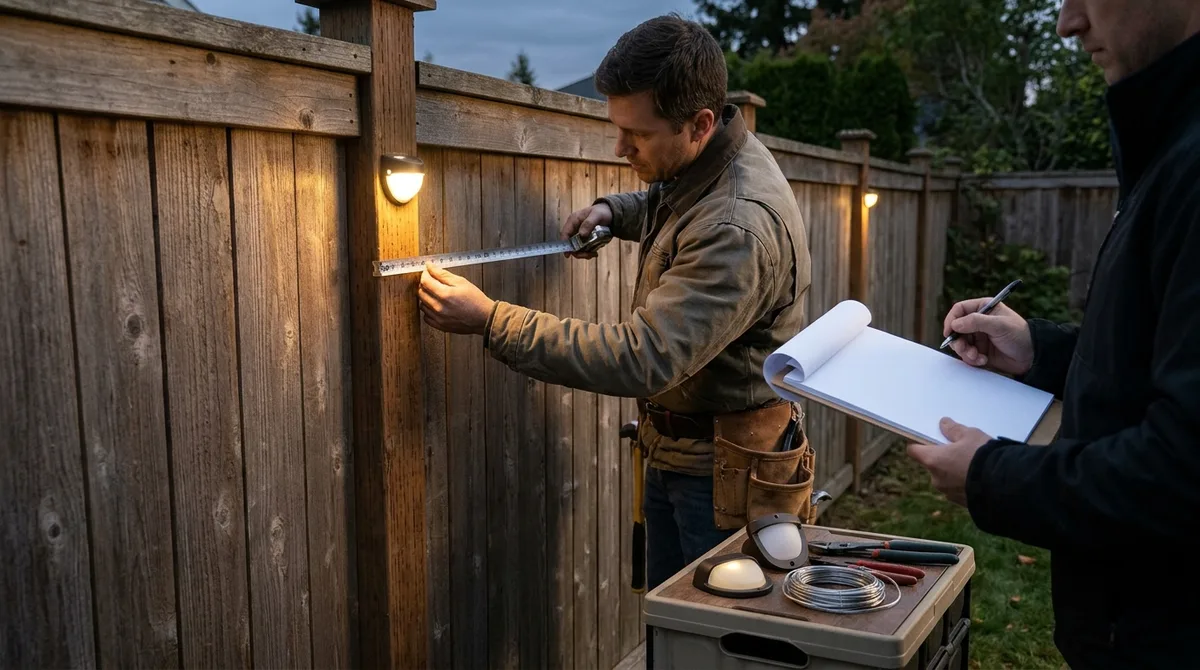
A useful fence-lighting quote should identify the fixtures, installation route, equipment, permit considerations, and any surface restoration so you can compare project scopes.
At Los Angeles Fence Builders, we install fences and gates for residential and commercial clients and offer free estimates. If you are also planning lighting, mention it when discussing the fence or gate layout.
Share details such as:
Ask the lighting installer to list the fixture count and placement, wiring route, transformer and controls, permit considerations, and whether surface restoration is included. Clear details make it easier to see what each estimate covers and identify differences in the proposed work.
Mark possible fixture locations and wiring routes on your fence plan, then use that plan to request and compare estimates.
Before requesting a fence or gate estimate, sketch the areas where added visibility matters most, such as a driveway entrance, pedestrian gate, or dark corner beside a path. Note whether the fence is existing or part of a planned replacement, and label its material and any gates that need to open freely. Those details help us understand the fence layout and gate requirements for your estimate.
If you are in Los Angeles or a nearby valley community, call us at (424) 625-8561 to discuss your fence or gate project. We serve areas such as Beverly Hills, Culver City, Santa Monica, Burbank, Glendale, Encino, and Northridge, along with the San Fernando, San Gabriel, and San Bernardino Valleys.
When you call, have your sketch and a few photos ready, especially images of the gate, nearby paving, and the route from the fence to a possible power source. Share the planned fixture positions when discussing fence or gate work, and make sure the estimate reflects the fence or gate layout you intend to build.
Solar fence lights can often be added to an existing fence if the posts or rails are sturdy and provide suitable mounting points. Check that the panels can receive sunlight and that the fence material supports the chosen brackets. A damaged or loose section may need repair first.
Fence lights and driveway-gate lights can sometimes share lighting controls if the fixtures and control system are compatible. Ask for the lights to be listed by control zone in the plan so you know whether the fence and gate areas can operate together or separately.
A fence-lighting quote should state whether permit fees and permit-related work are included, excluded, or billed separately. Ask who will handle the application and whether inspection-related work is included, so you can compare the full project scope rather than just the installation price.
VIEW OUR WORK
LEARN MORE
CONNECT WITH US