

We’ve all been there, you’re heading out for the day, hit the remote, and your gate starts jerking or makes a grinding sound that makes the neighbors look over. Keeping your entrance running smoothly doesn't have to be a chore, but these sliding gate maintenance tips are the secret to avoiding a costly breakdown. Since debris in the tracks is still the biggest reason these systems fail, a little bit of proactive care goes a long way in keeping your home secure and your morning commute stress-free.
Think of your gate like a car; it needs a little love to stay reliable and efficient year after year. Taking just a few minutes each month can actually double the life of your hardware and even cut down on your energy bills. I’ve seen plenty of gates wear out years too early just because of a bit of hidden rust or dirt, so I want to show you the easiest ways to keep things moving. It’s all about simple habits that keep your rollers spinning and your sensors clear without needing a toolbox full of heavy equipment.
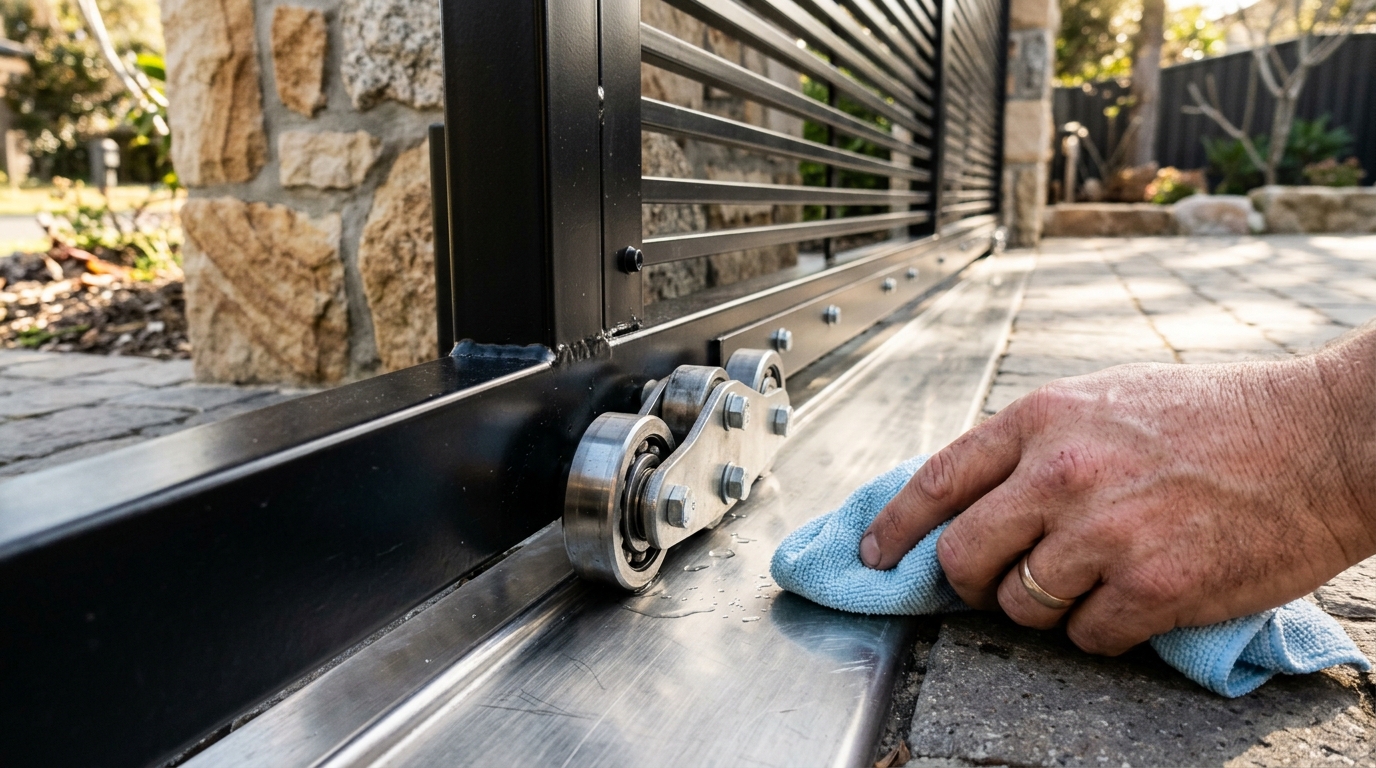
A clean track is the foundation of a healthy sliding gate system and the easiest way to prevent expensive motor repairs. When dirt, stones, or fallen leaves pack into the groove, your gate motor has to work twice as hard to push the gate along its path. This extra strain leads to premature wear on the internal gears and can eventually cause the motor to burn out entirely. By keeping the path clear, you ensure the wheels glide smoothly without any resistance or jerky movements. I always tell my clients that five minutes of sweeping can save you hundreds of dollars in professional service calls down the road.
I recommend making a quick sweep of the tracks part of your weekly routine to stay ahead of any buildup. Use a stiff-bristle brush or a heavy-duty outdoor broom to push out debris that gets wedged in the corners. If you notice packed mud or stubborn grime, a quick spray with a garden hose can help loosen things up before you wipe it dry. Pay close attention to the areas near the gate stops, as these spots tend to collect the most gravel and organic matter. Once the track is clear, you will immediately notice how much quieter and more responsive your gate becomes during operation.
While it might be tempting to apply grease to the track to make it slide faster, you should actually keep the metal surface dry. Wet lubricants like oil or heavy grease act like a magnet for dust and sand, creating a grinding paste that wears down your rollers. If you feel like the gate needs a little extra help, focus your lubrication efforts on the internal bearings of the wheels instead. A clean, dry track is the industry standard for a reliable system that stands up to daily use. Keeping this area spotless is the most effective way to protect your investment and maintain your property's security.
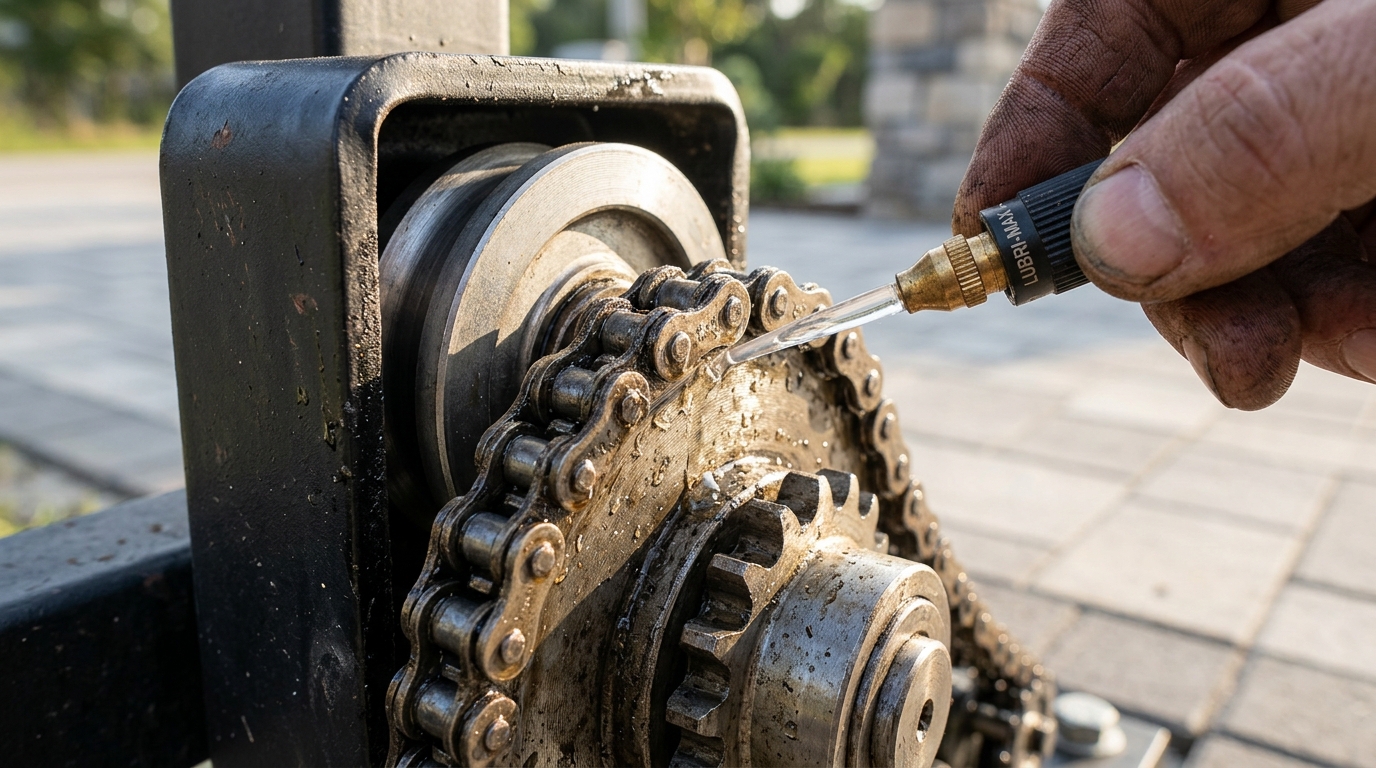
Selecting the right lubricant is the secret to keeping your gate running quietly and preventing expensive motor repairs down the road. While it might be tempting to grab a standard oil-based spray from the garage, these products actually act like a magnet for the dirt and grit that naturally settles on your driveway. Over time, that oily residue turns into a thick, abrasive paste that grinds down your rollers and puts unnecessary strain on the motor. I always recommend using a high-quality silicone spray or white lithium grease instead. These options provide a slick barrier that repels moisture and dust, ensuring your hardware stays clean and protected against the elements.
Applying your lubricant correctly is just as important as the product you choose for the job. You should focus your efforts on the internal bearings of the rollers and the pivot points of the chain rather than soaking the entire track. A light, even coat every three to six months is usually enough to maintain that effortless glide we all want for our home security. If you notice the gate starting to squeak or jerk during operation, it is a clear sign that the moving parts are thirsty for a fresh application. Taking five minutes to handle this simple task can extend the life of your equipment by years and keep your daily routine running smoothly.
Your safety sensors are the most critical part of your sliding gate system because they prevent accidents before they happen. To keep them working perfectly, I recommend starting with a simple cleaning routine using a soft, damp cloth to wipe away dust, cobwebs, or mud from the lenses. These small devices live close to the ground, so they easily get blocked by garden debris or splashing rain. Even a tiny smudge can interfere with the infrared beam and cause your gate to act up or stop moving entirely. Taking a moment to clear their vision ensures the system can accurately detect anything in its path.
Testing the auto-reverse safety sensors is just as straightforward and should be done every single month. To do this, start the gate closing and simply wave a long object, like a broom handle or a piece of cardboard, across the path of the sensors. A healthy system will recognize the obstruction instantly and trigger the gate to stop and reverse its direction. If the gate continues to close despite blocking the infrared beam, it is a clear sign that the safety sensors or wiring need professional attention. Keeping this safety feature in top shape protects your vehicles from dents and, more importantly, keeps your family and pets safe.
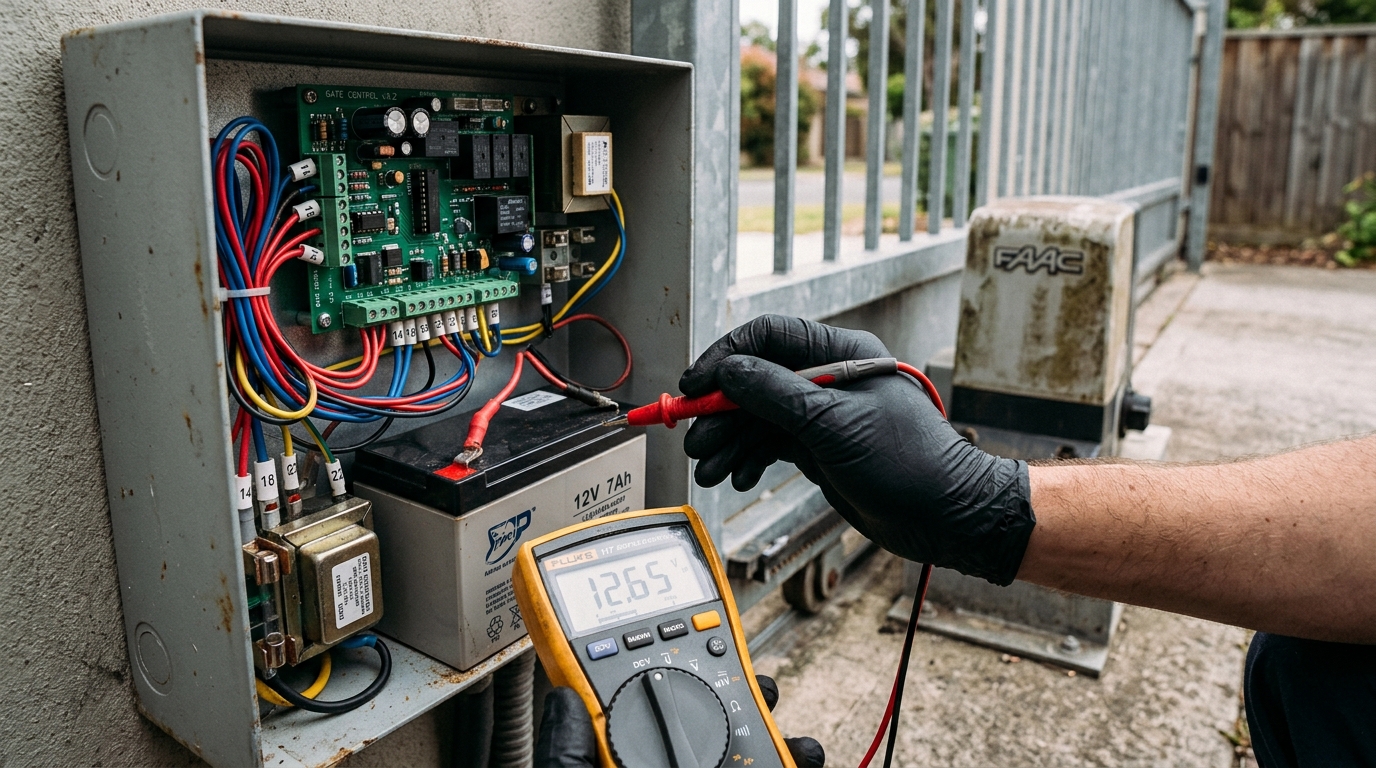
Keeping your gate's motor box clean and dry is one of the best ways to prevent electrical failures and expensive repairs. When you open the housing, you should look closely for any signs of frayed or chewed wires, which are often the work of small pests like rodents or insects looking for a warm place to nest. These tiny visitors can cause significant electrical shorts or even fire hazards if they chew through the protective insulation. I also recommend checking for any moisture buildup or corrosion on the terminals, as damp environments can quickly degrade your system's performance. If you see any loose connections or evidence of nesting, it is a clear sign that your gate needs some professional attention.
The health of your backup battery is just as important as the wiring, especially since modern solar powered systems rely so heavily on consistent energy storage. You can usually tell a battery is reaching the end of its life if the gate moves noticeably slower than usual or struggles to complete a full cycle during a power outage. Most gate batteries last about three to five years, but extreme weather can shorten that lifespan significantly. I suggest testing the battery response at least once a quarter to make sure you are never locked out of your own property. If the casing looks swollen or you notice a leak, please give us a call right away to handle the replacement safely.
While basic visual checks are easy to do yourself, electrical systems can be tricky and sometimes dangerous to handle without the right tools. Our team can perform a deep check into your motor’s diagnostics to catch small glitches before they turn into a total system failure. We check the voltage levels and ensure every connection is tightened to factory specifications, giving you total peace of mind. Regular professional tune-ups not only keep your warranty valid but also ensure your sensors and safety features are working exactly as they should. Taking these small steps now will save you from the headache of a gate that refuses to budge when you are in a hurry.
Taking care of your sliding gate is one of the smartest ways to protect your property investment while ensuring your home stays secure. These simple habits, like sweeping the track and checking the sensors, prevent small issues from turning into expensive emergency repairs. When your gate operates smoothly, it reduces the strain on the motor and helps the entire system last for years longer than a neglected one. I have seen how a little bit of monthly attention keeps a high value asset running like new. It really comes down to staying consistent so you never have to worry about being locked out or leaving your driveway vulnerable.
Investing in a regular maintenance routine gives you total peace of mind every time you press that remote. Since modern systems are becoming more advanced with solar power and smart sensors, keeping the mechanical parts clean is more important than ever. You want to make sure your gate remains a reliable barrier that opens effortlessly when you arrive home. If you ever feel like the upkeep is becoming too much to handle alone, professional service plans are a great way to ensure your track and motor get expert care. Keeping an electric gate in top shape is the best way to guarantee your sliding driveway gate is always ready to perform when you need it most.
I recommend making a quick sweep of the tracks part of your weekly routine to stay ahead of any buildup. Using a stiff bristle brush or a heavy duty outdoor broom only takes five minutes but prevents your motor from working twice as hard. This simple habit keeps your wheels gliding smoothly and saves you from expensive professional service calls.
A grinding sound usually means there is debris like stones, dirt, or leaves packed into the track groove. When these materials get wedged in, they create resistance that strains the internal gears of your motor. Clearing the path immediately will stop the noise and prevent the motor from burning out entirely.
Yes, a quick spray with a garden hose is great for loosening packed mud or stubborn grime that a broom cannot reach. Just make sure you are not blasting water directly into the electrical components of the motor or the sensors. Keeping the hardware clean this way ensures your rollers keep spinning without any jerky movements.
Taking a few minutes each month for proactive care can actually double the life of your hardware and cut down on energy bills. By reducing the strain on your motor, you avoid costly breakdowns and prevent parts from wearing out years too early. It is much cheaper to sweep a track than it is to replace a burned out motor or damaged gears.
Ignoring debris causes your gate motor to struggle, which leads to premature wear on the hardware. Over time, this extra strain can cause the system to fail completely or lead to hidden rust and dirt buildup. A little bit of proactive care is the best secret to keeping your home secure and your morning commute stress free.
You do not need a toolbox full of heavy equipment to keep your gate running like new. A stiff bristle brush, a standard outdoor broom, and a garden hose are usually all you need for basic upkeep. These simple tools help you keep the sensors clear and the tracks debris free without any technical hassle.
VIEW OUR WORK
LEARN MORE
CONNECT WITH US