

Fence removal usually costs between $3 and $8 per linear foot, with many standard projects totaling about $300 to $750. I’ve found that the final price depends on more than fence length. Concrete footings, heavy materials, limited access, and debris hauling can all increase the bill. Understanding these factors can help you avoid surprises before work begins.
A simple wood fence may be quick to remove, while posts set in concrete or bulky metal panels can require extra labor and equipment. Disposal may be included in the quote or charged separately. If you are installing a replacement fence, removal is often included in a broader per-foot price. A clear breakdown of labor, hauling, and additional charges makes it easier to compare estimates.
Professional fence removal usually costs about $3 to $8 per linear foot for a standalone job. A typical project falls between $300 and $750, depending on the fence size and local labor rates. As a quick estimate, removing 50 linear feet may cost $150 to $400, while 100 feet may run $300 to $800. A 150-foot fence could cost roughly $450 to $1,200, especially if the posts are set in concrete or access is limited.
I also consider the fence material and how the debris will be handled after removal. Wood, chain-link, vinyl, and metal fences require different tools and levels of labor. Concrete footings may add around $150 to $250 for digging or equipment. Hauling and disposal may cost extra, with debris removal often adding about $60 to $600 depending on the volume. Fences on slopes, behind gates, or near landscaping may also take longer to dismantle and carry away.
If removal is bundled with disposal or a new fence installation, the combined price may reach $5 to $20 per linear foot. This broader range can include tearing out the old structure, loading debris, preparing the site, and installing the replacement fence. I recommend asking for an itemized estimate so you can confirm whether disposal, concrete removal, grading, and site preparation are included. Comparing the full project scope, rather than only the removal rate, makes it easier to plan your budget.
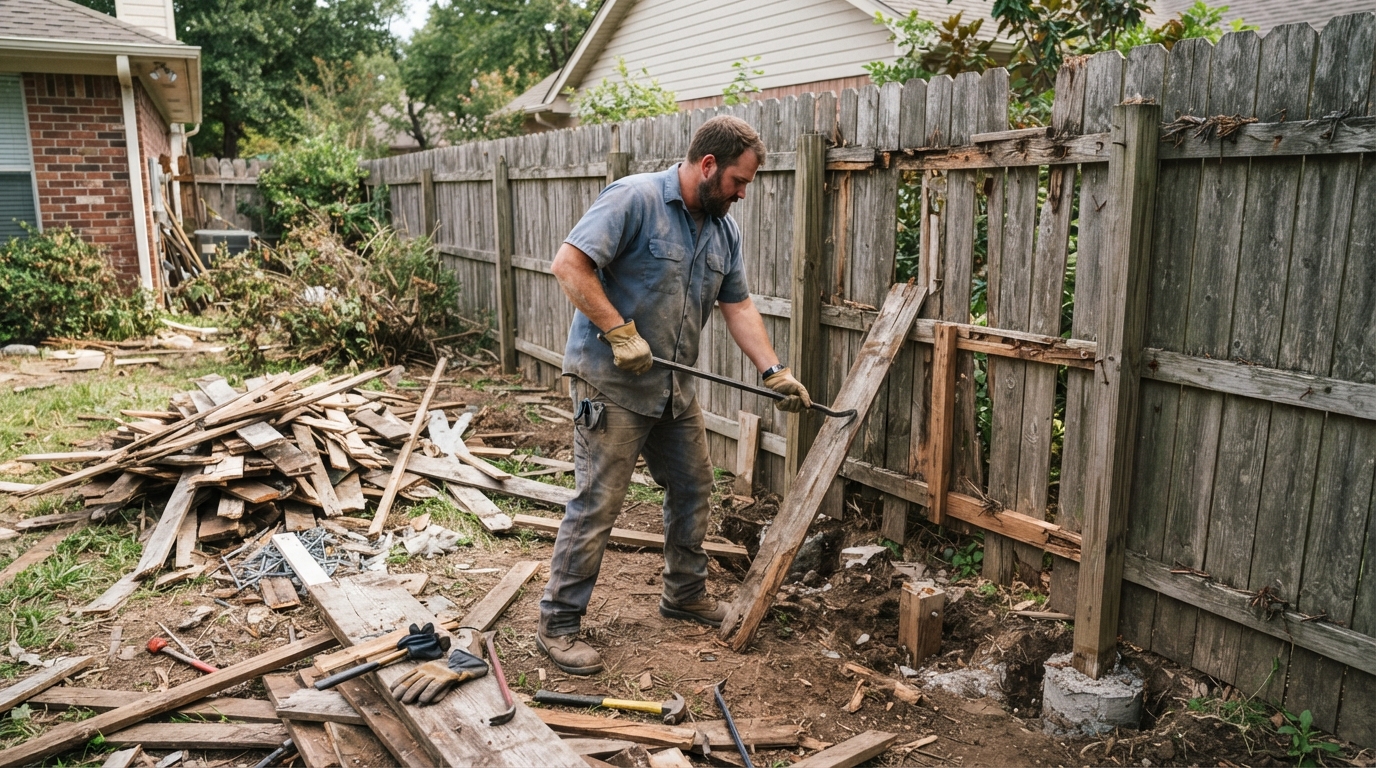
Fence removal commonly costs between $3 and $8 per linear foot for a standalone professional job. Most smaller projects cost around $300 to $750, but the final price depends on more than the fence length. Wood and chain-link fencing often costs less because crews can cut, pull, and load the sections with standard tools. Metal fencing, masonry walls, and heavily anchored posts usually take more time and may require specialized equipment. If removal is bundled with a replacement fence, the combined work may cost about $5 to $20 per linear foot, depending on the full scope.
The fence material, height, and total length are the first details I use to estimate the work. Taller or heavier panels require more workers to handle, while longer runs increase labor, hauling, and disposal costs. Access matters too. A fence beside a driveway is easier to remove than one behind a house, down a slope, or in a narrow side yard. Buried posts and concrete footings can add significant labor, especially when they must be dug out instead of cut below grade. Concrete post removal or special equipment may add roughly $150 to $250 to the project.
I also check whether the fence can be removed in sections or must be dismantled piece by piece. Rusted fasteners, dense landscaping, steep ground, and limited space can slow the crew and increase labor costs. Disposal is another item to confirm. Hauling panels, posts, and broken concrete may be priced separately, with debris removal often adding about $60 to $600. Before work begins, I recommend asking for an estimate that clearly separates removal, footing work, equipment, hauling, and site cleanup. This makes it easier to compare options and plan the cleared area for a new fence or another project.
When I calculate fence removal costs, I separate labor from disposal and site preparation. Professional removal often runs about $3 to $8 per linear foot, with many standard projects landing between $300 and $750. Some quotes include hauling, landfill fees, recycling, and basic cleanup, while others charge for these items separately. I recommend asking whether the price covers loading and transport, disposal fees, nails and small debris, and a final sweep of the work area.
Concrete footings and buried posts can raise the total because they require more labor and may need special equipment. Removing concrete posts or stubborn footings may add roughly $150 to $250, while a separate junk-hauling charge can range from about $60 to $600 depending on the volume. Wood, metal, and vinyl may also have different recycling or disposal costs, especially when materials are mixed. If you are replacing the fence, bundling removal and disposal with installation may cost about $5 to $20 per linear foot, depending on the scope.
After the fence is gone, I check whether the property needs post extraction, debris removal, hole filling, grading, or other cleanup before the new fence goes in. Pulling posts can leave uneven soil or open holes, and heavy equipment may leave ruts that need to be leveled. Ask for these tasks to be listed in the quote so you are not surprised by added charges later. A clear fence removal estimate should show what is included and leave the site ready for the next phase of your project.
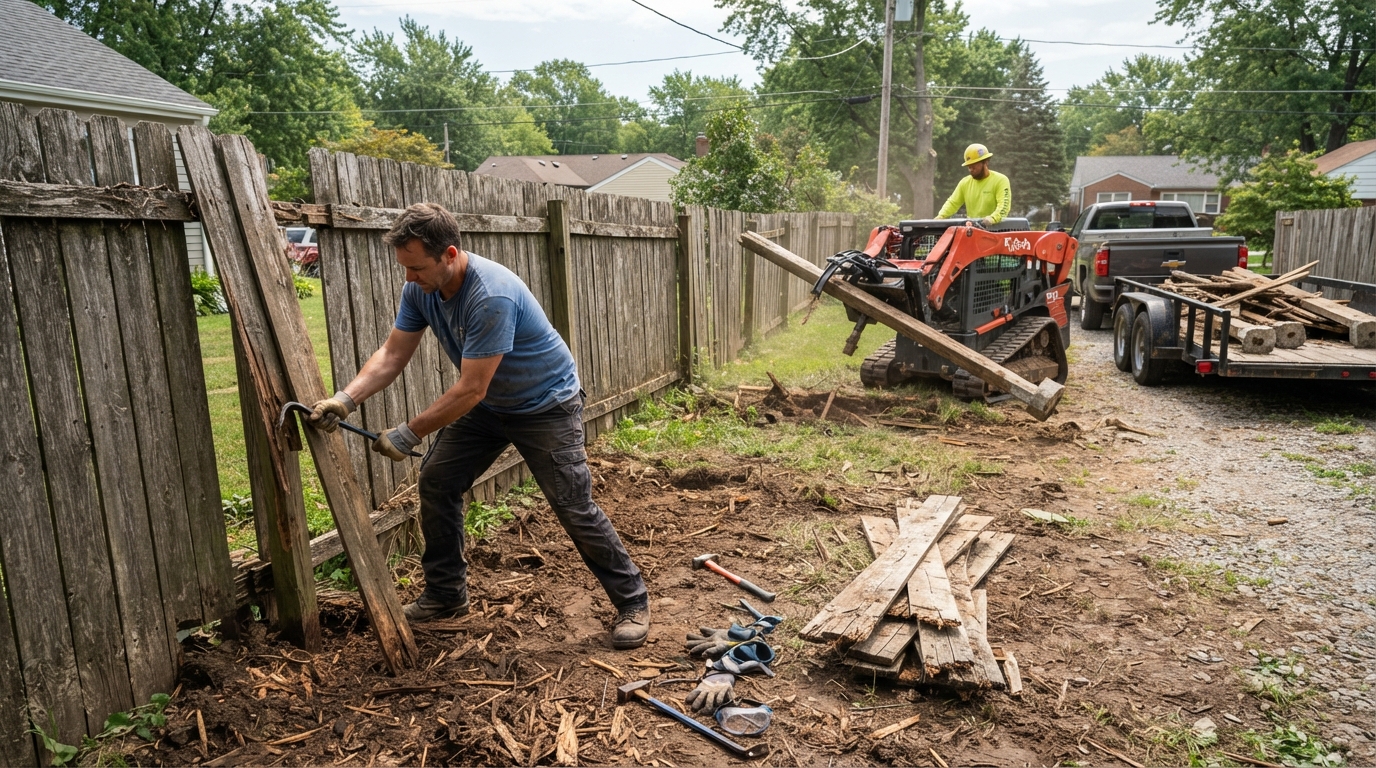
Removing a fence yourself can save on labor, but the savings may not be as large as they seem. You may still need to rent a post puller, reciprocating saw, trailer, or other tools. Disposal can add roughly $60 to $600 depending on the amount and type of debris. For a small wood fence with easy access, DIY removal may be practical if you have help and enough time. I would also check for buried utility lines, wear gloves and eye protection, and plan where every post, panel, and piece of concrete will go before you start.
Professional fence removal commonly costs about $3 to $8 per linear foot, or roughly $300 to $750 for a typical standalone project. The price can increase when the fence is large, difficult to access, made from heavy materials, or requires separate hauling. Concrete footings are another major factor. Pulling or breaking them out may require special equipment and can add about $150 to $250. In my experience, professional removal is often worthwhile when posts are deeply set, the fence is close to structures, or the site has limited room for equipment and debris.
If you plan to install a replacement fence, ask for removal, hauling, footing removal, and site preparation as one project quote. Bundling the work may cost about $5 to $20 per linear foot, depending on the materials and installation scope. It can also leave the ground ready for new posts. I would choose professional removal when you need the area cleared quickly, want to avoid disposal problems, or need old concrete removed cleanly for the new layout. DIY removal can make sense for a short, accessible fence, but professional help is usually safer and more efficient for larger or more complicated projects.
For most professional projects, I’d budget about $3 to $8 per linear foot for standalone fence removal, with many typical jobs costing between $300 and $750. Removal bundled with a replacement fence may run closer to $5 to $20 per linear foot because it can include demolition, hauling, site preparation, and installation. A small, accessible wood fence may cost less, while chain-link fencing, masonry, buried posts, concrete footings, steep slopes, and limited access can raise the total. Concrete post removal or special equipment may add roughly $150 to $250, and debris hauling can add another $60 to $600 depending on the load. These ranges provide a starting point, but the fence condition and work required at your property will determine the final cost.
When I request quotes, I ask for separate prices for demolition, disposal, cleanup, and preparation for the replacement fence. This makes it easier to compare estimates and identify fees that may be hidden in a single lump sum. I also confirm whether the quote includes removing posts and concrete, loading debris, hauling materials away, leveling the area, and filling open holes. If a new fence is part of the project, I ask for removal and installation to be shown as separate line items. A detailed quote helps you plan your budget and provides a clear starting point for the next phase of your project.
I typically charge about $3 to $8 per linear foot for professional fence removal. Most standard projects cost around $300 to $750, but the total can increase with concrete footings, difficult access, heavy materials, or debris hauling.
Removing 50 linear feet usually costs about $150 to $400, while 100 feet often runs $300 to $800. A 150-foot fence may cost roughly $450 to $1,200, especially when posts are set in concrete or materials must be carried a long distance.
Yes. The material affects both labor time and disposal costs. Wood and chain-link fences are often simpler to dismantle, while vinyl panels, heavy metal sections, and reinforced posts may require extra tools, workers, or equipment.
Concrete footings can add about $150 to $250 to the project. I may need to dig around each post, break apart the concrete, or use specialized equipment, so I always include the footing condition in the estimate.
Not always, so I recommend checking the quote carefully. Debris hauling and disposal can add about $60 to $600, depending on the fence volume, material, disposal fees, and distance to the facility.
Limited access, steep slopes, locked gates, dense landscaping, and nearby structures can all increase labor time. When workers cannot bring equipment close to the fence or must carry debris by hand, the removal price usually goes up.
Often, yes. When removal, disposal, site preparation, and replacement installation are bundled together, the total may range from $5 to $20 per linear foot, depending on the new fence and the preparation required.
I recommend measuring the fence length, identifying the material, and noting whether the posts are set in concrete. Ask for a written breakdown that separates removal, labor, hauling, disposal, equipment, and site preparation so you can compare estimates fairly.
VIEW OUR WORK
LEARN MORE
CONNECT WITH US