
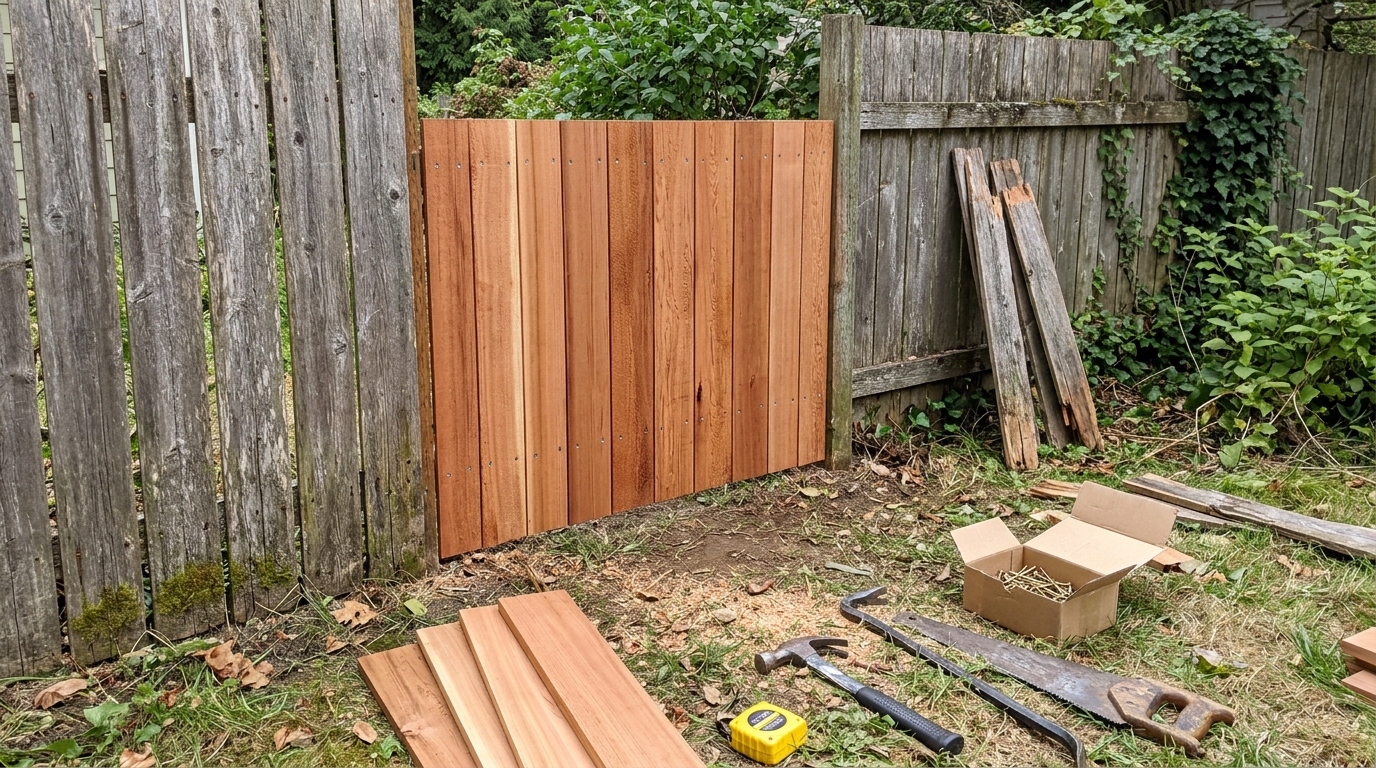
Fence panel repair or replacement is broadly estimated at $150–$750, depending on the material, panel size, labor, and whether the posts can be reused. Fixr’s fence repair guide reports labor-included panel replacement at $200–$750. Use these figures as planning ranges, not guaranteed quotes. For a wood fence, Angi estimates that repairing or replacing one panel costs $150–$400. Replacing individual boards may cost less than replacing a complete panel, while a damaged post can add work and expense.
The panel is only part of the estimate. Labor, removing the damaged section, disposal, difficult access, and finding a compatible replacement can all affect the final price. Matching an older fence may take extra planning, especially when the original material or style is no longer readily available. If the damage is limited and the surrounding fence is in good condition, replacing only the affected section may make sense. If problems extend along the fence or keep returning, compare the repair budget with a broader replacement estimate. At Los Angeles Fence Builders, we install residential and commercial fences and gates in Los Angeles and surrounding valley areas. We work with wood, chain link, wrought iron, vinyl, and high-security fencing.
A single fence-panel replacement in the U.S. is broadly estimated at $150–$750. Labor-included panel replacement is estimated at $200–$750, while repairing or replacing a wood panel is estimated at $150–$400 per panel. The actual price depends on the material, panel size, and whether posts and nearby sections can be reused. Use these figures as planning ranges, not guaranteed quotes.
Repairing a single board is a smaller job than replacing a complete panel, so it can cost less. For example, HomeGuide lists single-board replacement at $100–$300, while its average for standard fence repairs, including panel replacement, is $300–$900. That broader repair average can include different types of work, so it is not a per-panel price. Replacing one damaged board may be enough when the rest of the panel is sound. Replacing a panel means removing and installing the complete section.
For two wood panels, the $150–$400 per-panel estimate offers a rough starting point, but the actual total may not be exactly twice the cost of one panel. Labor can vary depending on access and the work involved. The estimate may also change if posts need replacement, damaged material needs removal, or the new panels are difficult to match to the existing fence.
A quote should make clear whether the price covers one board or a full panel, and whether it includes labor. That distinction helps explain why two estimates for what sounds like the same repair can differ. One may cover a small board fix, while another includes complete panels and related work. Compare estimates with the same scope before using them to set your budget.
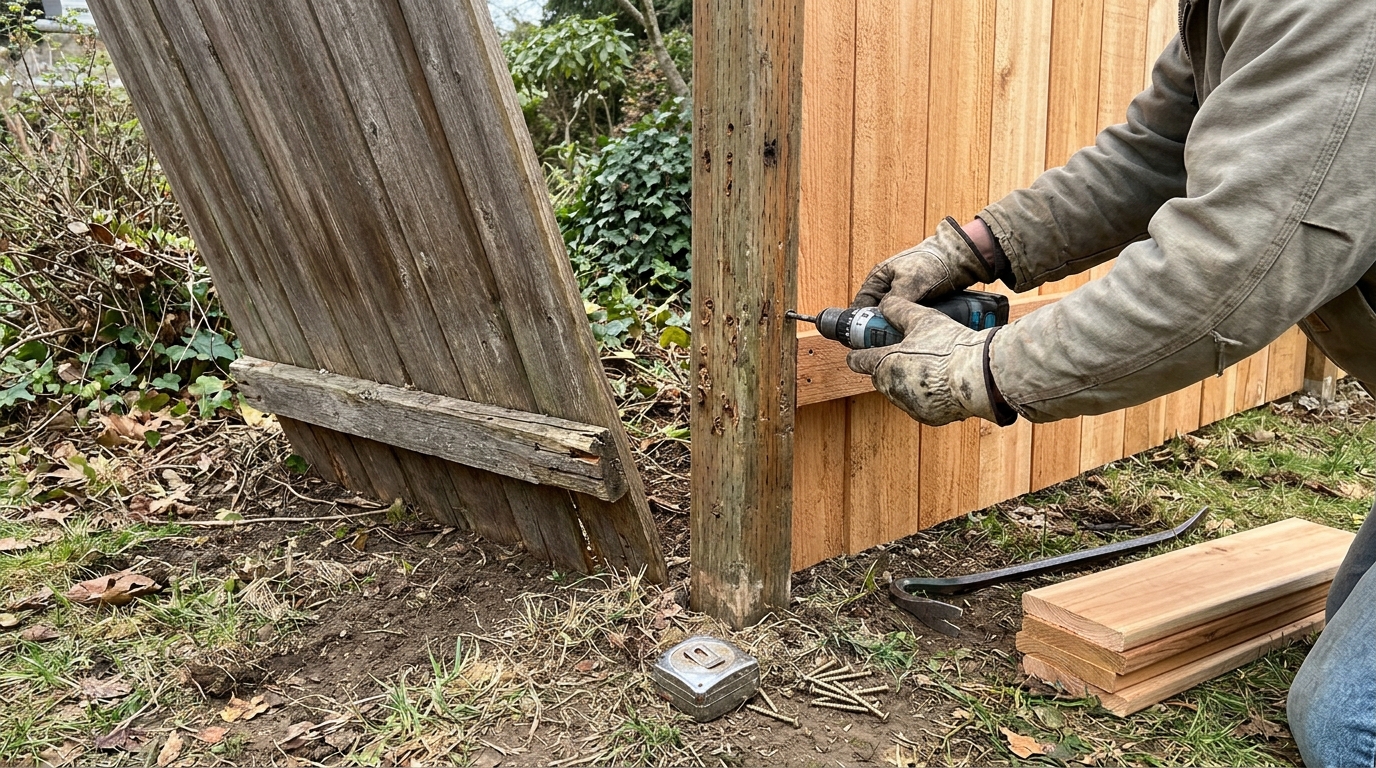
The final price depends on how much of the fence must be disturbed, how easily a compatible panel can be found, and whether the work extends beyond the panel itself. Material, panel dimensions, style, and availability all affect the cost. A larger section needs more material and may require more installation work, while an older or unusual design can be harder to match. Manufactured parts, including vinyl panels with specific profiles or colors, may be difficult to find.
The condition of the posts can quickly change the scope. A damaged or unstable post may not safely support a new panel, turning a panel-only job into a larger repair. Replacing one fence post is estimated at $120–$350, depending on the material and installation complexity.
Labor also depends on the site and the steps needed to complete the repair. A clear, level path to the fence makes it easier to bring in materials and remove the old section. Tight side yards, uneven ground, or obstacles near the fence can slow the work. If the new panel does not line up with the existing fence, nearby sections may need adjustments so the finished run looks consistent and fits securely.
Removal and disposal may be separate charges rather than part of the panel price. Professional fence removal can add up to $5 per linear foot. The estimate may also include hauling away damaged panels, posts, and other debris. Ask how the contractor handles disposal, especially if the old material cannot be left on site.
When requesting an estimate, share the details that help define the work:
Photos can show the fence’s style, the damaged area, and the route to the work site. If you know the original manufacturer or have a leftover piece of the panel, include that information too. A close match may depend on details that are hard to see from a distance, such as the panel profile, finish, or attachment method.
Ask for the estimate to separate the panel from related work where possible. That makes it easier to see whether a higher price reflects a different panel, extra labor, post replacement, removal, or adjustments to the surrounding fence. It also helps you compare proposals that describe the repair in different ways.
Material affects fence panel replacement cost through the type of panel, the parts it connects to, and how closely a replacement needs to match the existing fence. No material has one universal price. A repair estimate for wood cannot be directly compared with one for vinyl, chain link, wrought iron, or high-security fencing.
For wood, the $150–$400 per-panel estimate applies specifically to repairing or replacing a wood fence panel. Repair estimates stated by linear foot use a different measure: wood repair is listed at $20–$35 per linear foot, while vinyl repair is listed at $25–$45 per linear foot. These are repair estimates, not a direct comparison of material-only prices for complete panels. A wood fence may also allow a contractor to replace a damaged board rather than the whole panel, if the surrounding boards and frame remain sound.
A New Jersey retail price example from April 2025 puts standard-grade, 6-by-8-foot cedar solid-board panels at $142.50 and #1-grade panels at $164.25, with posts sold separately. These figures are not a Los Angeles quote and do not include installation.
Vinyl and other manufactured fencing can be harder to match than a standard wood board. The profile, color, finish, and connection parts all need to work with the existing fence. A compatible panel may not be readily available, particularly for an older or less common system, which can affect timing and cost. Replacing a damaged rail, connector, or other individual component may be a better fit than removing a full section, if the rest of the fence is in good condition.
Chain link, wrought iron, and high-security fencing each have their own repair considerations. With chain link, the damaged area may involve the mesh, a rail, or a post, so the repair depends on which parts are affected and whether they can be reused. Wrought-iron sections may require a compatible design and secure connections to the surrounding fence. High-security fencing can involve specialized panels and related components, so identify the system before choosing between a panel replacement and a component repair. The material name alone does not determine the price.
The best-value option is often the one that restores the fence securely without replacing sound parts. For example, if a wood panel has a few damaged boards, a board-level repair may preserve the frame. If a manufactured panel cannot be matched, replacing a larger connected section may be worth comparing with a one-off replacement. The right scope depends on the condition of the surrounding fence and the availability of compatible parts.
At Los Angeles Fence Builders, we install residential and commercial fences using wood, chain link, wrought iron, vinyl, and high-security materials. Our installation experience helps us consider how the panel, posts, and connection parts work together when assessing a replacement.
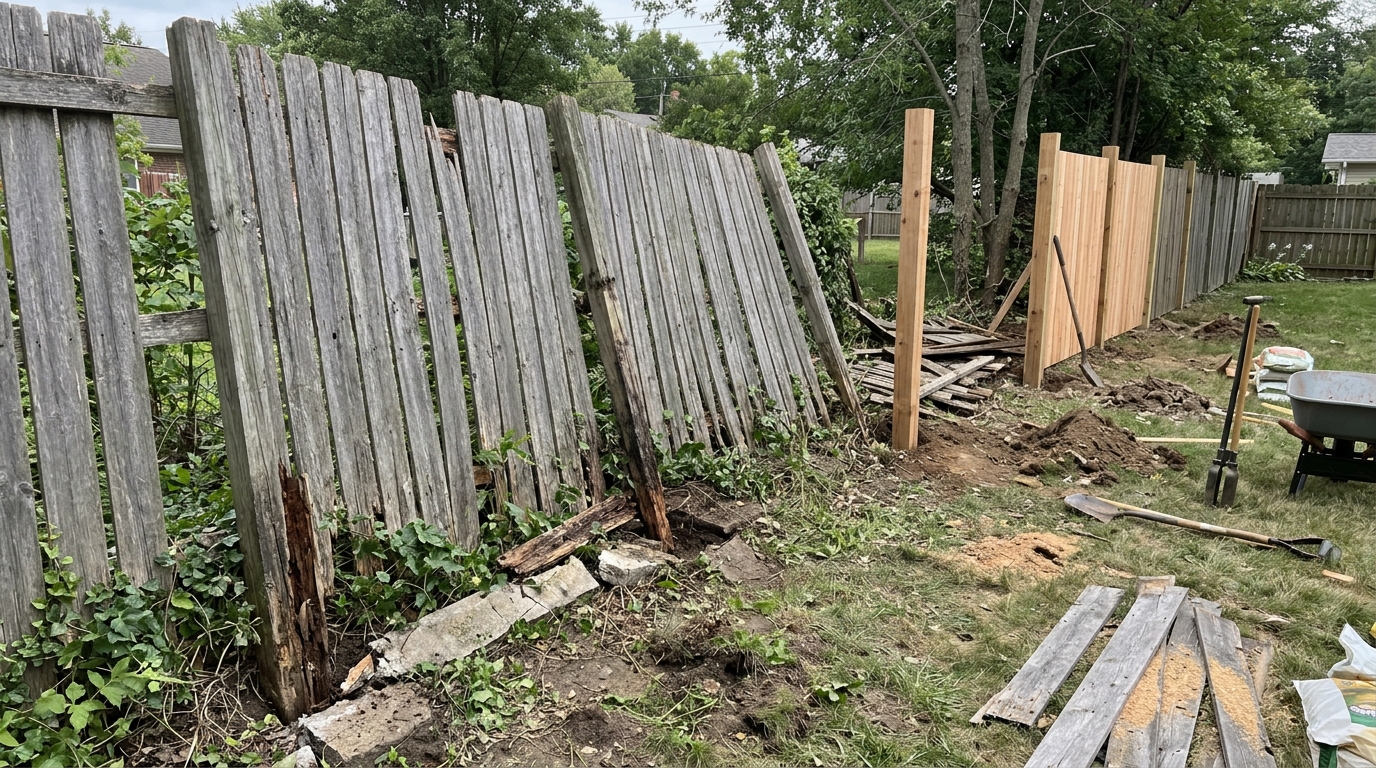
Compare the cost of a full replacement when damage reaches multiple sections, repairs keep recurring, or the remaining fence cannot reliably support compatible new panels.
A targeted repair makes the most sense when the damage is limited and the rest of the fence is sound. For example, replacing one panel may be practical if neighboring sections are secure, posts are in good condition, and a matching panel is available. If nearby panels are also loose or damaged, or the fence needs the same repair repeatedly, it makes sense to price a longer run rather than treat each section as a separate fix.
Published estimates put fence repairs commonly at $10–$30 per linear foot and fence installation commonly at $6–$50 per linear foot. These ranges cover different scopes and are not a direct quote comparison. A repair may cover a limited damaged area, while an installation estimate may cover a new fence run. Use the figures as planning ranges, not as a promise that a particular repair will cost less than replacement.
Costs can rise when damage extends beyond a panel. Major fence repairs are listed at $900–$2,500. This range shows how work involving more than a straightforward panel swap can change the budget. A repair estimate in this range may cover several damaged components, while a longer-run installation estimate covers a different amount and type of work. Compare what each price includes before deciding based on the totals alone.
The condition of the remaining fence matters as much as the number of damaged panels. Check the posts, rails, and adjacent sections, not just the broken area. If posts are unstable or neighboring sections are out of line, installing a new panel alone may leave those problems unresolved. A replacement estimate should account for removing the old fence and checking the posts and adjacent sections, rather than pricing only the new fence material.
Compatibility can also affect whether a targeted fix is worthwhile. A replacement panel needs to fit the existing layout and connect properly to the parts that remain. Wood boards may be easier to match or replace individually than a discontinued vinyl panel with a particular profile or color. Chain-link mesh, wrought-iron sections, and high-security systems also rely on compatible parts and connections. If suitable components are difficult to find, replacing a longer connected run may be a cleaner option than fitting one mismatched section.
Consider a fence with one damaged panel and secure neighboring sections. A panel-only scope keeps the work focused. If several panels along the same run are damaged, posts need attention, or repeated repairs have not lasted, ask for an estimate covering a longer run as well. The broader estimate should identify which existing parts can remain and which need removal or replacement.
Before choosing, compare the panel-only estimate with one for replacing the longer run. Check that both clearly describe removal, post condition, adjacent sections, materials, and installation work. A low panel-only figure may not cover the work needed to make the repair hold, while a larger installation figure may include more fence than the damaged area alone. Comparing the scopes side by side gives you a more useful basis for deciding whether to repair, replace a run, or replace the full fence.
A useful replacement quote spells out the materials, labor, removal, disposal, and any work needed to reconnect the remaining fence. Clear line items help you compare estimates based on the work included, not just the total. Before requesting quotes, prepare the same information for each contractor. A consistent description makes it easier to spot differences in scope and assumptions.
Permits and zoning requirements depend on the local jurisdiction and project details, so do not assume a small replacement is automatically exempt. For example, Raleigh’s residential fence rules require permits when replacement covers 50% or more of an existing fence. A change in material, height, or location requires a zoning permit even below that threshold. Austin uses a different test for its safe-fencing requirements: they apply when replacement covers more than 50% of the existing fence’s total linear distance. Austin’s permit rules also depend on height and location, including whether a fence is in a floodplain or along certain residential property frontages. These examples show why replacement scope alone may not answer every permit question. Minneapolis says a building permit is not required to build a fence, but zoning requirements still apply under Title 20 of the Minneapolis Code of Ordinances. The city’s fence guidance is another reminder that requirements vary by jurisdiction. For a Los Angeles project, check with the local authority responsible for the property and describe the planned work, including how much fence will be replaced and whether its material, height, or location will change. Confirm the requirements that apply before work begins rather than relying on rules from another city.
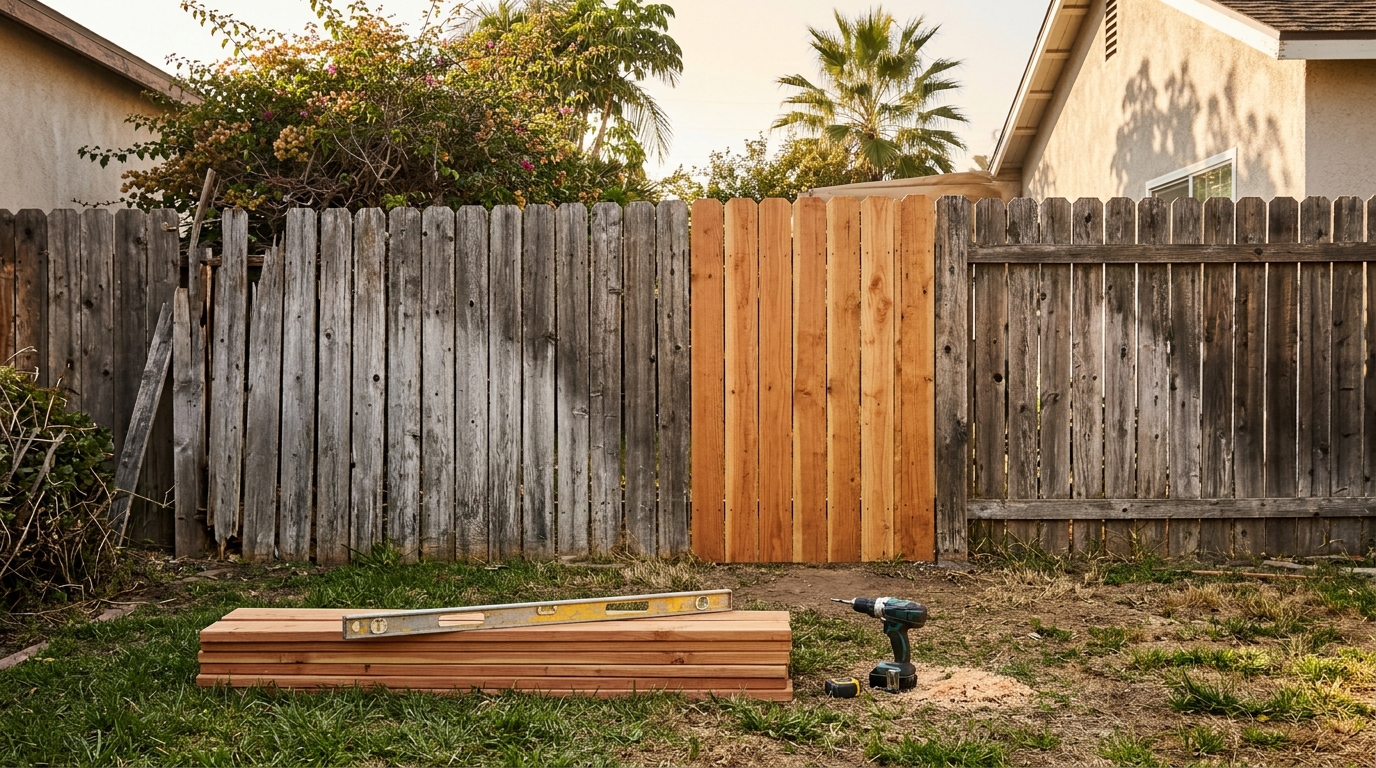
Before requesting an estimate, mark the damaged section and decide whether the problem seems limited to one panel or extends farther along the fence. Note any visible post damage, leaning, loose connections, or issues in adjacent sections. A clear description helps define what an estimate should cover, without assuming that replacing a panel alone will address every concern.
Gather the details that distinguish your fence from a standard panel: material, style, approximate dimensions, and the number of sections involved. If you know the original product or have a piece of the damaged panel, include that information. For manufactured fencing, a profile or finish detail can help clarify whether a compatible replacement is included in the proposed scope. Photos showing both the damaged area and the full fence run can also make the project easier to describe.
Ask for two scopes when the condition of the wider fence is uncertain: a targeted estimate for the affected section and a broader installation estimate for the connected run or fence. The first should explain what work is needed at the damaged area. The second should state how much existing fencing would be removed and what would be installed in its place. Compare the included work, not just the totals. Check whether each scope accounts for posts, removal, disposal, and connections to the remaining fence.
Our installation options include wood, chain link, wrought iron, vinyl, and high-security fencing. You can explore our fence and gate installation services to see the types of projects and materials we handle.
A broader installation estimate is useful even when you expect to replace only a small section. It gives you a basis for comparing the cost and scope of targeted work with a larger project, while clarifying which existing parts may remain. If the damaged area is clearly isolated and the surrounding fence appears sound, the targeted scope may be the more relevant comparison. If the estimate identifies concerns beyond that section, review how the broader option addresses them before choosing a scope.
Keep the estimates specific to the same fence run and requested material wherever possible. A proposal for one panel is not directly comparable with an installation proposal that includes a longer stretch of fence, removal, or additional posts. Ask each contractor to identify the planned work and any assumptions about existing sections that will stay in place. That detail helps you judge whether the proposed scope matches the damage you can see and the amount of fence you want considered.
Before requesting a price, decide what you want the estimate to help you choose: a panel-only repair, replacement of the connected run, or a larger fence project. If keeping the existing look matters most, ask for a similar material and style. If you are open to changing materials, ask about options using wood, chain link, wrought iron, vinyl, or high-security fencing.
For a panel-only option, ask the contractor to identify which existing parts would stay in place. For a connected-run option, ask where removal would begin and end. If you are considering a full replacement, make clear which fence boundaries are part of the project so the estimate reflects the area you want changed.
At Los Angeles Fence Builders, we provide residential and commercial fence and gate installation in Los Angeles and surrounding valley areas. Share the fence material, the area you want considered, and whether you are weighing a targeted repair against a larger installation. You can contact us to discuss the project and available material options.
Homeowners insurance may cover fence damage or replacement, depending on your policy and what caused the damage. Check your policy and contact your insurer to confirm whether the damage is covered and what documentation they need.
For questions about whether the expense applies to your situation, ask a tax professional.
Check the property records and any agreement with your neighbor. Confirm local requirements before arranging replacement.
VIEW OUR WORK
LEARN MORE
CONNECT WITH US