
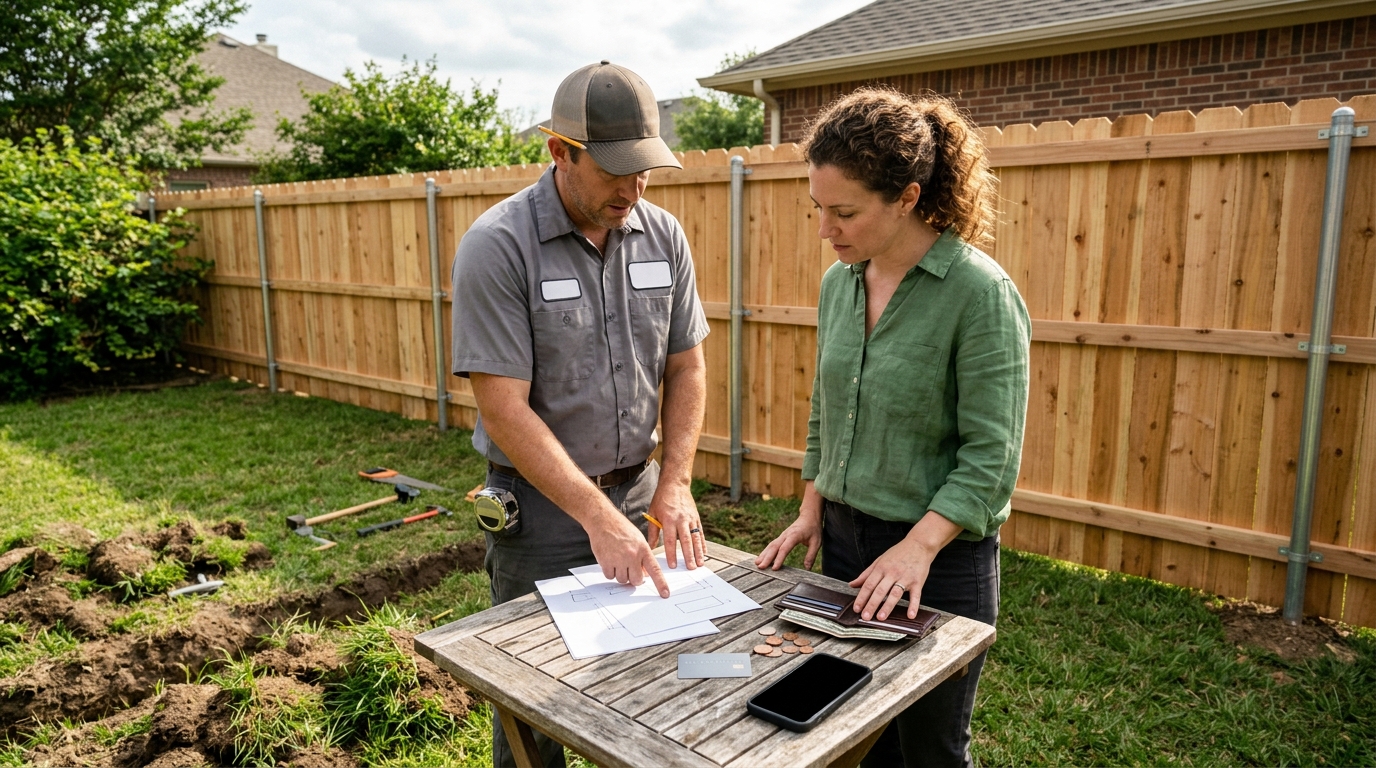
A new fence can add privacy, security, and curb appeal, but professional installation often costs around $3,270. Many homeowners pay between $1,860 and $4,833. Premium materials, multiple gates, uneven ground, permits, and old-fence removal can raise the price. I’ve found that comparing fence financing options early helps protect your budget without putting the project on hold.
You may be able to pay with savings, use contractor-arranged financing, take out a personal or home-equity loan, or choose a credit card, promotional plan, or installment option. Each choice affects your interest rate, monthly payment, repayment time, and financial risk. The right fit depends on your credit, available cash, project cost, and how quickly you can comfortably repay the balance.
Fence financing options can make a planned installation easier to manage, especially when the project costs more than expected. A professionally installed fence often costs around $3,270, but your total may range from under $2,000 to well over $10,000 depending on the materials, property size, gates, terrain, permits, and old-fence removal. I usually recommend starting with savings if paying in cash still leaves room for emergencies. This approach avoids interest and keeps the project from becoming a long-term bill. If cash would stretch your budget too far, financing can help you move forward with predictable payments.
Contractor-arranged financing may offer a convenient way to spread out payments, but I would review the interest rate, loan term, fees, and promotional expiration date before accepting an offer. An unsecured personal loan can also provide a fixed payment without using your home as collateral, although approval and rates depend on your credit and income. Credit cards or buy now, pay later plans may work for a smaller project or a short promotional period, but deferred interest and high standard rates can make them expensive if you do not pay the balance on time. I always suggest comparing the total repayment amount, not just the monthly payment. A lower payment can still cost more when the loan lasts several years.
Home-equity loans and HELOCs may provide larger amounts or lower rates for qualified homeowners, but they use your home as collateral and require careful consideration. A home-equity loan usually provides a fixed amount and payment, while a HELOC works more like a revolving line of credit and may have a variable rate. In areas where it is available, PACE financing is another option, but it can affect your property tax bill and future home sale. I recommend reviewing the terms closely. Before choosing a plan, match the payment to your monthly budget and confirm that the fence contractor accepts that type of financing. The right choice covers the project without putting your emergency savings or essential expenses at risk.

A professionally installed fence costs about $3,270 on average, while many projects fall between $1,860 and $4,833. I usually start with the estimated linear footage because average pricing is around $23 per linear foot. Then I account for the material you choose. Gates, permits, uneven terrain, old-fence removal, site access, and labor can all raise the final quote. Larger or more complex projects may cost considerably more, so I recommend getting a written estimate before choosing among fence financing options.
If paying in cash would strain your budget, I would compare contractor-arranged home improvement financing, an unsecured personal loan, a home-equity loan, or a HELOC. Credit cards with a promotional period and installment payment plans may also work for smaller projects, but I would check the interest rate, fees, credit requirements, and what happens when the promotional period ends. Home-equity options may offer a lower rate, but they use your home as collateral and can take longer to arrange. The best choice depends on your credit, available equity, project size, and how quickly you want the installation completed.
Before applying, I calculate a comfortable monthly payment by subtracting any down payment from the project total and dividing the balance by the planned number of payments. I then add estimated interest and fees. For example, a $3,270 fence with a $500 down payment leaves $2,770, which would be about $115 per month over 24 months before interest or fees. I also leave room in the budget for maintenance and unexpected site work instead of borrowing the maximum amount. Comparing the total repayment amount, not just the monthly payment, helps me choose financing that keeps the fence affordable over time.
I usually start with cash or savings because paying the fence contractor directly avoids interest, fees, and a credit check. This can make sense for a smaller project, especially when the quote fits comfortably within your budget. However, I recommend keeping your emergency savings intact. Contractor-arranged financing may offer convenient monthly payments, promotional rates, or fixed terms, which can help you begin a larger installation sooner. Before signing, I would confirm the interest rate after any introductory period, the loan term, fees, and whether deferred interest applies. This option often suits homeowners who want a simple application at the time of purchase and have fair to strong credit.
An unsecured personal loan does not use your home or fence as collateral, so the main risk is a higher interest rate than secured borrowing. Lenders usually review your credit score, income, debts, and payment history. Stronger credit may help you qualify for better rates and longer terms. Fixed-rate personal loans provide predictable payments, making them useful for a complete project with a clear quote that includes gates, grading, permits, or removal. Shorter terms can reduce total interest but raise the monthly payment. Longer terms lower the payment but increase the overall cost. I would compare the annual percentage rate, origination fee, monthly payment, and early-payoff rules before accepting an offer.
Home-equity loans and HELOCs can work well when a fence is part of a larger improvement plan or the project cost is substantial. A home-equity loan typically provides one lump sum with a fixed rate and predictable payments. A HELOC lets you draw funds as needed and commonly has a variable rate, so payments can change. Both use your home as collateral. This may allow lower rates, but it creates a serious risk if you cannot repay the balance. These options also involve credit, income, available equity, and sometimes appraisal requirements, along with possible closing costs. I would choose them only after confirming the full repayment cost and making sure the payment remains comfortable if rates rise.

Credit cards can be convenient for a smaller fence project or deposit, especially if you can pay the balance quickly. Promotional financing may offer a low or zero interest period, but check whether interest is deferred and charged retroactively if you do not pay the balance in full by the deadline. I also look for the regular annual percentage rate after the promotion, late fees, minimum payments, and any automatic payment requirements. Before using a card, I compare the total repayment cost with the contractor’s financing offer.
BNPL and installment plans divide the project cost into scheduled payments, which can make a larger fence easier to fit into your budget. Confirm the down payment, payment frequency, late-payment policy, possible service fees, and whether missed payments could affect your credit. Most importantly, ask the fencing contractor whether the plan can be used for the full contract, including gates, removal, permits, and unexpected site work. A lower monthly payment is not always the cheapest option, so compare the total amount you will repay.
PACE financing may be available in some areas for qualifying property improvements, but it is tied to the property and can affect a future sale or refinance. I recommend checking local eligibility rules, the repayment schedule, administrative fees, and how the charge appears on your property tax bill. No matter which option you choose, get the financing terms in writing. Confirm when payments begin, how automatic payments work, and what happens if installation is delayed. Choose the plan that lets you complete the fence without stretching your budget beyond a comfortable monthly payment.
I compare fence financing offers by looking beyond the monthly payment. I start with the APR, total repayment amount, loan fees, and repayment length because a lower payment may cost more over time when spread across several years. I check whether the lender charges application, origination, late, or administrative fees, and ask whether there is a penalty for paying the balance early. I also confirm whether the payment plan requires a hard credit inquiry and how missed payments could affect my credit.
A detailed fence quote gives me the number I need before choosing a financing amount. I ask for materials, linear footage, gates, removal, grading, permits, labor, taxes, and site-related charges to be listed separately. Then I ask whether the contractor requires a deposit, uses a specific financing provider, or limits which payment plans I can use. If I can pay cash for part of the project, I compare the interest savings from borrowing less with the need to keep enough money available for emergencies.
Before accepting an offer, I compare the same project cost and repayment period across contractor financing, a personal loan, a home-equity option, a credit card promotion, and an installment plan. I verify when payments begin, whether promotional rates expire, and what happens if the project changes or runs over budget. Financing can make a needed fence easier to install now, but the best choice has a clear total cost and a payment that fits comfortably within my budget. Getting the terms in writing helps me avoid surprises and move forward with confidence.
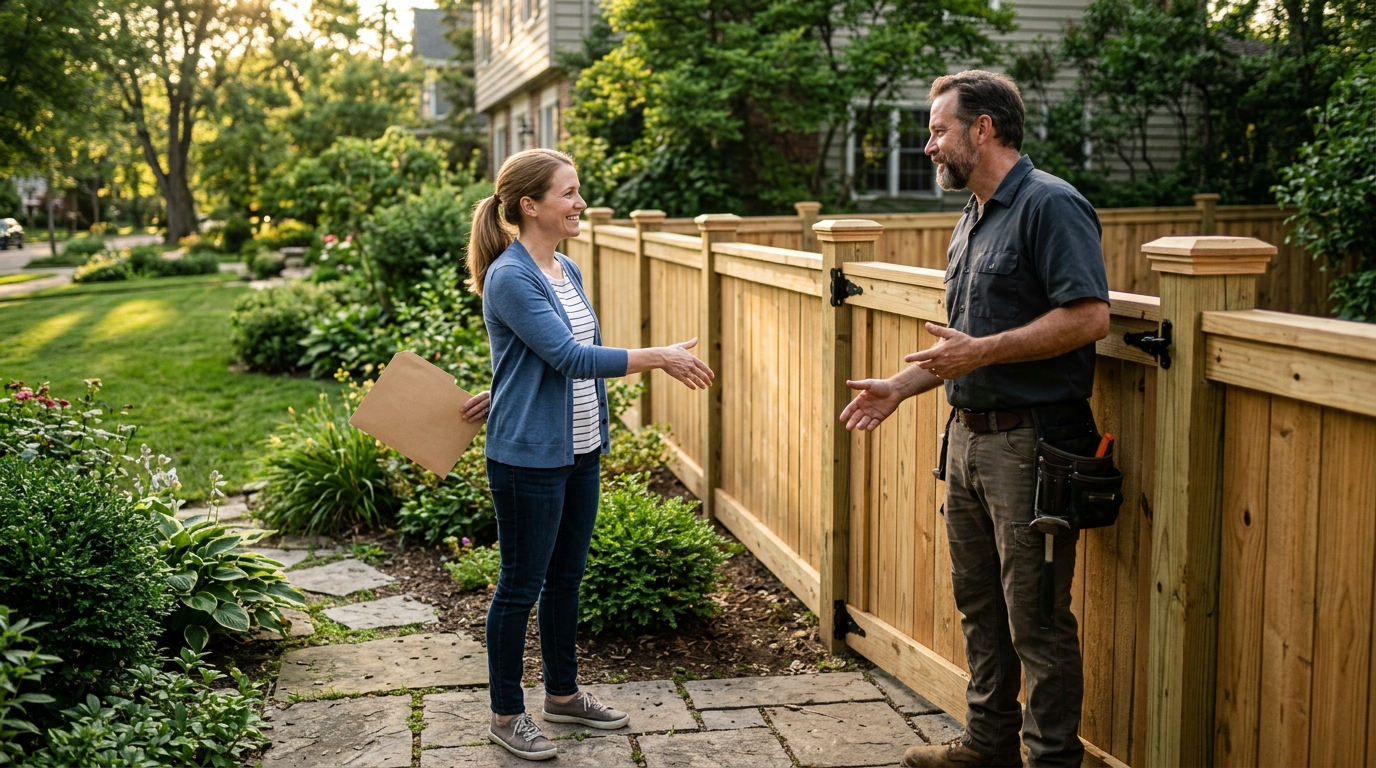
The best fence financing option depends on the project size, the savings you have available, and how comfortable you are with monthly payments. For a smaller fence, paying with cash or using a short promotional plan may help you avoid long-term interest. Larger projects may be easier to manage with contractor-arranged financing, a personal loan, a home-equity loan, or a HELOC, depending on your credit profile and available equity. I would also consider whether the payment fits comfortably within your budget after accounting for interest, fees, and the loan term. A lower monthly payment can cost more overall if it takes much longer to repay.
Before signing an agreement, I recommend comparing the total cost of every option, not just the advertised payment. Ask for the complete fence price, including materials, labor, gates, permits, removal, site preparation, and added charges. Check the annual percentage rate, origination fees, prepayment rules, and what happens when a promotional or deferred-interest period ends. Confirm that the financing amount matches the final written quote, and make sure you understand when payments begin. With those details in hand, you can choose a payment approach that lets you move forward without putting unnecessary pressure on your budget.
Choosing the right fence financing options starts with knowing your total project cost and monthly budget. A professionally installed fence often costs around $3,270, but your quote may be higher or lower depending on the materials, property size, gates, terrain, permits, and old-fence removal. If you have enough savings, paying in cash avoids interest. Contractor-arranged financing, a personal loan, or a home-equity option may spread payments over time. Credit cards, promotional financing, and buy now, pay later plans can also help, but I recommend checking the interest rate, fees, and repayment period carefully.
Before moving forward, I suggest comparing at least two payment options and looking at the total amount you will repay, not just the monthly payment. Ask whether the financing has deferred interest, prepayment penalties, variable rates, or a credit check. Make sure the payment fits comfortably within your budget. Home-equity loans, HELOCs, and PACE financing may offer different terms, but they can involve added risks or requirements, so review them closely. With a clear quote and a financing plan you understand, you can improve your property’s privacy, security, and appearance without taking on more debt than you can manage.
You can pay with savings, use financing arranged by the fence contractor, take out an unsecured personal loan, or borrow against your home’s equity. A credit card, promotional financing plan, or buy now, pay later option may also work for a smaller project. I recommend comparing the interest rate, fees, monthly payment, and repayment period before choosing.
Paying with savings can be the least expensive option because you avoid interest and loan fees. I recommend using cash only if you will still have enough set aside for emergencies and other essential expenses. If paying in full would leave you short, financing part of the project may be safer for your budget.
Contractor-arranged financing can be convenient and may offer fixed monthly payments or a promotional interest rate. Before accepting it, check the annual percentage rate, loan term, origination fees, minimum payments, and what happens when a promotional period ends. I also recommend comparing the offer with a loan from a bank or credit union.
An unsecured personal loan can cover the project without using your home as collateral. These loans often have fixed payments, but your interest rate and approval depend on your credit, income, and debt. I would request quotes from several lenders and compare the total repayment cost, not just the monthly payment.
A credit card or installment plan may be useful for a smaller fence project if you can repay the balance quickly. Be careful with deferred-interest offers, high credit card rates, late fees, and short repayment periods. I only recommend this option when the payment fits comfortably within your budget and you understand the terms.
A home-equity loan or line of credit may offer a lower rate for a larger project, but your home secures the debt. That means missed payments can create a serious financial risk. I would consider this option only after reviewing the fees, rate structure, repayment terms, and your ability to make payments over time.
Start with a detailed estimate that includes materials, labor, gates, permits, uneven-ground work, and old-fence removal. Professionally installed fences often cost around $3,270, but projects can range from about $1,860 to $4,833 or much more for large or premium installations. I recommend borrowing only what you need and leaving room in your budget for unexpected costs.
Compare each option by total cost, interest rate, monthly payment, repayment length, fees, and financial risk. Savings may cost the least, while a fixed-rate personal loan can provide predictable payments without putting your home up as collateral. Choose the option that lets you complete the project without draining your emergency fund or taking on a payment you cannot comfortably afford.
VIEW OUR WORK
LEARN MORE
CONNECT WITH US