
Commercial fence replacement ROI involves more than the price of posts, panels, and gates. I look at what the fence protects, the cost of theft or vandalism, and whether better security can reduce liability, maintenance, or insurance concerns. In many cases, preventing one serious loss can make the replacement pay for itself.
There is no universal ROI percentage for every commercial property. The strongest returns usually come from protecting high-value equipment, keeping a site operational, improving access control, or meeting requirements for tenants, insurers, or lenders. A practical estimate starts by comparing the replacement cost with the losses and ongoing expenses the new fence may help prevent.
I calculate commercial fence replacement ROI by comparing the full project cost with the losses and expenses the new fence may help prevent. Start with the complete price, including removal, installation, gates, access controls, permits, repairs to surrounding surfaces, and any required security equipment. Then estimate likely savings from avoided theft, vandalism, emergency repairs, routine maintenance, liability claims, and business downtime. A simple first-year formula is: (estimated first-year savings minus replacement cost) ÷ replacement cost × 100. This provides a practical planning figure, not a guaranteed return.
The savings are strongest when the property protects valuable equipment, inventory, vehicles, materials, or an active construction site. For example, preventing one major theft or repeated vandalism may cover a large portion of the replacement cost. Stronger gates and access controls can also reduce daily maintenance and unauthorized entry. I consider less obvious benefits as well, such as maintaining insurance coverage, supporting tenant retention, reducing vacancy concerns, or avoiding operational interruptions. These factors can strengthen the financial case, but they should be supported by site records, prior incidents, insurance requirements, and realistic cost estimates. Property value alone is usually harder to measure, so I treat it as a supporting benefit rather than the main source of ROI.
Payback is another useful way to judge whether the upgrade is worthwhile. Divide the total replacement cost by the estimated annual savings to see how many years it may take to recover the investment. One avoided major loss can shorten that timeline significantly. Commercial fence replacement does not have one reliable industry-wide ROI percentage because every site has different risks, assets, security features, and operating costs. I recommend using conservative estimates and comparing several options, such as a basic fence replacement and a complete system with reinforced gates, lighting, cameras, or sensors. This approach helps you choose an upgrade that improves security while making the financial benefit easier to explain to owners, insurers, lenders, or tenants.
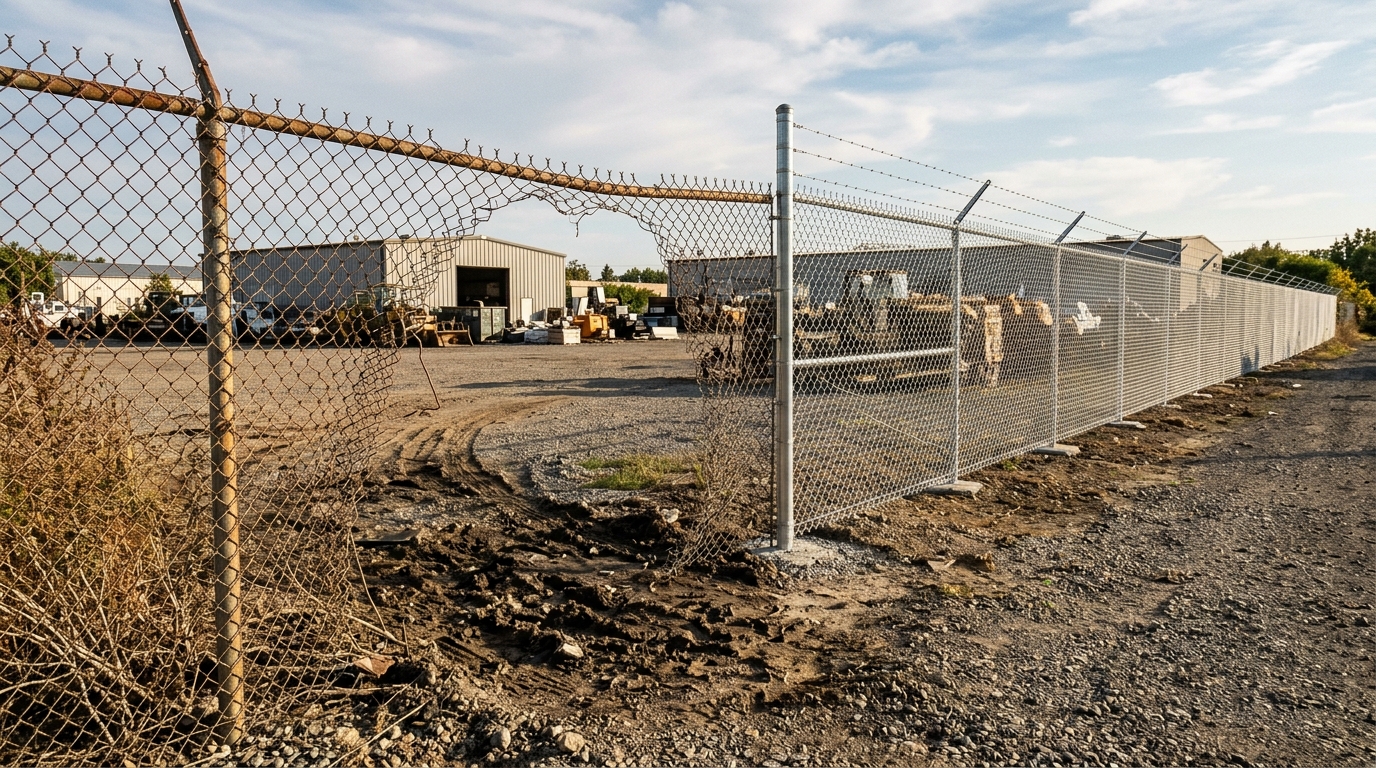
The strongest commercial fence replacement ROI usually comes from preventing losses, not simply making a property look newer. I look first at what the fence protects, such as vehicles, equipment, fuel, copper, construction materials, or high-value inventory. If theft, vandalism, or trespassing has already caused repeated costs, avoiding even one major incident may cover much of the replacement expense. The same logic applies to vacant properties, where a secure perimeter can reduce break-ins, dumping, damage, and liability concerns. Start by comparing the fence project cost with recent losses, insurance deductibles, repairs, downtime, and potential business disruption.
The fence design also affects the level of financial protection you receive. Taller, stronger materials may be worthwhile for a high-risk yard, while reinforced gates, controlled entry, and anti-climb features can close gaps that a basic fence leaves open. I also consider lighting, cameras, alarms, and motion or gate sensors because they can improve detection and create a more complete security plan. These upgrades cost more upfront, so the best choice depends on the value of the assets, site visibility, staffing, and local crime conditions. In many cases, targeted improvements at gates and vulnerable sections provide better value than replacing every component with the most expensive option.
Insurance and property value can support the case for replacement, but I treat them as part of the calculation rather than guaranteed payback. A stronger perimeter may help maintain coverage requirements, support tenant expectations, reduce maintenance, or keep a property ready for leasing and operations. Ask your insurer, lender, or property manager whether specific security features are required before assuming a premium reduction or valuation increase. Then compare the expected savings and avoided losses with installation, maintenance, monitoring, and future repair costs. This practical comparison provides a more reliable commercial fence replacement ROI than relying on a general percentage.
Commercial fence replacement ROI often involves more than immediate cash savings. I look first at whether the new fence helps meet insurance requirements, reduce theft exposure, or support lower premiums after a documented risk review. Premium reductions are not guaranteed, so I recommend confirming requirements and potential savings with your insurance professional before including them in the project budget. Even without a lower premium, keeping the property insurable can protect far more value than the cost of the fence.
A stronger fence can also support property value by improving curb appeal, tenant confidence, and day-to-day security. For commercial tenants, a secure, well-maintained site may help reduce complaints, support renewals, and make the property easier to market. These benefits are real, but they can be harder to measure than avoided repair bills or fewer vandalism incidents. I separate direct financial returns, such as reduced claims and maintenance, from long-term gains, such as better tenant retention and financing appeal.
The operational benefit may be the most practical part of the calculation. A properly planned replacement can keep gates, loading areas, parking, and access routes working while the project is underway, which helps prevent lost revenue and disruptions. I also consider compliance needs, access control, lighting, cameras, and the value of the assets behind the fence. When the upgrade prevents one major loss, protects continued operations, or keeps a property ready for tenants and insurers, the commercial fence replacement ROI can be strong even without a simple percentage to quote.
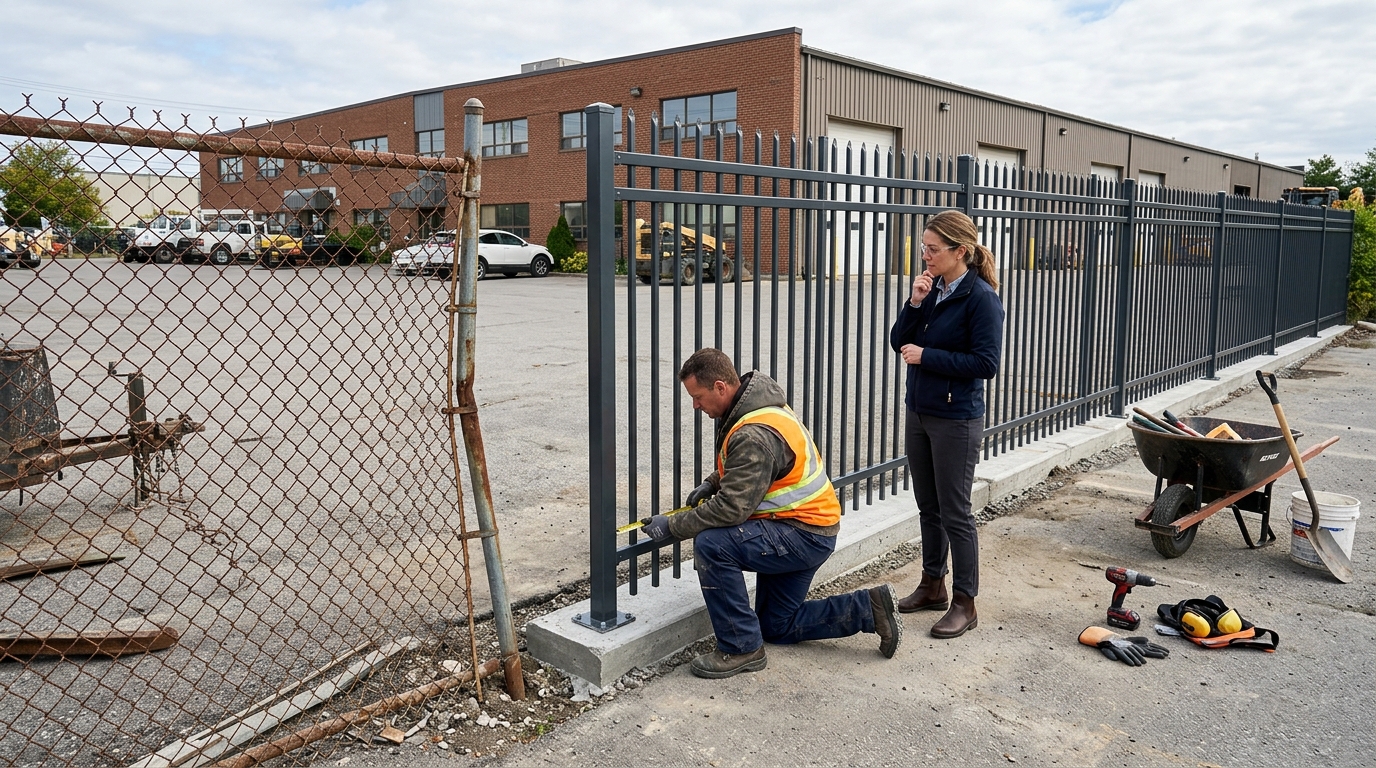
I start a commercial fence replacement ROI estimate with the costs you already know, not a hoped-for payoff. Gather recent repair invoices, emergency service bills, vandalism and theft reports, insurance claims, premium changes, and maintenance hours. Add the value of equipment, materials, vehicles, or inventory stored behind the fence, along with the likely cost of downtime if access is blocked or operations stop. It also helps to note vacancy, tenant concerns, compliance requirements, and any insurer or lender conditions tied to site security.
Before requesting quotes, I organize the information into a simple checklist:
With that baseline, I compare quotes by looking beyond the lowest installed price. I review fence life expectancy, corrosion resistance, gate hardware, access control, maintenance needs, and how well each option fits the site’s actual risks. Then I build conservative, expected, and high-loss scenarios using realistic numbers, such as fewer repairs, one avoided incident, lower cleanup costs, or reduced downtime. I do not count on an unproven increase in property value, and I treat insurance savings as a possible benefit until the insurer confirms them. The final estimate can use this simple comparison: expected annual savings and avoided losses divided by the replacement cost, while clearly showing which assumptions are certain and which are only potential.
Commercial fence replacement is most likely to deliver a strong return when it prevents a major loss or keeps your business operating without interruption. A stronger perimeter may help deter theft, vandalism, trespassing, and damage to vehicles, equipment, inventory, or construction materials. In some cases, the replacement can also support insurance requirements, reduce liability exposure, or help keep a property attractive to tenants and buyers. I focus less on a broad ROI percentage and more on the specific loss or recurring cost the new fence is designed to address.
The numbers become easier to understand when I compare the replacement cost with realistic savings over time. Lower maintenance needs, fewer gate repairs, reduced security incidents, and less downtime can all contribute to the payoff. A fence upgrade may also be worthwhile if it protects a high-value yard, limits unauthorized access after hours, or helps preserve coverage and compliance. Property value can benefit from a secure, well-maintained perimeter, but security and operational savings are usually the clearest financial drivers.
Before approving the project, I recommend evaluating your site-specific risks, asset values, incident history, insurance requirements, and daily access needs. Then request an itemized proposal that explains the cost of each improvement, such as added height, stronger materials, upgraded gates, access control, lighting, or surveillance integration. Ask the contractor to connect every upgrade to a realistic benefit, whether that means preventing a likely loss, lowering maintenance costs, protecting coverage, or reducing downtime. This process gives you a more useful measure of commercial fence replacement ROI and helps you invest where the financial impact is most likely to be real.
Commercial fence replacement ROI compares the cost of a new fence with the losses and expenses it may help prevent. I look at avoided theft, vandalism, emergency repairs, liability concerns, maintenance, and business downtime. The goal is to determine whether the fence can protect enough value to justify the investment.
Start with the full project cost, including removal, installation, gates, access controls, permits, surface repairs, and related security equipment. Then estimate the first-year savings from avoided losses and reduced expenses. Use this formula: (estimated first-year savings minus replacement cost) ÷ replacement cost × 100. This provides a planning estimate, not a guaranteed return.
Include more than the price of posts and panels. I recommend adding demolition, disposal, labor, gates, locks, access control systems, permits, grading, concrete work, and repairs to nearby pavement or landscaping. You should also account for ongoing inspections, maintenance, and expected repairs over the fence’s useful life.
The strongest returns often come from properties protecting expensive equipment, inventory, vehicles, building materials, or active construction sites. Facilities with frequent unauthorized entry, repeated vandalism, or strict access requirements may also benefit significantly. Preventing one major loss can cover a large part of the replacement cost.
Yes, stronger gates and access controls can make the fence more valuable than a basic barrier alone. They help control who enters, reduce unauthorized access, and create a clearer record of site activity. These improvements may also lower daily security demands and reduce the chance of theft or vandalism.
A new fence may support insurance requirements, reduce liability concerns, and help keep a property compliant with tenant, lender, or insurer expectations. It can also limit damage that forces you to pause operations or repair the site during business hours. I treat these benefits as part of the financial case, even when they are harder to assign an exact dollar value.
The payback period depends on the project cost, the value being protected, and the losses the fence can prevent. A site facing frequent theft or vandalism may recover the investment quickly, while a lower-risk property may see the return over several years. I recommend comparing the replacement cost with both likely annual savings and the potential cost of one serious incident.
VIEW OUR WORK
LEARN MORE
CONNECT WITH US