
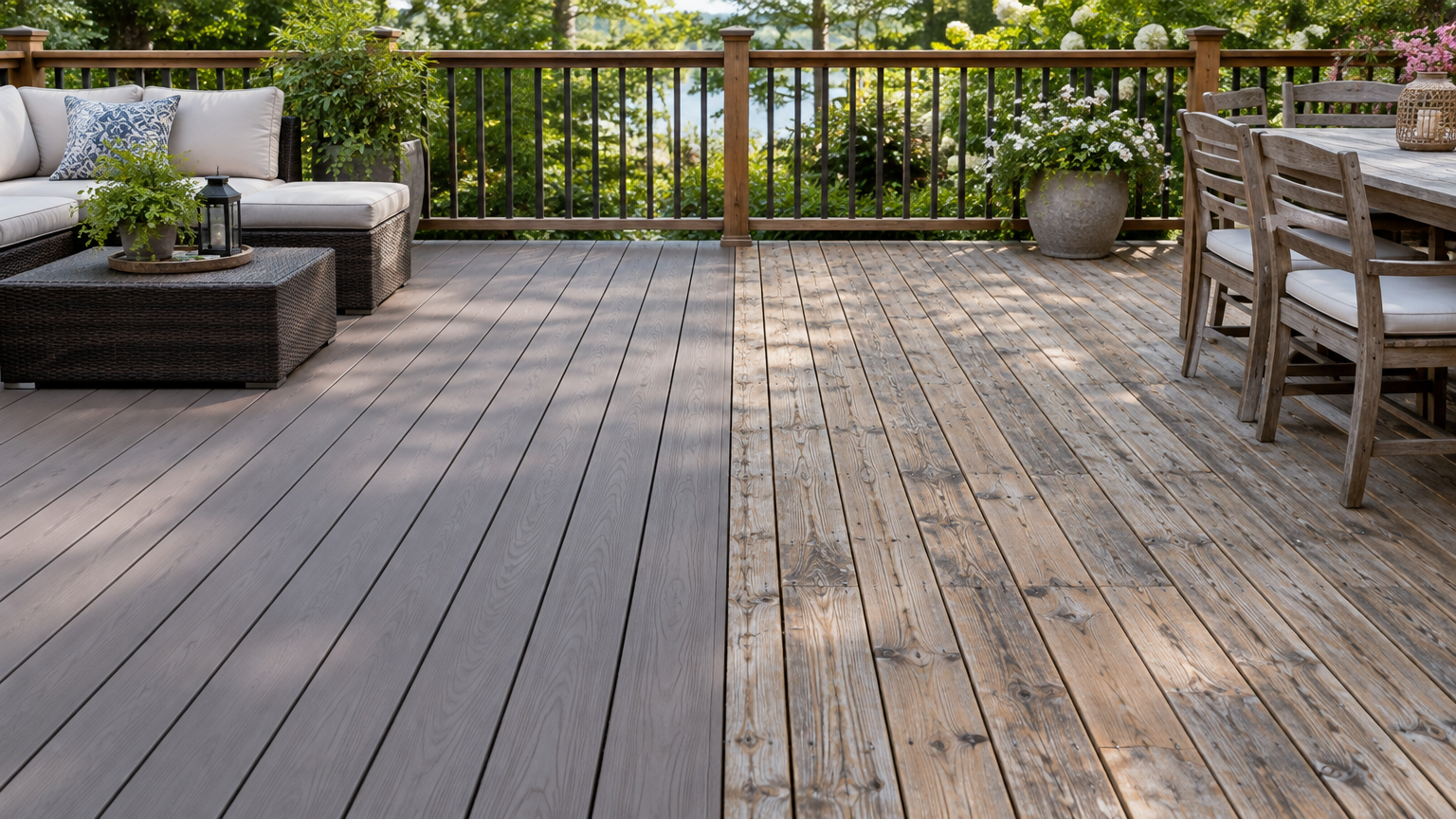
Composite decking vs. wood has no universal winner. Published 2025 installed estimates put wood at $40–$80+ per square foot and composite at $50–$100+ per square foot. Wood, especially pressure-treated lumber, generally costs less upfront, while composite typically needs less frequent surface maintenance. Pressure-treated wood should be sealed every 2–3 years, but composite care varies by product line.
The useful comparison is between specific products and project priorities, not broad material labels. Board composition, wood species, design, and project scope all affect the decision. For composite products, ASTM D7032 provides performance-rating procedures. Compare the exact product’s ratings and care instructions alongside its price.
Broad 2025 installed estimates are $40–$80+ per square foot for wood and $50–$100+ for composite, but pressure-treated wood generally costs less upfront and project-specific quotes should compare the same full scope, including structure, stairs, railings, and removal.
Composite care varies by product line, so compare the exact board’s care instructions and warranty rather than assuming all composite decking is maintenance-free.
Deck performance depends on the specific boards, supporting frame, exposure, and installation, so compare product load and span specifications and follow installation requirements; ASTM D7032-21 evaluates composite products but does not establish a universal winner over wood.
California’s 2025 Residential Code took effect January 1, 2026, and requires covered composite boards to be labeled for ASTM D7032 compliance with allowable load and span stated, while wood deck materials must be No. 2 grade or better and preservative-treated or approved naturally durable lumber.
Neither composite decking nor wood is best for every project. Wood, particularly pressure-treated lumber, generally costs less to buy initially and offers a natural material, while composite usually costs more upfront in exchange for less frequent surface upkeep. Pressure-treated lumber is only one wood option; other species differ in appearance, price, and care needs. Composite is not one uniform product either: board construction, performance ratings, warranties, and cleaning instructions vary by product line. Compare complete installed costs rather than board prices alone, then weigh maintenance against product-specific performance. Code compliance is another selection factor: California’s residential code sets requirements for both wood and composite deck materials, with rules that depend on the material and product. The California code provisions for exterior decks are worth checking during product selection and project planning. For an integrated outdoor space, consider how deck boards will look and meet the fence line. A natural wood deck and wood fence create a different palette from composite boards beside vinyl or wrought iron. Los Angeles Fence Builders installs wood, vinyl, and wrought iron fences, among other materials, so fence material and finish can be part of the comparison.
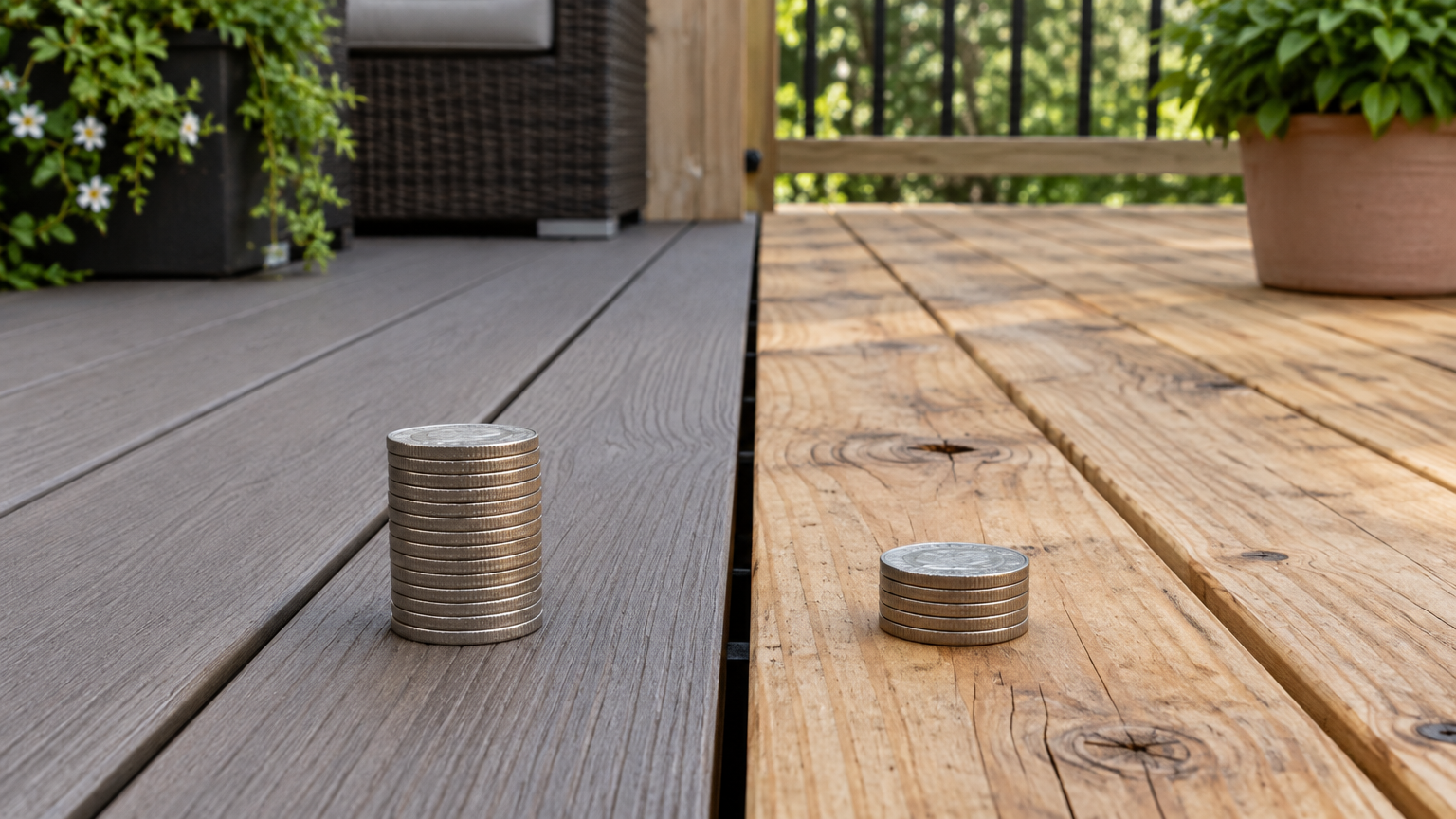
Composite decking generally costs more to install than wood, especially compared with pressure-treated lumber, but the price difference varies by project. Broad 2025 installed-price estimates are $40–$80+ per square foot for wood decking and $50–$100+ per square foot for composite. Those figures are market estimates, not universal prices or a quote for a Los Angeles project. A published 2024 estimate puts pressure-treated wood at $25–$50 per square foot installed, with an average service life of 10–25 years. Because estimates vary by date and scope, the ranges are useful for orientation, not as a direct bid comparison. Deck size, design complexity, wood species, composite product selection, and project scope all affect the estimate. A straightforward deck and a design with multiple levels or stairs involve different work. Wood species can shift the material cost, while composite prices vary by product. The estimate may also change depending on whether the project includes structural work, railings, or removal of existing decking. Compare the full installed project, not board prices alone. Include the supporting structure and other planned work, then consider ongoing upkeep: pressure-treated wood should be sealed every 2–3 years, while composite care depends on the product. Initial installation cost, maintenance, and eventual repair or replacement are separate considerations. A lifetime-cost calculation would require comparable, project-specific assumptions about products, care, and replacement timing, so the price ranges alone do not establish guaranteed savings for either material.
Pressure-treated wood is a clear example of the recurring care wood can require. Pressure treatment helps protect decking against rot and insects, but it does not prevent moisture-related warping, cracking, or splintering. Pressure-treated decking should be sealed every 2–3 years, adding a recurring maintenance task for owners.
Composite care is product-specific, not a single set of instructions for every board. Trex’s care instructions recommend soap-and-water cleaning or gentle pressure washing for Transcend, Enhance, and Select. For specified early-generation Trex products, the company recommends cleaning twice a year with composite deck cleaner. These different directions show why the composite label alone does not tell you what upkeep a board requires.
Care can also affect how you plan routine work and assess a product’s warranty. Before choosing between pressure-treated wood and composite, compare the care instructions and warranty for the exact board under consideration. Check the manufacturer’s guidance for the product generation and line, rather than assuming every composite board is maintenance-free or follows the same cleaning schedule.
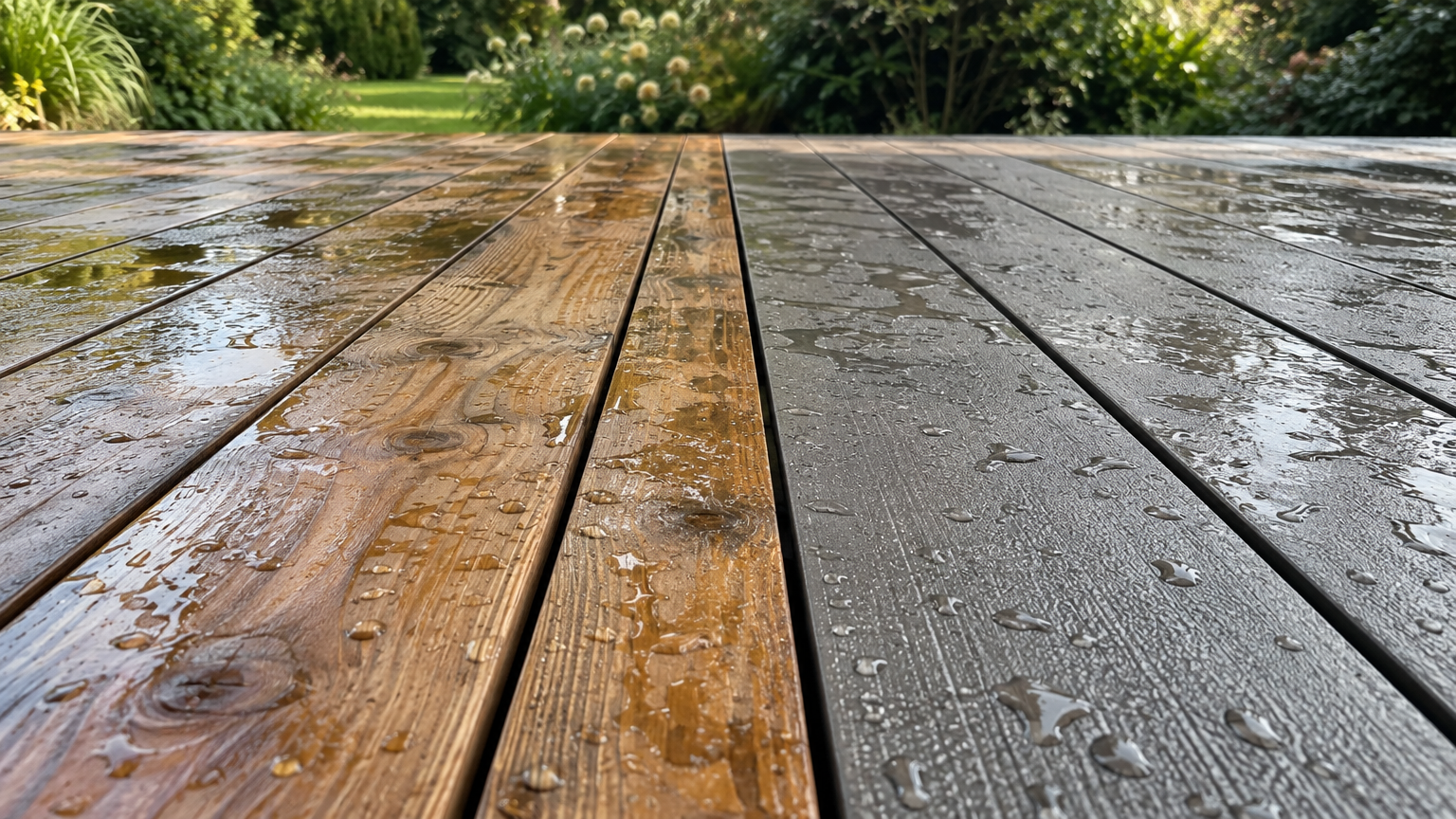
Neither composite decking nor wood is universally stronger outdoors; performance depends on the exact board, supporting frame, exposure, and installation. A material label alone does not tell you how a deck will handle loads, moisture, sunlight, or everyday use. ASTM D7032-21 includes performance-rating procedures for wood-plastic composite and plastic-lumber decking products. Its tests cover flexural performance, UV and freeze-thaw resistance, biodeterioration, creep recovery, fastener holding, and slip resistance. The standard helps describe how a product is evaluated, but it does not mean all composite boards perform identically or establish a universal strength winner between composite and wood. ASTM International’s D7032-21 standard provides details about the procedures. Board and framing specifications both affect deck performance. Compare the exact product’s load and span information, then check that the proposed framing and board layout meet those specifications. Follow the selected manufacturer’s installation requirements, including instructions for fastening, spacing, and support; a board’s ratings do not replace proper installation. Wood and composite products can also differ in how they respond to outdoor conditions, so compare their published specifications rather than assuming one category will last longer in every setting. Assess heat for the particular board and color: review the manufacturer’s guidance for the product you are considering instead of assuming composite or wood is always cooler underfoot. The most useful comparison is between products suited to your design and site, with ratings and installation instructions considered together.
The 2025 California Residential Code took effect January 1, 2026. Code compliance is a product-selection and project-planning consideration, not a substitute for checking the code that applies to your project and the manufacturer’s product documents.
Section R507.2.2 requires covered composite deck boards and stair treads to be labeled for ASTM D7032 compliance and to state allowable load and span. The section also sets a flame-spread index limit of 200 when tested under ASTM E84 or UL 723. Section R507.2.1 requires wood deck materials to be No. 2 grade or better and either preservative-treated under Section R317 or made from approved naturally durable lumber; termite protection applies where Section R318 requires it. Review the California Residential Code’s exterior-deck provisions alongside the specifications for the boards you are considering.
Trex Refuge is an adjacent option, not a type of wood-plastic composite: Trex describes it as a PVC decking line. In a January 13, 2026 announcement, Trex described the launch as limited and said Refuge meets ASTM E84 Class A flame-spread requirements and IWUIC ASTM E2768 ignition-resistance standards, with a 50-year limited residential warranty. These fire-performance and warranty statements are Trex’s; see the company’s Refuge announcement for product-specific details.
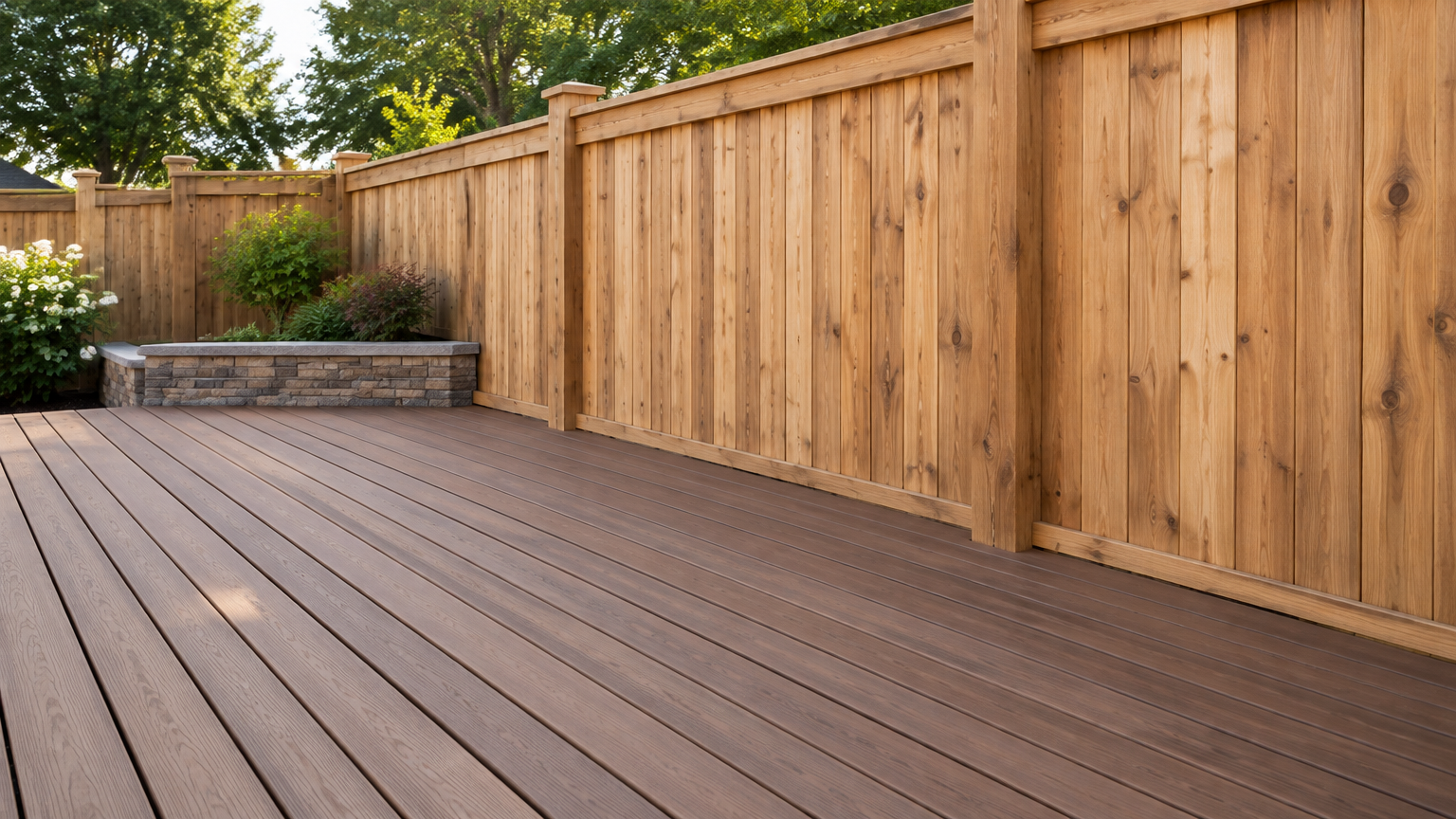
Plan the deck surface, fence appearance, privacy needs, gate locations, and transitions as parts of one coordinated project. A composite deck beside a wood fence creates a different look and maintenance mix from wood decking beside vinyl or wrought iron. The deck and fence still have distinct product requirements, so a coordinated appearance does not mean choosing the same material for both.
Before finalizing selections, confirm how deck edges, fence lines, grade changes, and gate access will meet. Decide where the fence should provide privacy, where gates need to open, and how people will move between the deck and yard. Reviewing those connections early helps you compare materials that suit the overall layout.
Choose a deck material based on your budget, care preferences, the exact product’s performance, and applicable code requirements. Then coordinate the fence and gate plan around the selected deck, checking product specifications and installation plans for each part.
Los Angeles Fence Builders installs residential and commercial fences and gates across Los Angeles and surrounding valley areas. Options include wood, chain link, wrought iron, vinyl, and high-security fencing. Share the planned deck surface and layout when discussing fence placement so gate locations, privacy goals, and transitions can be considered alongside installation planning.
Create a project sheet before requesting estimates. Record the deck footprint, levels, stairs, railing, and any existing surface to remove. List the exact wood and composite products you are considering, then ask your deck contractor to price the same layout and scope for each option. Include the product specifications and installation instructions so the proposed framing and board layout can be checked against the selected product.
Add a simple site sketch showing fence runs, gate locations and opening directions, privacy sections, and where the fence meets the deck. Note whether the fence should be wood, vinyl, wrought iron, or another material, and flag any access points that must remain clear. Keep deck and fence work as separate estimate lines, even when both are planned together.
For the fence and gate portion, send the sketch and your chosen deck color or finish to Los Angeles Fence Builders when requesting an installation estimate. The company serves residential and commercial properties across Los Angeles and surrounding valley areas, with fence options including wood, chain link, wrought iron, vinyl, and high-security fencing. This gives the fence plan clear reference points while your deck contractor prices the boards and structure.
A 20x20 composite deck is roughly $20,000–$40,000+ installed using the broad 2025 estimate of $50–$100+ per square foot. That estimate is for a 400-square-foot deck and can vary with the product, design, and project scope, so it is not a project quote.
A 12x12 composite deck is roughly $7,200–$14,400+ installed using the broad 2025 estimate of $50–$100+ per square foot. That estimate is for a 144-square-foot deck; product choice, design, and project scope affect the final price.
One damaged composite deck board may be replaceable, but whether it can be removed without disturbing nearby boards depends on the product’s fastening system and installation. Check the exact manufacturer’s repair and installation instructions because composite products and fastening requirements vary.
VIEW OUR WORK
LEARN MORE
CONNECT WITH US