
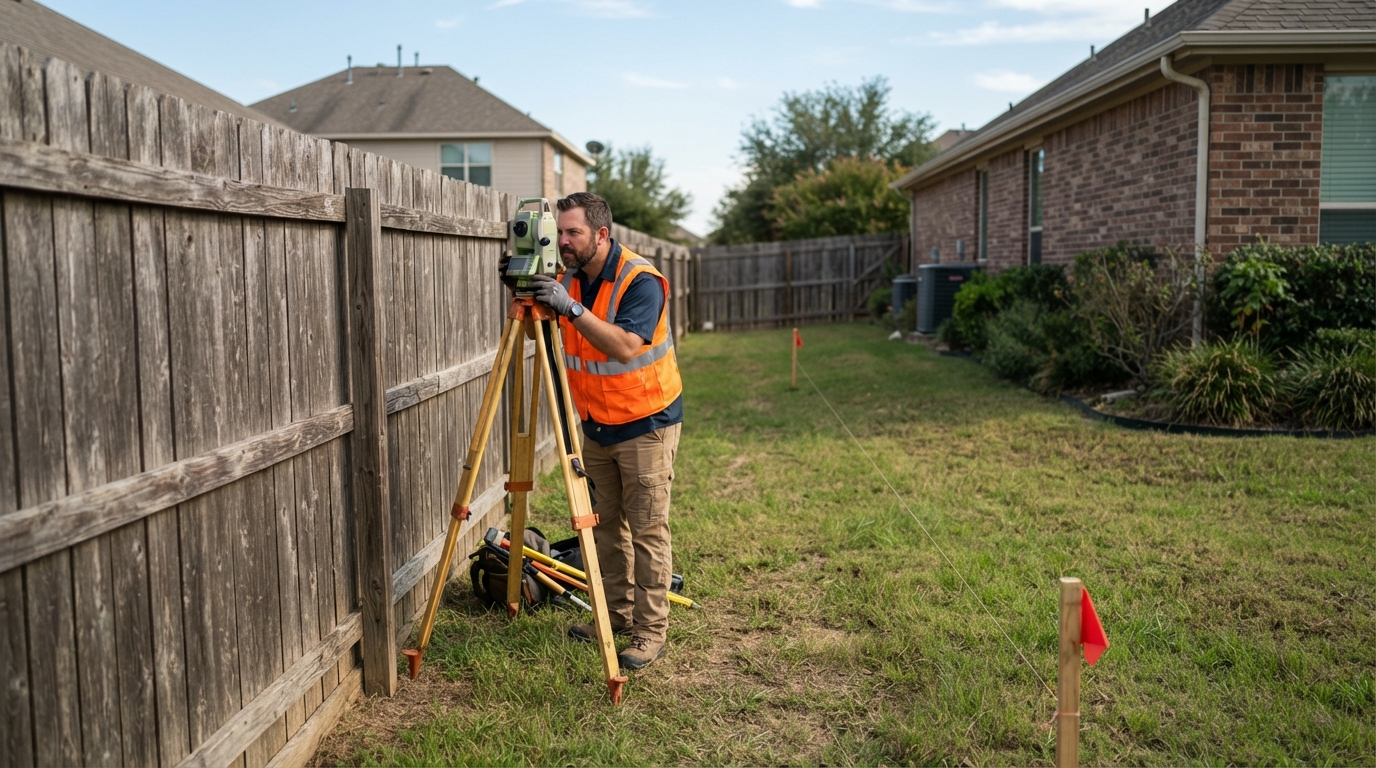
A property-line fence survey is worth arranging before you finalize the layout or schedule installation if the planned fence is near an uncertain boundary. A surveyor can review deeds and plats, examine physical boundary evidence, and mark or document the line. The Oklahoma Society of Land Surveyors recommends surveying before building a fence near a property line.
Settling the boundary early can help confirm the fence run before materials are ordered and work dates are set. In California, Civil Code § 841 requires 30 days’ prior written notice when seeking contribution for covered dividing-fence costs. Once boundary questions are addressed, we can help plan installation. We install residential and commercial fences and gates across Los Angeles and surrounding valley areas.
If your planned fence is near a property boundary and you are unsure where the line falls, arrange a survey before approving the layout or scheduling installation. A mistaken boundary assumption can delay work or lead to a disagreement about where the fence belongs. The Oklahoma Society of Land Surveyors recommends surveying before building near a property line and contacting a surveyor well in advance in its fence-building guidance.
MassGIS says property-tax parcel data are not authoritative boundary records. MassGIS guidance on property-tax parcels explains this limitation.
A professional surveyor reviews deeds and other records, searches for monuments and physical evidence, then forms an opinion about the most probable boundary locations. NSPS model property-survey standards describe this process. A fence contractor can help plan the fence run and installation, but the surveyor provides the professional opinion about the boundary. Raise boundary questions before you lock in materials or work dates so the installation plan can reflect the surveyor’s findings.
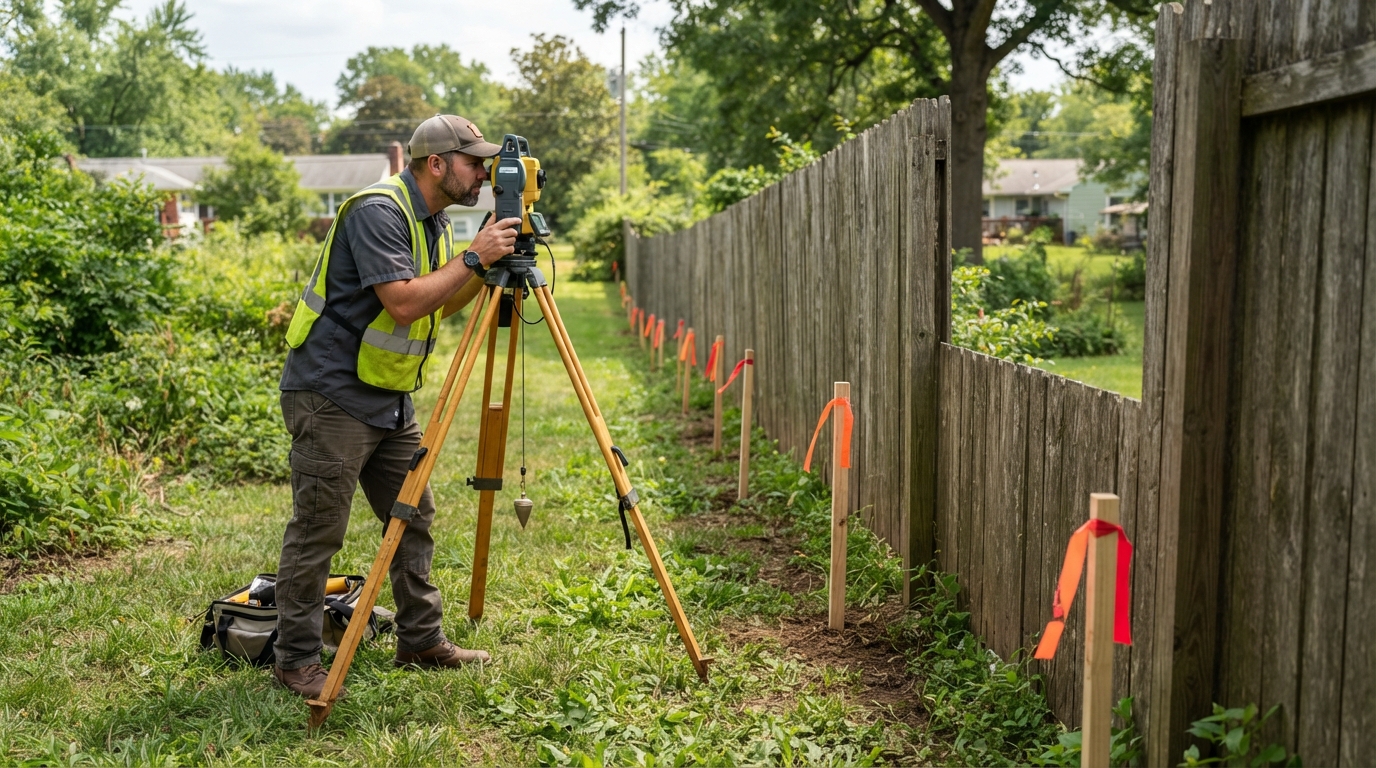
A fence-line survey can include reviewing property records, examining boundary evidence, and marking or documenting the boundary. The exact deliverables depend on the scope you request. NSPS model standards describe reviewing deeds and pertinent documents, searching for monuments and physical evidence, and comparing evidence to assess corner locations. When requesting a quote, describe the proposed fence run and ask which of these deliverables are included:
A clear scope helps match the survey to your project’s layout needs and avoid paying for deliverables you do not need.
Property-line survey costs do not have a universal price. Fees and turnaround depend on the requested scope, site conditions, and how much boundary evidence is available. The Oklahoma Society of Land Surveyors says estimates depend on anticipated difficulty and time, and boundary work depends in part on the availability and proximity of discovered evidence. When requesting estimates, ask what records the surveyor will review and what fieldwork is included. Confirm what will be marked or delivered, such as corner locations, intermediate stakes, and a drawing. Compare estimates only when they cover the same scope. Ask about expected turnaround early, since timing can vary with the work requested and conditions on your property. Request a written estimate from a professional surveyor so you can review the scope, deliverables, and possible timing factors before authorizing the work.
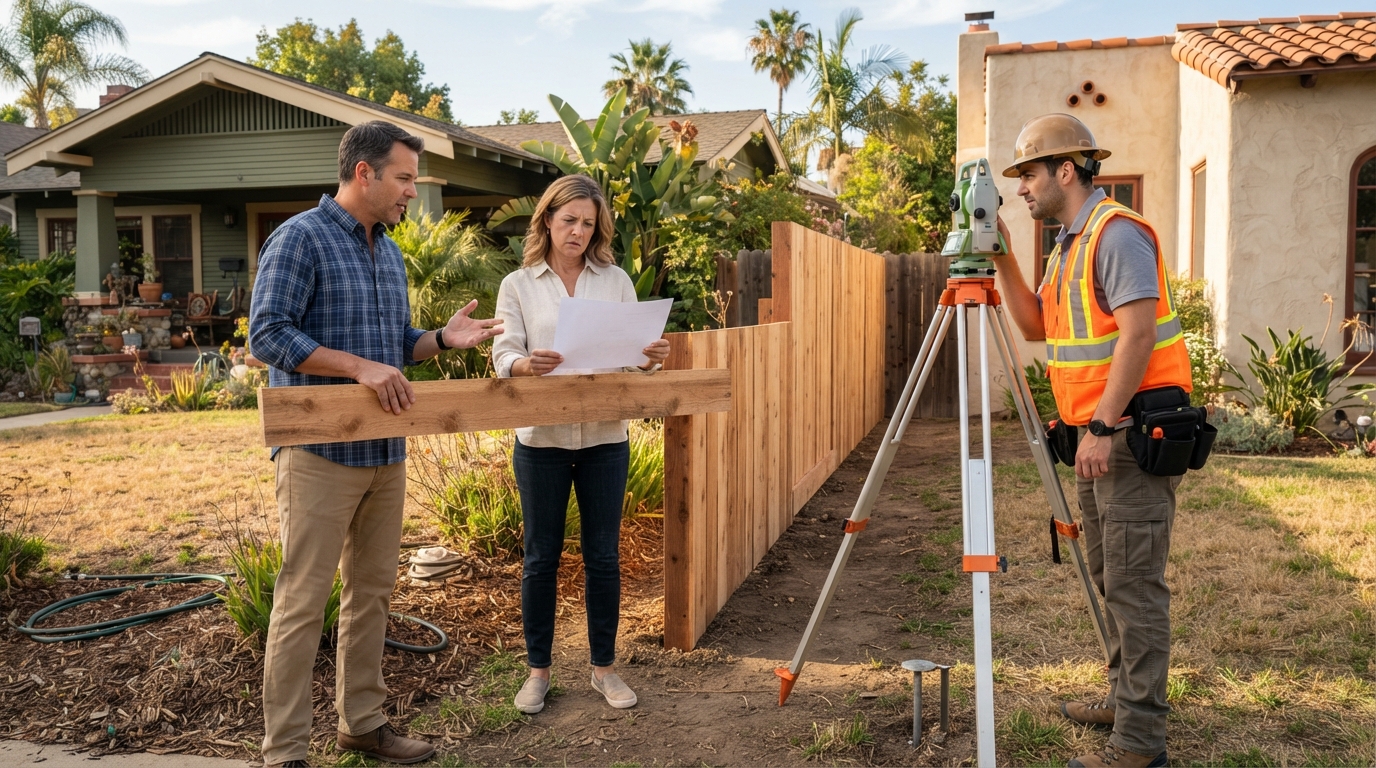
In California, adjoining landowners are presumed to share equally in the reasonable costs of constructing, maintaining, or necessarily replacing a dividing fence, unless they agree otherwise in writing. The presumption applies to covered fence costs, but not every fence project qualifies for contribution. California Civil Code section 841 requires a landowner seeking contribution for covered costs to give affected neighbors 30 days’ prior written notice. The notice must describe the proposed solution, estimated costs, how costs would be shared, and the proposed timeline. Before authorizing work, confirm the boundary and discuss the proposed fence, estimated costs, and cost-sharing plan with affected neighbors. Agreeing on the layout and responsibilities in advance can help prevent disputes once construction is underway.
Before setting an installation date, confirm the survey deliverables, local permit requirements, and fence layout with your installer.
If the survey markings are missing, unclear, or do not match the planned fence run, pause scheduling and ask the surveyor to clarify the boundary before installation. Once the layout is documented, share the survey drawing or field markings with your installer. Point out gate locations and any access needs, then choose the fence material so the installation plan can be prepared around the confirmed line.
For a residential or commercial project in Los Angeles or the surrounding valley areas, contact us at Los Angeles Fence Builders to discuss installation once boundary questions are resolved. We install wood, chain link, wrought iron, vinyl, and high-security fences and gates. Keep the surveyor’s deliverables available during planning so our team can coordinate the fence layout with the information you received.
A surveyor can locate the property boundary, but a boundary survey alone does not determine who owns an existing fence. The surveyor can document boundary evidence and provide a professional opinion about the most probable boundary locations, which may help clarify the fence’s position. NSPS model property-survey standards
A property-line survey can provide professional evidence about where the boundary most likely lies, but it does not automatically settle a dispute. If neighbors disagree about the survey findings or what they mean for the fence, consider getting legal advice.
A neighbor’s old survey may be useful background, but have a professional surveyor review it before using it to lay out your fence. The surveyor can assess the relevant deeds, documents, monuments, and other boundary evidence as part of the requested work. NSPS model property-survey standards
There is no single setback that applies to every fence. Requirements depend on local rules and the project location. Check with your local permitting authority before setting the fence line, and ask your surveyor to identify the boundary. For example, the City of Wayzata, Minnesota, requires a permit for most fences and a certificate of survey for a fence on or up to the property line, subject to an existing-stakes exception.
No. The location of a fence by itself does not establish the legal property boundary. A professional land surveyor can review records and physical evidence to determine and document the most probable boundary location. MassGIS explains that parcel data are not authoritative boundary records.
VIEW OUR WORK
LEARN MORE
CONNECT WITH US