
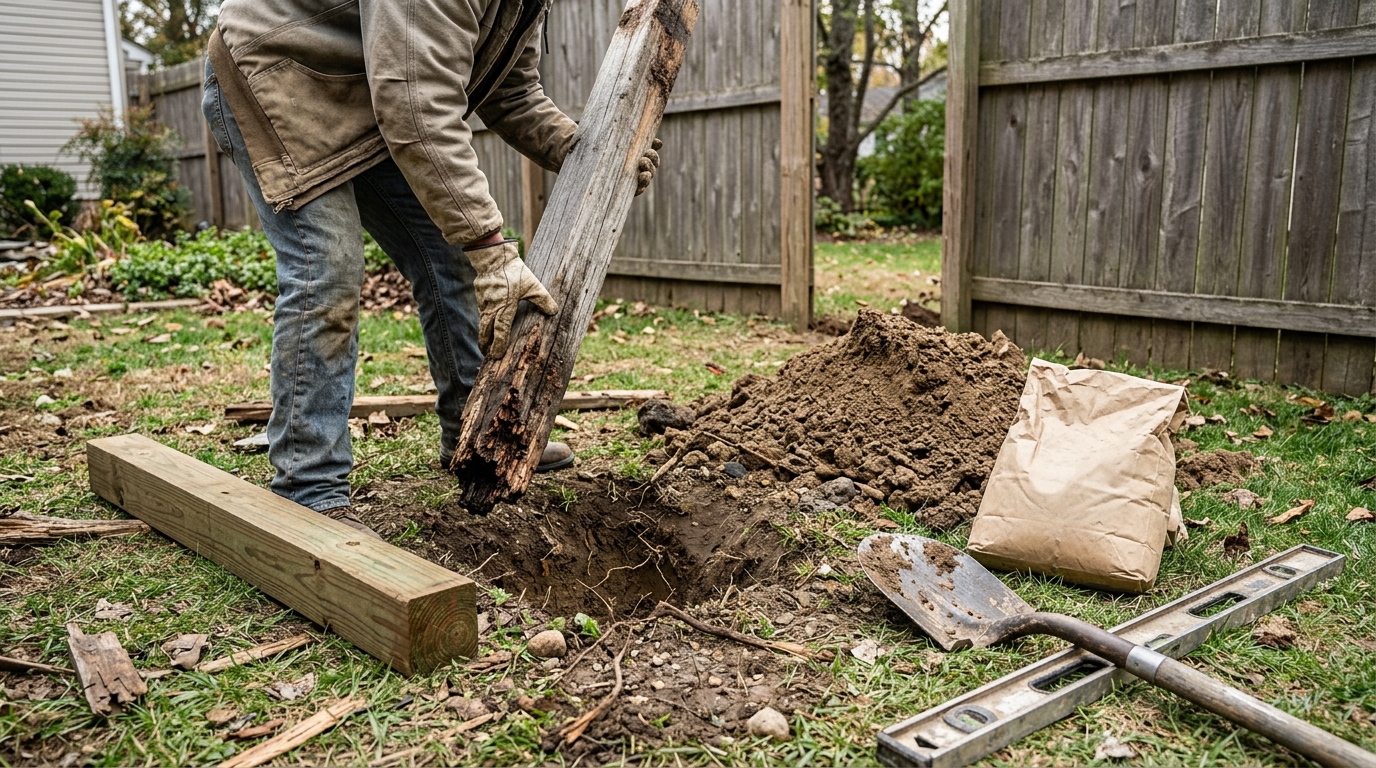
Professional replacement of one fence post generally costs $150 to $400, though the final price depends on the fence and the condition of the footing. Published estimates vary by material: wood post replacement is listed at $120 to $350, while chain-link replacement is $100 to $300.
These are broad market estimates, not guaranteed quotes for Los Angeles. The post material, the difficulty of removal and installation, and whether the concrete footing needs repair can all affect the price. A replacement post also needs to fit the existing fence system, so the work may involve more than swapping one piece. A clear quote should explain what is included and whether nearby fence sections need adjustment.
Professional replacement of one fence post generally costs $150 to $400 overall. Estimates range from $120 to $350 for a wood post and $100 to $300 for a chain-link post.
The final price depends on the post material, the complexity of removal and installation, and the condition of the concrete footing. If the footing needs work, the cost can exceed the post-replacement estimate. A quote should make clear whether it covers only the post or includes footing work.
Replacing one support is a smaller, more limited job than repairing or replacing an entire fence. The 2026 national average fence repair cost was $618, based on 2,968 verified projects. That broader repair figure is not a price for replacing one post or an estimate for replacing a whole fence.
For example, replacing one damaged post while keeping the surrounding fence in place has a different scope from fixing several damaged sections. A full fence replacement is a separate project, with costs based on the entire fence rather than one support.
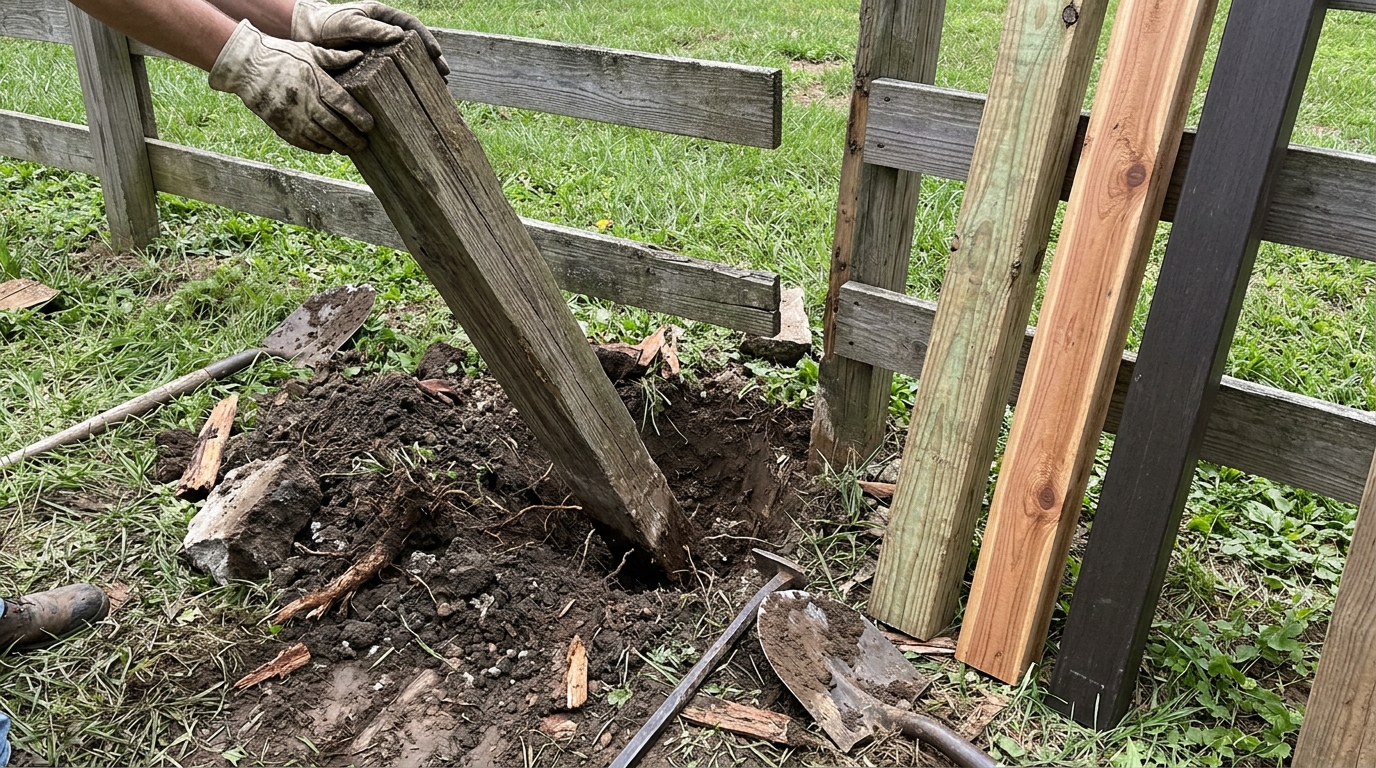
Replacement costs vary by post material and fence construction. The available estimates are $120 to $350 per wood post and $100 to $300 per chain-link post, while a broader estimate for replacing one post is $150 to $400.
| Post material | Estimated replacement cost |
|---|---|
| Wood | $120 to $350 per post |
| Chain link | $100 to $300 per post |
Those ranges are not material-by-material quotes for every fence. The available estimates do not provide separate prices for vinyl, metal, steel, or concrete posts. The work can still vary. For example, removing a post set in concrete may take more effort than installing a replacement in a usable footing.
The replacement post needs to suit both the fence material and its construction. A wood post must work with the existing rails and panels, while a chain-link post must fit the fence’s framework and connections. Vinyl, metal, and steel systems also use specific post sizes and attachment methods, so a post that looks similar may not support the existing sections properly.
Concrete posts call for a different assessment because the post and its footing may work together as a single support. The installer needs to determine what must be removed and how the replacement will connect to the surrounding fence. For any material, removal difficulty, installation steps, and footing condition can affect the final price.
Los Angeles Fence Builders works with wood, chain link, vinyl, and wrought iron fencing, among other systems. When comparing estimates, check that each quote identifies the replacement material and explains how the new post will fit the existing fence. That makes it easier to compare the work involved, not just the prices.
Post replacement can cost more when the new post is difficult to match or install, the concrete footing needs work, or connected fence sections need temporary support and adjustment. The price reflects the full job, not just the replacement post.
Material affects the work involved. A post may need specific dimensions, connections, or hardware to fit the existing fence, and some systems take more steps to detach and reconnect. Installation can also be more complicated when the old post is difficult to reach or remove. A narrow side yard, nearby obstacles, or limited room for tools and materials can make it harder to access the work area.
The footing can add substantial work if it is cracked, unstable, or anchored around the failed post. The contractor may need to break out and remove concrete, repair the footing, or replace it before setting the new post. Each option involves different removal and installation steps. Ask the contractor to explain what the footing needs and how that work is reflected in the estimate.
The number of damaged posts matters, too. A quote for several replacements may involve more removal and installation than a single-post job. The condition of connected rails and panels also affects the scope. A loose rail or panel may need to be detached, supported while the post is replaced, then reconnected and aligned. If nearby sections are damaged or no longer fit securely, the estimate may include additional adjustments.
Before comparing prices, ask whether the estimate includes labor, removal and disposal of the old post, footing removal or repair, and reconnection of the fence. Confirming each item helps you see whether a lower quote covers the same work as a higher one.
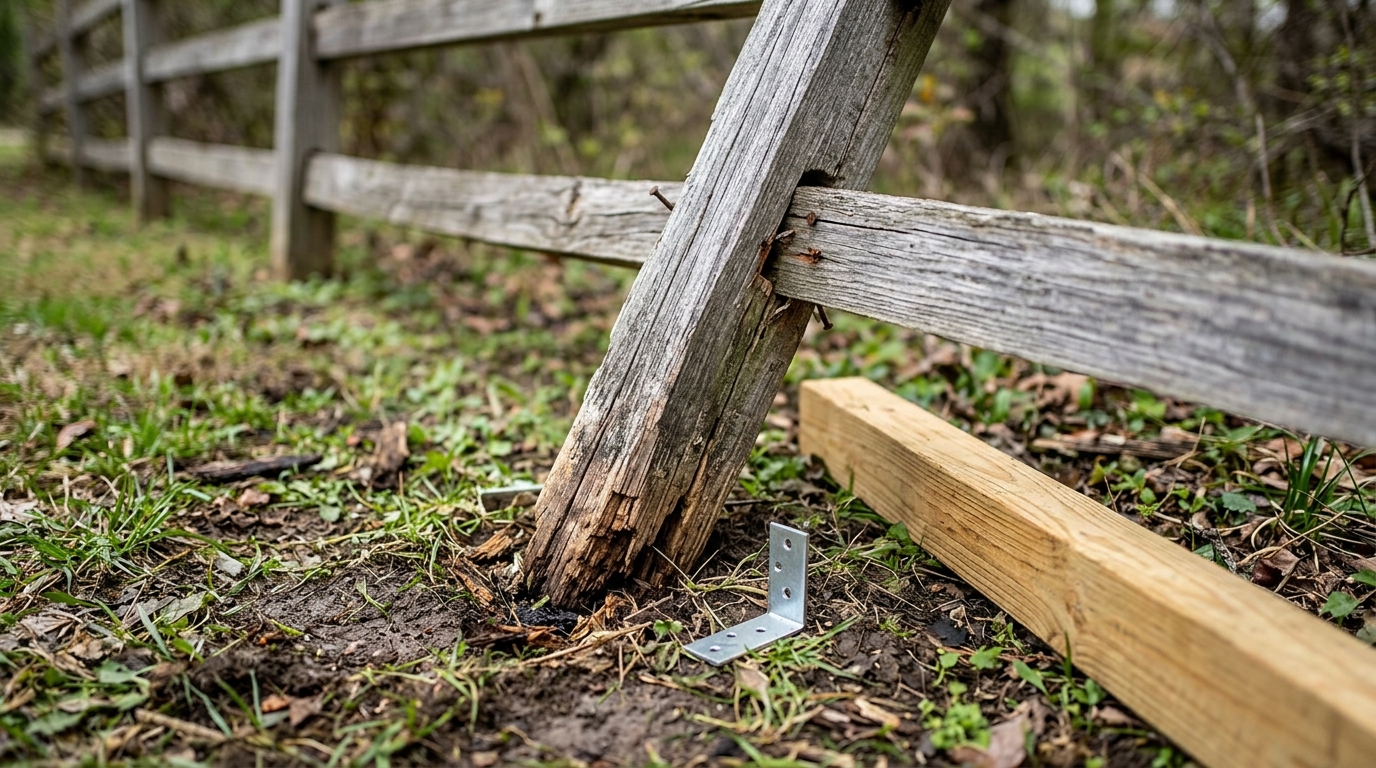
Repair may make sense when the post is sound and the footing can be stabilized. Replacement is usually the better choice when the post itself or its footing has failed. A loose or leaning post may need more than a cosmetic adjustment. If the post is soft or split near the ground, or the concrete footing is cracked or unstable, straightening it may not restore reliable support. First, identify whether the movement is coming from the post or from damage to the post or footing. If the post is intact and the footing is holding firm, a contractor may be able to secure and realign it. If the post is damaged, or the footing no longer holds it upright, ask whether the estimate includes replacing or repairing the footing as well as the post. The right scope depends on which part has failed. Then compare the post-specific estimate with the cost and scope of any work needed on nearby rails, panels, or fence sections. For example, a sound panel that only needs to be detached and reconnected is a different job from repairing a damaged rail or panel. The 2026 national average fence repair cost was $618, based on 2,968 verified projects. Use that figure only as a broad comparison for fence repair work, not as a price for replacing one post. Ask for an itemized estimate that separates the damaged support and footing from any connected fence work. The estimate should identify whether the post can be stabilized or needs replacement, what footing work is included, and whether rails, panels, or adjacent sections will be adjusted or repaired. With the costs divided by task, you can compare a post-only repair with the broader scope without mistaking a whole-fence repair benchmark for a post-replacement price.
A replacement wood post’s service life depends on its wood species and preservative treatment. The USDA Forest Service reports that treated wooden fence posts can last 5 to 25 years, while untreated posts may decay in 1 to 4 years. Those ranges describe posts generally, not a guaranteed lifespan for a particular fence. The treatment should suit the post’s exposure, especially when it will be buried in soil. AWPA Standard U1-24 lists Use Category UC4A for general round and sawn fence posts in ground contact or fresh water. The AWPA Use Category System groups treated wood by biodeterioration hazard level to help match the product to its intended end use. When comparing replacement options, ask what species and preservative treatment the proposed post has, and whether its use category fits the installation. A post intended for above-ground use may not be right for a support set in soil. The post’s treatment and intended exposure are useful details to include in the estimate, along with its dimensions and how it will connect to the existing fence. A suitable category can help guide selection, but it cannot guarantee how long an individual post will last. The USDA’s range varies with species and treatment, so do not treat any single lifespan estimate as a promise for your installation.
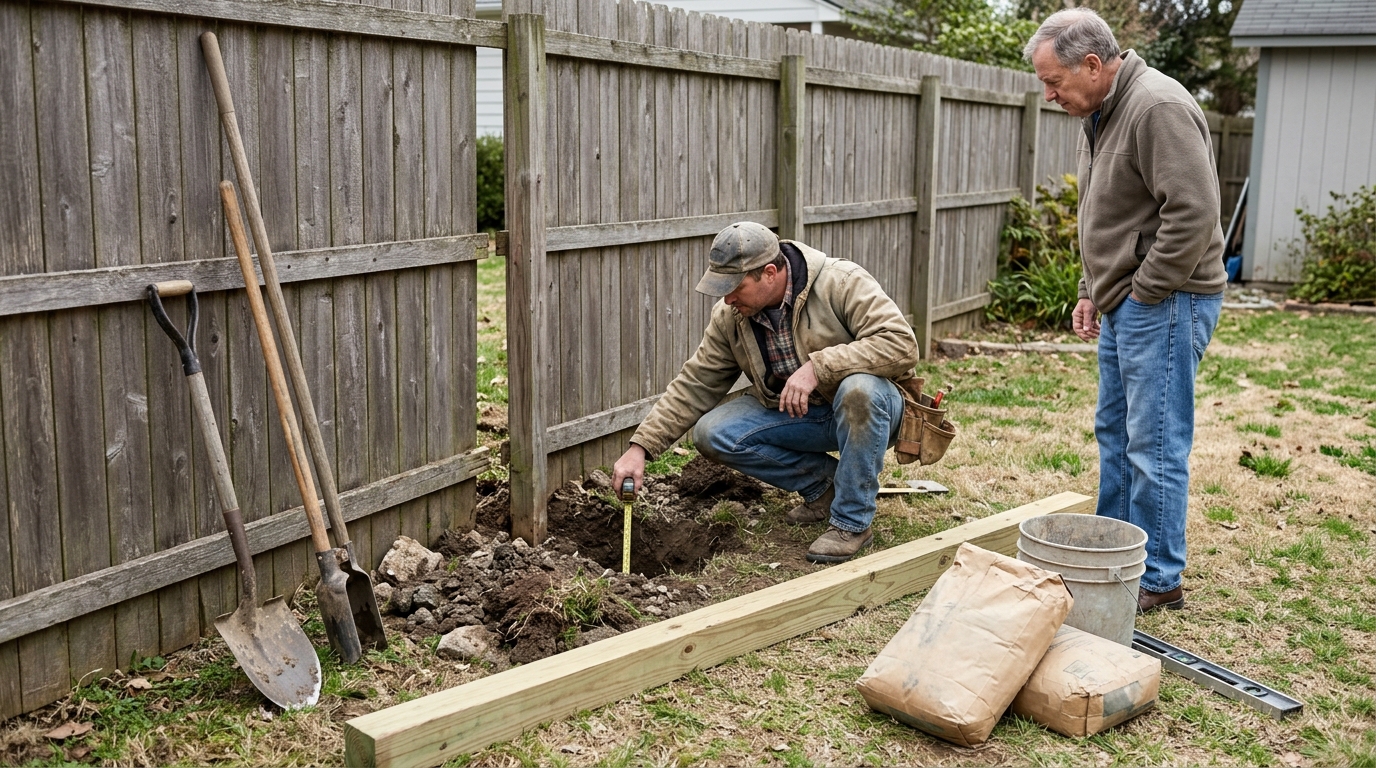
A fence post replacement quote should clearly list the post material, removal and disposal, footing work, labor, and reconnection of the fence sections. Ask the contractor to describe each part of the job so you can see what the estimate covers.
Confirm whether the estimate covers only the damaged post or includes repairs to nearby rails, panels, or other fence sections. Reconnecting a sound panel is different from replacing a damaged panel, so the quote should identify any extra work and its cost. Compare itemized estimates against the fence’s actual condition and material, not just the bottom-line price. Los Angeles Fence Builders provides residential and commercial fence and gate installation across Los Angeles and surrounding valley areas, with expertise in wood, chain link, wrought iron, vinyl, and high-security fencing.
To discuss your fence project in Los Angeles or the surrounding valley areas, contact Los Angeles Fence Builders. Ask whether we can provide a quote for the work. Tell us whether the fence is residential or commercial and whether it is made of wood, chain link, wrought iron, vinyl, or high-security materials.
Include how many posts appear damaged and what you can see at ground level, such as a leaning post, cracked concrete, or a loose rail. Mention whether a gate connects to the affected section, since its alignment may also need attention. Photos of the post, footing, and adjoining fence can help show which area needs review.
When requesting a quote, ask for it to identify the proposed post and the specific work included. If the footing or attached fence sections may need attention, ask for those items to be listed separately so you can decide which work to approve. For commercial properties, note any access limits or operating hours that may affect when the fence can be worked on.
Los Angeles Fence Builders provides residential and commercial fence and gate installation across Los Angeles and surrounding valley areas. Contact us with the fence type, location, and visible damage to discuss your project and whether our installation services fit the work.
Homeowners insurance may cover fence post replacement if the damage falls within your policy’s covered causes, but coverage depends on your policy and its exclusions. Check with your insurer before approving the work, and have photos and the contractor’s estimate ready.
Concrete fence posts may be worth considering when they suit the fence design and installation, but they are not automatically the best value. Ask for an estimate that explains how the post and footing work together and how the replacement will connect to the existing fence.
The single-post replacement estimates in this guide do not provide a price for installing a full fence. Request a written quote and compare it with other estimates that spell out the materials and work included.
The cost of a full fence cannot be calculated from a single-post replacement estimate because a full fence installation has a different scope. Request a project-specific quote based on your fence material and the work required.
VIEW OUR WORK
LEARN MORE
CONNECT WITH US