
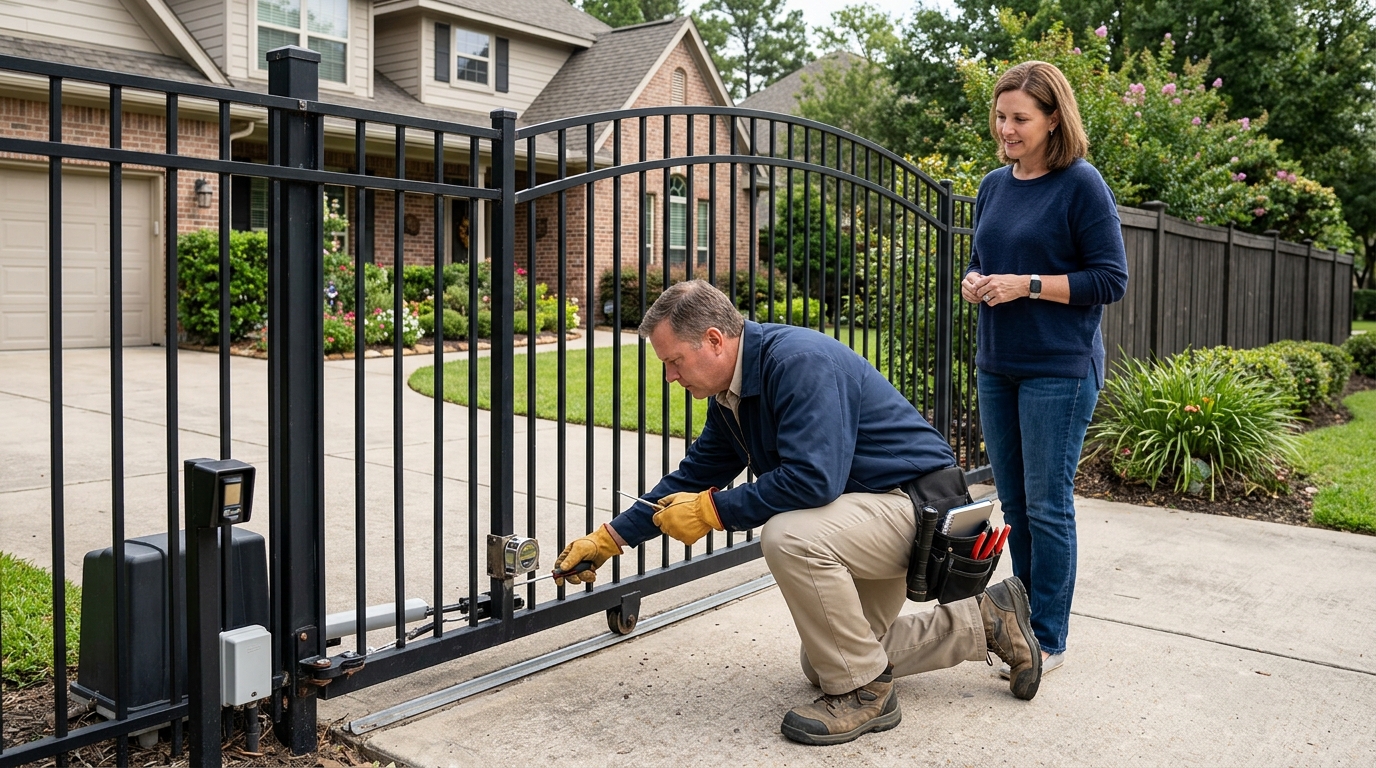
A gate can look secure and still create serious risks for children, pets, and anyone walking or driving through it. A residential gate safety inspection helps uncover problems such as weak hinges, faulty sensors, unsafe gaps, poor access controls, or an automatic gate that fails to stop and reverse. I start by identifying the gate type because an automated driveway gate, pool gate, pedestrian gate, and indoor child-safety gate each require different checks.
I focus on the details that matter most: stable construction, safe movement, reliable release systems, clear warnings, and proper separation between vehicles and pedestrians. For automated gates, I also check the operator, entrapment protection, controls, and compliance with applicable U.S. safety standards. A careful inspection can help prevent injuries, reduce repair costs, and give you confidence every time the gate opens or closes.
I start every residential gate safety inspection by determining whether the gate is an automated driveway or vehicular gate. These gates need more than a visual check because the operator, controls, sensors, hinges, rollers, and closing force all affect safety. I test whether the gate stops and reverses when it meets an obstruction. I also look for entrapment hazards, accessible pinch points, warning signs, a manual release, and a separate pedestrian route. UL 325 is the main U.S. safety standard for gate operators, while ASTM F2200 addresses the construction of automated vehicular gates. I also compare the installation with current local code requirements because unsafe operation can create injury risks and liability concerns.
Manual pedestrian gates usually have fewer mechanical parts, but they still need a careful inspection. I check that the gate is stable, swings or slides as intended, latches securely, and does not create sharp edges, pinch points, or gaps that could trap fingers or a child’s head. Pool barrier gates need an even closer review because their main purpose is to prevent unsupervised access to the water. I verify that the gate is self-closing and self-latching, opens away from the pool where required, and has the correct height, spacing, and latch location under applicable local pool codes. The gate’s location and daily use determine which measurements and safety features matter most.
Indoor child-safety gates are a separate category, so I do not inspect them like driveway or pool gates. I focus on the gate’s mounting, pressure or hardware installation, locking method, stability, and suitability for the opening, stairs, or room where it is used. A gate that works well in a doorway may be unsafe at the top of stairs, especially if it can be pushed out or creates a trip hazard. Once I identify the type, I can apply the right inspection criteria and explain which repairs are urgent, which maintenance tasks can help prevent failures, and which items may require code review or professional correction. This approach gives homeowners a practical record of the gate’s condition instead of treating every gate as if it had the same risks.
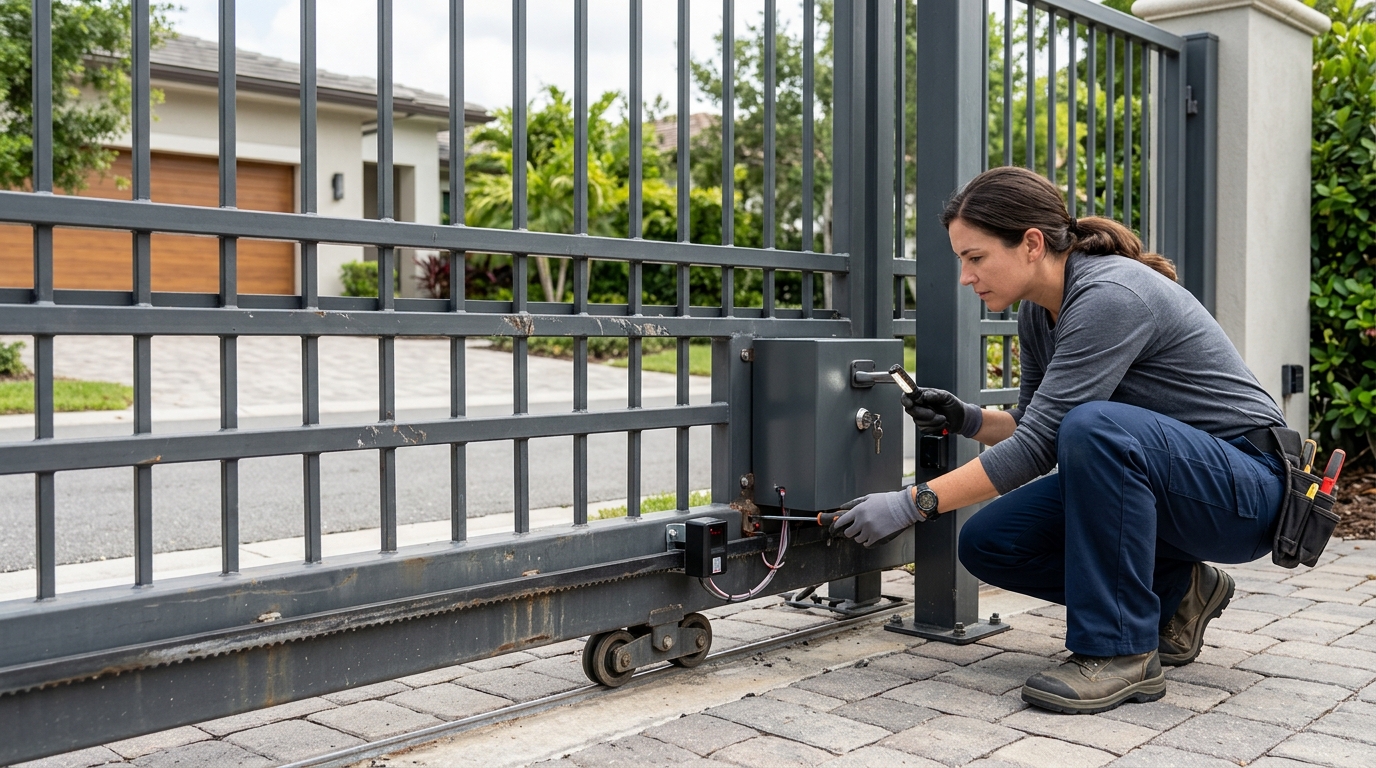
During a residential gate safety inspection, I start with the gate itself. I check the frame, hinges, rollers, and tracks for cracks, looseness, rust, wear, or anything that could make the gate bind or sag. The operator should be securely mounted and properly sized for the gate. Wiring, conduit, controls, and power connections should also be protected and in good condition. I look for required warning signs, a working manual release, and a separate pedestrian access route so people do not need to walk through the vehicle gate.
Next, I test the gate’s entrapment protection instead of relying on a visual check alone. Photo-eye sensors should detect a person, vehicle, or object in the opening, and contact sensors should respond if the gate meets an obstruction. When either safety device is triggered, the gate should stop and reverse promptly without excessive force or delay. I also check that remotes, keypads, and other controls are positioned and programmed to reduce accidental activation, especially where children or visitors may be present.
A thorough inspection can uncover problems that may lead to injuries, property damage, downtime, or liability concerns. I compare the installation with the operator’s safety requirements and applicable local rules, including standards commonly associated with UL 325 and ASTM F2200 for automated vehicular gates. If the gate fails a sensor test, does not reverse quickly, or has damaged structural or electrical parts, I recommend taking it out of service until the issue is corrected. Keeping inspection records and addressing repairs promptly also gives homeowners and property managers a clearer path toward ongoing maintenance and code compliance.
During a residential gate safety inspection, I first identify the gate type and how it is used. An automated driveway gate has different requirements than a manual pedestrian gate or pool barrier gate, so the inspection needs to match the actual risk. For automated gates, I review the operator, controls, entrapment protection, warning signs, manual release, hinges, rollers, and overall gate structure. UL 325 commonly applies to the gate operator, while ASTM F2200 addresses the construction and safety features of automated vehicular gates. I also check local building codes and the manufacturer’s requirements because those rules can affect what must be installed, tested, or repaired.
A key part of the inspection is confirming that the gate responds safely when it meets an obstruction. I test whether it stops and reverses properly, and I look for unsafe gaps, pinch points, damaged wiring, weak supports, or controls that children could reach too easily. Separate pedestrian access is also important because people should not have to walk through a moving vehicle gate. If the operator is outdated, lacks current safety features, or no longer meets the manufacturer’s instructions, replacement may be safer and more practical than repeated repairs. Code requirements can vary by location, so I recommend confirming specific requirements with the local building department when a project involves installation, major changes, or permitting.
Good inspection records help show that the property has been cared for responsibly. I document the gate’s condition, test results, code concerns, recommended repairs, and the date each repair or maintenance visit is completed. Promptly correcting a failed safety test is important, but routine professional maintenance can also help identify worn parts before they create an injury risk. Keep operator manuals, service reports, permits, and repair invoices together so you have a clear history of responsible upkeep. Records cannot eliminate liability, but consistent inspections, timely repairs, and an up-to-date safety system can help reduce avoidable risks.
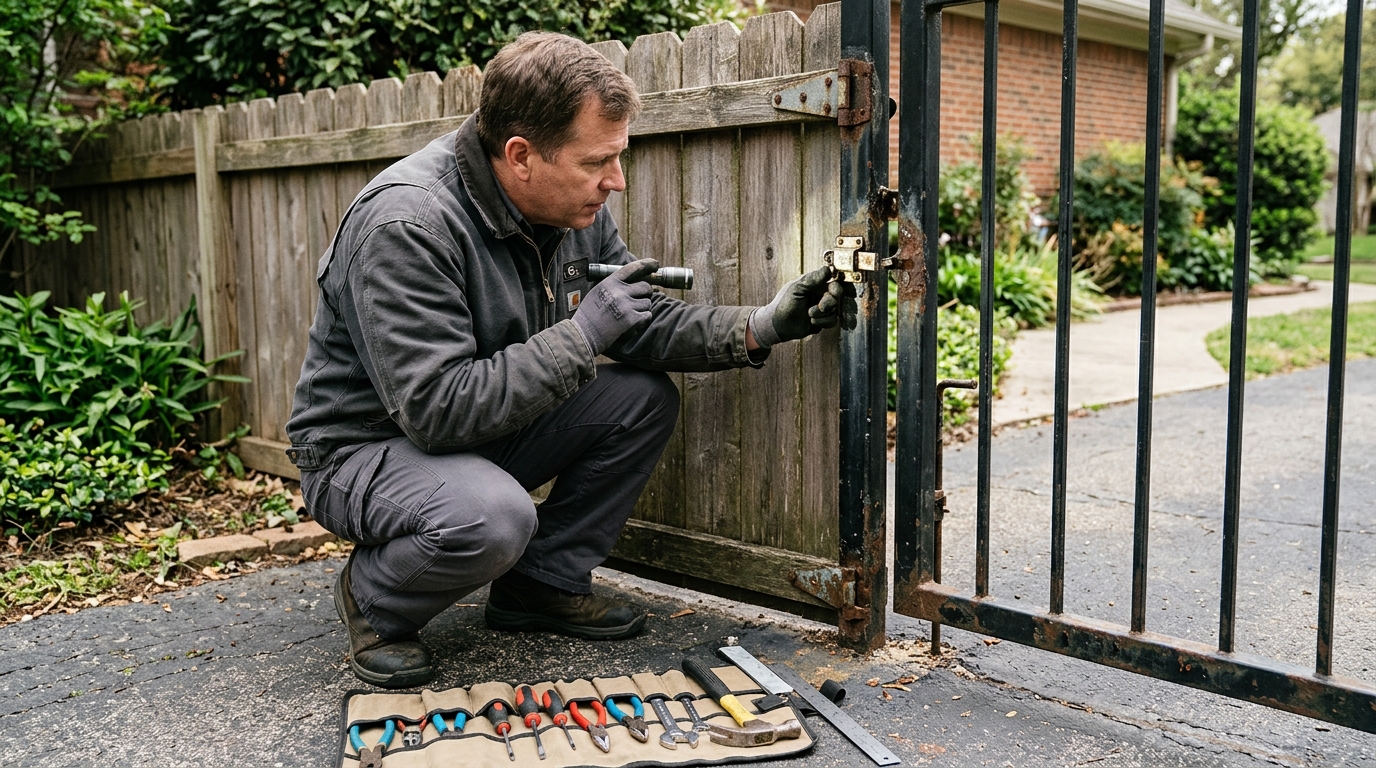
After a residential gate safety inspection, I provide a clear record of what I found, what I tested, and what needs attention. The report typically covers reversal protection, structural stability, exposed wiring, operator function, warning signs, manual release, and the safety of the controls. I also note whether the gate creates an entrapment risk or lacks a separate, safer pedestrian access point. This documentation gives you a practical repair plan and helps show that safety concerns were identified and addressed responsibly.
I prioritize repairs based on the level of risk, not simply on appearance. Failed reversal protection, damaged hinges or posts, exposed wiring, unsafe control placement, and gates that do not stop properly require immediate attention because they can cause serious injury or property damage. I also recommend replacing an operator manufactured before March 2000 because older equipment may lack important modern safety features and may not meet current expectations for safe operation. Until urgent problems are corrected, I may recommend taking the gate out of service or limiting access.
Some findings can be handled through adjustment, maintenance, or replacement of a worn component, while others point to a larger upgrade. I explain each option in plain language, including whether the repair is temporary, whether monitoring is appropriate, and when full gate or operator replacement makes more sense. After repairs, I recommend a follow-up test to confirm that the gate stops and reverses reliably under normal conditions. Regular inspections and prompt attention to new damage can reduce liability concerns and help keep the system dependable.
A residential gate safety inspection gives me a practical way to confirm that the gate is stable, operates as intended, and protects everyone who uses it. I recommend scheduling an inspection with a qualified professional who understands the specific gate type, whether it is an automated driveway gate, pedestrian gate, pool barrier, or child-safety gate. For automated gates, the inspection should include the operator, entrapment protection, controls, warning signs, manual release, and the gate’s ability to stop and reverse when an obstruction is detected. The inspector should also consider applicable local codes and standards, including UL 325 and ASTM F2200 where they apply. This thorough review can uncover risks that might otherwise contribute to an injury, property damage, or a liability claim.
After the inspection, I suggest keeping the written report, repair invoices, test results, and dates of future service in one easy-to-find file. Clear records show that safety concerns are being taken seriously and make it easier to track recurring problems. Any defect involving movement, hinges, sensors, access controls, wiring, or structural damage should be corrected promptly rather than postponed. If the gate cannot be operated safely, I recommend limiting access or taking it out of service until repairs are complete. Regular inspections and documented maintenance provide greater confidence that the gate remains safe, reliable, and ready for everyday use.
A residential gate safety inspection is a careful review of the gate, hardware, movement, access controls, and surrounding area. I look for hazards that may affect children, pets, pedestrians, or vehicles, including weak hinges, unsafe gaps, faulty sensors, pinch points, and failed stop or reverse functions.
Every type of residential gate should be inspected, but each one needs a different set of checks. I inspect automated driveway gates, manual pedestrian gates, pool gates, and indoor child-safety gates for safe construction, reliable latching, proper clearances, and age-appropriate protection.
I check the operator, hinges, rollers, controls, sensors, closing force, warning signs, and manual release. I also test whether the gate stops and reverses when it meets an obstruction, and I look for entrapment hazards, accessible pinch points, and a safe route for pedestrians.
An automatic gate must stop and reverse when it detects an obstruction. This feature helps prevent a person, child, pet, or vehicle from becoming trapped or struck. If the gate continues moving, reverses too slowly, or requires excessive force, stop using it until it is repaired.
I check that the gate is stable, moves smoothly, and closes and latches securely every time. I also look for sharp edges, loose hardware, finger-trapping points, unsafe gaps, and openings that could allow a child or pet to pass through or become stuck.
Pool gates need dependable self-closing and self-latching features, along with proper height, spacing, and separation from climbable objects. I also check that the latch is out of reach for young children and compare the gate with current local pool-barrier requirements because rules can vary by location.
You can perform basic checks, such as testing the latch, looking for loose parts, checking gaps, and confirming that an automatic gate stops and reverses. For powered gates, electrical components, closing force, entrapment protection, and repairs, I recommend a qualified professional who can evaluate the installation against applicable safety standards and local codes.
I recommend a basic inspection at least once a year and a quick safety check whenever the gate behaves differently, makes unusual sounds, or receives impact damage. Automated gates may need more frequent attention because sensors, operators, rollers, and controls can wear over time. Inspect the gate immediately after any repair, storm, collision, or change to the surrounding area.
VIEW OUR WORK
LEARN MORE
CONNECT WITH US